1000 hwan 1961
About This Note
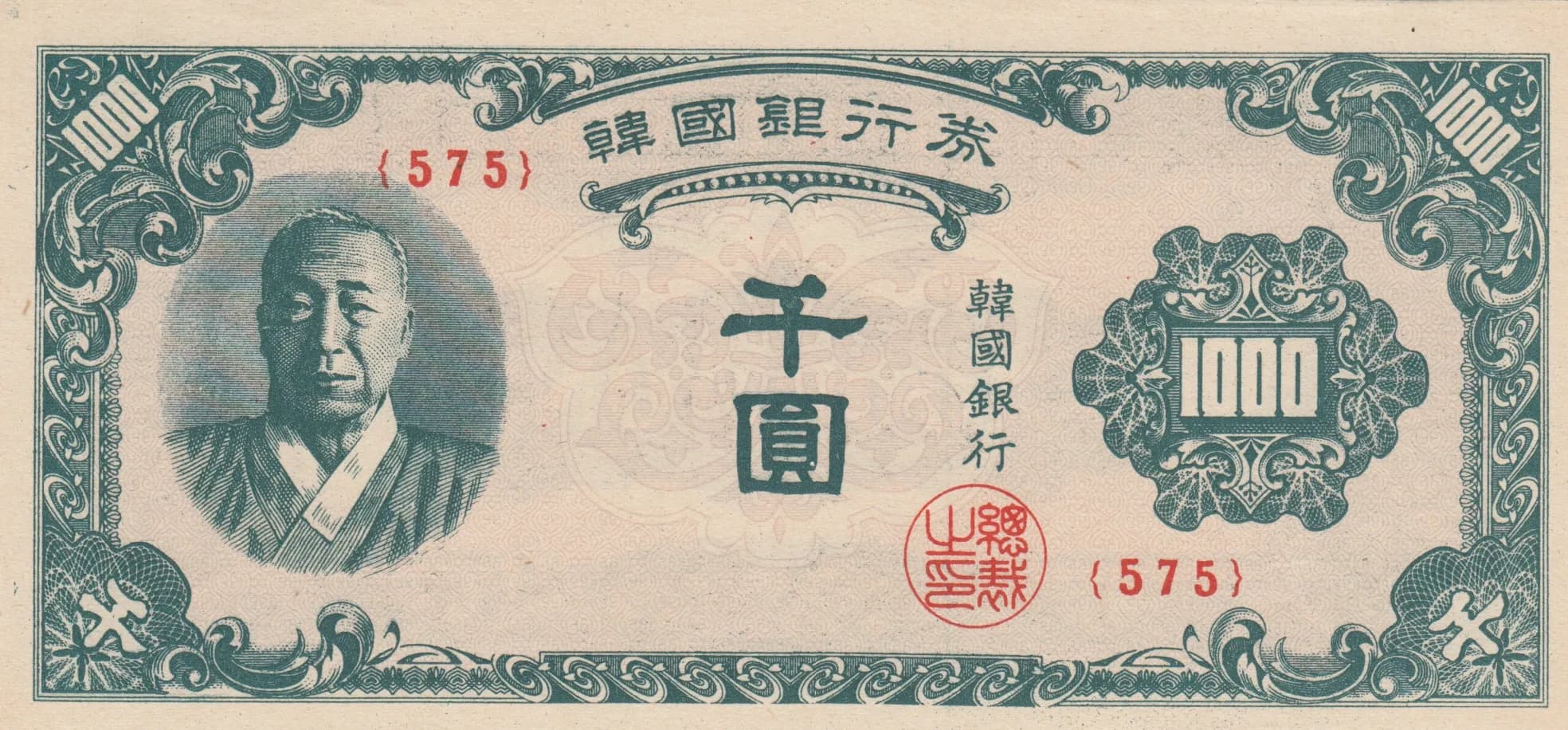
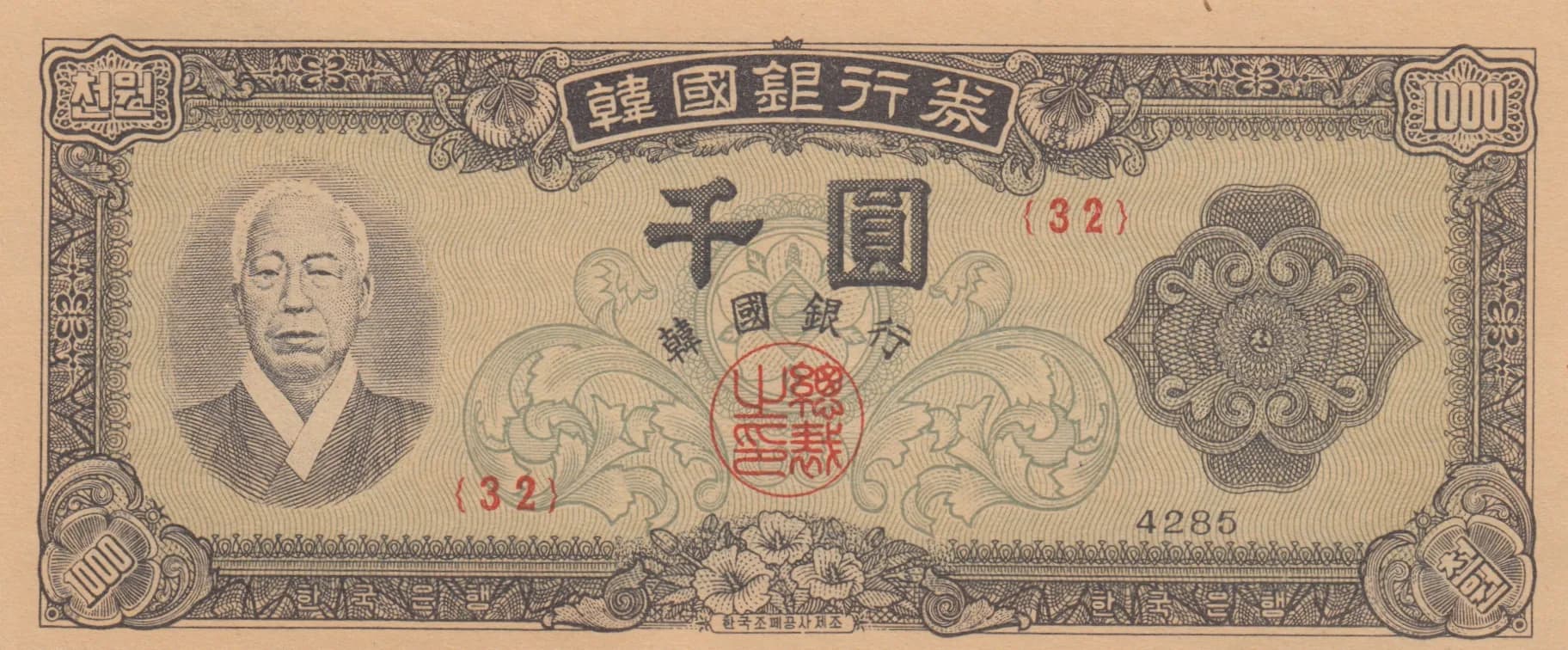
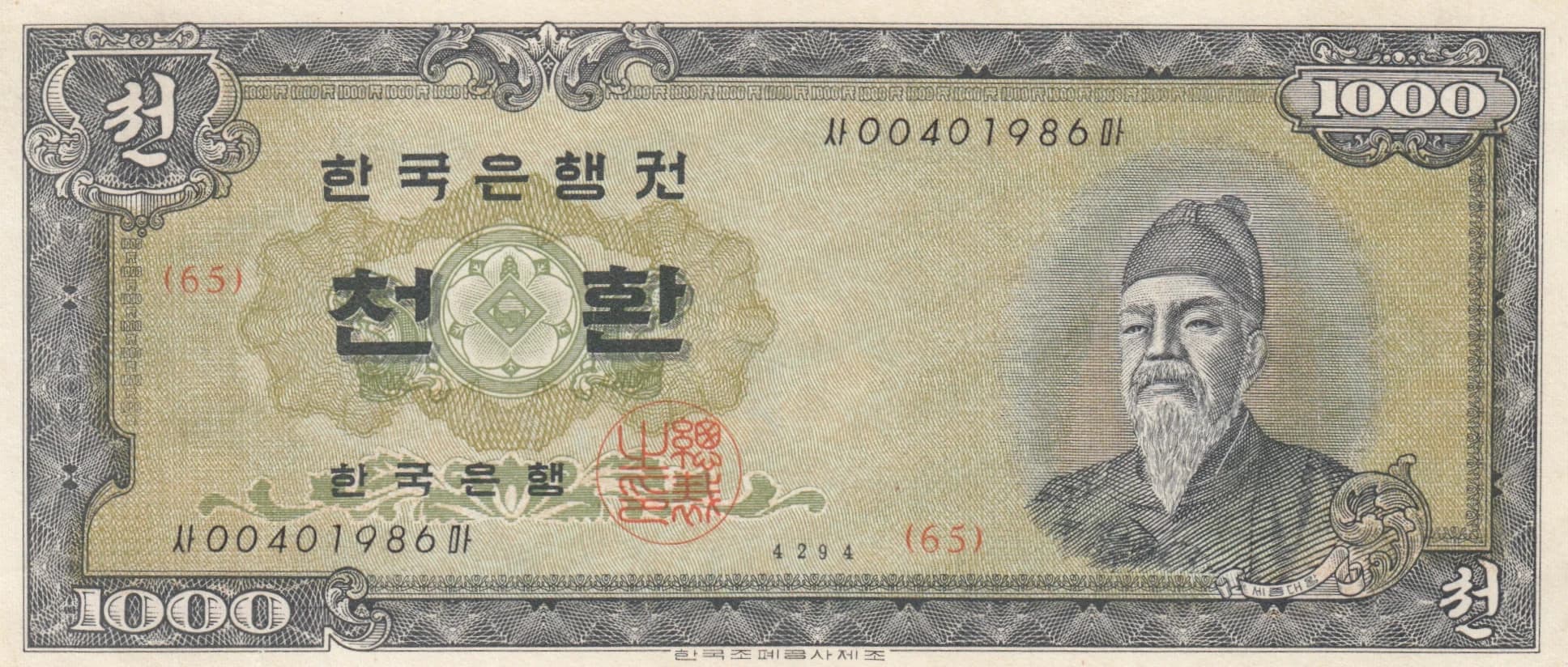
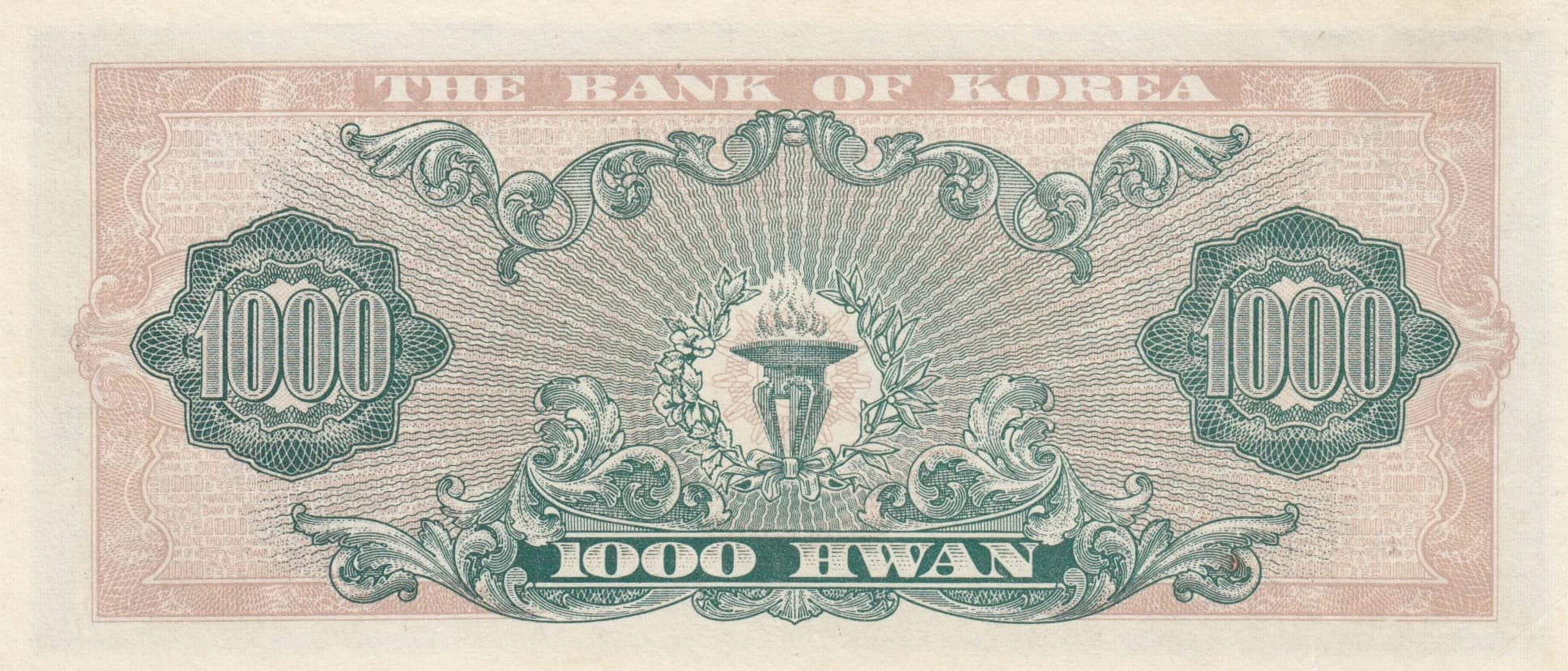
This is a beautiful example of South Korea's 1000 Hwan banknote from 1961, graded in Uncirculated condition. The note features exceptional engraving quality with a dignified portrait of a bearded historical figure in traditional Korean dress on the obverse, and a striking torch monument symbolizing Korean independence and eternal flame on the reverse. The pristine condition, sharp printing, and complete absence of handling marks make this an excellent example of post-war Korean currency design.
Common. The 1000 Hwan denomination from 1961 (Pick-25b) was issued in substantial quantities as a standard circulating denomination during the early 1960s. No documented scarcity in the catalog literature, and these notes remain readily available in the collector market across various condition grades. The uncirculated grade is more desirable than circulated examples, but the note itself is not rare or particularly scarce.
This 1000 Hwan note was issued during the early years of the Second Republic of South Korea, following the Korean War and during a period of national reconstruction. The torch monument depicted on the reverse represents the Korean independence movement and national spirit, while the traditional Korean dress and formal styling of the portrayed historical figure reflect the nation's efforts to establish a distinct cultural identity. The dual-language presentation (Korean and English) reflects South Korea's post-war international engagement and modernization efforts during the early 1960s.
The obverse features a right-profile portrait of what appears to be a historical Korean statesman or nationalist figure, rendered in fine engraved detail, wearing a traditional jeogori (jacket) and the distinctive samo (traditional tall Korean hat). The portrait is framed by intricate scrollwork borders with elaborate decorative flourishes characteristic of mid-20th century Korean banknote design. A circular emblem with geometric and yin-yang symbolism is positioned centrally, and an official red seal or stamp validates the note. The reverse displays a symmetrical commemorative design centered on an eternal flame or torch monument rising from an ornamental base, flanked by decorative wreaths and radiating light rays emanating from the flame. The design elements are rendered in pink, green, and cream tones, creating a formal, ceremonial appearance befitting a commemorative denomination.
Front side: '한국은행권' (Bank of Korea Note), '천원' (One Thousand Hwan), '한국 은행' (Bank of Korea), '1000' (denomination in Arabic numerals, appearing in upper right and lower left), Serial number pattern 'II00401986II', Reference markings '[651]' and '4294'. Back side: 'THE BANK OF KOREA' (English text at top), '1000 HWAN' (English denomination), '1000' (denomination in Arabic numerals appearing in ornate cartouches on left and right).
Intaglio engraving (copperplate printing), executed with exceptional technical precision. The fine line work throughout both sides, the detailed rendering of the portrait and torch monument, the intricate border patterns and scrollwork, and the overall depth and clarity of impression are consistent with the highest-quality intaglio methods employed by the Bank of Korea's designated security printer. The sharp detail preservation in uncirculated condition demonstrates the durability of the engraved plates and the quality of the printing process.
The specific variety designation P-25b indicates this is the second identified variety of the 1000 Hwan 1961 issue. The serial number pattern observed (II00401986II) and reference numbers ([651] and 4294) may indicate specific print batches, though without additional comparative examples these cannot be definitively linked to documented variety classifications. Further research into Bank of Korea archives would be needed to determine if plate variations or signature varieties exist for this denomination and year.