100 won 1965
About This Note
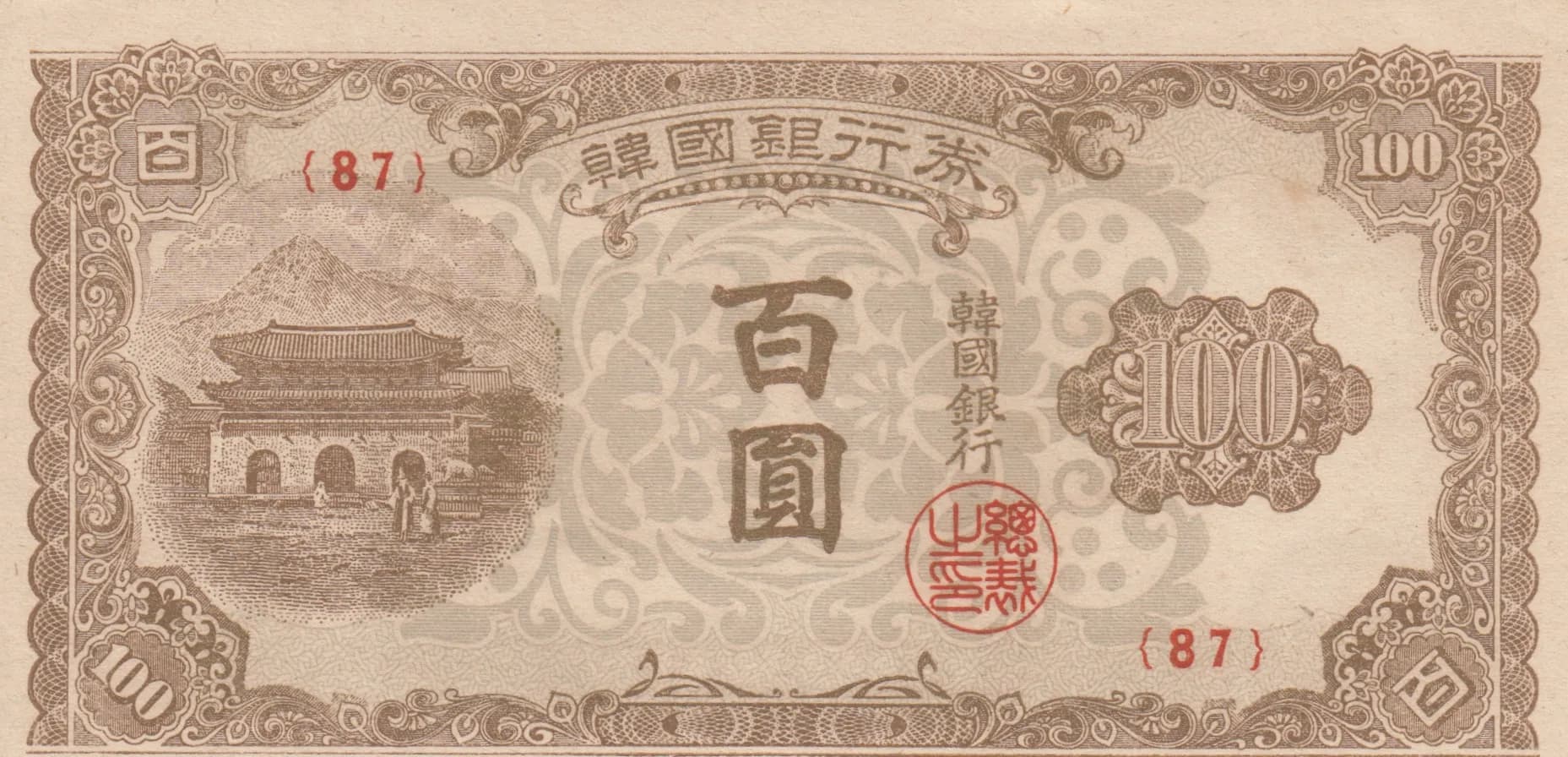
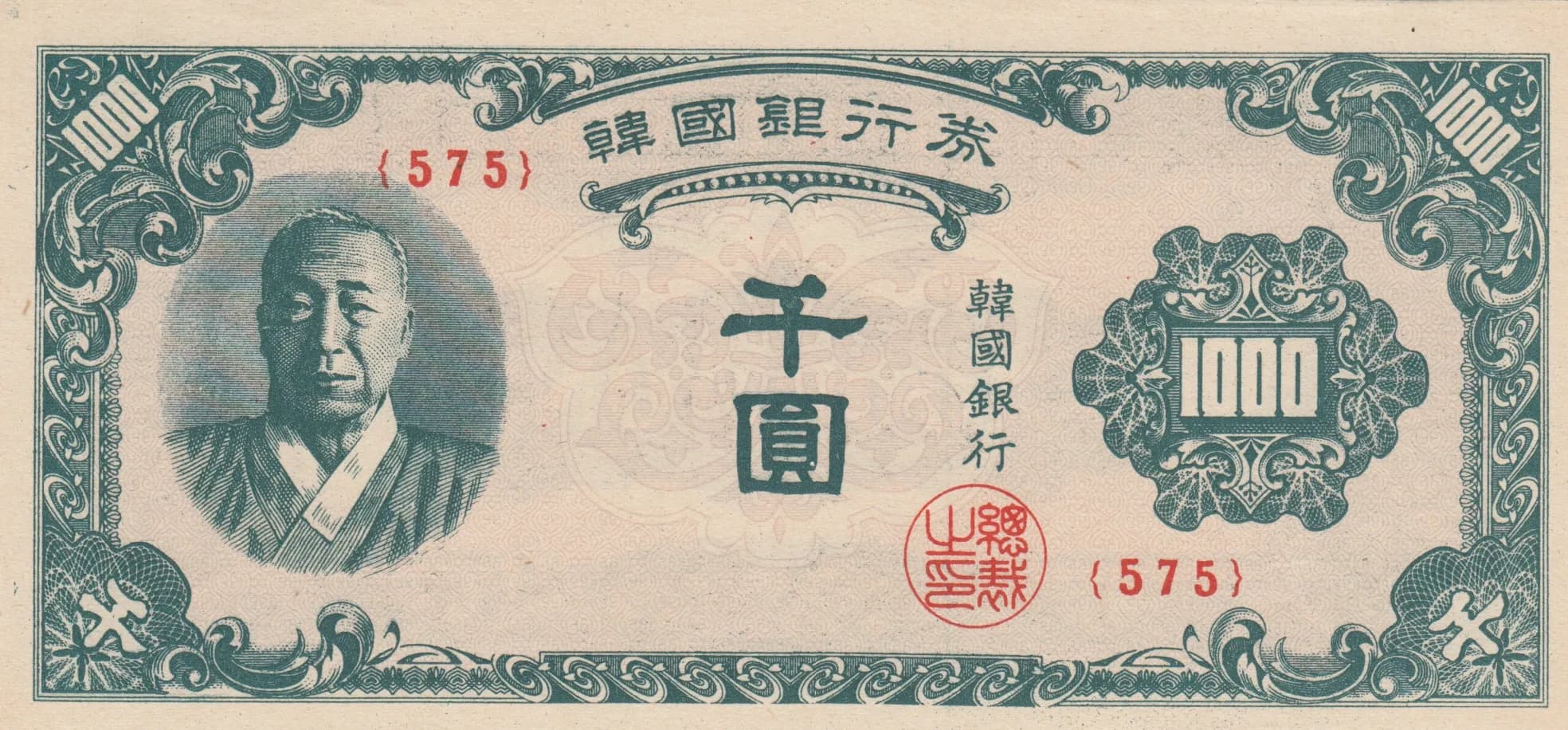
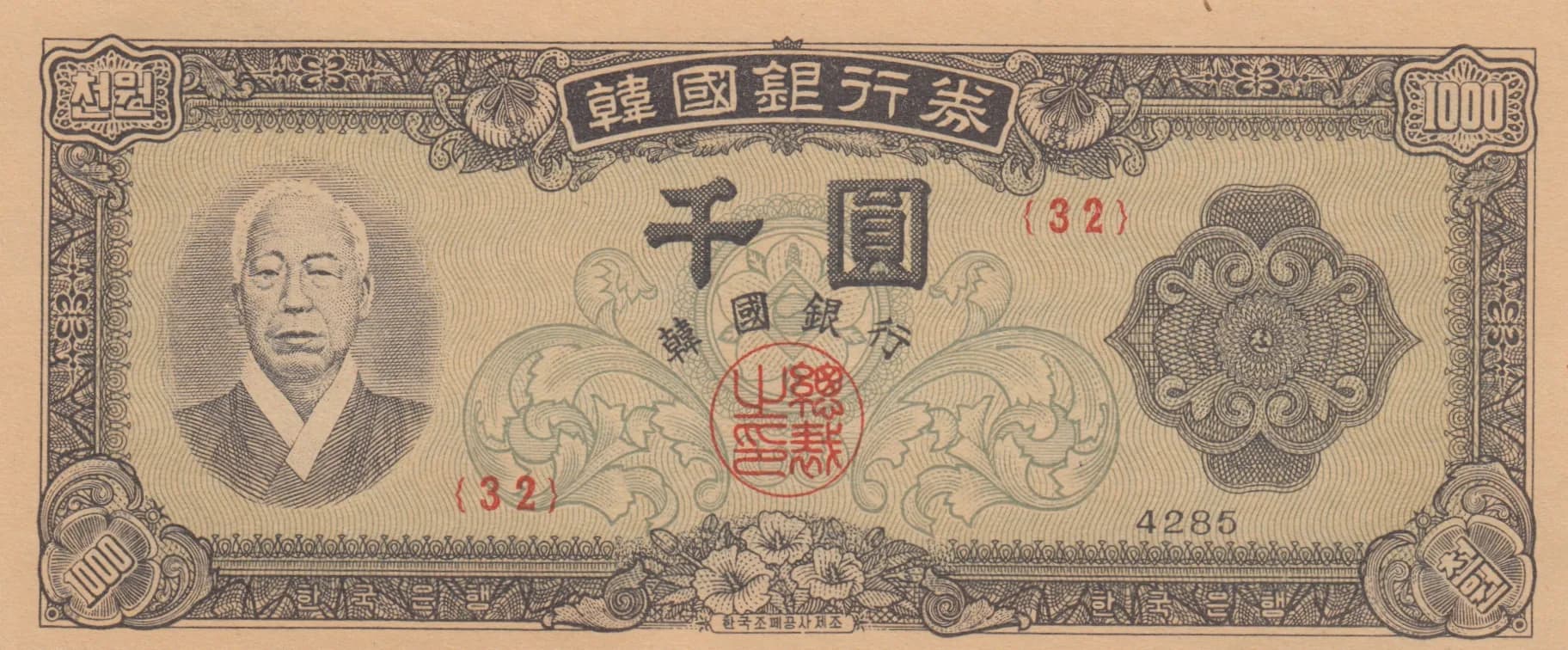
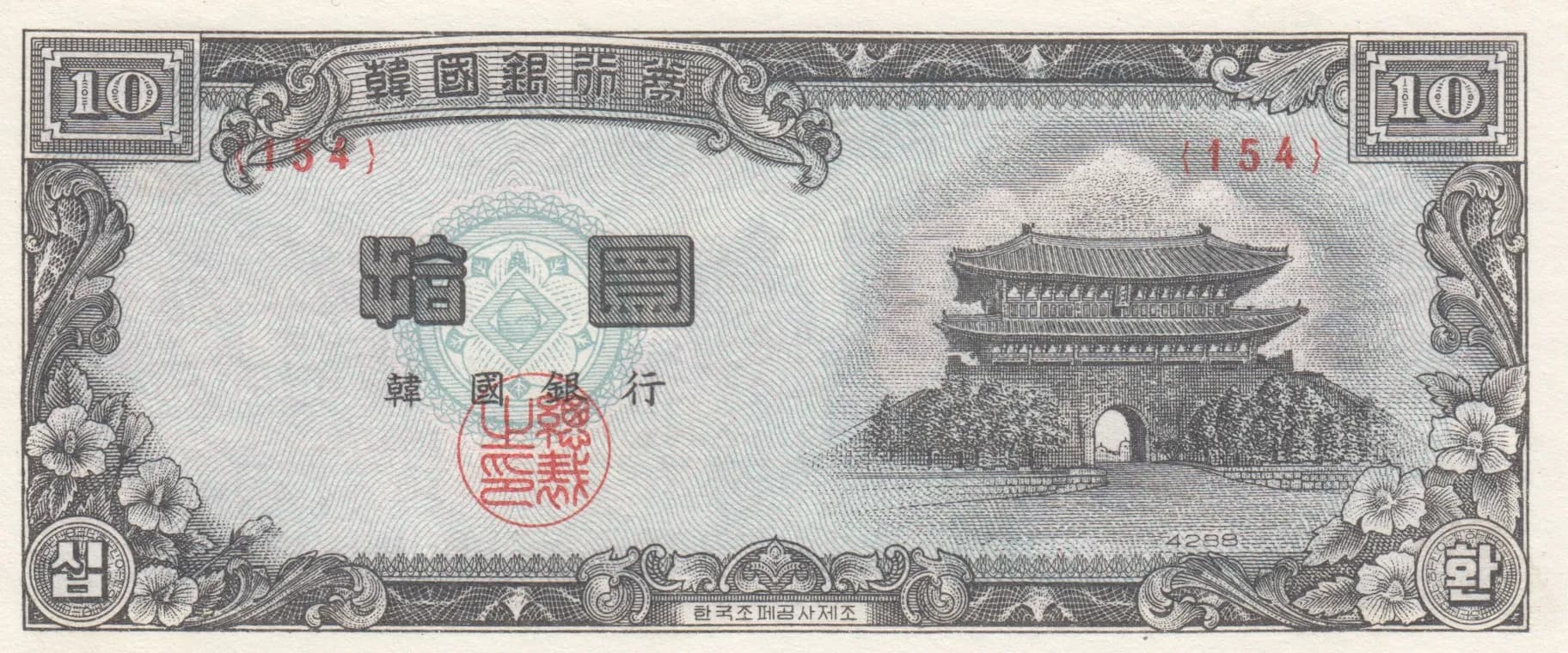
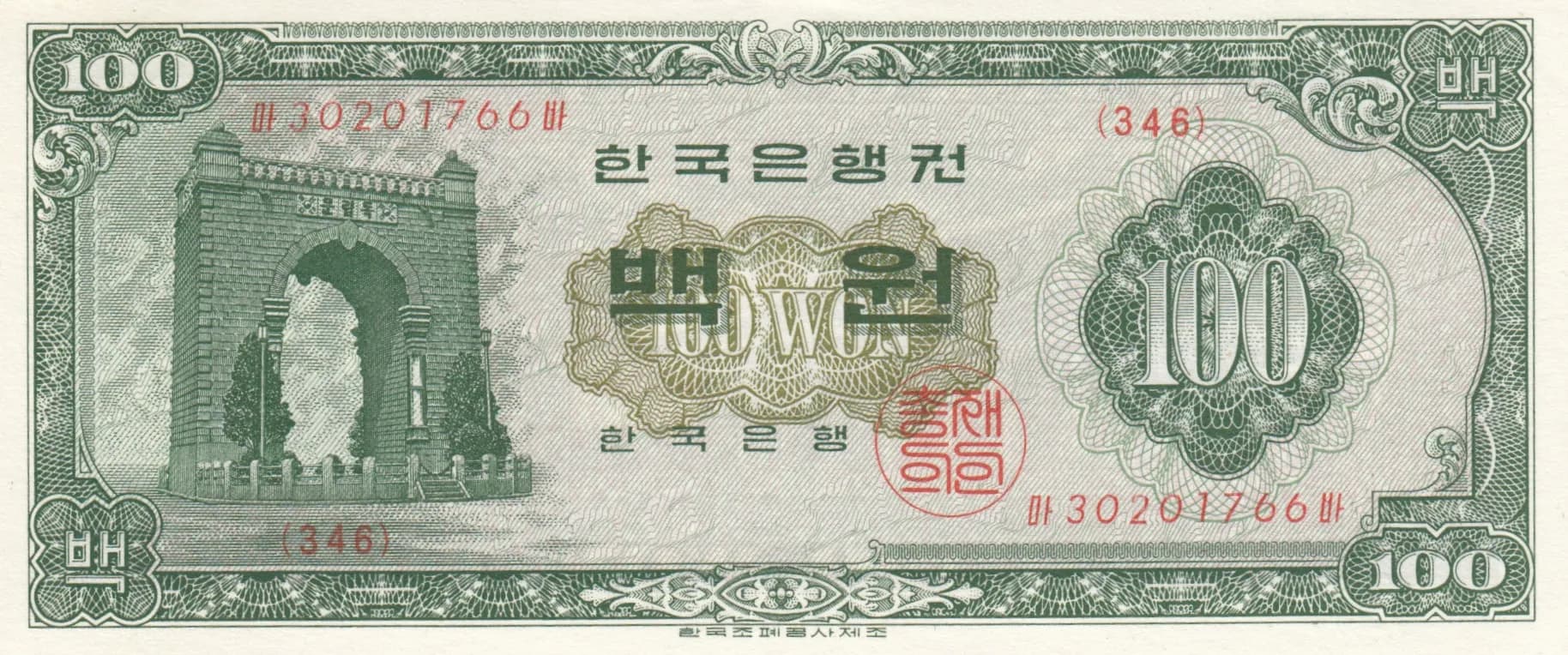
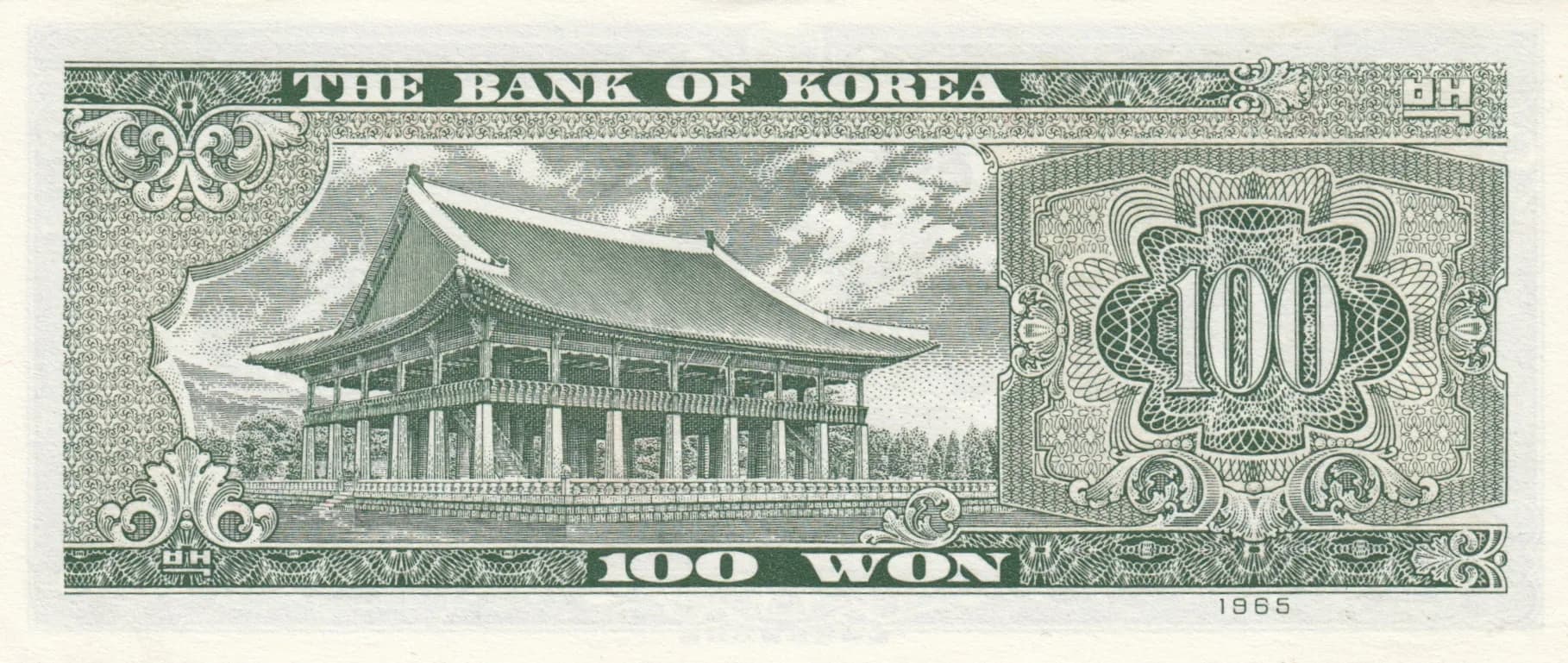
This is a 1965 South Korean 100 won note (Pick P-35d) in uncirculated condition, featuring a striking green and cream color scheme with ornate decorative borders characteristic of early Korean currency design. The obverse depicts a large stone fortress gateway with crenellated walls, while the reverse showcases a traditional Korean pavilion with characteristic upturned eaves, representing important elements of Korean cultural and architectural heritage. The note exhibits pristine condition with no signs of circulation, sharp detail in the fine-line engraving, and prominent red serial numbers and Bank of Korea seal.
Common. The 1965 100 won note (P-35d) was issued in substantial quantities during South Korea's early modern currency period and remains readily available on the numismatic market. UNC examples are frequently encountered in dealer inventories and collector holdings, with market values typically in the $5-15 USD range, confirming standard circulation patterns and no scarcity premium.
This note was issued during a formative period of South Korea's post-war economic development, when the nation was establishing its modern currency systems under the newly reorganized Bank of Korea. The architectural imagery—featuring both a fortress gateway and traditional Korean pavilion—reflects the government's emphasis on national identity and cultural continuity during the mid-1960s modernization period. The bilingual presentation (Korean on obverse, English on reverse) demonstrates Korea's engagement with international commerce and the Western-aligned political sphere during the Cold War era.
The obverse features a symmetrical design centered on Namdaemun (South Gate), the historic stone fortress gateway in Seoul, rendered in detailed engraving with crenellated defensive walls and massive archway. The note employs a classical ornate border design with rosette patterns and geometric scrollwork in green, with denomination numerals in decorative corner cartouches. The reverse displays Gyeongbokgung Palace's traditional Korean architectural style, specifically a pavilion structure with characteristic curved rooflines with upturned eaves (典型的한國 건축) set against a cloudy sky, maintaining the same ornamental green border framework. Bank of Korea seal and bilingual text anchor the design.
Front side: 한국은행권 (Bank of Korea Note), 백원 (100 Won), 한국 은행 (Bank of Korea), Serial number: III 302017661II and II 302017661II, Reference number (346). Back side: THE BANK OF KOREA, 100 WON, 1965.
Intaglio (engraved steel plate) printing, the standard security printing method for Korean currency of this era. The fine-line engraving detail visible throughout the border ornamentation, background patterns, and architectural rendering is characteristic of high-quality intaglio production. The note was printed by the Bank of Korea's contracted security printer, likely Korea Banknote Printing and Minting Corporation (KOMSCO's predecessor operations). Color registration between the green border frame and beige/cream field shows the precision expected from multi-pass intaglio printing.
Serial number prefix 'III' on the obverse indicates a standard printing variety. This note exhibits the reference number (346) visible in the design. Pick P-35d represents the specific cataloging for the 1965 100 won denomination; variations may exist based on serial number printing sequences and color intensity variations across production runs, but no major recognized varieties have been documented for this issue. The observed specimen shows consistent printing quality and standard security features typical of the P-35d designation.