5 won 1947
About This Note
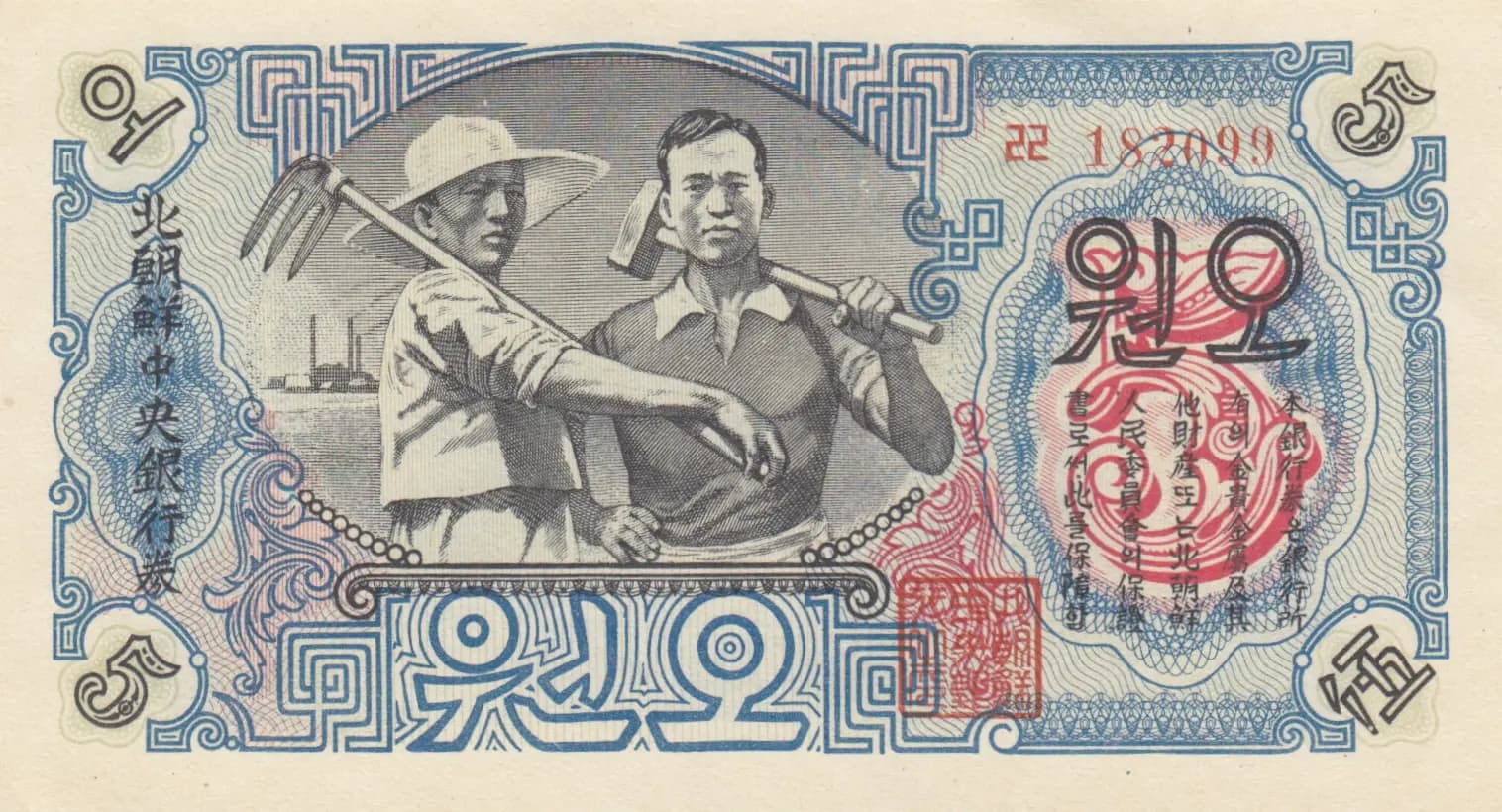
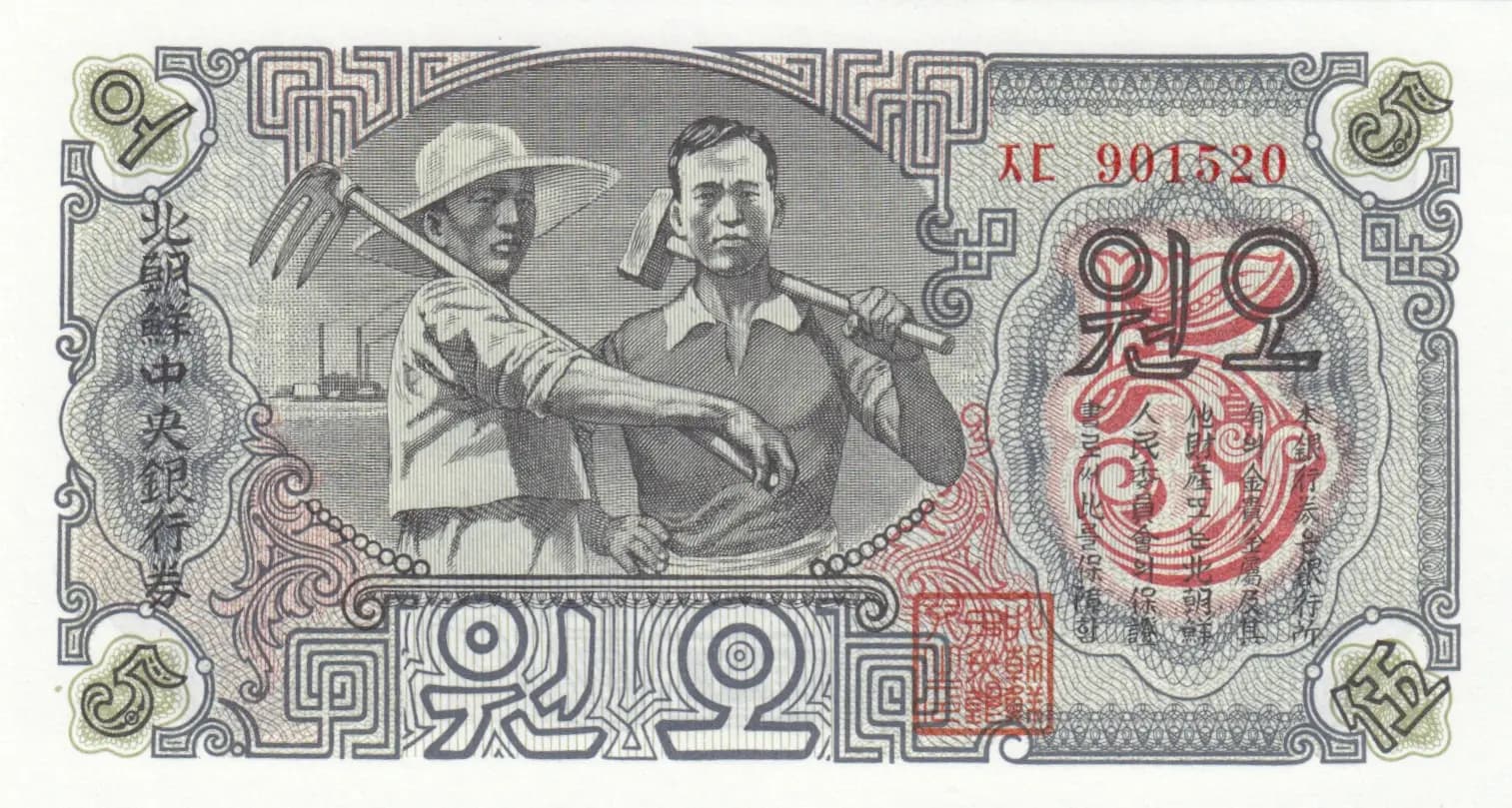
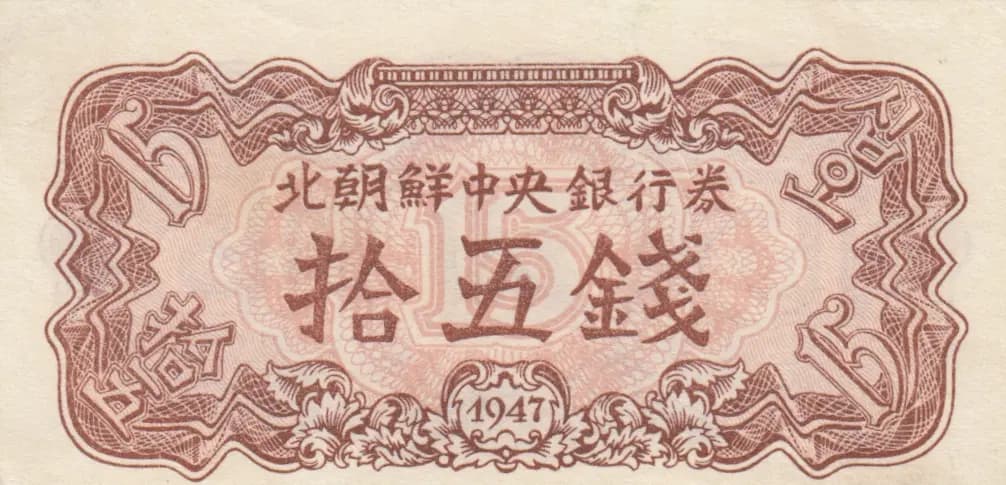
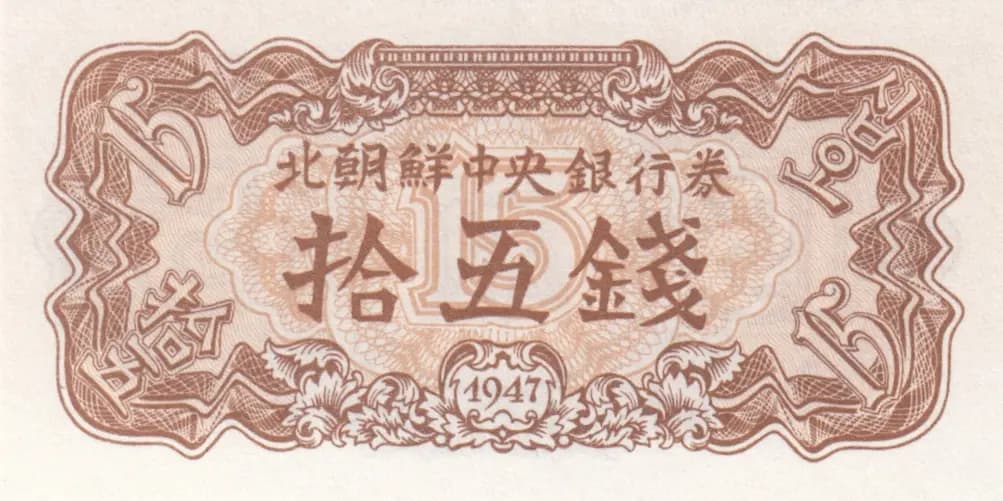
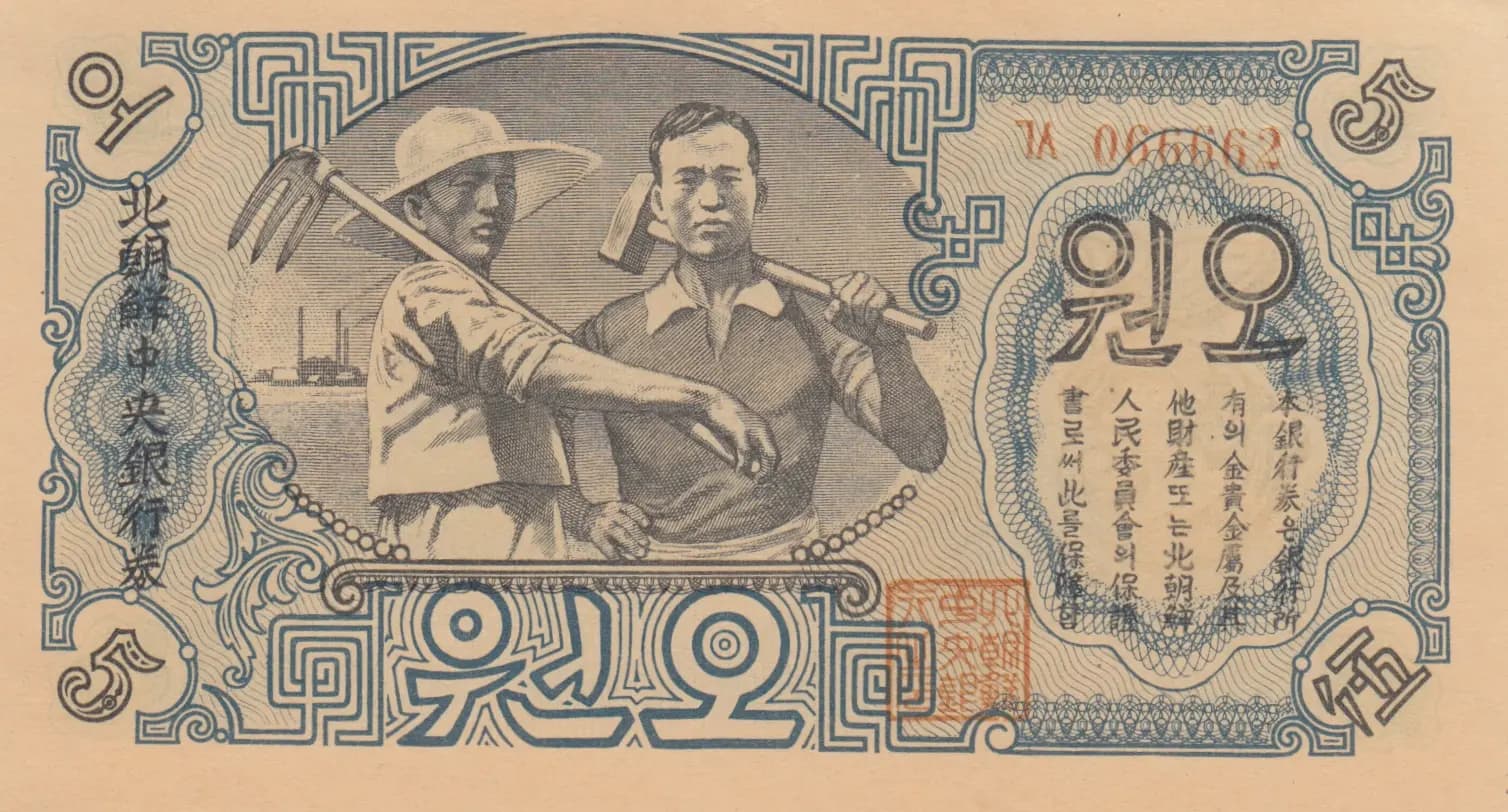
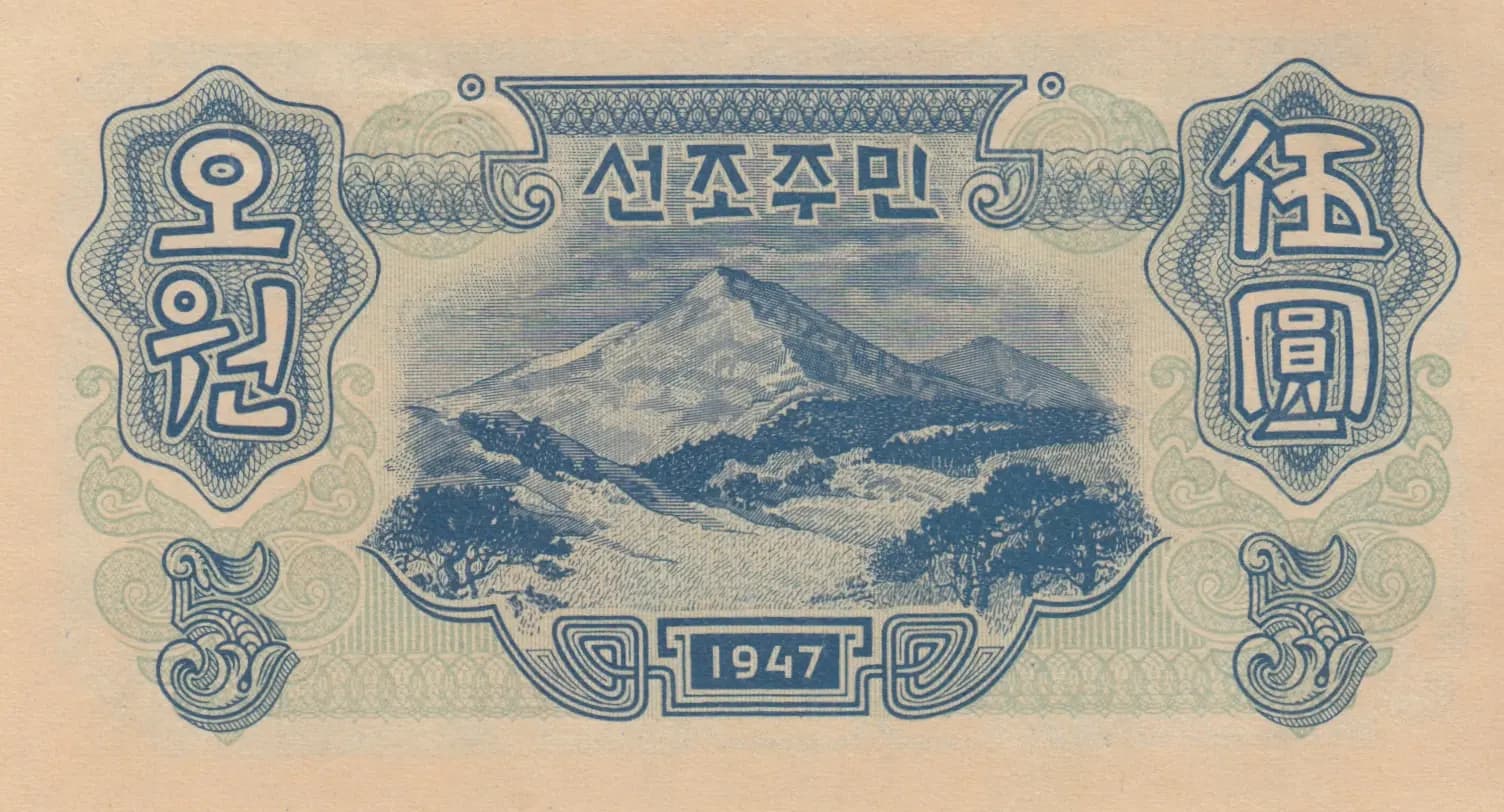
This is an uncirculated example of North Korea's first banknote series, the 5 won of 1947, issued by the North Korea Central Bank during the immediate post-liberation period. The note features striking labor-themed imagery on the obverse with two workers (one with a pickaxe, one with an axe) and a snow-capped mountain landscape on the reverse, all rendered in classical engraved style with blue and red inks. The pristine condition with sharp print quality and uniform paper color makes this an excellent representative specimen of this historically significant inaugural emission.
Common. This note, while historically significant as part of North Korea's first currency issue, was part of a substantial initial print run necessary to establish monetary circulation in the newly formed state. Uncirculated examples survive in reasonable quantities and regularly appear in collections of early North Korean currency. No evidence of short print runs, recalls, or extreme scarcity in the numismatic market.
This 1947 banknote represents North Korea's first monetary emission following the Soviet liberation of the peninsula and establishment of the Democratic People's Republic of Korea in September 1948 (though some sources date early notes to 1947). The labor-themed iconography—featuring workers with industrial tools—reflects the communist ideological emphasis on productive labor and the working class, while the majestic snow-capped mountain (likely Mount Paektu/Baekdu, a sacred symbol in Korean national identity) represents territorial sovereignty and national pride during this formative period of North Korean statehood.
The obverse depicts two male allegorical figures representing labor: a miner or agricultural worker on the left wearing a wide-brimmed hat and holding a pickaxe, and an industrial or forestry worker on the right in a collared shirt holding an axe. A steamship is visible in the background on the left, symbolizing maritime commerce and industrial development. The reverse features a prominent snow-capped mountain peak (Mount Paektu) with forested slopes, rendered in fine engraved linework in blue ink. Both sides are framed by elaborate ornamental borders featuring Greek key geometric patterns, decorative scrollwork in the corners, and shield-shaped medallions containing Hangul characters. The overall design employs classical banknote engraving aesthetic consistent with early 20th-century currency design practices.
Front side: '선조주민' (Chosen people/North Korean people), '오십' (fifty), '오십원' (fifty won), and a longer text in mixed Chinese characters regarding property rights and personal freedoms (言論宗教自由, freedoms of speech, religion, etc.). Back side: '선조주민' (Chosen people), '오십' (fifty), '오십원' (fifty won), and '1947' (year of issue). Additional Hangul characters appear within decorative shield medallions on the reverse.
Intaglio engraving (line engraving) with multi-color printing in blue and red/orange inks. The note demonstrates fine guilloche pattern background security printing typical of the period, with intricate line work throughout. The registration is precise and the impression is sharp, indicating professional security printer production, likely performed by a Soviet or Eastern European security printer assisting the nascent North Korean government.
Catalog Pick 9 represents the standard 1947 issue of the 5 won denomination from the North Korea Central Bank's first series. The note displays the characteristic design elements of this primary variety with no observed overprints, signature variants, or secondary printings. Serial number details are not clearly legible in the provided images, preventing definitive variety classification by serial number prefix if such varieties exist.