5 won 1947
About This Note
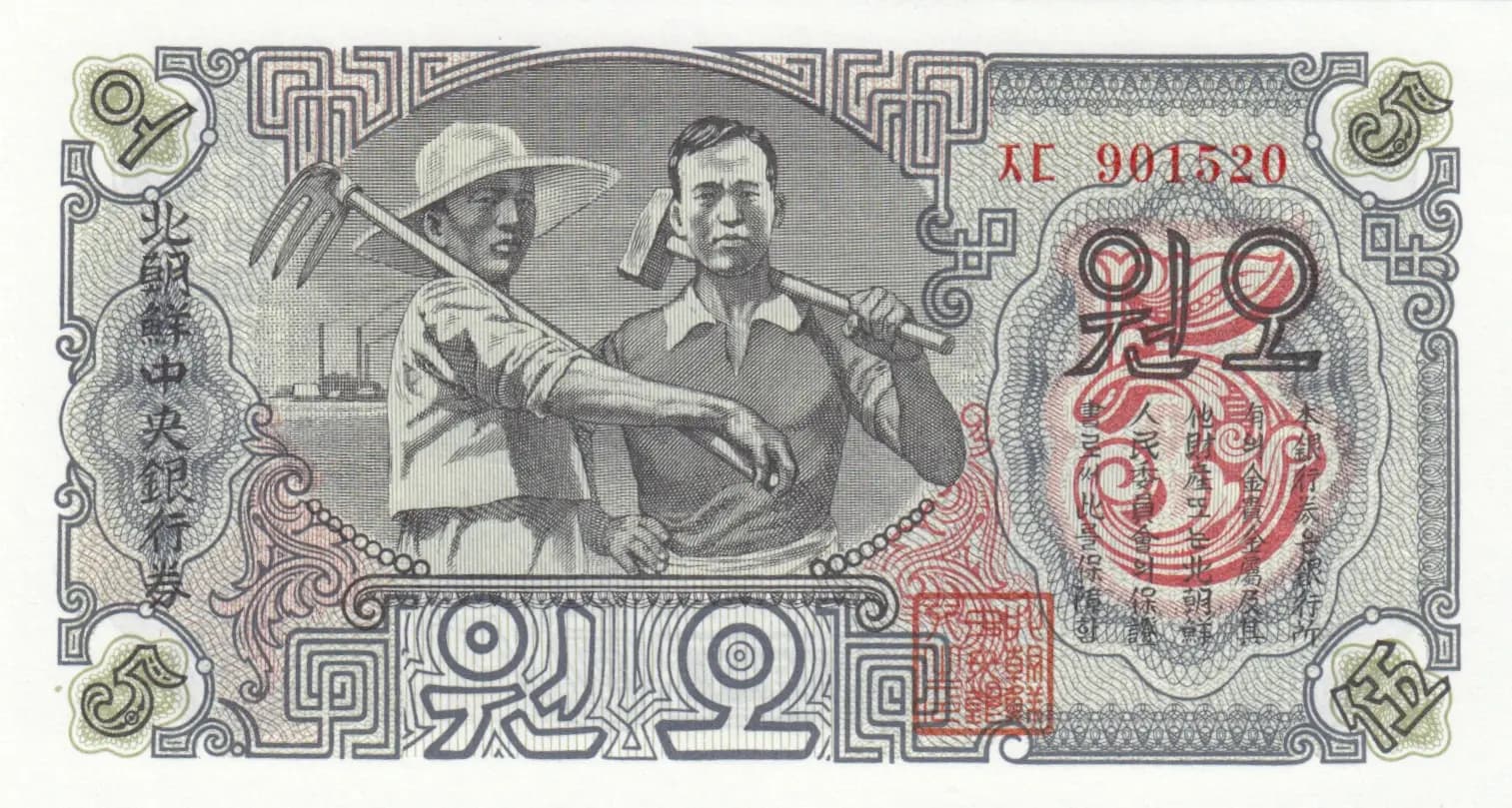
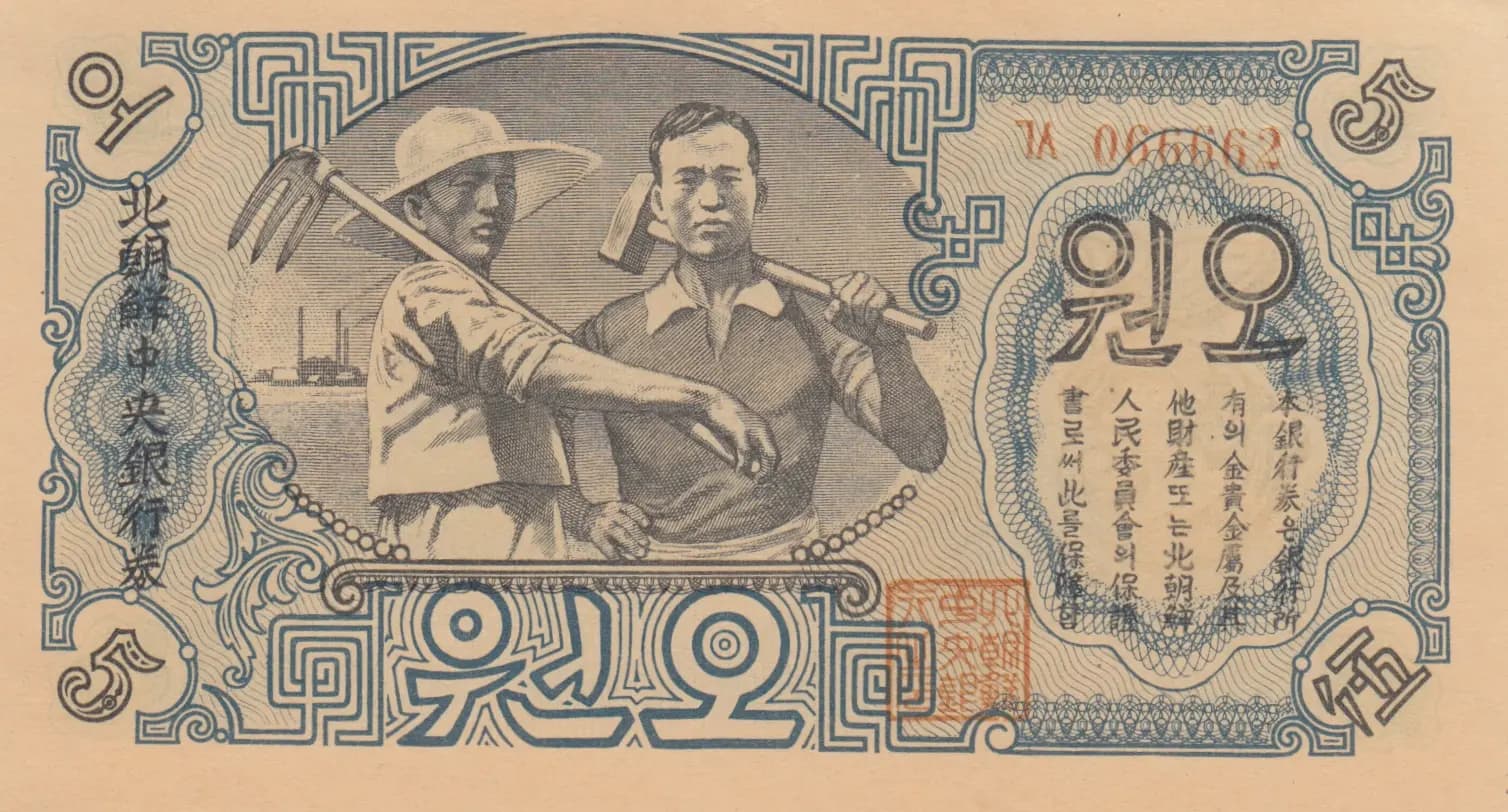
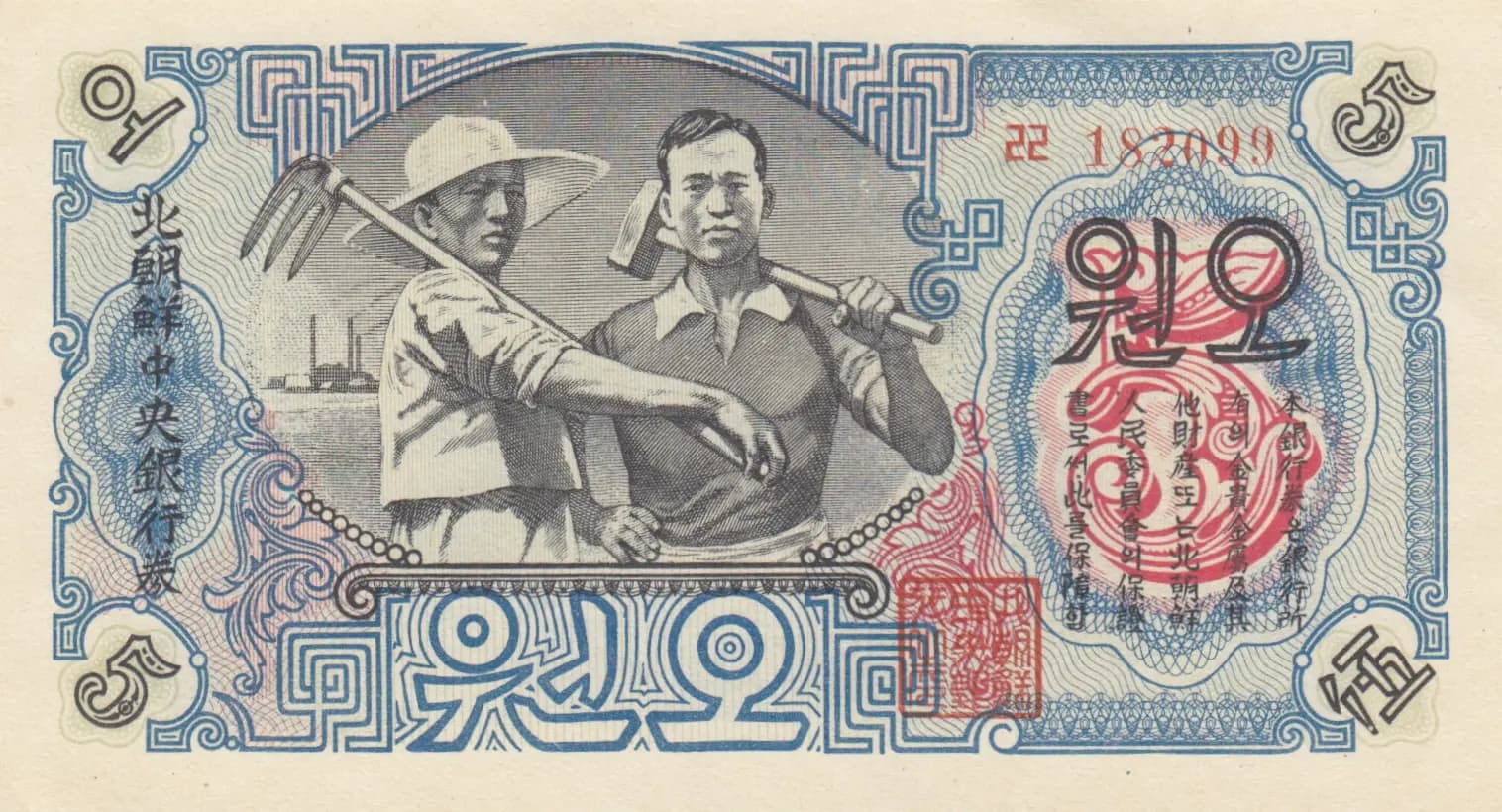
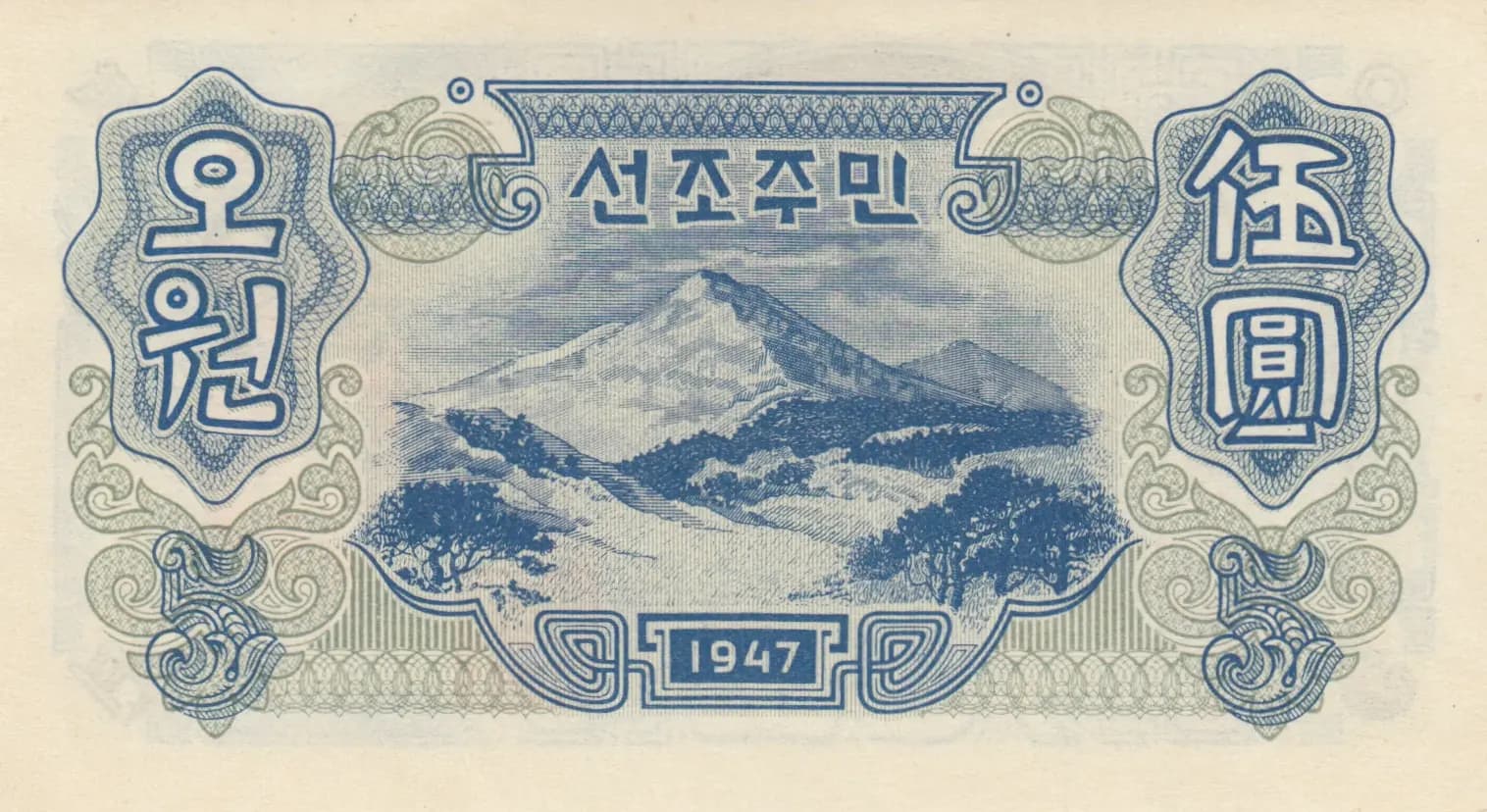
A striking 5 Won note from North Korea's 1947 issue (Pick P-10a), featuring heroic socialist-realist imagery of two workers wielding pickaxe and hammer against an industrial backdrop on the obverse. The reverse showcases the iconic snow-capped Mount Paektu dominating a forested landscape. Presented in UNC condition with crisp printing, minimal wear, and excellent color preservation, this early DPRK emission represents a significant piece of Korean numismatic history during the nation's founding year.
Common. While this is an early issue from the DPRK's founding year and represents historical significance, the Pick P-10a 5 Won 1947 was produced in substantial quantities for general circulation. Uncirculated examples are moderately available in international banknote markets, and current market pricing for UNC specimens typically ranges from $15-40 USD, placing it firmly in the common category. The accessibility of this note in quality grades and its regular appearance in dealer inventories confirm its common status despite its historical importance.
Issued by the North Korea Central Bank in 1947, immediately following the peninsula's division and the establishment of the Democratic People's Republic of Korea, this note embodies the regime's early socialist ideology through its labor-themed iconography. The depiction of workers with tools and the prominence of Mount Paektu—a sacred peak in Korean national mythology and a symbol of resistance—reflects the nascent DPRK's emphasis on industrial development and national identity. This currency represents the transitional period before the Korean War (1950-1953) fundamentally reshaped the peninsula's economic and political landscape.
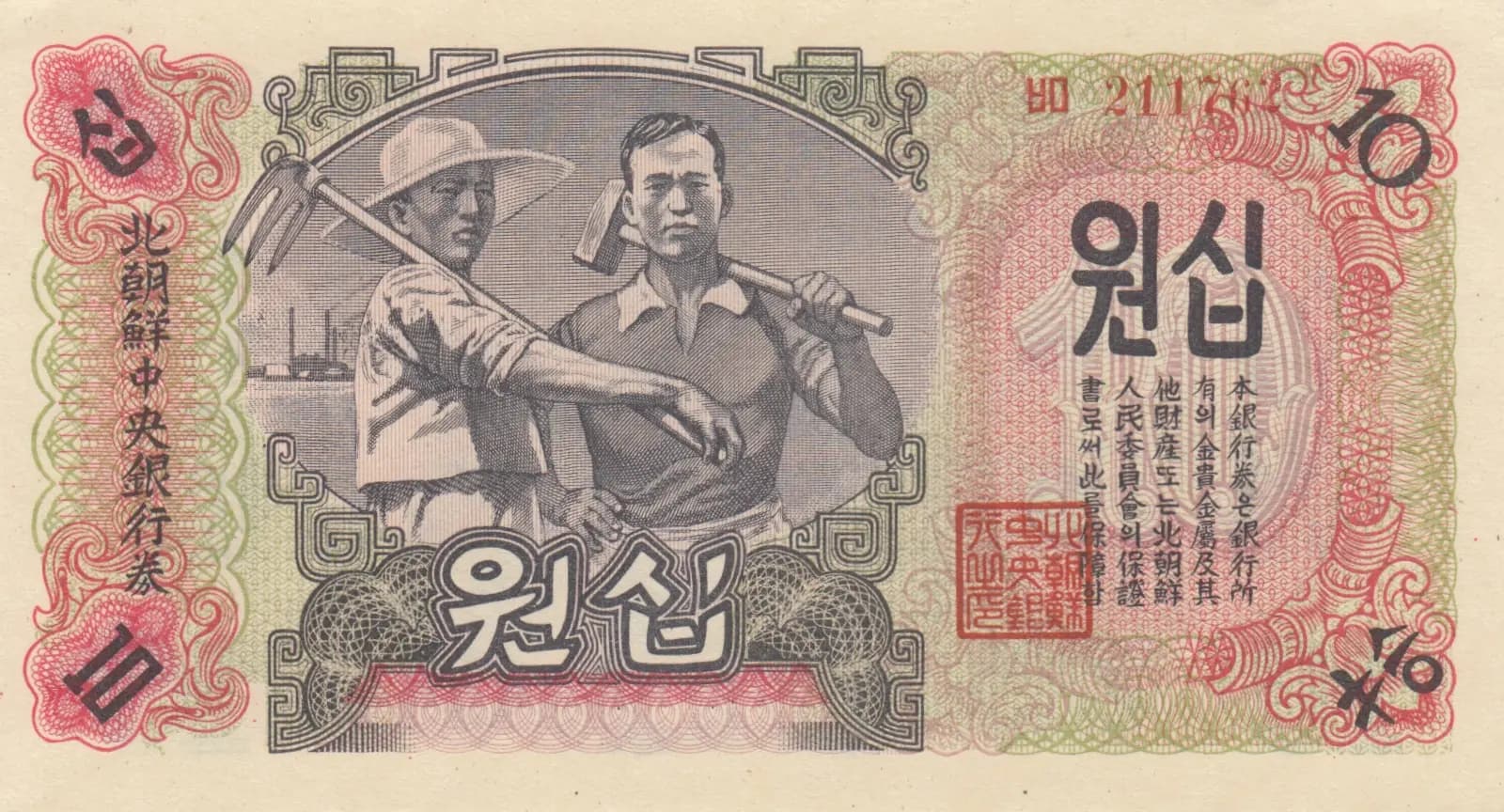
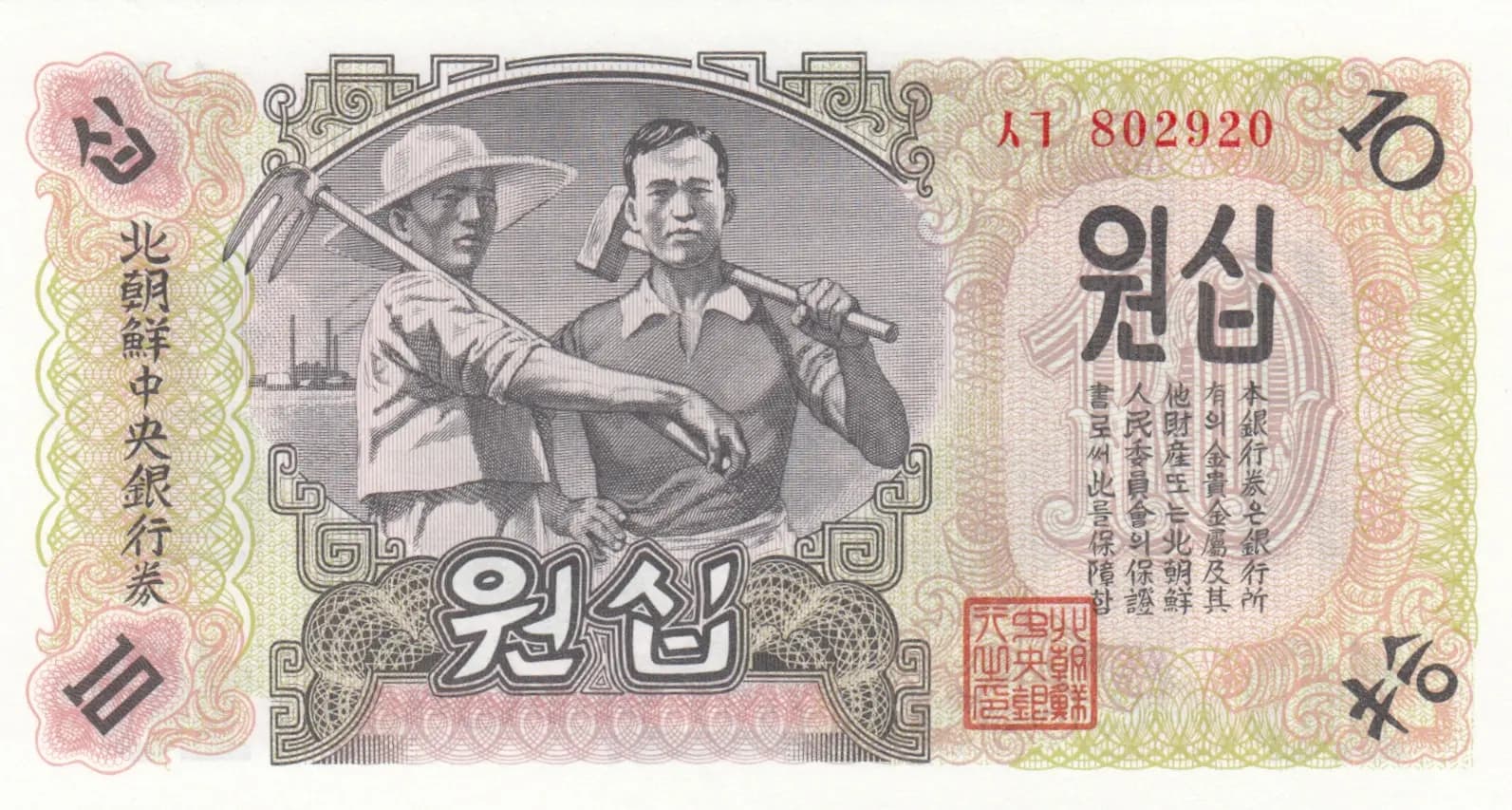
The obverse features two heroic male workers positioned centrally in socialist-realist style: the left figure wears a wide-brimmed hat and lighter garments while gripping a pickaxe, while the right figure in darker clothing wieldsа hammer—both iconic tools of labor symbolism. An industrial facility or factory structure is visible in the background, emphasizing the regime's developmental aspirations. Ornate blue geometric borders frame the composition with spiral corner flourishes. A red circular seal bearing Korean characters appears on the right side. The reverse presents Mount Paektu (Paekdu Mountain), Korea's highest peak and a symbol of national pride and revolutionary heritage, depicted snow-capped and dominating a forested mountainous landscape with rolling terrain. Decorative panels with emblems frame both sides, maintaining the ornate geometric design language consistent with the obverse.
Front side: '朝鮮民主主義人民共和國' (Democratic People's Republic of Korea), '五圓' (Five Won), serial notation '22 1947/9'. Back side: '朝鮮民主主義人民共和國' (Democratic People's Republic of Korea), '1947' (year), '五圓' (Five Won). All inscriptions are rendered in traditional Chinese characters (Hanja) as was standard for official documents in Korea during this period.
Intaglio engraving (line engraving), evidenced by the fine detailed line work visible throughout the borders, the intricate geometric patterns, the finely rendered landscape topography on the reverse, and the crisp definition of portraiture and ornamental elements. The printing quality and security features suggest production by a sophisticated state printer, consistent with Soviet-assisted technical standards employed by the North Korean Central Bank during this early period of the DPRK.
The observed specimen exhibits the serial notation '22 1947/9', indicating a September 1947 issue from the first printing run. The red circular seal on the obverse and the specific geometric border pattern variations are consistent with the P-10a designation. No evidence of overprints, signatures, or other distinguishing features that would indicate major varieties are apparent in the visual analysis. Early 1947 issues may show minor printing variations typical of the DPRK's initial currency production, but the P-10a represents the standard variety for this denomination and date.