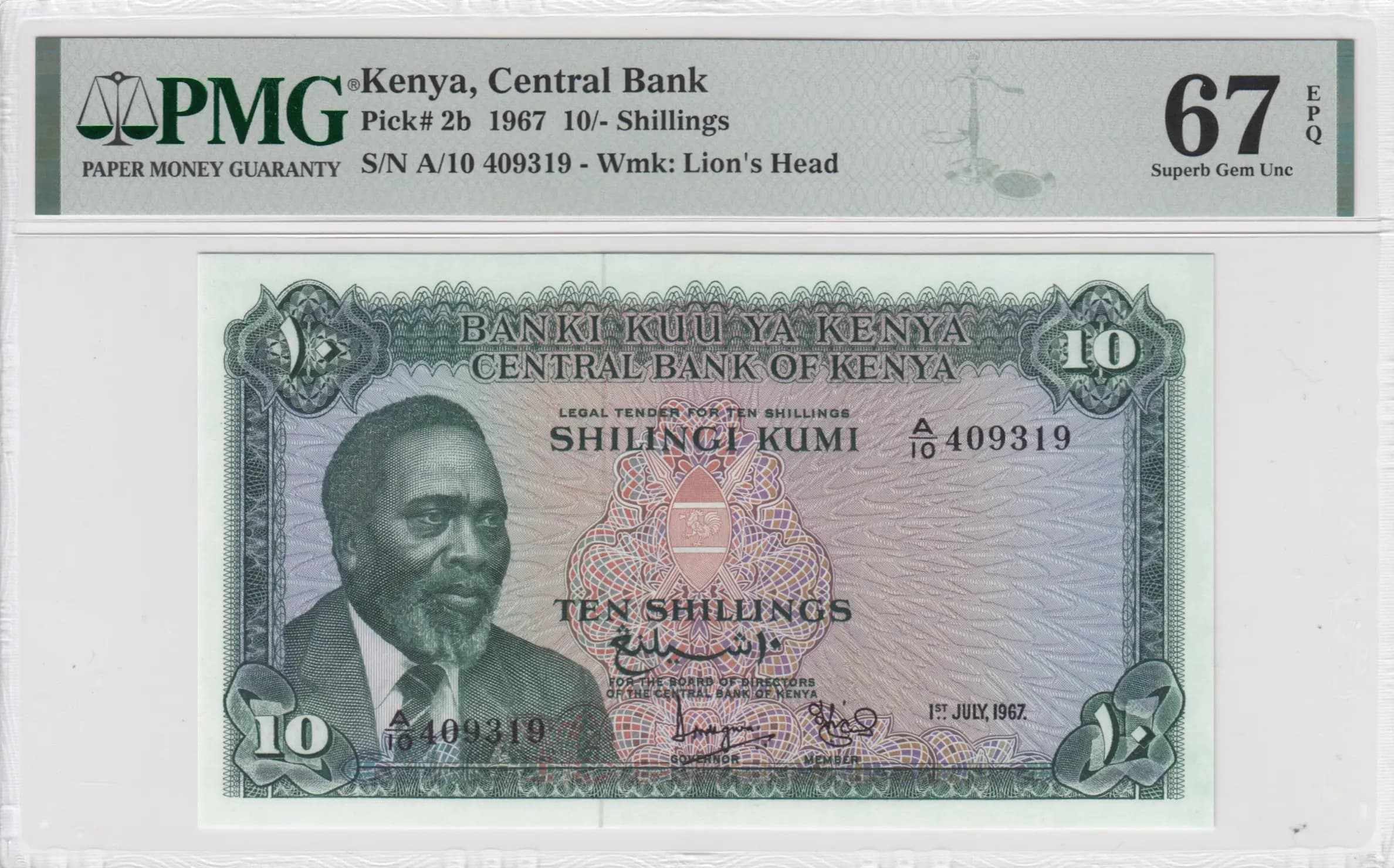
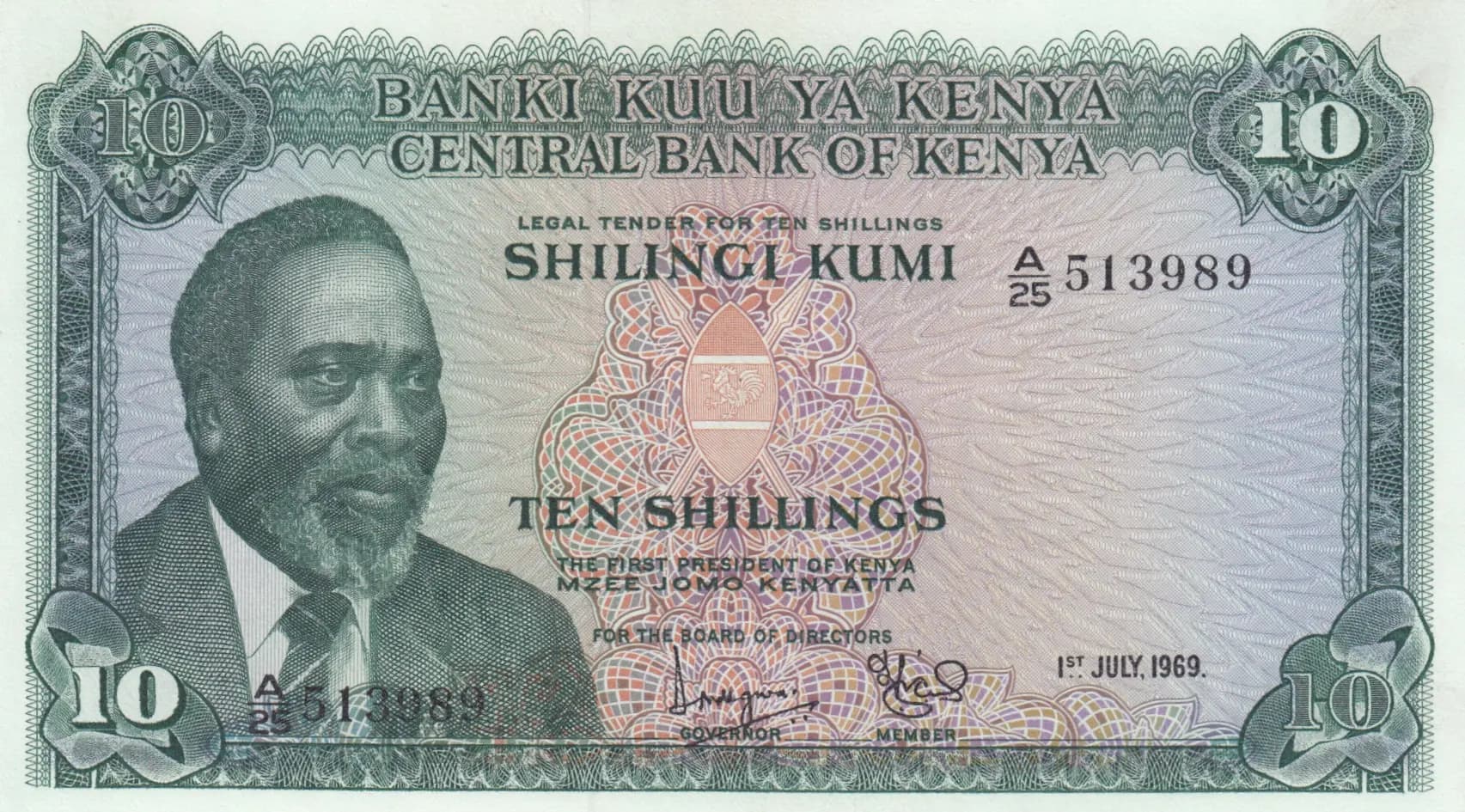
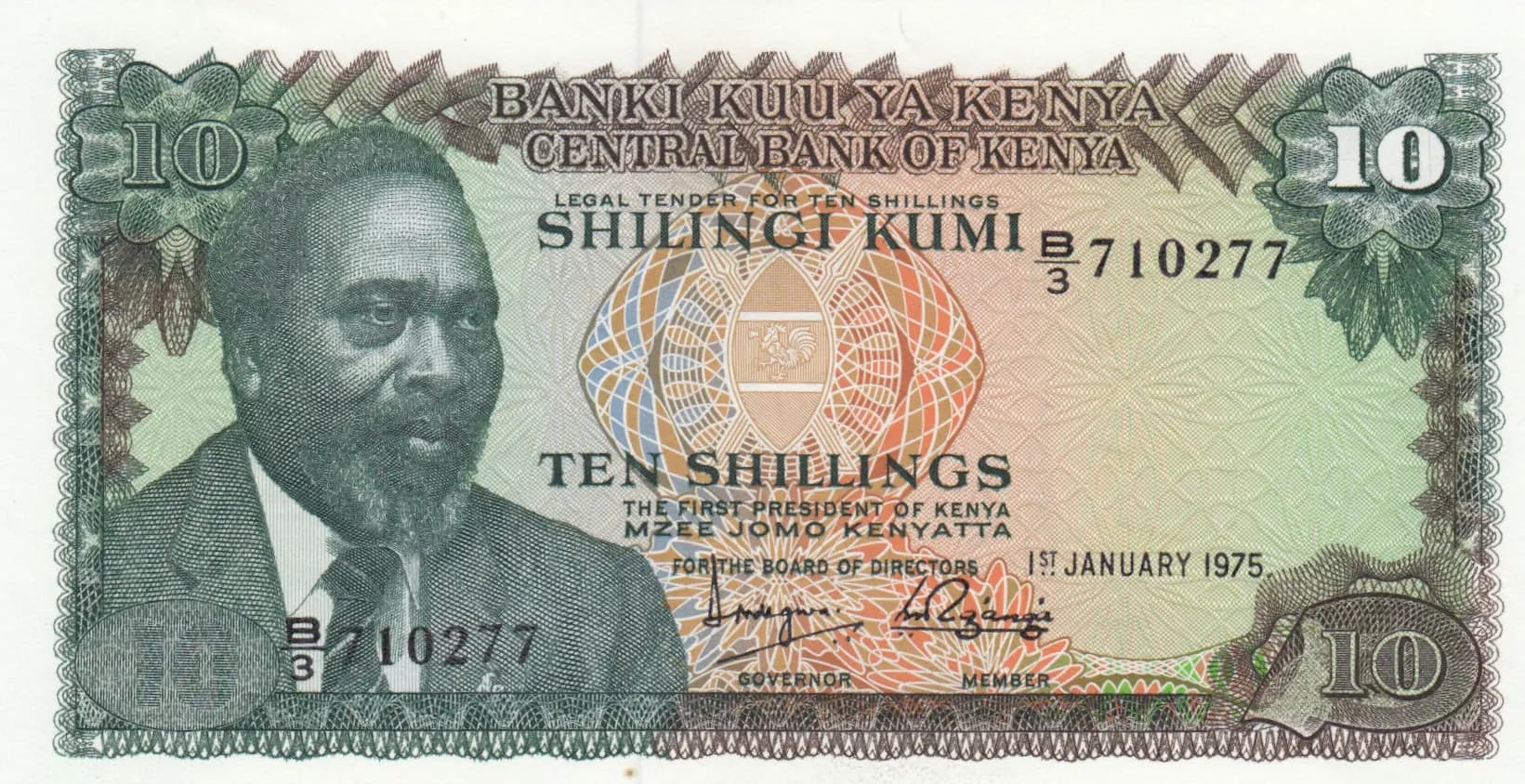
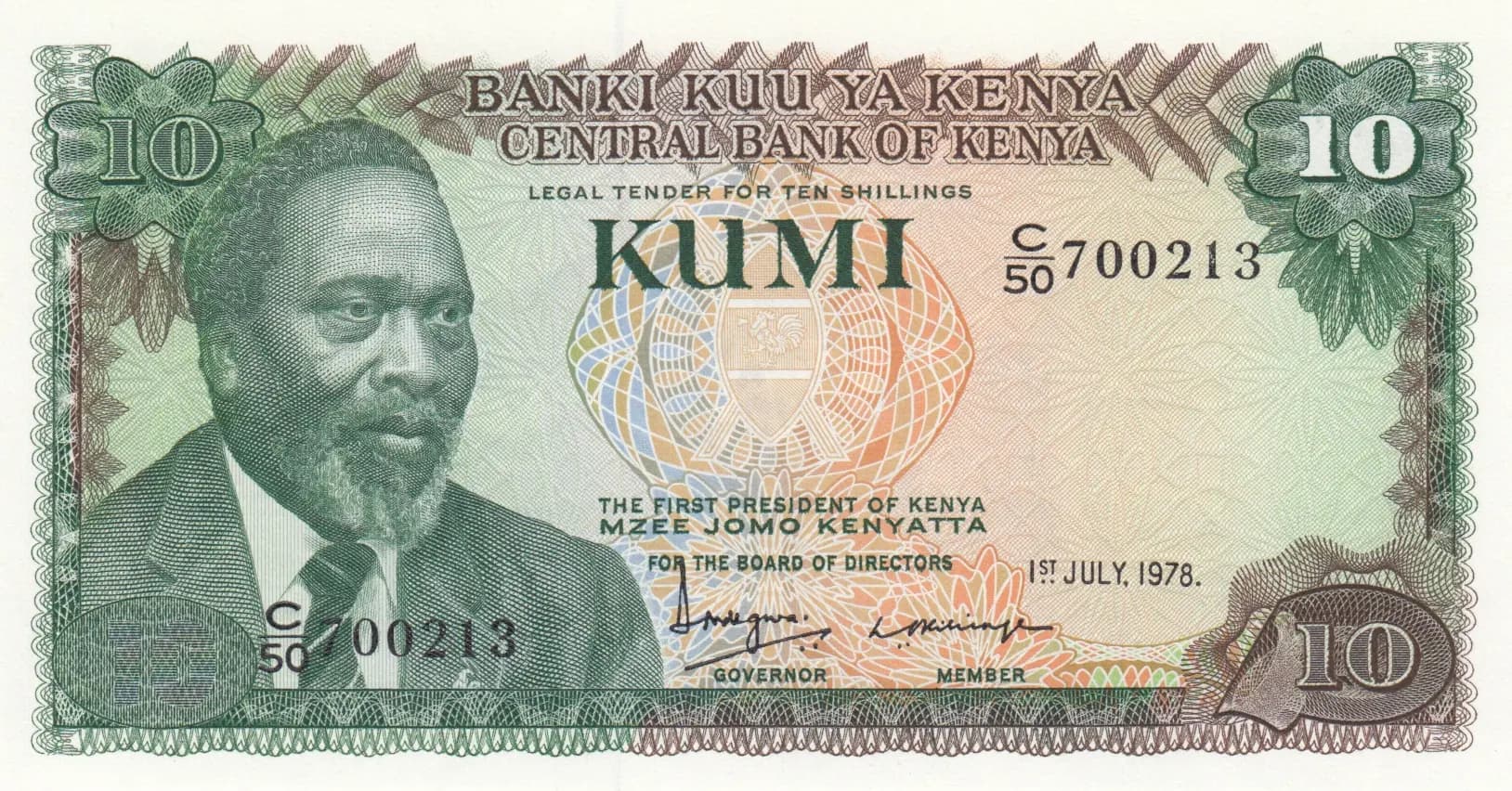
5 shillings 1975
Market Prices
15 salesAbout This Note
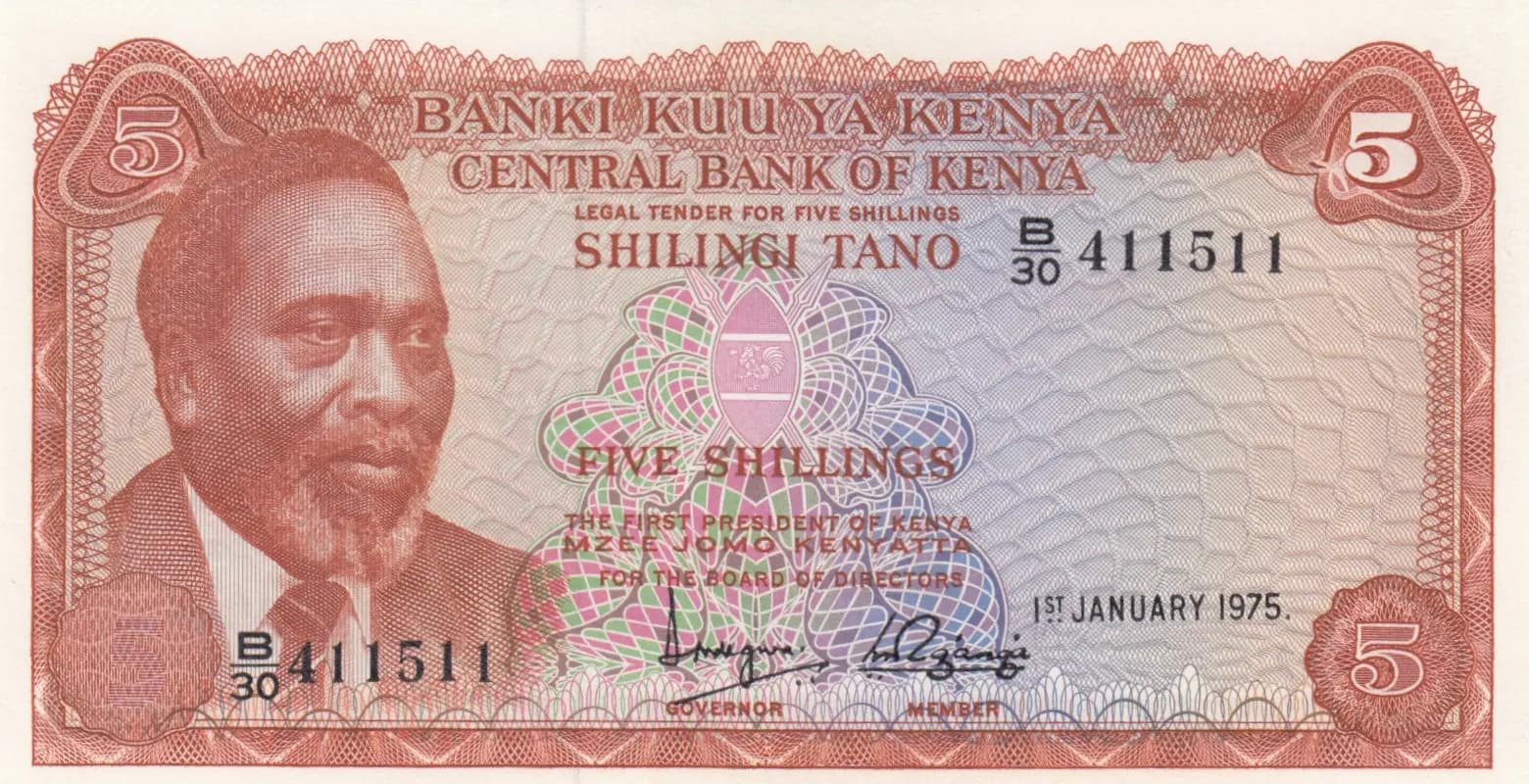
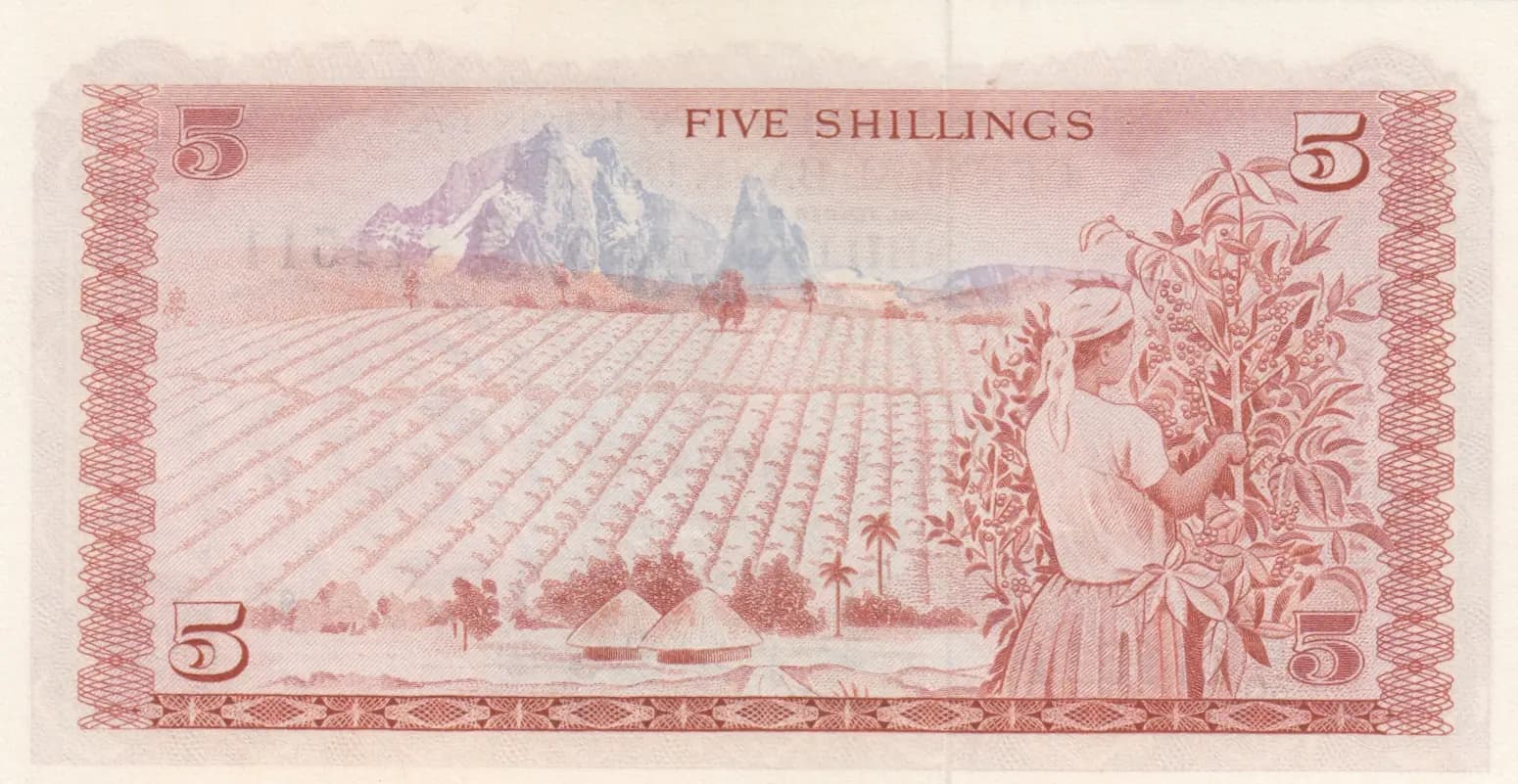
A stunning uncirculated example of Kenya's 1975 5 shillings note featuring Mzee Jomo Kenyatta, the nation's first president, in formal portrait on the obverse. The reverse depicts a coffee harvest scene with mountains in the background, reflecting Kenya's agricultural heritage. The note exhibits crisp, clear printing with no visible wear, creases, or circulation marks, representing an excellent specimen of this regular-issue denomination.
Common. Despite the note's age (nearly 50 years old) and attractive design, market data from realbanknotes.com shows consistent low eBay pricing across multiple condition grades, with UNC examples selling in the $6-$17 range over the past decade. The 2019 catalog value of $15 for UNC examples, combined with numerous sales records at moderate prices, indicates substantial circulation among collectors. Early Kenyan currency from the 1975-1977 period was produced in large quantities and remains readily available in numismatic commerce.
Issued on January 1, 1975, this note commemorates Kenya's early independence era under President Kenyatta's leadership. The coffee harvest imagery on the reverse reflects Kenya's economic importance as a major coffee producer during the 1970s, while Kenyatta's portrait underscores his role as the nation's founding leader. The bilingual English-Swahili inscriptions represent Kenya's post-colonial commitment to Swahili as a national language alongside English.
The obverse features a dignified portrait of Mzee Jomo Kenyatta positioned on the left, rendered as a bearded gentleman in formal attire. The central design showcases Kenya's national coat of arms with an ornate shield featuring intricate geometric patterns in pink, green, and blue, flanked by decorative scrollwork and borders. The reverse presents a naturalistic landscape scene depicting coffee harvest activity, with a silhouetted figure of a worker among cultivated crops in the foreground, traditional structures visible in the mid-ground, and snow-capped mountains rising dramatically in the background. The color palette of red-brown, pink, cream, and light blue creates a warm, distinctive aesthetic typical of Central Bank of Kenya currency design from this period.
FRONT: 'Banki Kuu ya Kenya' (Swahili) / 'Central Bank of Kenya' (English); 'Legal Tender for Five Shillings' (English); 'Shilingi Tano' (Swahili - Five Shillings); 'Five Shillings' (English); 'The First President of Kenya' (English); 'Mzee Jomo Kenyatta' (Swahili); 'For the Board of Directors' (English); '1st January 1975' (date); 'Governor' and 'Member' (signature lines). BACK: 'Five Shillings' (English); denomination '5' in corners.
Intaglio engraving with fine line work, evidenced by the sharp, crisp geometric patterns, intricate crosshatching, and detailed stippling visible throughout both obverse and reverse. The multi-color printing demonstrates the use of multiple passes and careful registration. The catalog indicates Pick number P-11b with TDLR (Thomas De La Rue) as the identified printer for the P-11a variant, suggesting similar printing techniques were employed for this issue.
This note is cataloged as Pick P-11b (1975 issue date). The catalog reference notes that P-11a and P-11b represent variants within the broader P-11 base number, with the distinction relating to denomination display size (large print for Swahili and English versus small print in variant P-15). The observed serial number B 30 411511 represents the standard numbering system for this issue. No date overprints, security overprints, or signature variations are evident in the visual analysis.