10 shillings 1969
Market Prices
5 salesAbout This Note
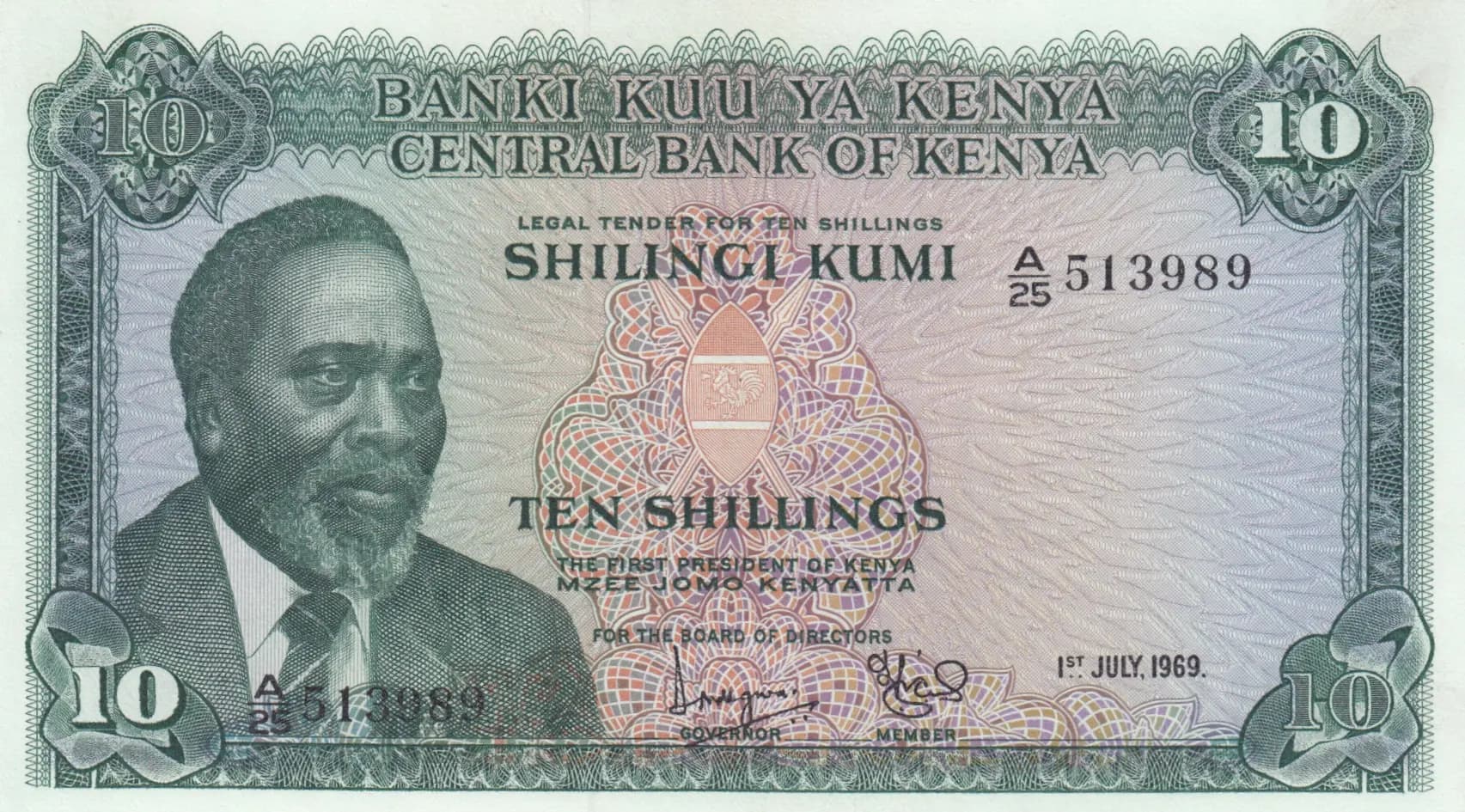
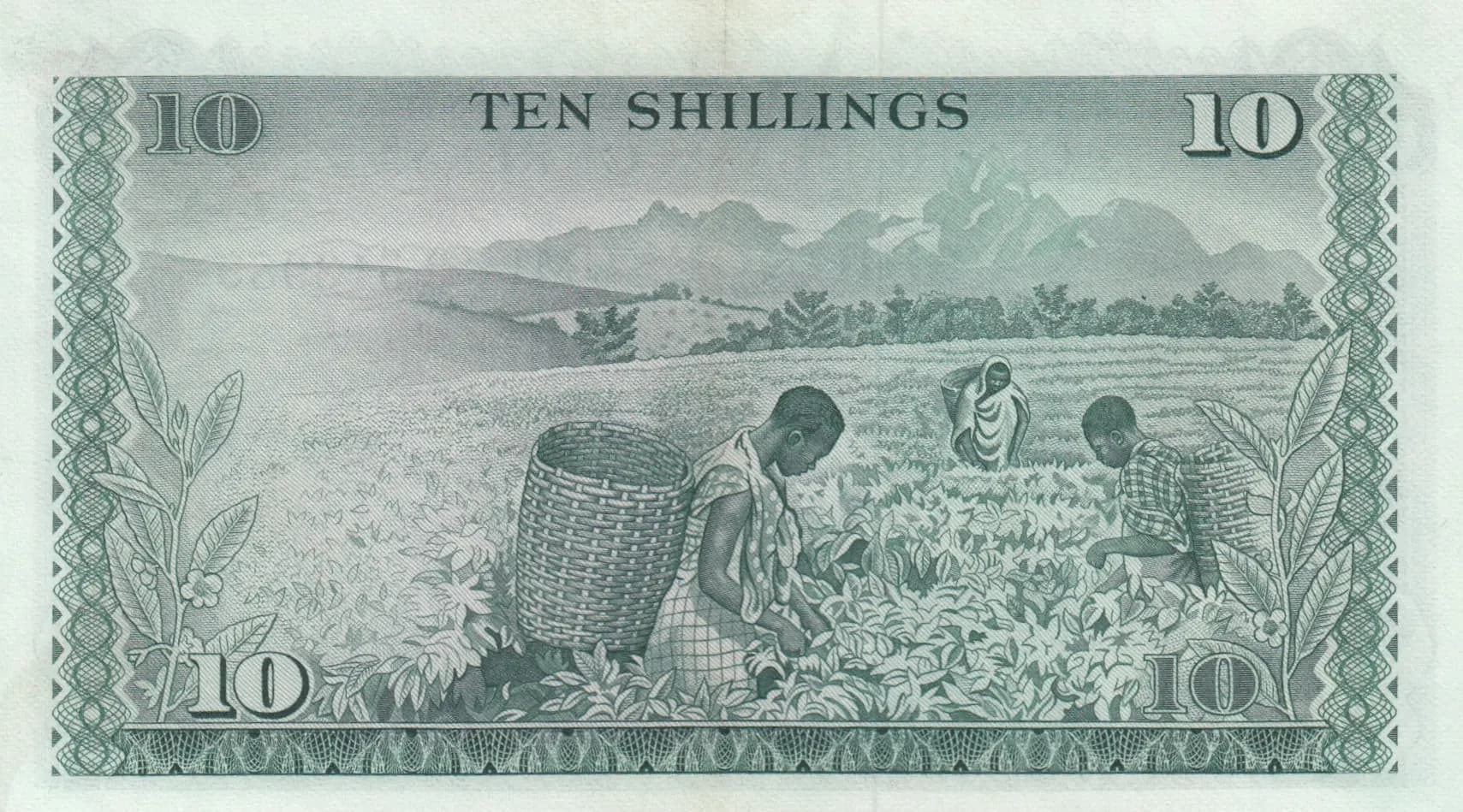
This is an exceptional example of Kenya's first banknote issue featuring Mzee Jomo Kenyatta, the nation's founding president. The note displays pristine uncirculated condition with sharp engraving throughout, vibrant multicolored printing on both sides, and no signs of wear or handling. The obverse showcases Kenyatta's portrait alongside Kenya's national coat of arms, while the reverse depicts tea harvesters at work—a fitting tribute to one of Kenya's most important economic sectors at independence.
Common. This note, despite its historical significance as Kenya's first banknote issue, was produced in substantial quantities for regular circulation from 1969-1974. Market data from eBay shows typical selling prices ranging from $3.58 to $17 depending on condition, with UNC examples cataloging at $60 but regularly appearing on the secondary market. The availability across multiple graded examples and the absence of any production scarcity indicators confirm common status even in uncirculated condition.
Issued on 1st July 1969, this note commemorates Kenya's post-independence era under President Jomo Kenyatta's leadership. The tea harvest imagery on the reverse reflects Kenya's agricultural economy and colonial legacy, transforming colonial-era export crops into symbols of independent Kenya's economic foundation. The bilingual Swahili-English inscriptions underscore the young nation's commitment to both its African heritage and international commerce during the early years of the Central Bank of Kenya's operation.
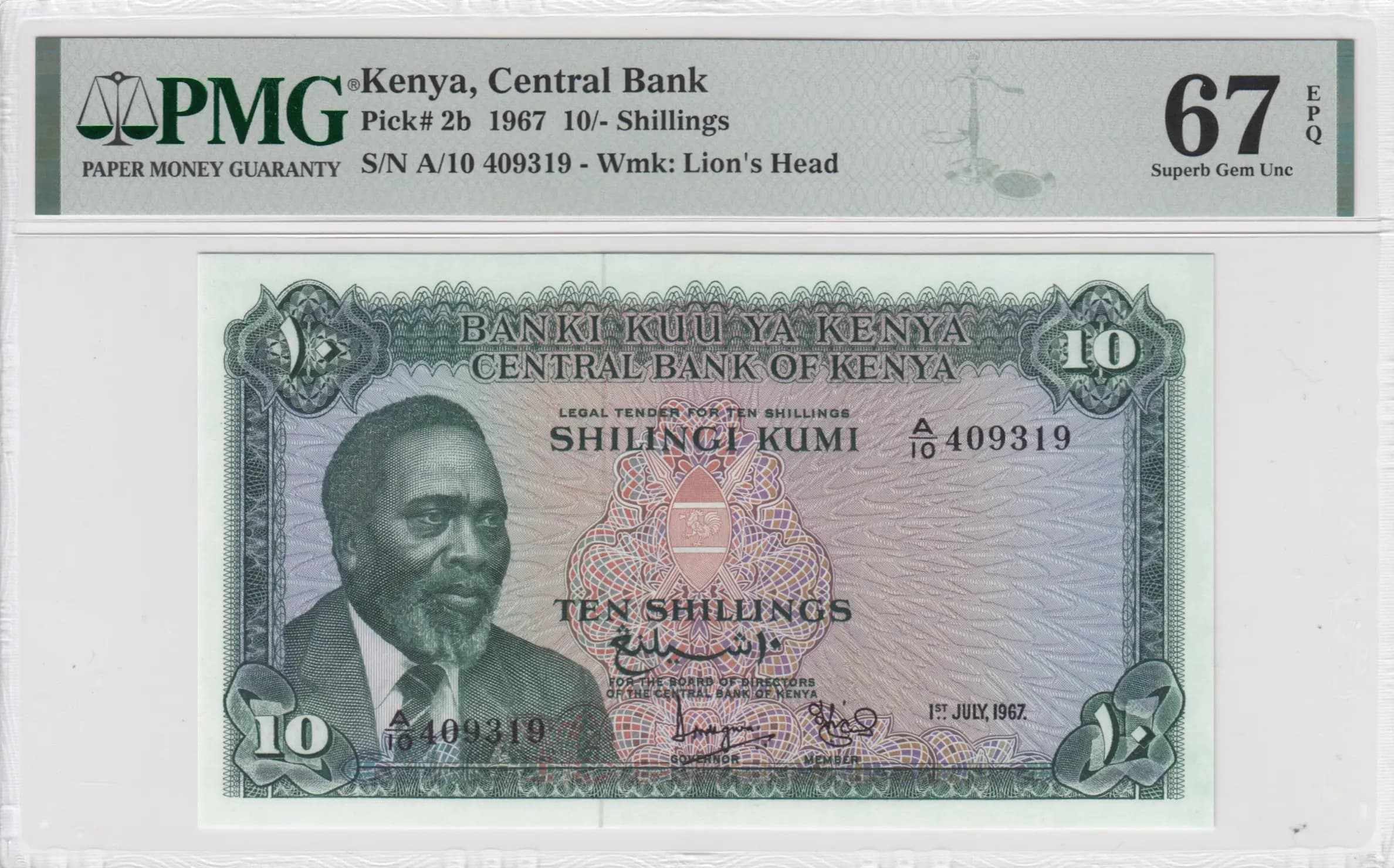
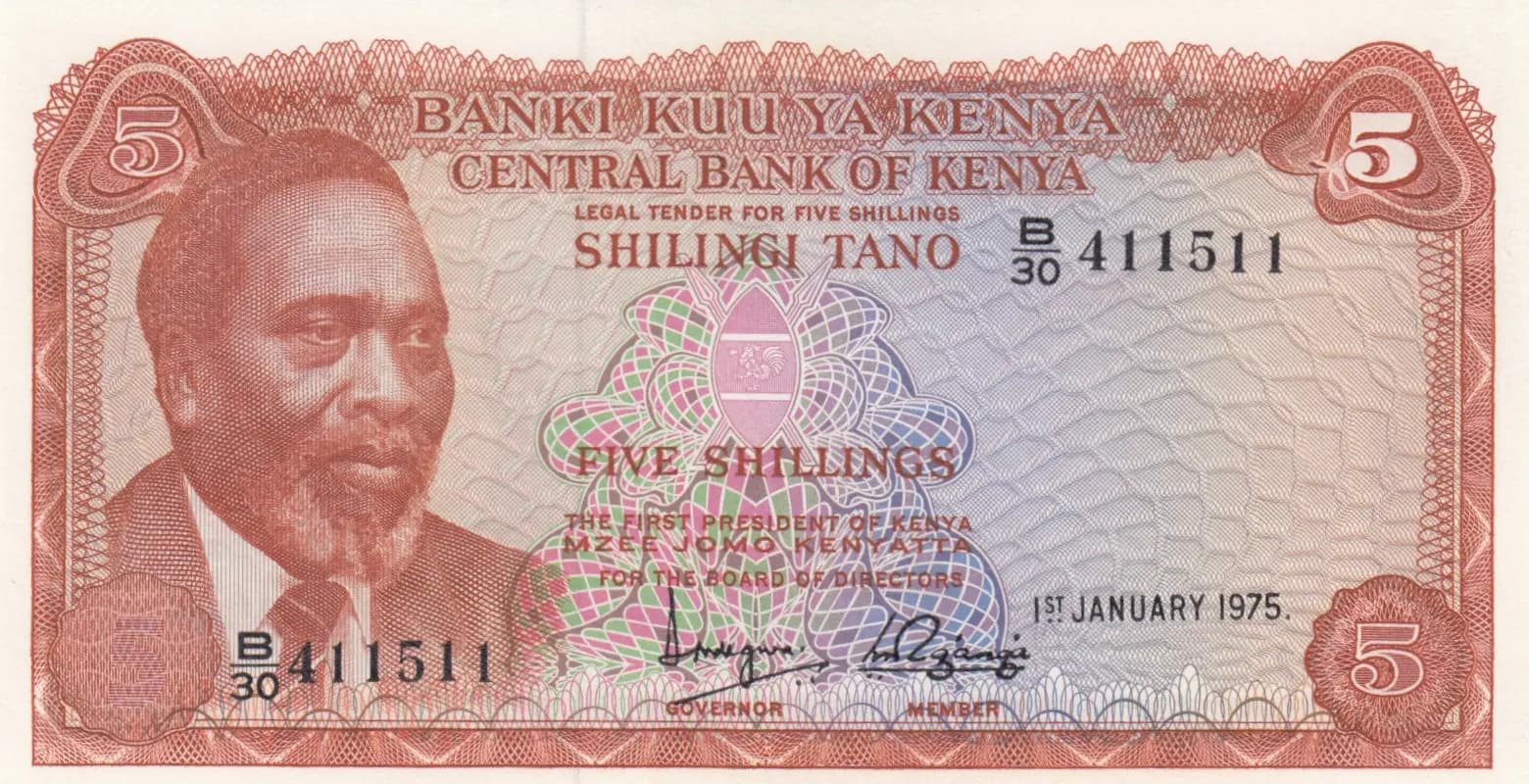
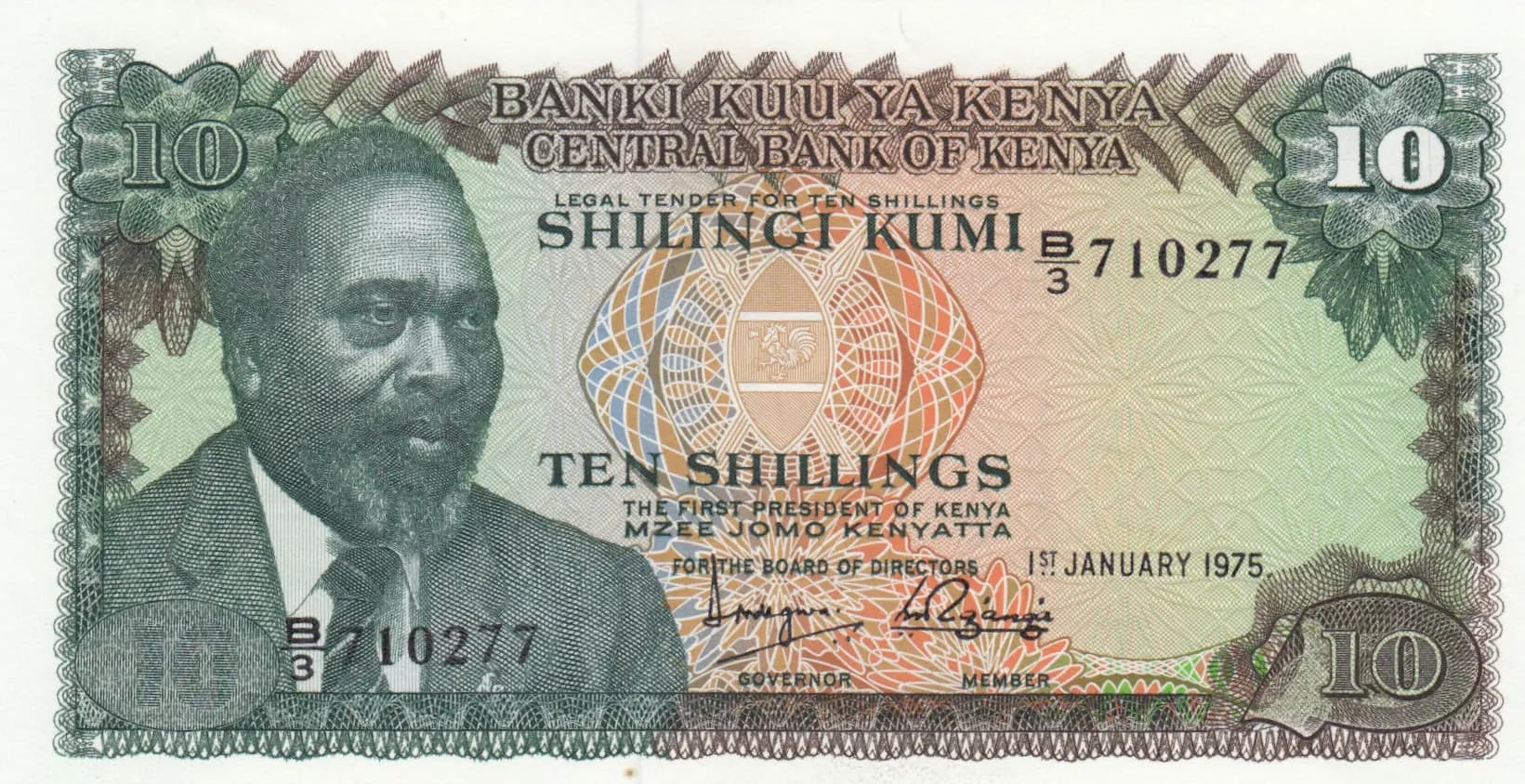
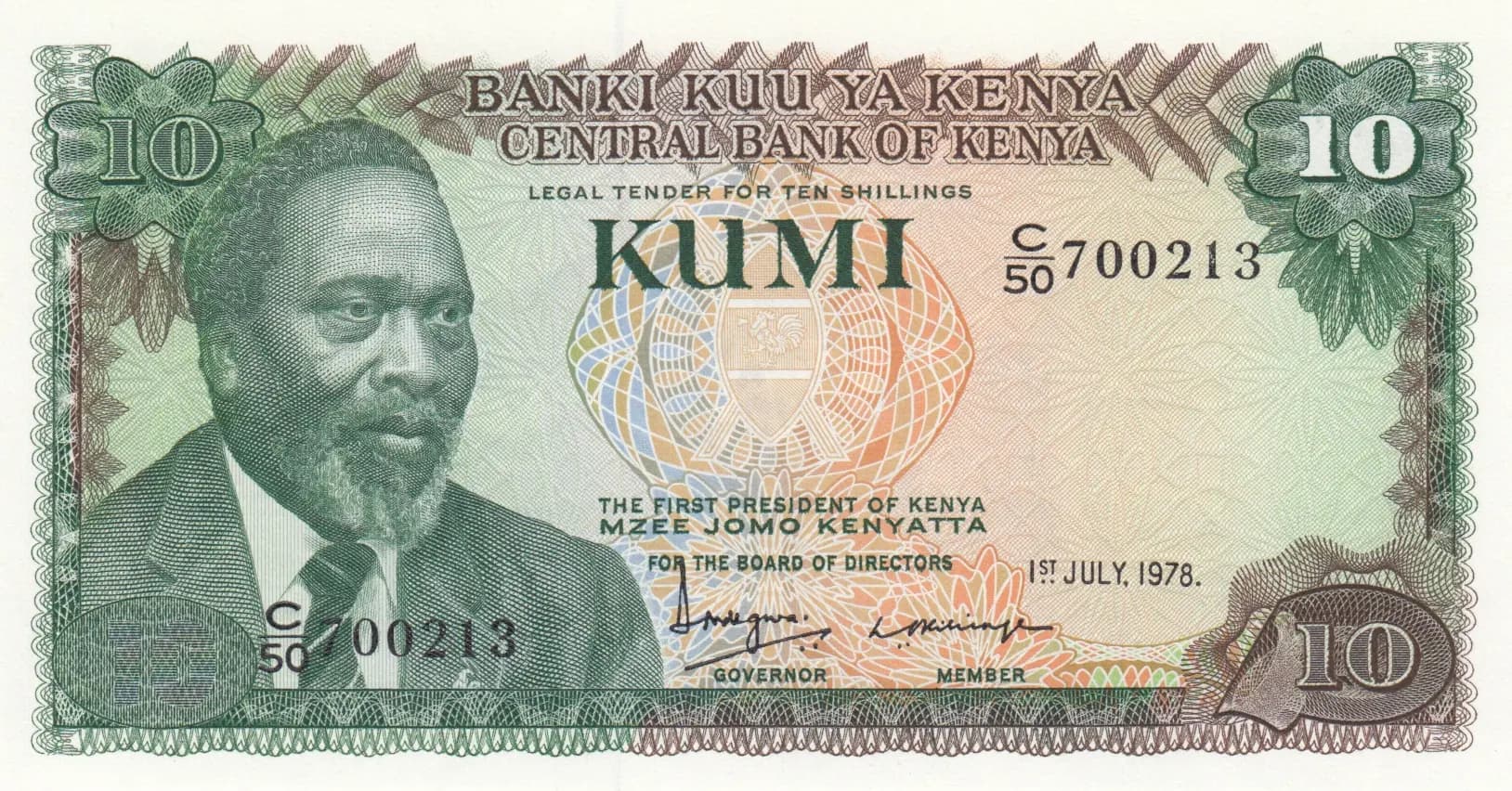
The obverse features a left-facing portrait of Mzee Jomo Kenyatta, Kenya's first president, rendered in fine detail with intricate cross-hatching characteristic of high-security banknote engraving. The portrait is flanked by the Kenyan national coat of arms—a distinctive shield with an oval/egg-shaped central design in red and purple, representing Kenya's heraldic identity. Ornamental corner designs with floral and geometric patterns frame the composition in green-gray and blue-gray tones with accent colors of pink, salmon, and purple. The reverse depicts a naturalistic agricultural scene showing tea harvesters at work in a cultivated field, with mountains visible in the background and tropical vegetation framing the composition. Two figures—one male carrying a large woven harvest basket and one female laborer—are rendered in the same fine engraving technique, emphasizing Kenya's agricultural wealth during the post-independence period.
Front Side: 'BANKI KUU YA KENYA' / 'CENTRAL BANK OF KENYA' (bilingual header); 'LEGAL TENDER FOR TEN SHILLINGS' (legal tender declaration); 'SHILLING KUMI' / 'TEN SHILLINGS' (denomination in Swahili and English); 'MZEE JOMO KENYATTA' / 'THE FIRST PRESIDENT OF KENYA' (identification of portrait subject); '1ST JULY, 1969' (issue date); 'FOR THE BOARD OF DIRECTORS' / 'GOVERNOR' / 'MEMBER' (signature lines); Serial number: 'A 25 5139889'. Back Side: 'TEN SHILLINGS' (denomination); '10' (numeric denomination in all four corners).
Intaglio (line engraving) process, characteristic of high-security banknote production. The note exhibits detailed guilloche work in borders, fine cross-hatching for portraiture and landscape shading, and multi-color offset printing for the coat of arms and secondary design elements. The printer is not definitively identified from available catalog data, though this represents the early production standard of the Central Bank of Kenya's inaugural note series (Pick P-7 variants).
This note is identified as Pick P-7a based on the presence of Western numerals at all corners (without Arabic numerals at upper left and lower right). The PMG population report indicates at least two additional variants exist within the P-7 designation: P-7e and P-7s (TDLR printer variant). The observed serial number prefix 'A 25' and issue date of 1st July 1969 are consistent with the earliest production run of this design type. The note belongs to the 1969-1974 date range on the currency itself, though the actual physical note was issued on the July 1st, 1969 inauguration of the Central Bank of Kenya.