10 shillings 1978
Market Prices
26 salesAbout This Note
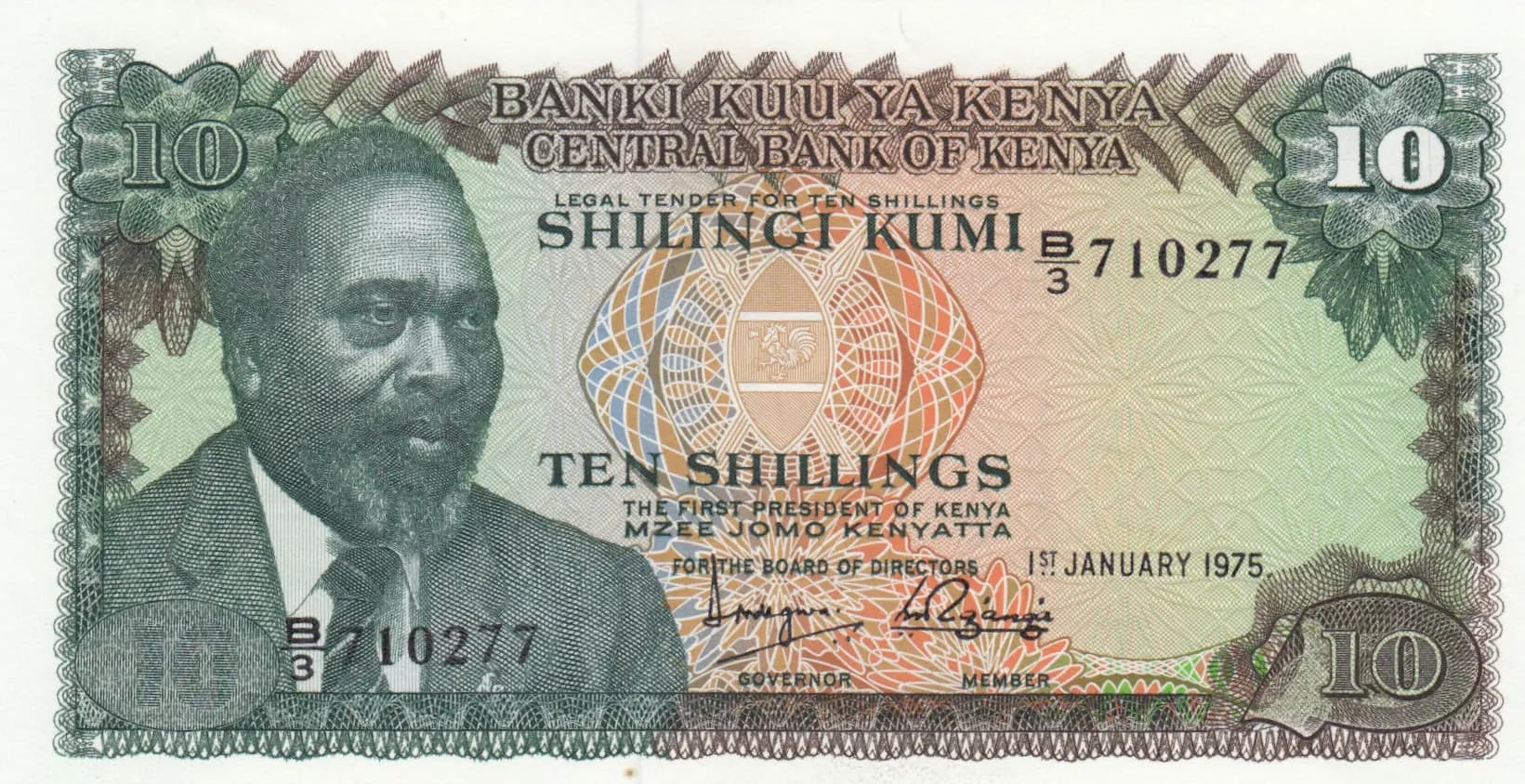
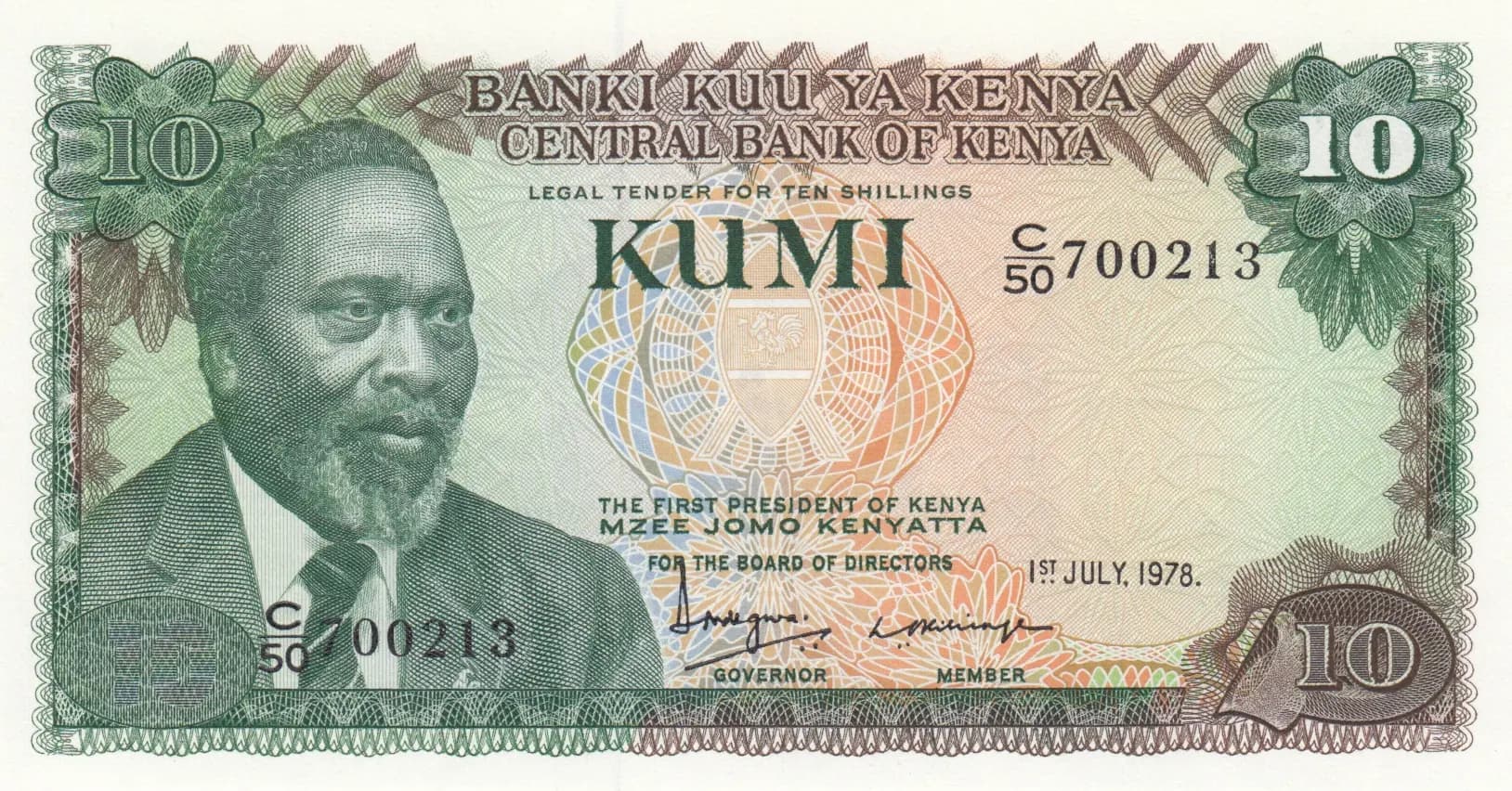
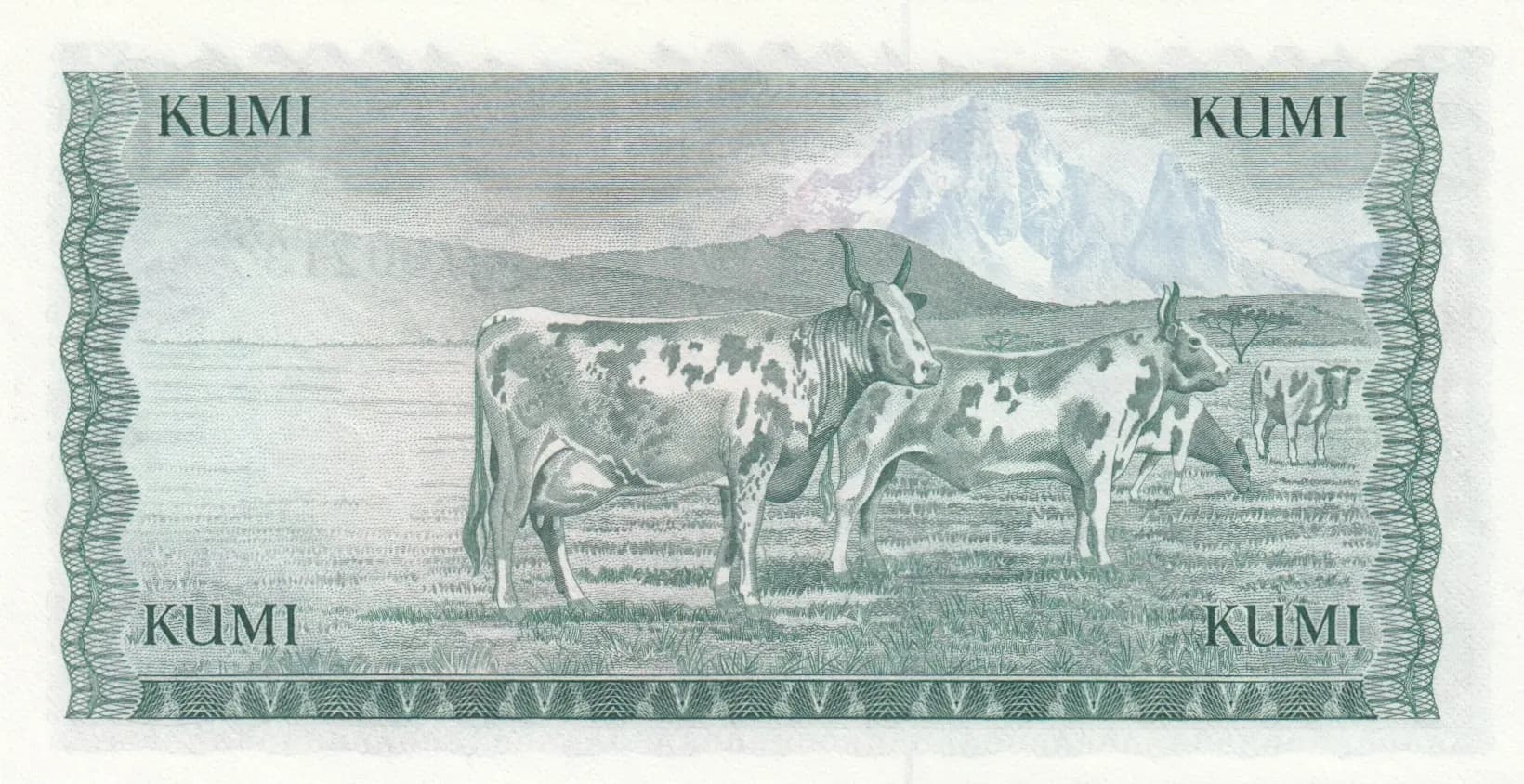
This is an exceptionally well-preserved example of Kenya's 1978 10 shillings note (Pick P-16), graded UNC, featuring a striking portrait of Mzee Jomo Kenyatta, Kenya's first president, rendered in fine line engraving on the obverse. The reverse presents a pastoral landscape with indigenous cattle and Mount Kenya in the background, showcasing Kenya's agricultural heritage. The note displays pristine condition with no visible wear, creases, or damage, making it an excellent specimen for collectors of East African currency.
Common. The 1978 10 shillings note (P-16) is a regular issue with a substantial print run. Market data from realbanknotes.com shows consistent availability of UNC examples selling for $3–5 since at least 2010, with dozens of documented sales over the past 15 years. The note experiences regular circulation in the secondary market and appears frequently in dealer inventories, confirming its common status among collectors.
Issued on 1 July 1978 by the Central Bank of Kenya, this note commemorates Mzee Jomo Kenyatta, who led Kenya to independence and served as its first president until his death in 1978. The pastoral imagery of cattle and Mount Kenya on the reverse reflects Kenya's strong agricultural and pastoral traditions, while the bilingual inscriptions in English and Swahili underscore the nation's post-colonial identity. This note represents the early period of Kenya's modern monetary system, approximately two decades after independence.
The obverse features a left-facing profile portrait of Mzee Jomo Kenyatta, Kenya's first president, executed in fine line engraving work with meticulous detail showing his characteristic beard and facial features. The portrait is positioned on the left side of the note and is identified by the inscription 'THE FIRST PRESIDENT OF KENYA' below his image. The central design element is the Kenyan coat of arms within an ornate oval shield featuring radiating geometric patterns in orange, blue, and gold. Ornamental leaf motifs and floral decorative borders frame the corners and edges of the note. The color scheme is predominantly green and beige with cream tones. The reverse depicts a pastoral landscape scene with indigenous African cattle in the foreground and Mount Kenya with its distinctive snow-capped peak visible in the background, rendered in fine line engraving to create depth and detail. The word 'KUMI' (Swahili for 'Ten') appears repeated in all four corners of the reverse side.
FRONT SIDE: 'BANKI KULU YA KENYA' (Swahili: Central Bank of Kenya) / 'CENTRAL BANK OF KENYA' (English) / '10' (denomination) / 'LEGAL TENDER FOR TEN SHILLINGS' (English) / 'KUMI' (Swahili: Ten) / 'MZEE JOMO KENYATTA' (Swahili/English: Elder Jomo Kenyatta) / 'THE FIRST PRESIDENT OF KENYA' (English) / 'FOR THE BOARD OF DIRECTORS' (English) / '1ST JULY, 1978' (English: Issue date) / 'GOVERNOR' (English) / 'MEMBER' (English) / Serial number 'C50700213' (English). BACK SIDE: 'KUMI' (Swahili: Ten) repeated four times in the corners of the note.
The note was produced using intaglio (copperplate) engraving, evidenced by the fine line work, intricate geometric borders, detailed portrait rendering, and the pastoral landscape imagery observable in the visual analysis. The multi-color printing on both obverse and reverse suggests a multi-pass intaglio printing process. The Central Bank of Kenya's notes from this era were typically produced by De La Rue, the prominent British security printer, though this specific note's printer attribution would require verification of production records.
This note carries the date '1ST JULY, 1978' on the obverse. The visual analysis identifies it as a bilingual issue with English denomination text ('10' and 'LEGAL TENDER FOR TEN SHILLINGS') in addition to Swahili text ('KUMI'). The serial number observed is 'C50700213'. According to catalog references, similar notes with Swahili and English denominations in large print are catalogued separately as Kenya P-12, while the P-16 designation specifically applies to notes with English denomination in small print, as seen in this specimen. No additional overprints or security variants are evident in the visual analysis.