1/2 dinar 1975
Market Prices
8 salesAbout This Note
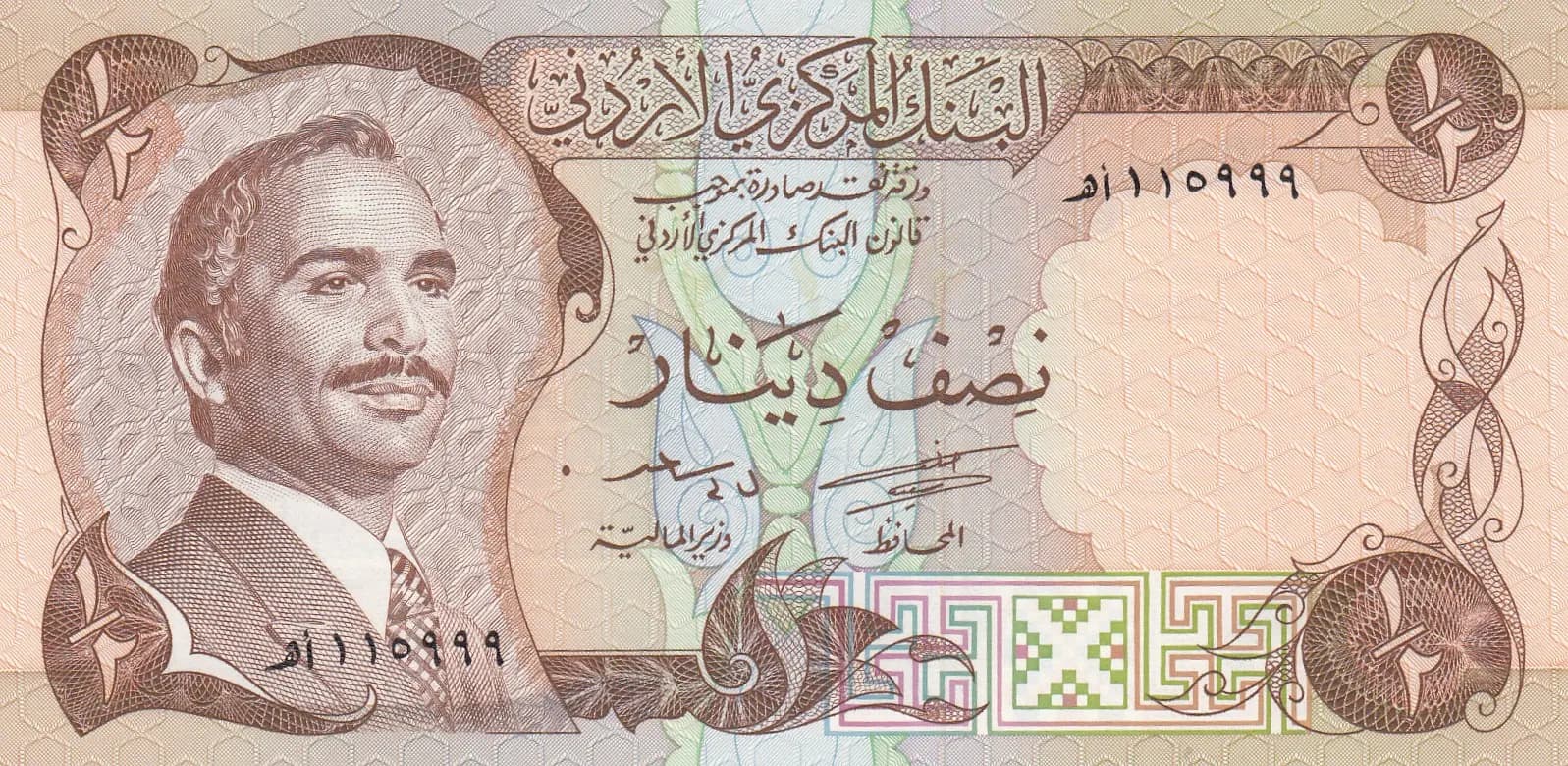
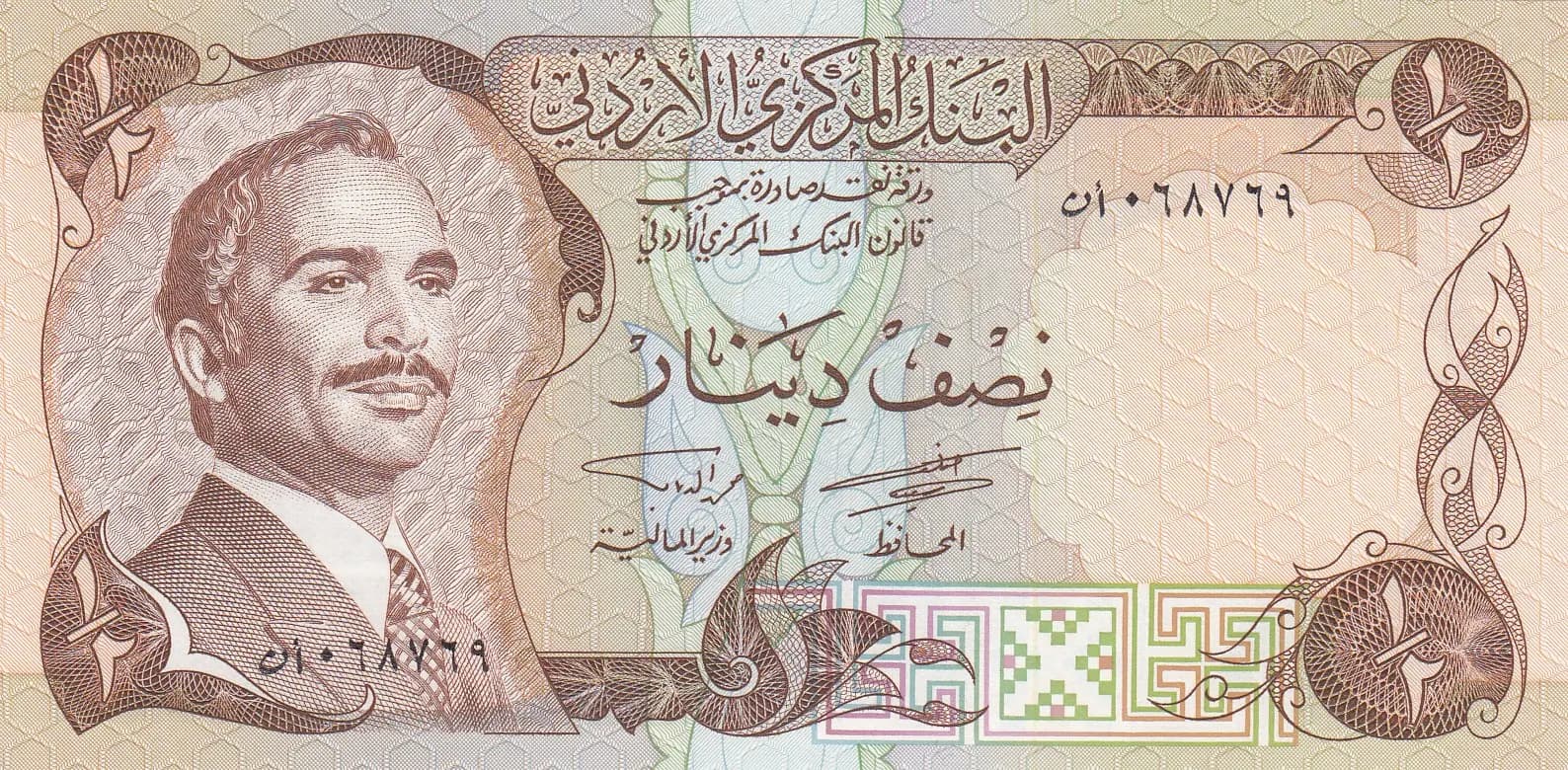
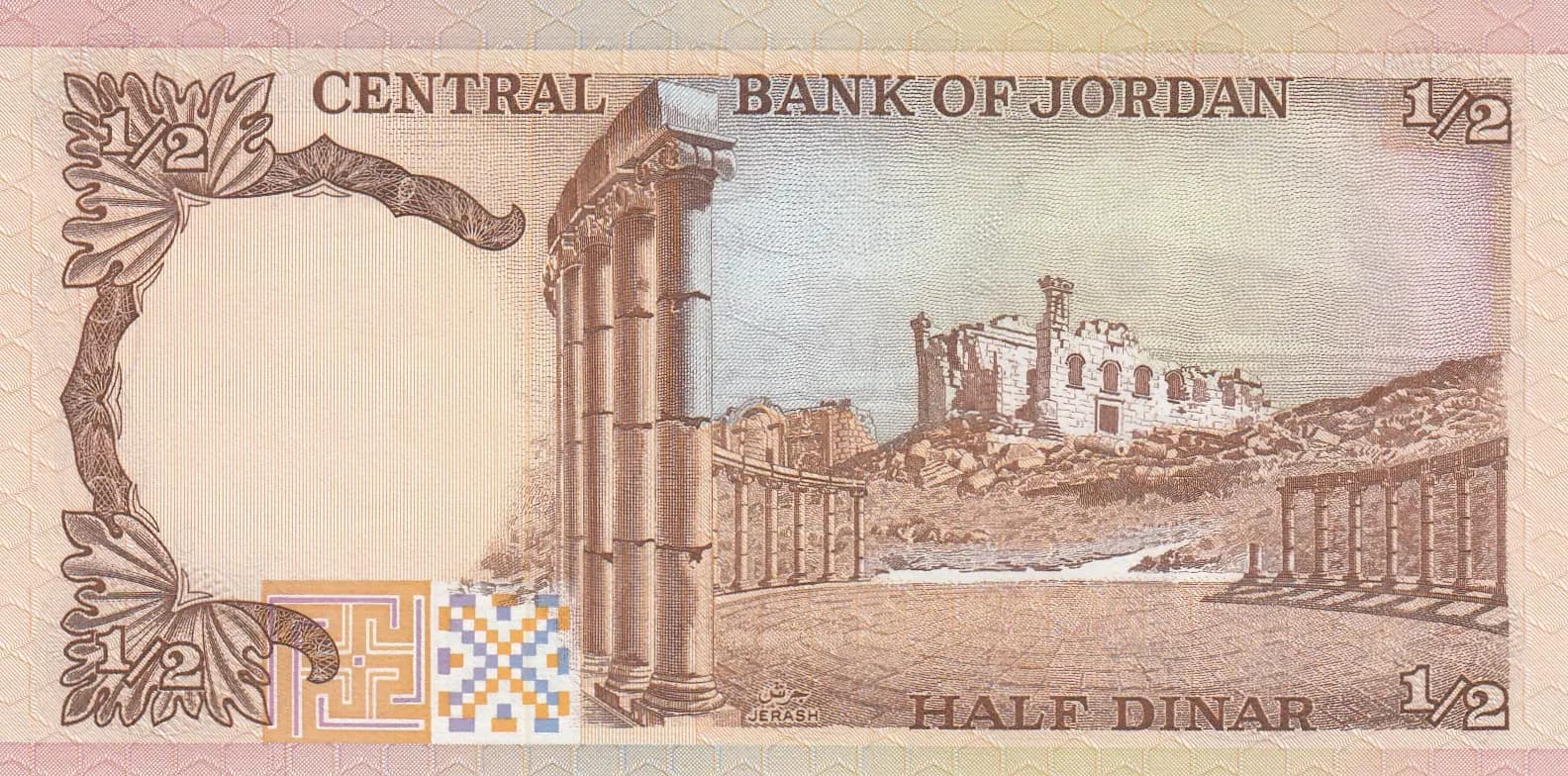
This is a pristine, uncirculated 1/2 Dinar banknote from Jordan issued in 1975 by the Central Bank of Jordan. The note features a beautifully engraved portrait of King Hussein in formal attire on the obverse and classical Nabatean ruins from Jerash on the reverse, both rendered in rich brown and earth-tone inks with fine intaglio detail work. The note exhibits perfect condition with no circulation wear, creasing, or handling marks—exemplifying the finest preservation of this denomination.
Common. This note was part of the regular currency circulation series issued from 1975-1992, as indicated by the catalog dating range. eBay market pricing shows recent sales in the $1–$35 range across multiple condition grades (F through PMG 66), with UNC examples averaging $11–$13.50 based on 2019 catalog values. The stable, modest pricing and consistent availability on secondary markets indicate this is a common banknote with no print run restrictions or scarcity factors.
Issued during the reign of King Hussein II, this 1975 banknote represents Jordan's mid-1970s monetary design era and celebrates the nation's rich classical heritage. The reverse features the ancient Roman city of Jerash (Gerasa), one of the Decapolis cities and a testament to Jordan's historically significant archaeological sites. The inclusion of both Arabic and English text reflects Jordan's bilingual official documentation practices during this period of modernization and international engagement.
The obverse features a formal portrait of King Hussein II positioned at the left side, rendered in brown and sepia tones using detailed intaglio engraving. The king is depicted with dark hair and a mustache, wearing formal business attire including a suit and tie. The reverse showcases classical Nabatean and Roman architectural ruins from the ancient city of Jerash, featuring prominent columns, building facades, and a monumental gateway complex set against a desert landscape. Both sides employ ornamental decorative elements including shell motifs, scrollwork borders, and an eagle or bird emblem in the upper left of the reverse. A geometric security pattern in multiple colors (orange, yellow, and blue) appears in the lower portion of each side, serving as an anti-counterfeiting measure.
FRONT SIDE: 'البنك المركزي الأردني' (Central Bank of Jordan); 'نصف دينار' (Half Dinar); 'السنة 1976' (Year 1976); 'د. عبد المنعم القصار' (Dr. Abdel Moneim Qassar); 'السيد عبد الهادي المجالي' (Mr. Abdel Hadi Majali); Serial Number: 0968749. BACK SIDE: 'CENTRAL BANK OF JORDAN'; '1/2'; 'HALF DINAR'; 'JERASH' (indicating the ancient city of Jerash depicted in the architectural ruins).
Intaglio (engraved) printing with multicolor offset capabilities, executed by Thomas De La Rue and Company (TDLR) based on PMG population data. The fine line work, detailed portraiture, ornamental scrollwork, and geometric security patterns are characteristic of high-security banknote production. The note demonstrates the sophisticated multi-color engraving techniques typical of 1970s Central Bank currency production.
This specimen represents the P-17c variety as indicated by the Pick catalog designation. The note displays signatures of Dr. Abdel Moneim Qassar and Mr. Abdel Hadi Majali in their respective official positions. The serial number 0968749 and the date inscription 'السنة 1976' (Year 1976) are consistent with early printings of this 1975-issue series. PMG records indicate the TDLR printer variant (P-17s) as a catalogued variety; this note's production by TDLR is confirmed by visual security features and design characteristics typical of that printer.