500 yen 1951
Market Prices
11 salesAbout This Note
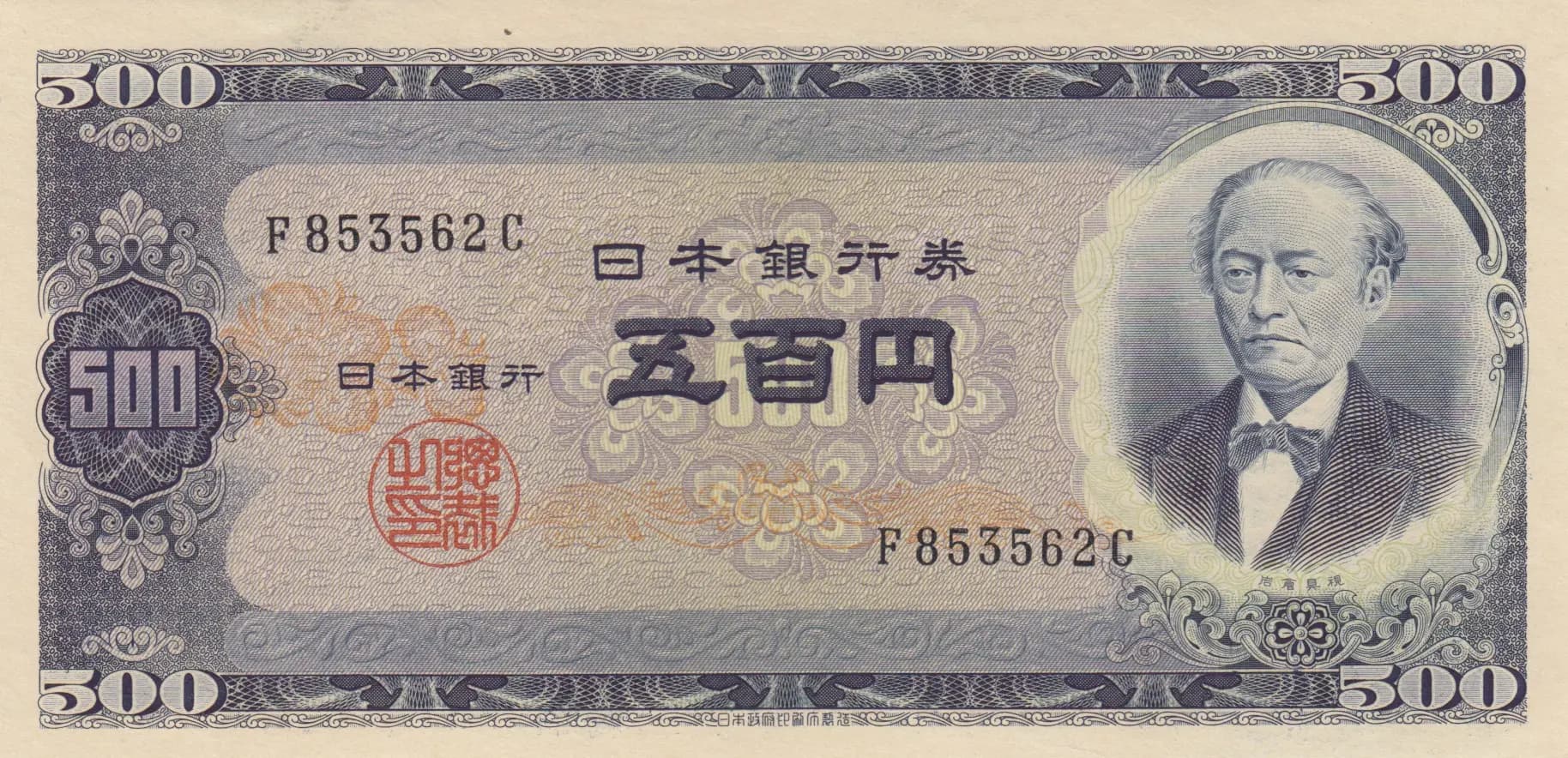
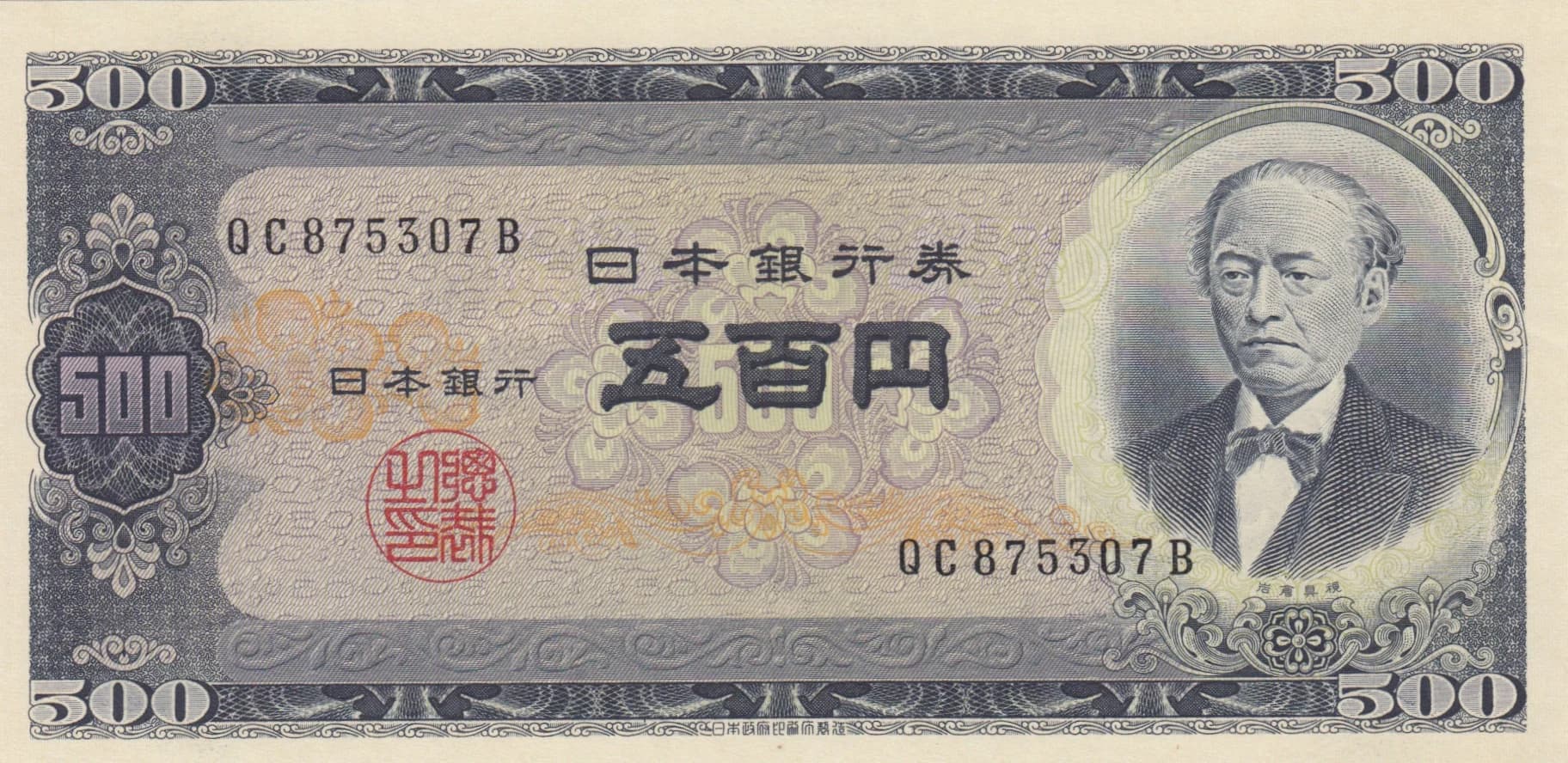
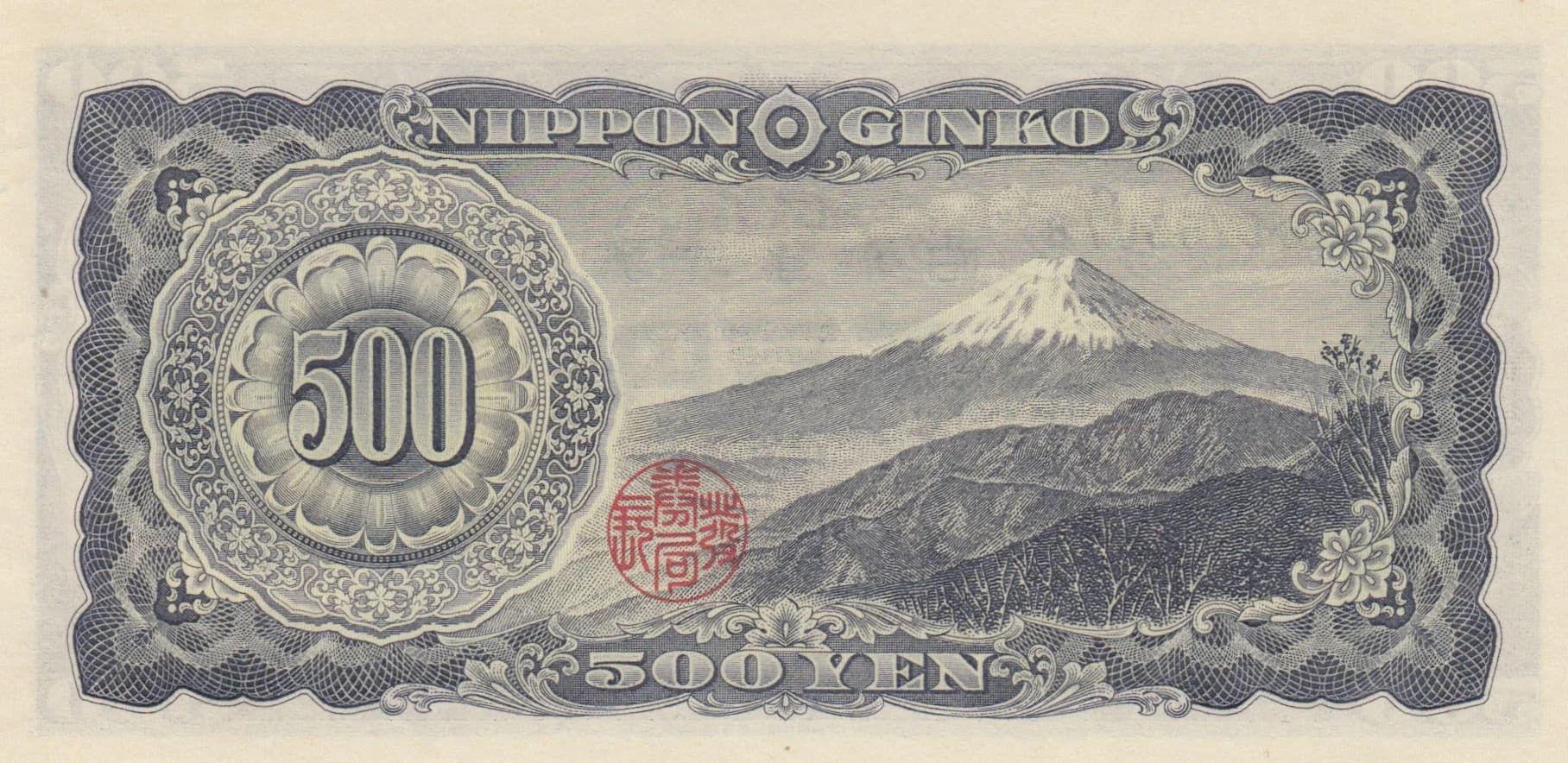
This is an exceptional example of Japan's 500 yen banknote from 1951 (Pick P-91b), presented in uncirculated condition with pristine preservation throughout. The note features an elegant design with a formal portrait on the obverse and a stunning landscape vignette of Mount Fuji on the reverse, both framed by ornate decorative borders in dark blue with floral and geometric patterns. The sharp print quality, absence of wear or creasing, and vibrant color rendering make this a desirable specimen for collectors of early post-war Japanese currency.
Common. The 500 yen notes from 1951 were issued in substantial quantities as regular circulation currency during Japan's post-war monetary stabilization. No evidence indicates this was a short-run issue, limited edition, or recalled series. While uncirculated examples command a premium over circulated specimens, the denomination and date are standard catalog entries without scarcity factors. Most Japanese banknotes from this era remain relatively common in the numismatic market.
Issued during Japan's early post-war recovery period under the Allied occupation, this 1951 banknote represents the Nippon Ginko's efforts to establish currency stability following World War II. The prominent depiction of Mount Fuji on the reverse reflects Japan's cultural nationalism and symbolic reassertion of national identity during reconstruction. The formal, Western-influenced portrait on the obverse and English text ('NIPPON GINKO,' '500 YEN') indicate the note's design was created during a period of significant Western influence and international engagement.
The obverse features a formal portrait of a bearded gentleman in 19th/early 20th century formal dress with bow tie, positioned within an ornate oval frame on the right side. The left side displays an intricate circular emblem with geometric and floral patterns in the classical Japanese decorative tradition. The reverse showcases a detailed landscape vignette of Mount Fuji (Fujisan), Japan's most iconic landmark, with its distinctive snow-capped volcanic peak rising above forested foothills. A large decorative circular cartouche containing the denomination '500' dominates the left side of the reverse. Both sides are enclosed in borders featuring elaborate shell and fan motifs typical of mid-20th century Japanese banknote design. Red official seals and stamps appear on both sides.
Front side: '日本銀行券' (Nippon Ginko-ken / Bank of Japan Note), '五百円' (gohyaku-en / 500 Yen), '500' (Arabic numerals), 'OC875307B' (serial number). Back side: 'NIPPON GINKO' (Bank of Japan in romanized form), '500' (Arabic numerals), '500 YEN' (English denomination). Additional Japanese characters appear on both sides indicating denomination and official seals/stamps in red ink.
This note was produced using intaglio printing (engraved plate printing), evidenced by the fine line patterns, intricate decorative engraving, and detailed landscape rendering visible throughout. The sharp definition of the portrait, the precision of the geometric borders, and the subtle gradations in the Mount Fuji vignette are characteristic of high-quality intaglio work. The Bank of Japan typically employed domestic security printers for this denomination during this period, with production reflecting the advanced engraving standards of Japanese currency manufacture.
This specimen carries the serial number 'OC875307B,' indicating it belongs to a standard printing batch from 1951. The specific series letter 'OC' and the alphanumeric sequence represent a minor variety identifier. Pick catalog P-91b designation indicates this is the second cataloged variety of the 1951 500 yen issue. Known varieties of this note typically differ in signature combinations, serial number prefixes, or subtle printing variations; however, without comparative examples or specialized Japanese banknote references, precise variety classification beyond the P-91b designation requires consultation of detailed Japanese currency catalogs.