1 yen 1946
Market Prices
85 salesAbout This Note
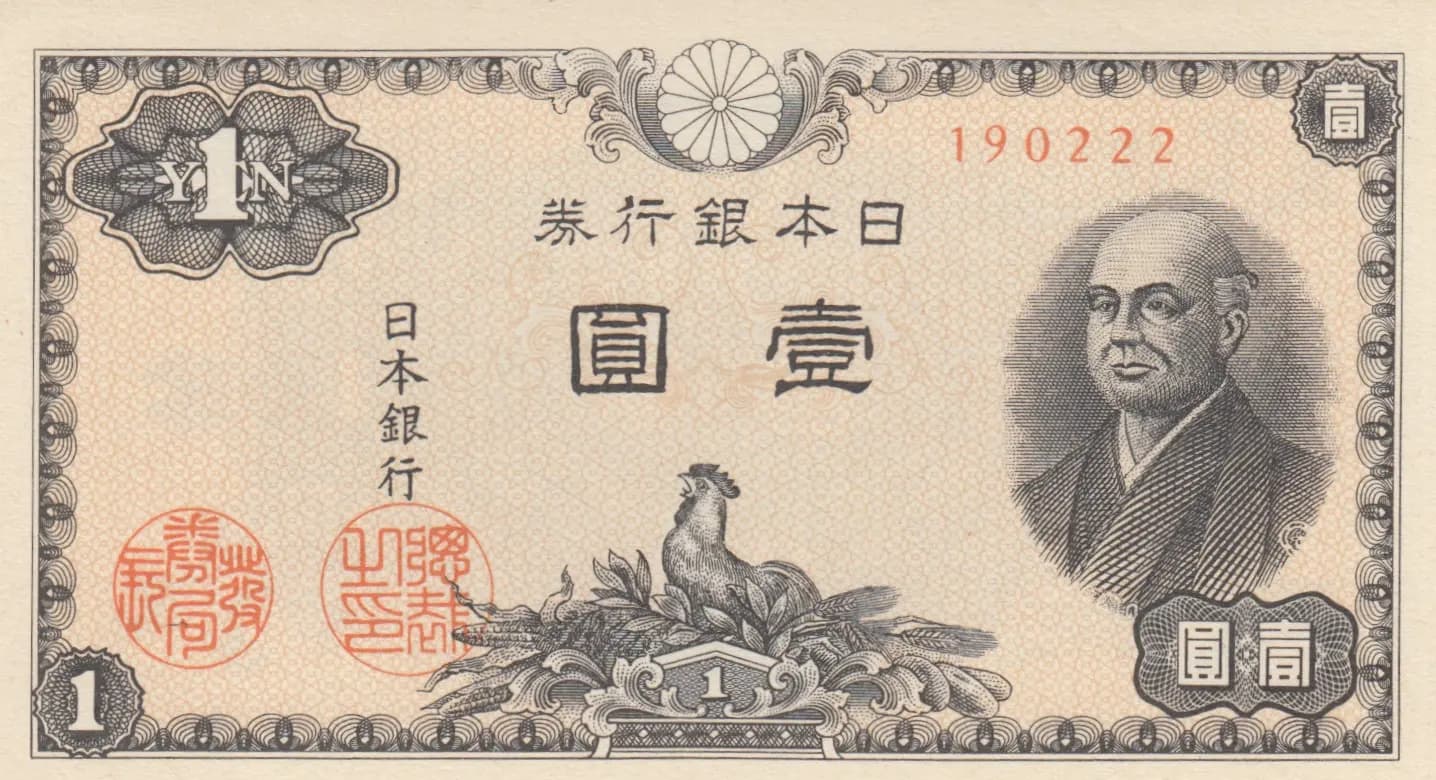
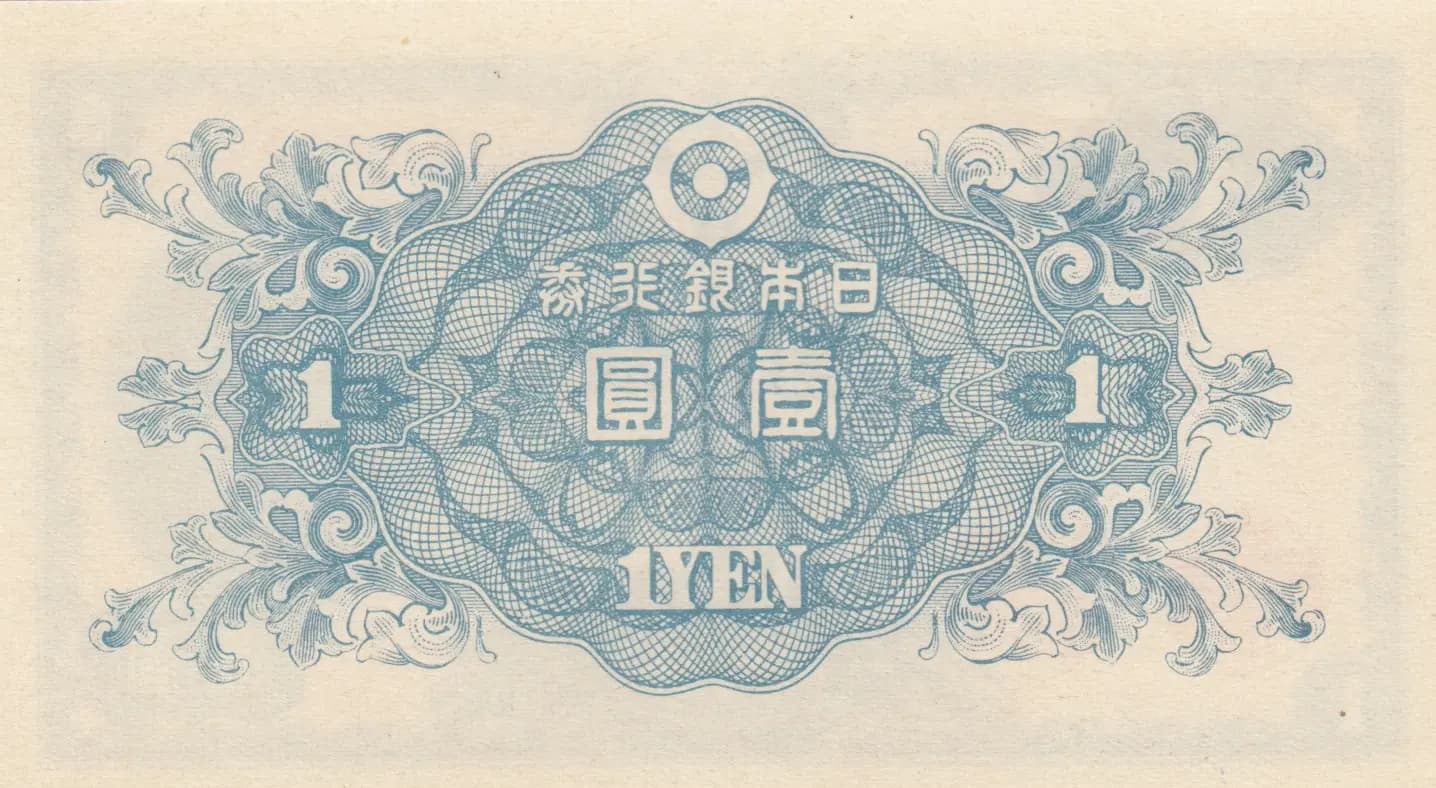
This is an exceptional UNC example of the 1946 Japanese 1 Yen banknote (Pick P-85), featuring a striking design with a portrait of Sontoku Ninomiya on the obverse and an ornate reverse with imperial chrysanthemum symbolism. The note exhibits pristine condition with uniform aged patina, crisp black and red inks on the front and blue on the reverse, making it an attractive specimen for collectors of post-war Japanese currency. The fine engraving and complex guillochéwork are clearly visible throughout, showcasing the technical quality of Bank of Japan's production during this transitional period.
Common. This 1946 1 Yen note circulated widely and was produced in substantial quantities during the post-war period. The eBay historical price data shows UNC examples selling consistently in the $2-7 range over the past 15 years, with PMG-graded higher-end examples (65-66) reaching $15-40. These modest prices and high transaction frequency indicate robust collector availability. The 2016 catalog value of $1 in UNC condition further confirms this note's common status.
Issued in 1946 by the Nippon Ginko (Bank of Japan) during the immediate post-war period under Allied occupation, this note represents Japan's early post-WWII currency stabilization efforts. The obverse portrait depicts Sontoku Ninomiya (1787-1856), a respected agricultural reformer and moral philosopher, chosen to represent virtuous rebuilding—symbolically appropriate for a nation undergoing reconstruction. The persistence of imperial imagery, including the 16-petal chrysanthemum and references to the 'Empire of Greater Japan' (大日本帝國) on the reverse, reflects the complex transitional status of Japanese institutions during the occupation period.
The obverse features an ornate rectangular border of intricate scrollwork and guillochéwork framing the design. A portrait of Sontoku Ninomiya, a bearded man in traditional Japanese dress shown in right profile, occupies the right side of the note. The center-lower portion displays a meticulously engraved rooster (cockerel) with flowering plants, symbolizing prosperity and renewal. Two red circular seals with Japanese characters are positioned in the left-center area, representing official authorization. The 16-petal imperial chrysanthemum appears at top center, reaffirming the connection to imperial authority. The background employs a light cream/beige underprint. The reverse is dominated by a large ornate oval or cloud-shaped cartouche (typical of classical Japanese and Chinese design traditions) rendered in blue ink, containing Japanese text and the denomination. Symmetrical decorative scrollwork and floral motifs frame both sides, demonstrating the high technical standard of the note's engraving.
Front side: 日本銀行券 (Nippon Ginko Ken - Bank of Japan Note); 壱圓 (Ichi En - One Yen); 日本銀行 (Nippon Ginko - Bank of Japan); Serial number 1902222. Back side: 大日本帝國 (Dai Nippon Teikoku - Empire of Greater Japan); 圓 (En - Yen); TEN (English transliteration); Denomination numeral 1.
Intaglio engraving (line engraving with deep intaglio work), characteristic of high-security banknote production. The fine line work, complex guillochéwork patterns, and multi-color printing (black and red on obverse, blue on reverse) indicate use of traditional steel plate engraving techniques. The Bank of Japan's security printers employed advanced intaglio methods with multiple impression passes to create the layered color effects and intricate security patterns visible throughout the design.
Based on the PMG Population Report, this Pick number includes at least two catalogued varieties (P-85a and P-85s). The observed specimen appears to be a standard circulation issue (P-85a) based on its regular format and lack of specimen overprinting. The serial number format (1902222) and red seal placement are consistent with standard 1946 production. Collectors should note that specimen notes (P-85s) with 'SPECIMEN' overprints exist and command modest premiums. Minor variations in seal placement and serial number series may exist across print runs, though such distinctions are not typically major variety factors for this otherwise straightforward post-war issue.