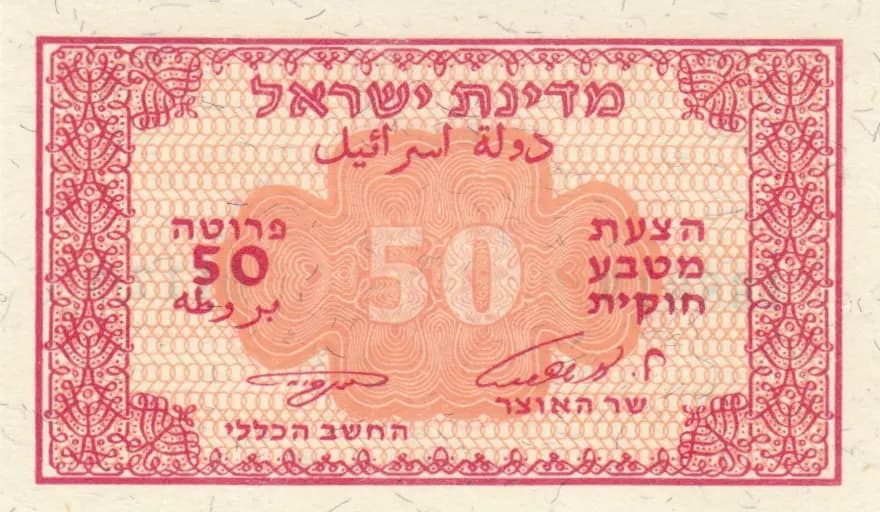
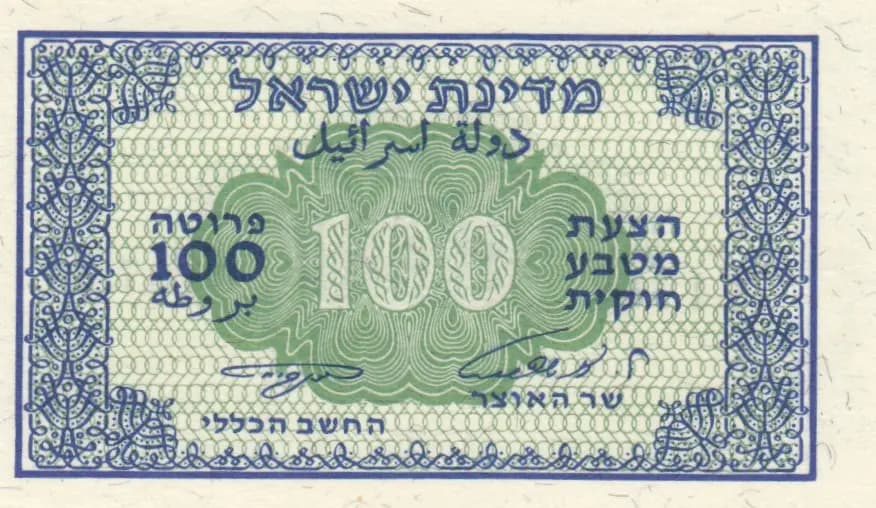
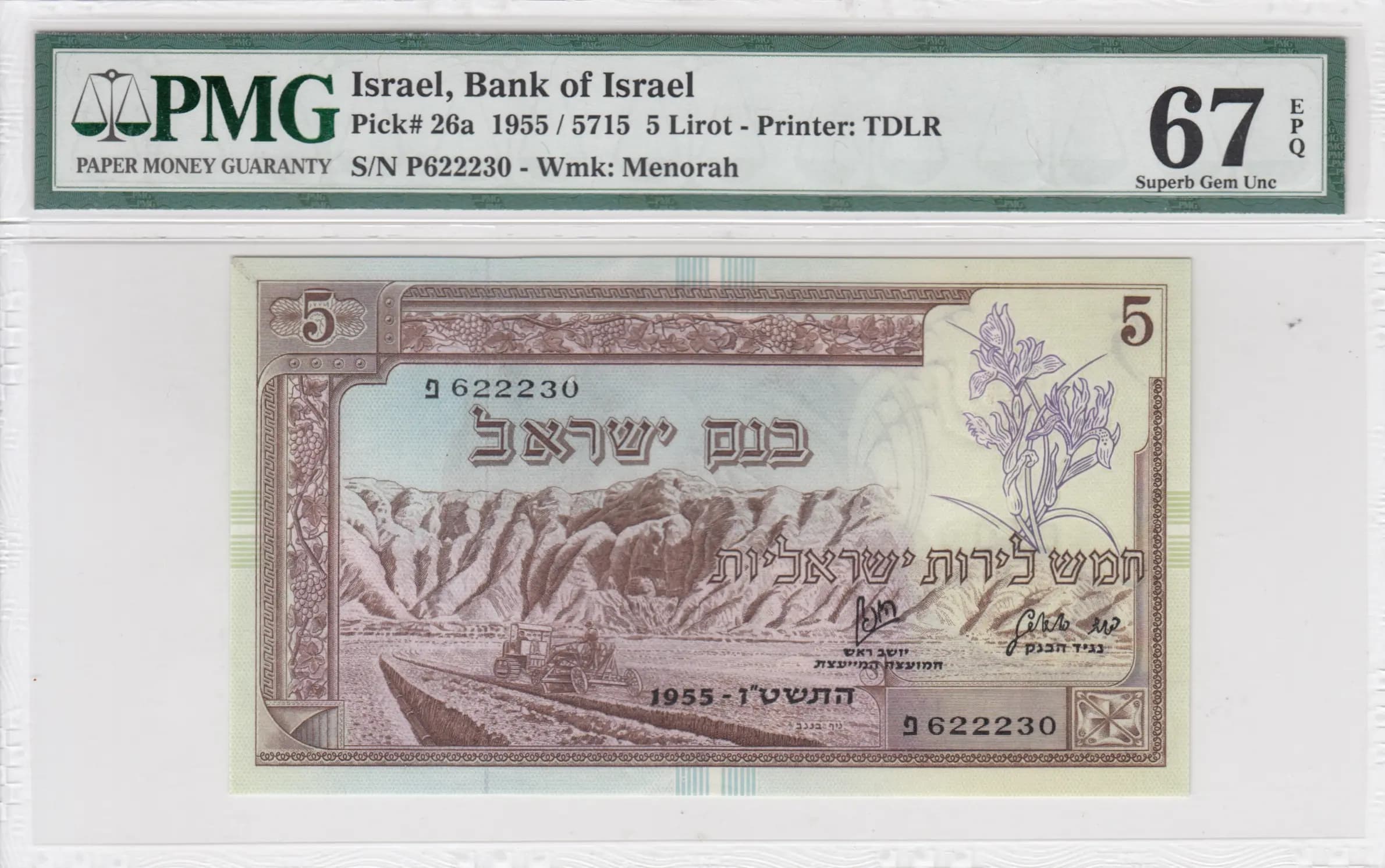
10 palestine pounds 1948
Market Prices
10 salesAbout This Note
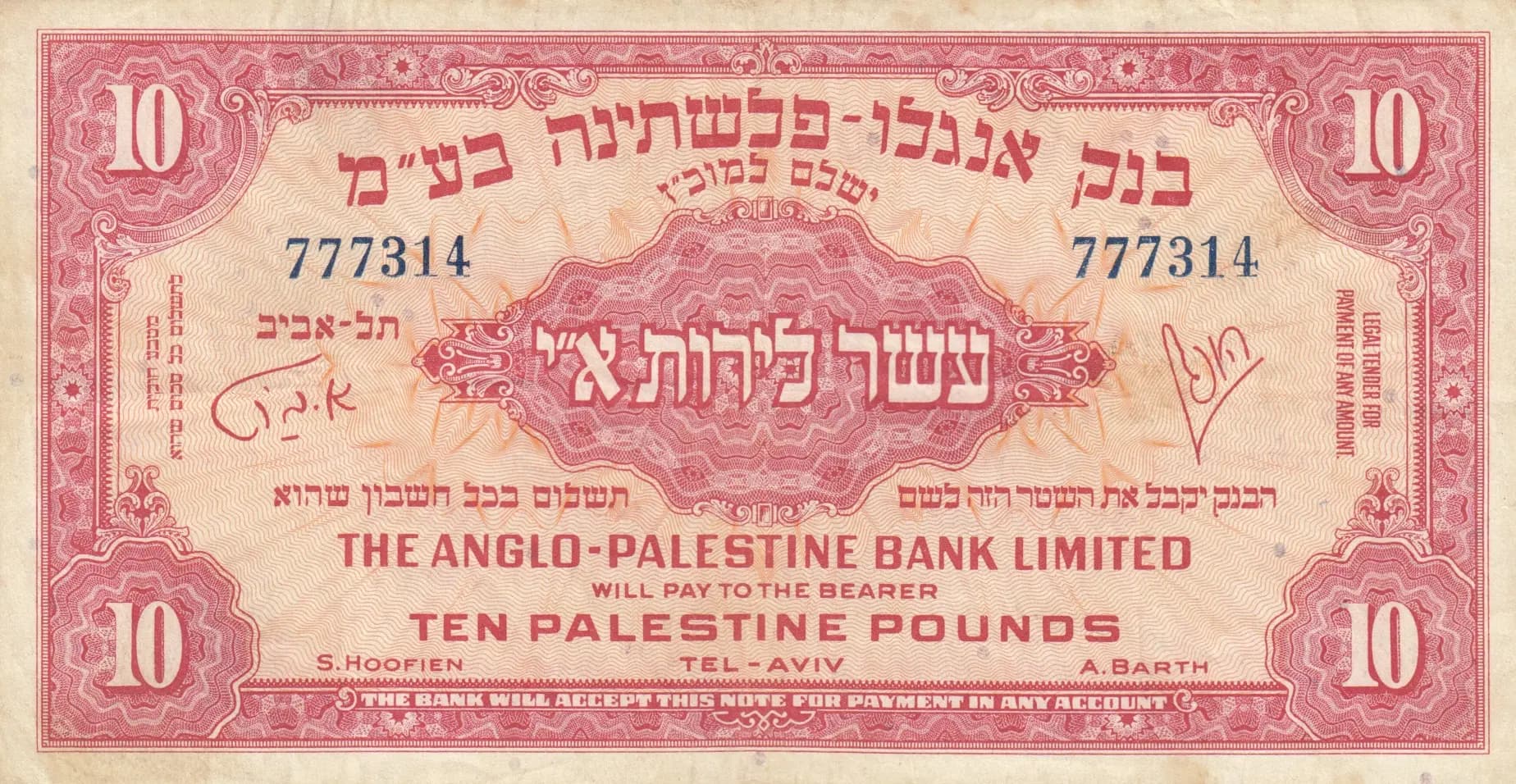
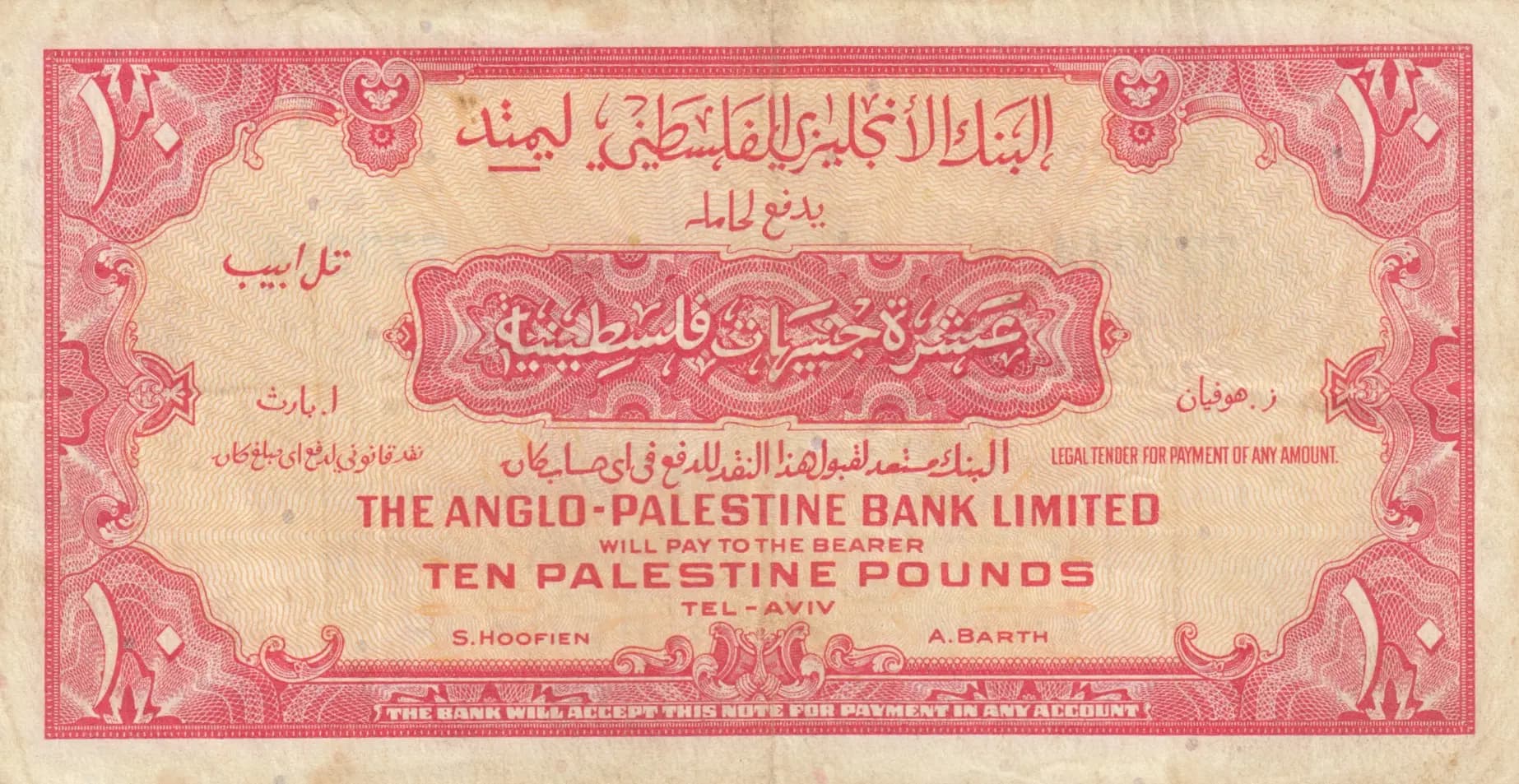
This is a high-quality example of the 1948 Anglo-Palestine Bank 10 Palestine Pounds note (Pick P-17), graded Very Fine. The note exhibits the elegant ornamental design characteristic of early Israeli currency, featuring rose-pink coloring with cream borders and intricate engraved scrollwork throughout. The bilateral Hebrew and Arabic inscriptions reflect the multilingual nature of Mandate-era Palestine, while the twin signatures of S. Hoofien and A. Barth authenticate this important transitional currency piece that bridges the Palestine Mandate and early Israeli periods.
Common. While these notes are now historical pieces from a brief 1948-1951 circulation period, the print run was substantial enough that VF examples remain readily available to collectors. Recent eBay market data confirms consistent sales of VF specimens in the $237-$304 range (2019-2025), with multiple VF examples sold annually. The 2016 catalog valuation of $60 VF versus the current market reality ($250-$310) reflects typical appreciation for historical currency rather than underlying scarcity. F-grade examples sell for $100-$214, and UNC pieces command $300+, indicating a healthy supply across the grade spectrum. This is a popular historical note due to its transitional significance and attractive design, but it is not scarce.
This note was issued during the critical 1948-1951 period when the Anglo-Palestine Bank (later Bank Leumi) transitioned from serving the British Mandate territory to becoming Israel's principal banking institution following statehood. The trilingual design—featuring English, Hebrew, and Arabic text—represents the final currency circulating under the old Mandate system before the Israeli Pound (Lira) replaced Palestine Pounds. The Tel-Aviv issue location and Hebrew calendar date (תש"פ) emphasize the establishment of Jewish institutional authority in the newly-formed State of Israel.
This denomination features a highly ornamental design executed in the Edwardian-revival style typical of early 20th-century bank currency. The note is dominated by an elaborate border composed of repeating arabesque and scrollwork patterns, reflecting the artistic traditions of Ottoman and Arab design prevalent in the Eastern Mediterranean region. Large corner denominals '10' in all four corners are rendered in ornamental cartouches. The center of both sides contains framed cartouches with text—Hebrew on the obverse, Arabic on the reverse—representing the dual populations served. No portraits or specific landmarks are depicted; instead, the security relies entirely on the complexity of the engraved ornamental patterns and the fine-line detail work. The rose-pink and cream color scheme creates effective contrast for visibility and anti-counterfeiting purposes. Decorative circular medallions appear in the corners, further enhancing the intricate aesthetic.
FRONT: Hebrew: בנק אנגלו-פלשתינה בע"מ (Anglo-Palestine Bank Limited), תש"פ (5708 in Hebrew calendar/1948), תל-אביב (Tel-Aviv). English: "THE ANGLO-PALESTINE BANK LIMITED / WILL PAY TO THE BEARER / TEN PALESTINE POUNDS / TEL-AVIV" with signatures of S. HOOFIEN and A. BARTH, and statement "THE BANK WILL ACCEPT THIS NOTE FOR PAYMENT IN ANY ACCOUNT". BACK: Arabic: البنك الإنجليزي الفلسطيني لمحدود (Anglo-Palestine Bank Limited), بيروت (Beirut), تل أبيب (Tel-Aviv). English: Same promise to bearer text and "LEGAL TENDER FOR PAYMENT OF ANY AMOUNT" with identical signatures and acceptance clause.
Intaglio engraving, the standard security printing method for banknotes of this era. The fine-line engraved patterns, ornamental borders, and detailed scrollwork are characteristic of high-quality intaglio production. The two-color printing (rose-pink and cream) with blue-ink serial numbers was applied using the traditional separate plate technique. The note was printed by the British American Bank Note Company, the established printer for Mandate and early Israeli currency (a common practice for the period). The intricate engraving patterns visible throughout—particularly the repeating geometric and arabesque designs—provided security through their complexity and difficulty to counterfeit with the technology of the era.
This specific example shows serial number 777314 in blue ink on both sides, printed twice as was standard for the series. Varieties for Pick P-17 are primarily distinguished by: (1) signature varieties—notes bear combinations of S. Hoofien and A. Barth signatures in different positions; (2) serial number prefixes and ranges reflecting different print runs; (3) minor variations in the intensity of the pink coloring across different printings. The 1948 date is consistent with the entire P-17 series; catalog designation 'ND (1948-1951)' reflects that undated notes circulated throughout this period. No major overprints or error varieties are known for this denomination. The condition grade (VF) and apparent absence of printing defects or repairs is consistent with well-preserved examples from institutional holdings rather than heavy circulation.