1/4 dinar 1973
About This Note
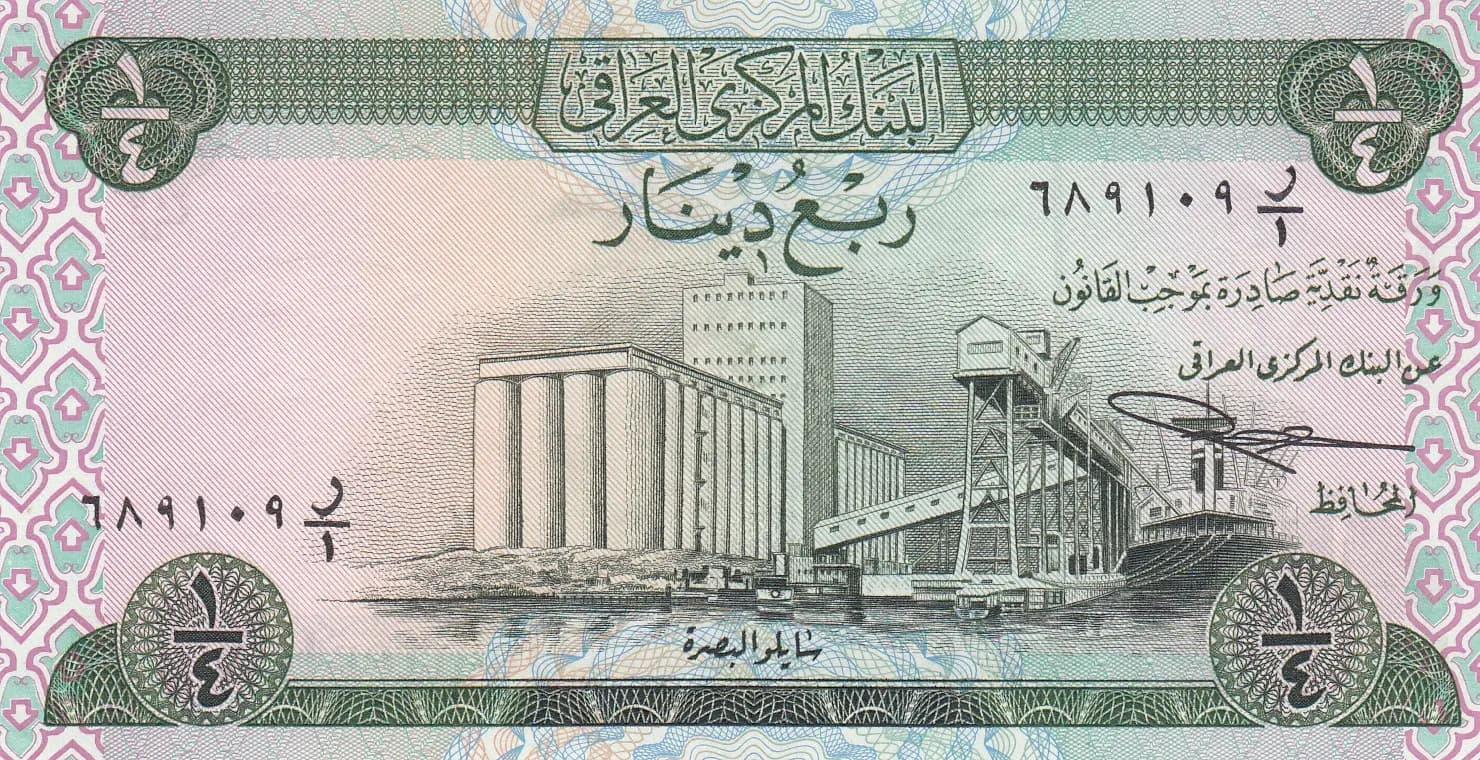
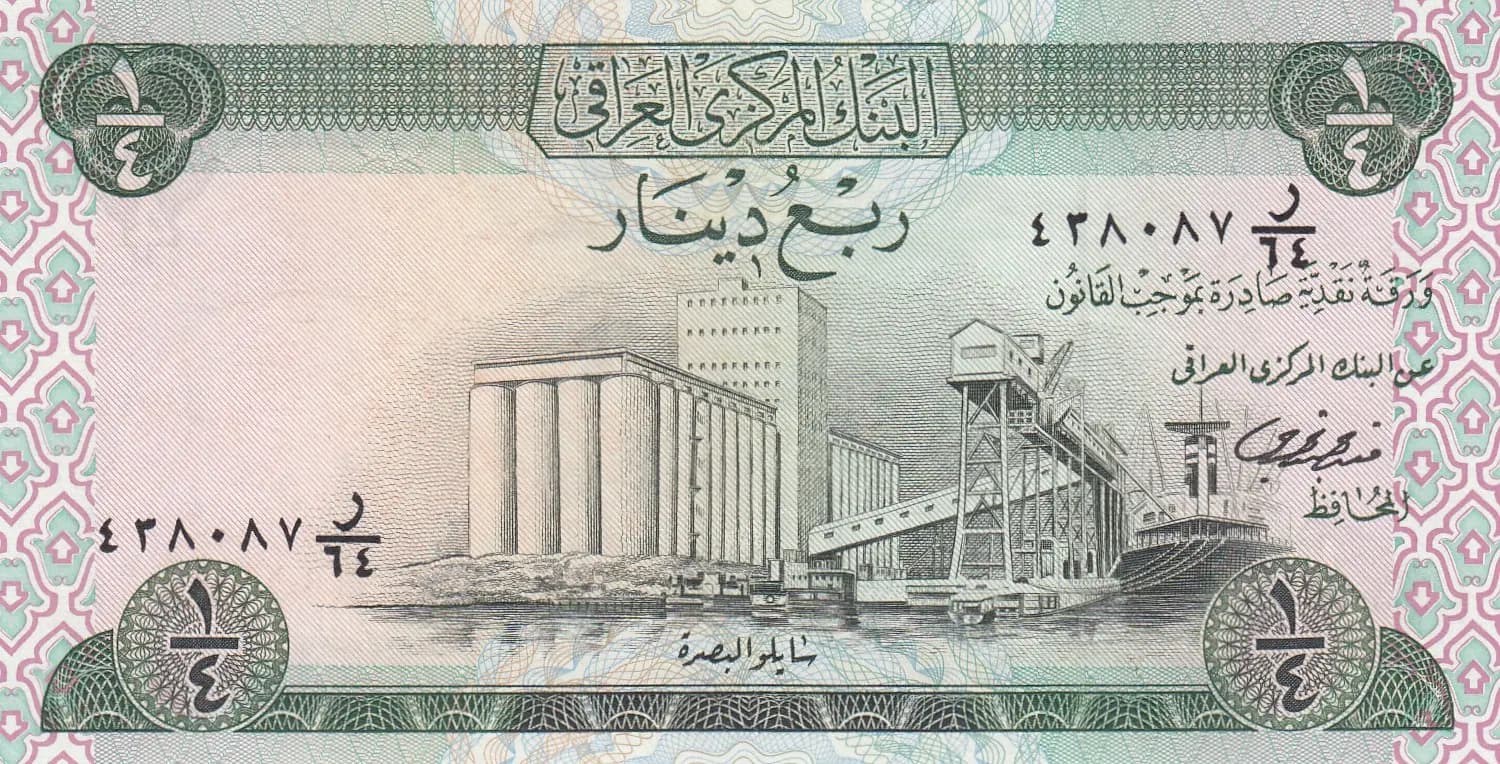
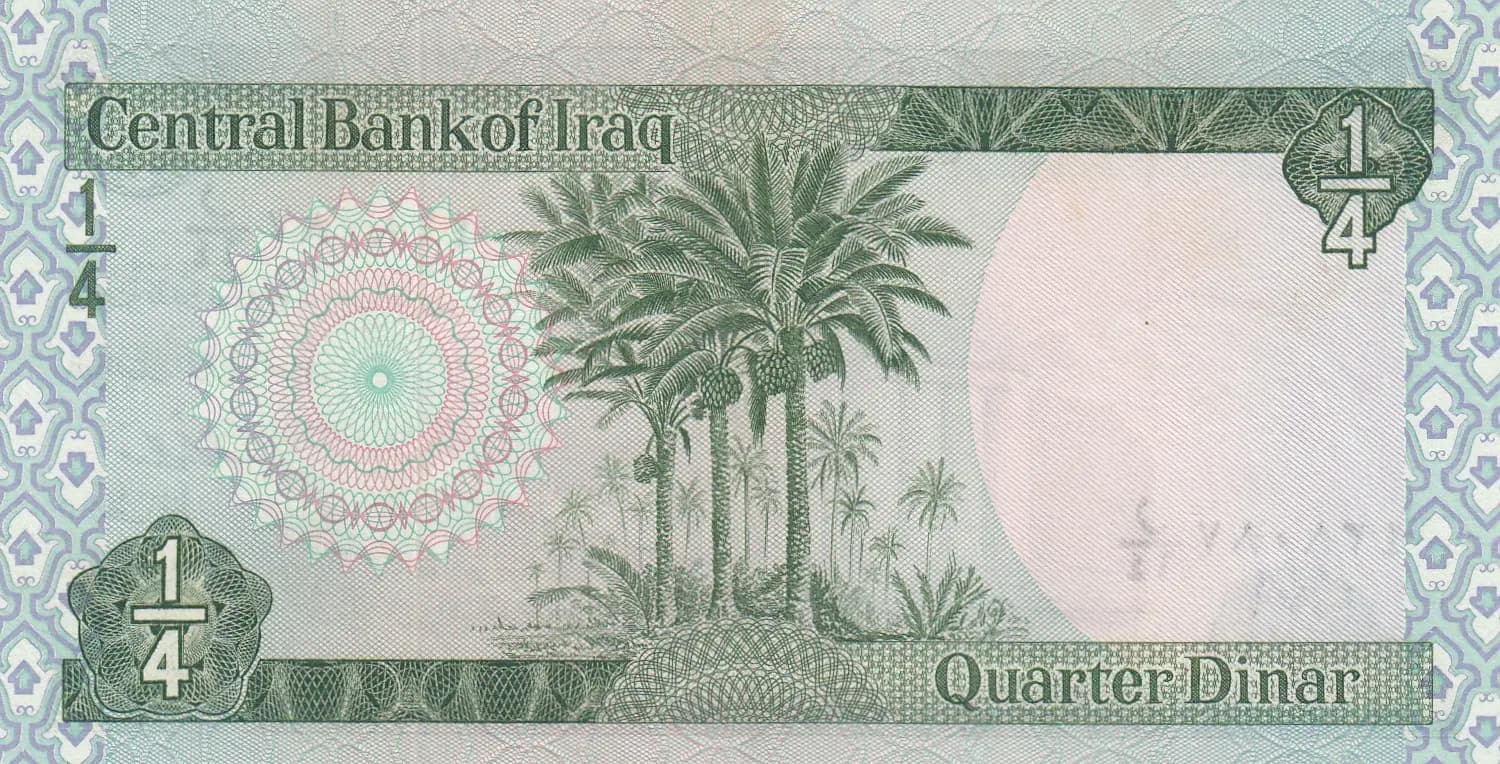
This 1973 Iraqi 1/4 Dinar (Pick 61) is presented in uncirculated condition with vibrant pink and green color printing. The note features striking industrial imagery on the obverse depicting the grain elevator facilities at the Port of Basrah, while the reverse showcases a lush date palm grove, reflecting Iraq's economic importance in agriculture and petroleum export infrastructure during the early 1970s. The exceptional preservation, sharp engraving detail, and intact security features make this an attractive example of mid-20th century Iraqi monetary design.
Common. The 1/4 Dinar denomination from 1973 was part of Iraq's standard circulation series with substantial print runs during the 1970s. This Pick 61 variety remains readily available in the numismatic market, even in uncirculated condition, as many examples were preserved in banking stocks. No evidence of limited mintage, recall, or rarity factors applies to this issue.
Issued during the Ba'athist era under the Revolutionary Command Council, this 1973 banknote reflects Iraq's economic priorities in the post-1968 period, specifically highlighting the country's strategic port facilities and agricultural wealth. The deliberate choice to feature the Basrah grain silo on the obverse underscores the importance of commodity export infrastructure, while the date palm imagery on the reverse celebrates Iraq's agricultural heritage and the date palm's cultural significance to the nation. This denomination and design series represents the modernization of Iraqi currency imagery during a period of relative economic growth preceding the 1973 oil embargo.
The obverse features the Grand Grain Elevator (Silos) of Umm Qasr/Port of Basrah as the central vignette, a modernist industrial complex with prominent vertical cylindrical storage vessels and an accompanying administrative building with tower structure, positioned along the waterfront. This facility was symbolically important to Iraq's economy as a major grain export terminal. The reverse depicts a naturalistic scene of Iraqi date palms (Phoenix dactylifera), rendered with careful botanical detail to showcase the agricultural bounty of the Mesopotamian region. Both sides are framed by ornate circular medallions in the four corners featuring alternating leaf/palm motifs and geometric designs, consistent with Islamic artistic traditions. The note employs a delicate pink and green color palette with cream and gray accents, enhanced by fine guilloche patterning and intricate border work throughout.
FRONT: الجمهورية العراقية (al-Jumhūrīyah al-'Irāqīyah) = 'Republic of Iraq'; ربع دينار (Rubʿ Dīnār) = 'Quarter Dinar'; بنك العراق المركزي (Bank al-'Irāq al-Markazī) = 'Central Bank of Iraq'; ١٩٧٣ (1973 in Arabic numerals, date notation). BACK: 'Central Bank of Iraq' (English); 'Quarter Dinar' (English); Denomination markers '1/4' displayed in corner medallions.
Intaglio (engraved) printing, characterized by the fine-line engraving patterns, complex geometric guilloche designs, and sharp detail visible throughout both sides. The security features—including the intricate border work, ornamental medallions, and detailed background patterning—are consistent with professional currency engraving. The printer for this series was Giesecke+Devrient (German security printer), who handled much of Iraq's currency production during this period, though specific printer attribution should be confirmed against Iraqi Central Bank records.
Pick 61(2) designation indicates this is a specific variety of the 1973 1/4 Dinar issue. Varieties in this series typically relate to signature combinations of Central Bank officials or minor design variations. Serial number prefixes, signature variants, and specific date notations on the note would define the precise variety. The Arabic numeral date marking '١٩٧٣' (1973) is consistent with notes from the initial issue year of this design. No overprints or special markings are visible on the presented example.