50 rials 1974
Market Prices
5 salesAbout This Note
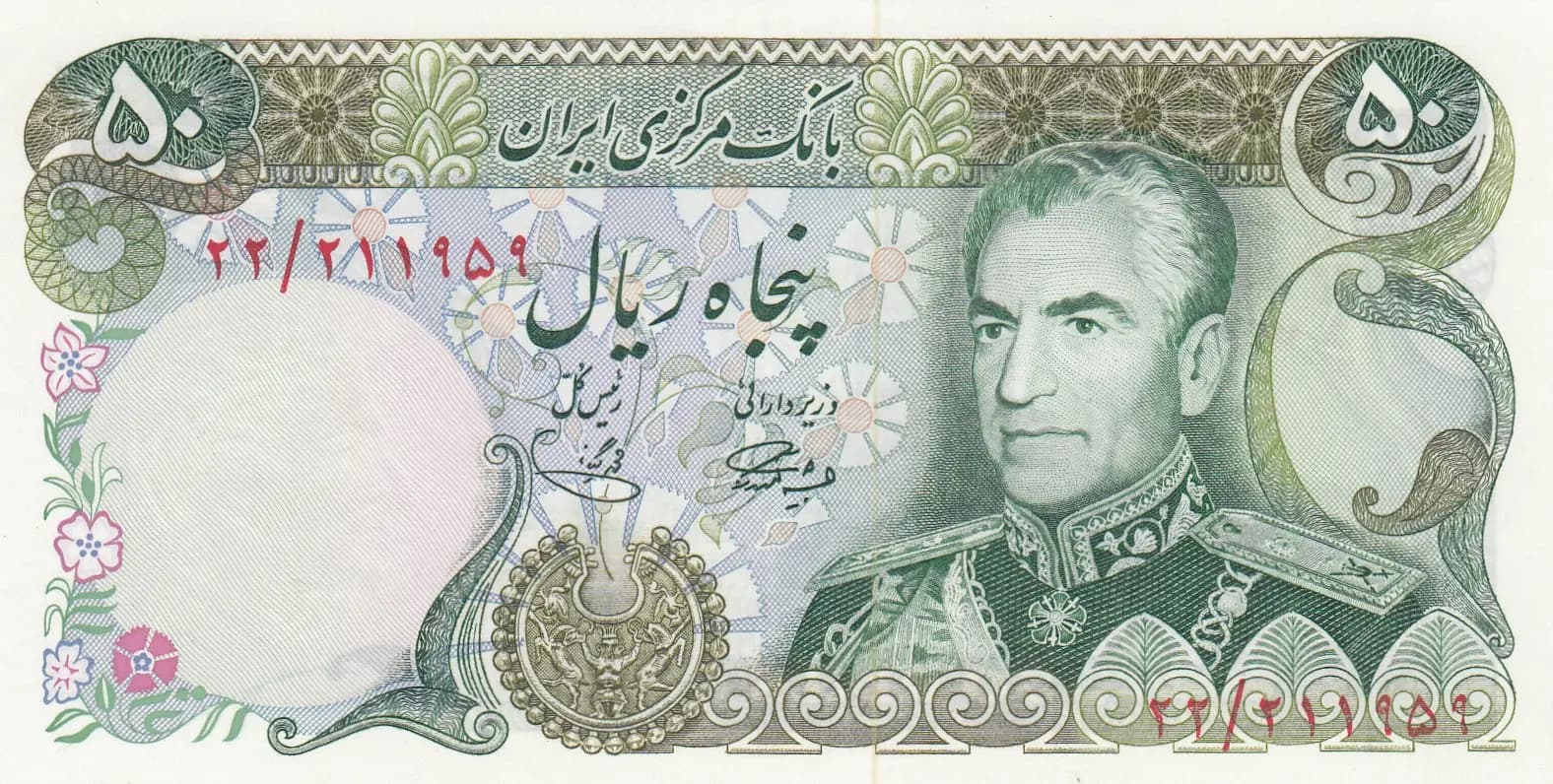
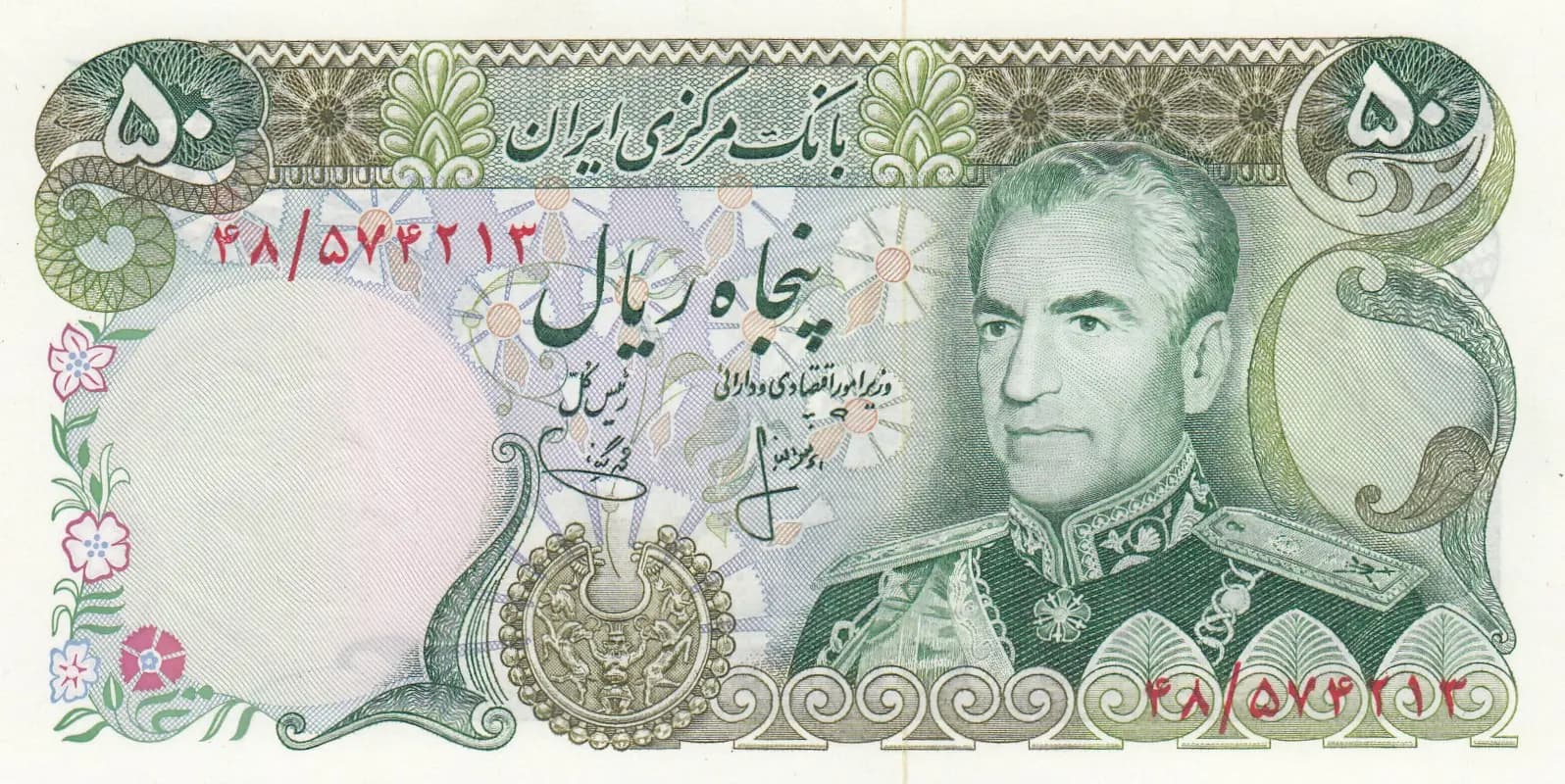
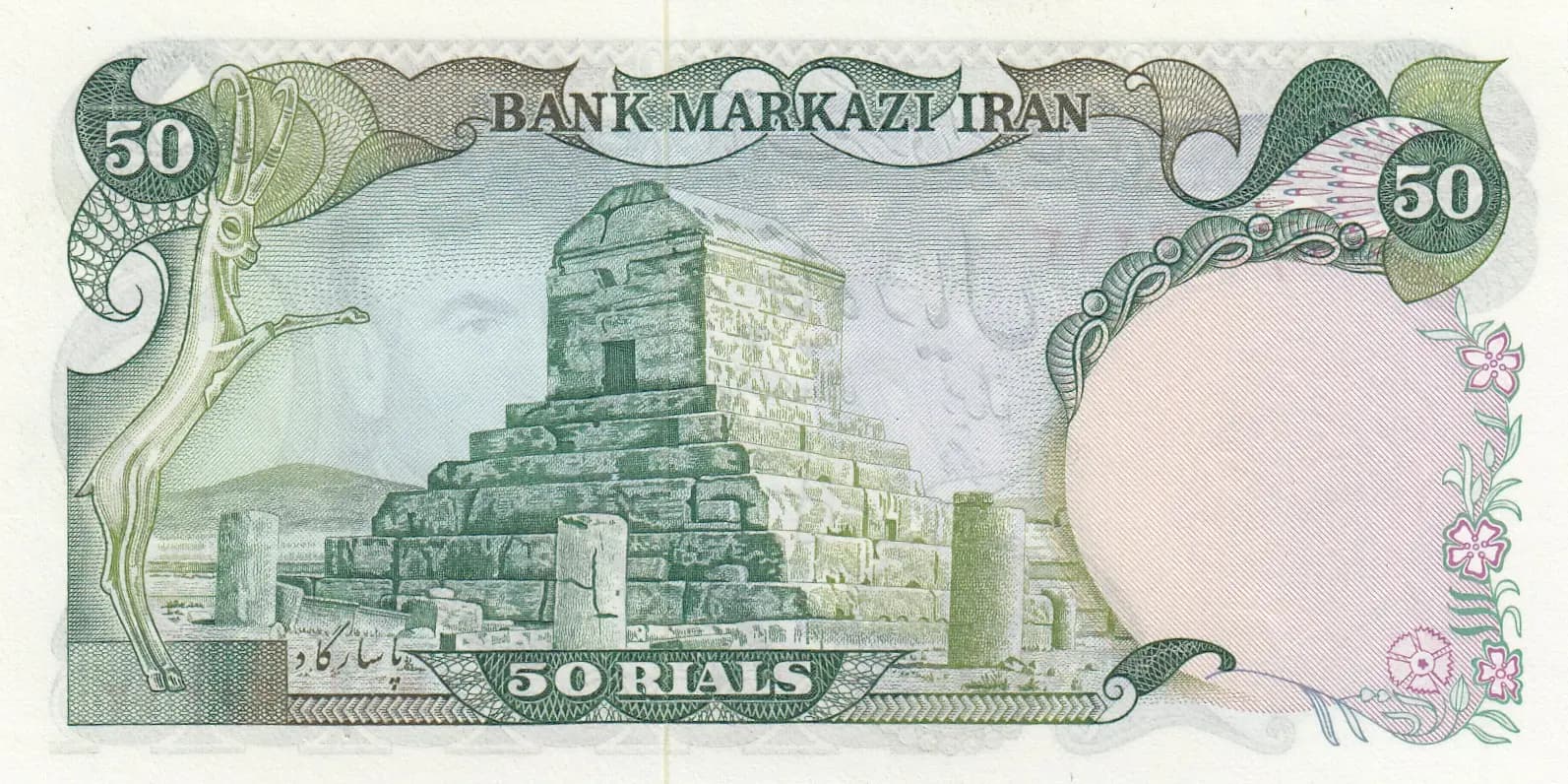
This is a Bank Markazi Iran 50 Rials note from 1974 (Pick P-101b), featuring a portrait of Shah Mohammad Reza Pahlavi in military dress uniform on the obverse and the Tomb of Cyrus the Great at Pasargadae on the reverse. The note displays the characteristic green and pink color scheme with ornate Persian decorative elements and fine engraved security patterns. While catalogued as UNC, the physical specimen shows clear evidence of circulation with visible creasing, fold marks, and age-related wear inconsistent with true uncirculated preservation.
Common. The eBay price history demonstrates consistent market valuations in the $1.63–$10.50 range across multiple condition grades (VF and UNC specimens), with catalog values at $5–$10 (2019). The multiple variant cataloging entries (P-101a, P-101b, P-101d, P-101e) indicate a substantial printed series with variants. Sales frequency and pricing suggest this note circulated widely and remains readily available in the collector market.
This note was issued during the reign of Shah Mohammad Reza Pahlavi, the last reigning monarch of Iran's Pahlavi dynasty, a period marked by modernization efforts and significant oil revenues. The obverse prominently features the Shah's portrait in military regalia, symbolizing his authority and role as supreme commander, while the reverse depicts the Tomb of Cyrus the Great—an ancient Persian monument representing the nation's imperial heritage and connection to pre-Islamic Persian civilization. This imagery reflects the Pahlavi era's emphasis on linking contemporary Iran to its ancient Persian past.
The obverse features a right-facing profile portrait of Shah Mohammad Reza Pahlavi dressed in formal military uniform with medals and insignia, positioned on the right portion of the note. The left side displays ornamental Persian carpet-like patterns with pink floral motifs. An emblematic seal bearing a lion motif appears in the lower center, representing the Iranian state symbol. Heart-shaped decorative elements adorn the top corners. The reverse depicts the Tomb of Cyrus the Great at Pasargadae—a crenellated stone structure with fortress-like architecture representing one of Iran's most important pre-Islamic historical monuments. Both sides feature extensive ornamental scrollwork, flourishes, and borders consistent with classical banknote engraving traditions. The color palette combines green, pink, brown, and tan with white background areas.
Front: 'بانک مرکزی ایران' (Bank Markazi Iran / Central Bank of Iran), '۵۰' (50), 'پنجاه ریال' (Fifty Rials), '۱۹۷۴/۵/۱۵' (Date: 15 May 1974 in Persian calendar). Back: 'BANK MARKAZI IRAN' (Central Bank of Iran in English), '50' (denomination in Arabic numerals), '50 RIALS' (denomination in English), and Persian text identifying the historical site depicted.
Intaglio engraving (line engraving and recess printing), evidenced by the fine detailed cross-hatching, intricate background patterns, and the high-quality line work visible throughout the note. The printer is identified as TDLR (Tehcommunications Directorate Line Records or a similar security printer designation associated with Iranian banknote production of this era). Security features include elaborate engraved patterns and fine-line work designed to prevent counterfeiting.
This note is identified as Pick P-101b, one of four cataloged variants for the 50 Rials 1974 issue. All variants share the TDLR printer attribution. The P-101b variety represents a specific printing or signature variant within the 1974 series. Distinction between P-101a, P-101b, P-101d, and P-101e typically involves signature combinations, security thread variations, or sequential printing runs, though the visual analysis does not provide sufficient detail to confirm the specific distinguishing characteristics of the P-101b variant. The specimen examined shows date notation of 1974/5/15 (Persian calendar equivalent to May 15, 1974).