10 rials 1934
Market Prices
14 salesAbout This Note
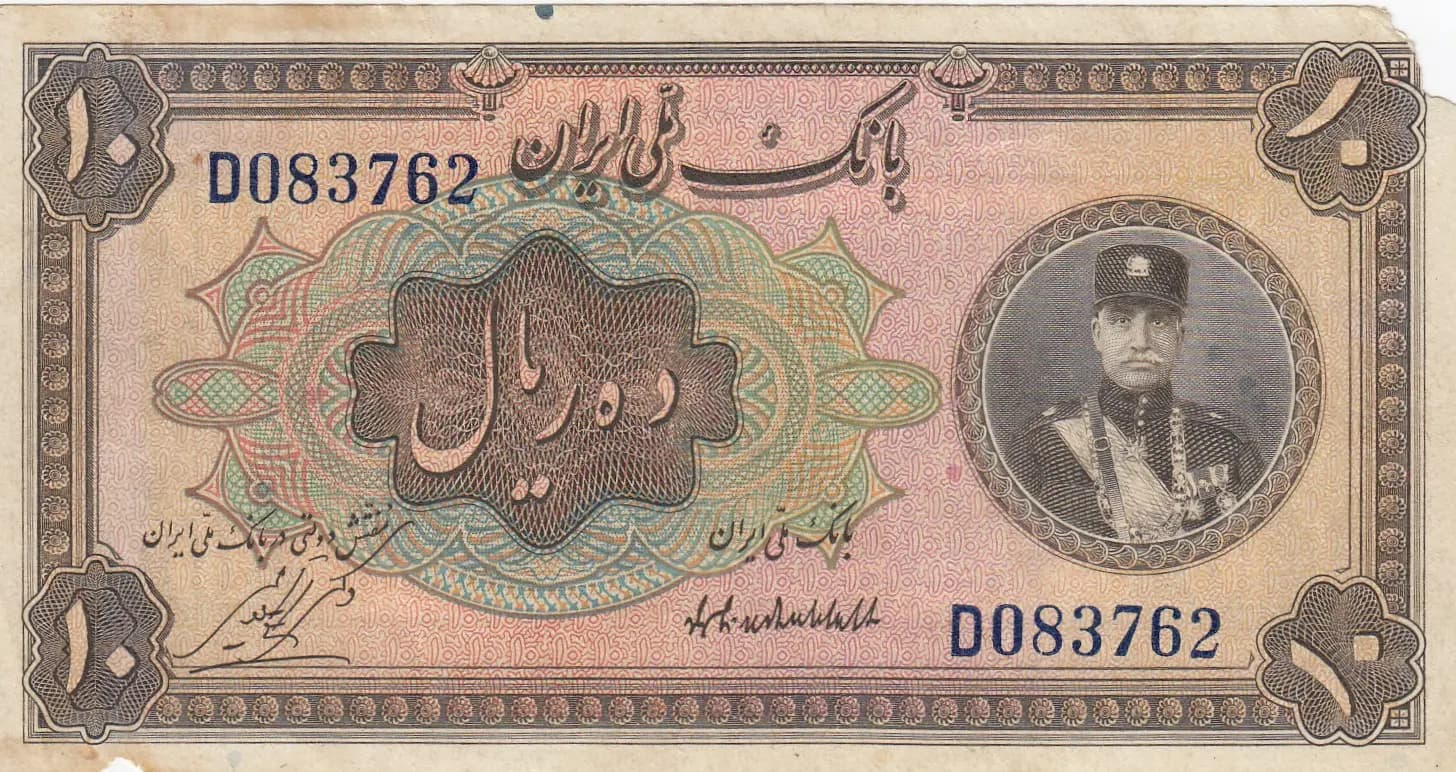
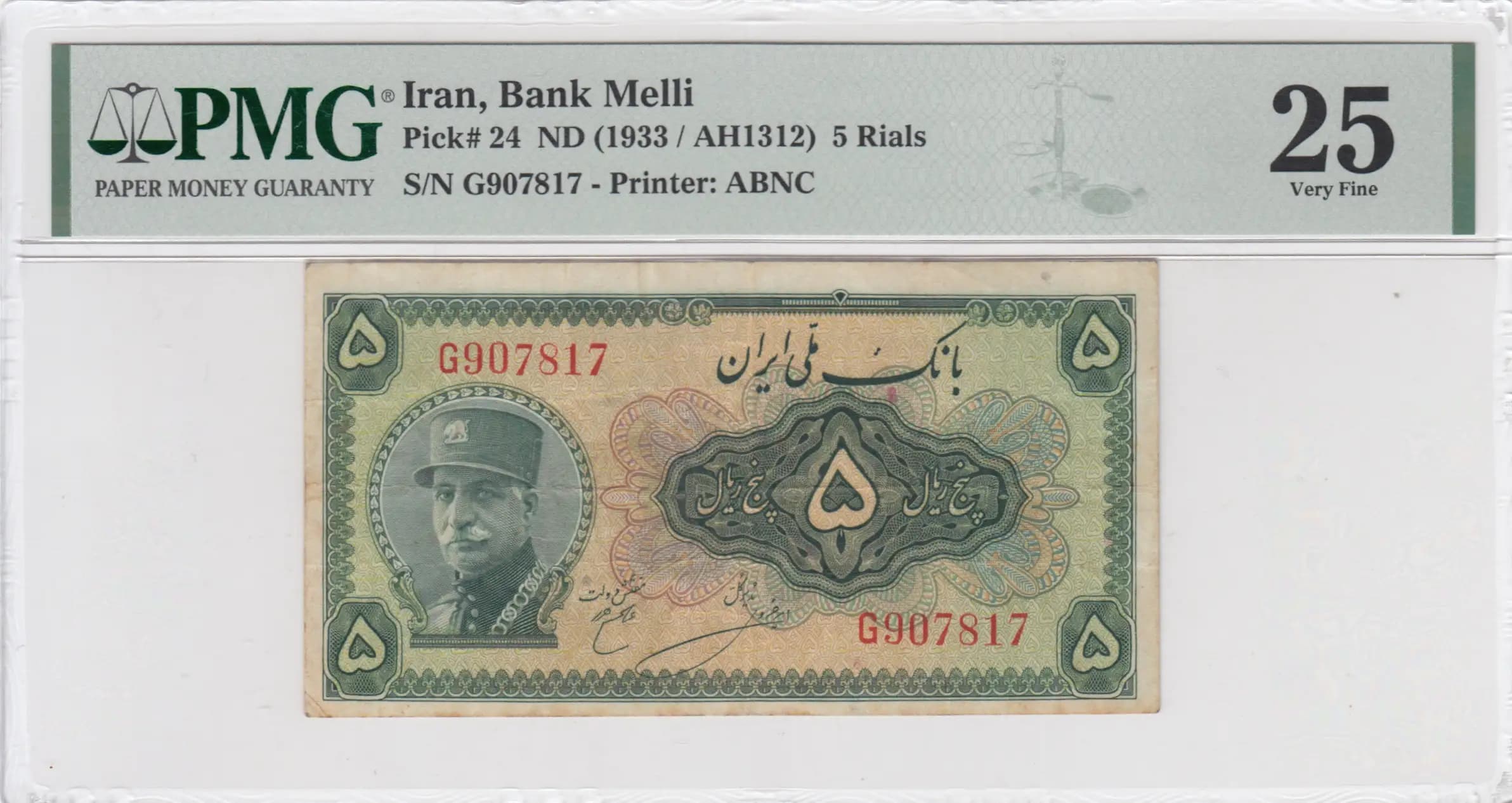
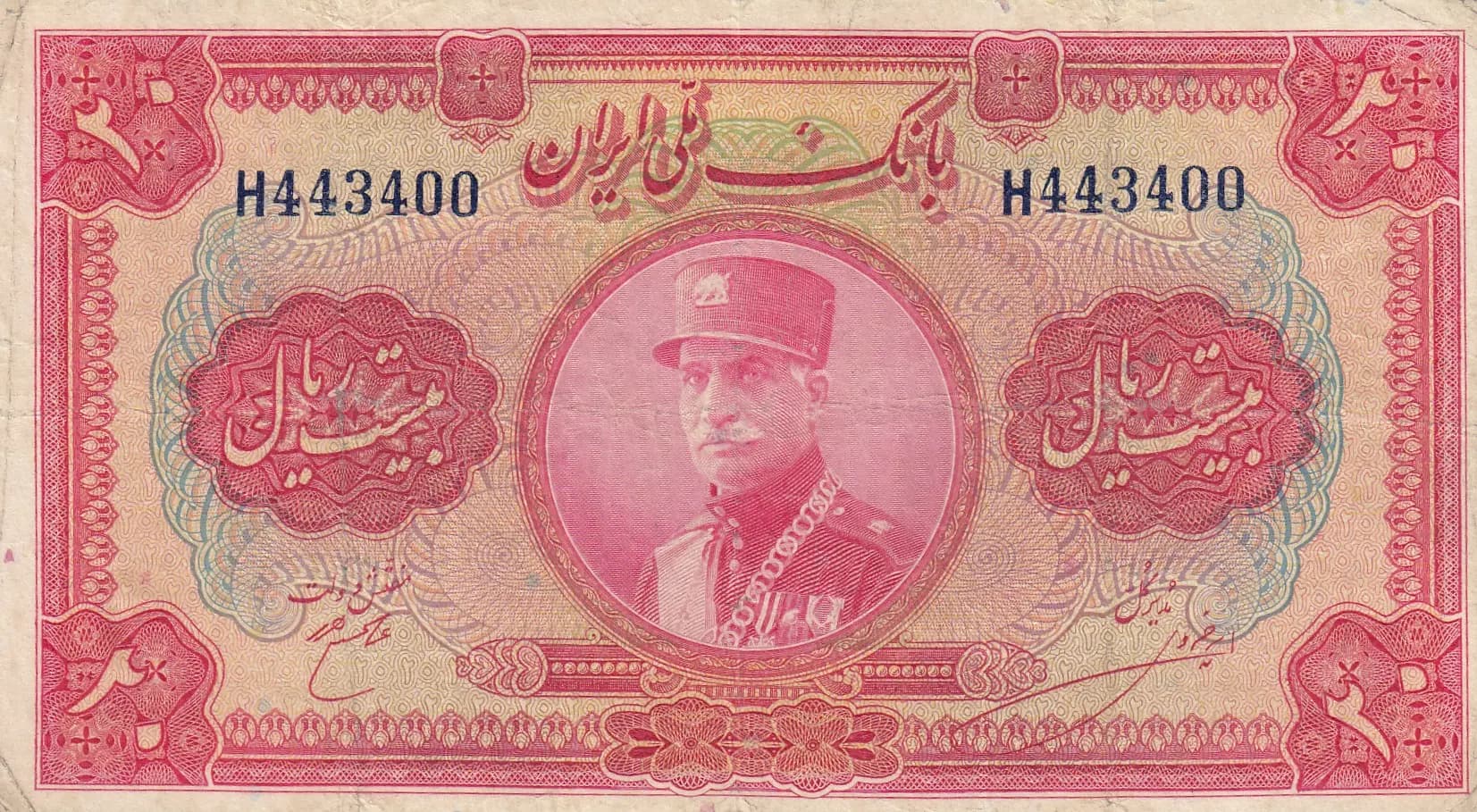
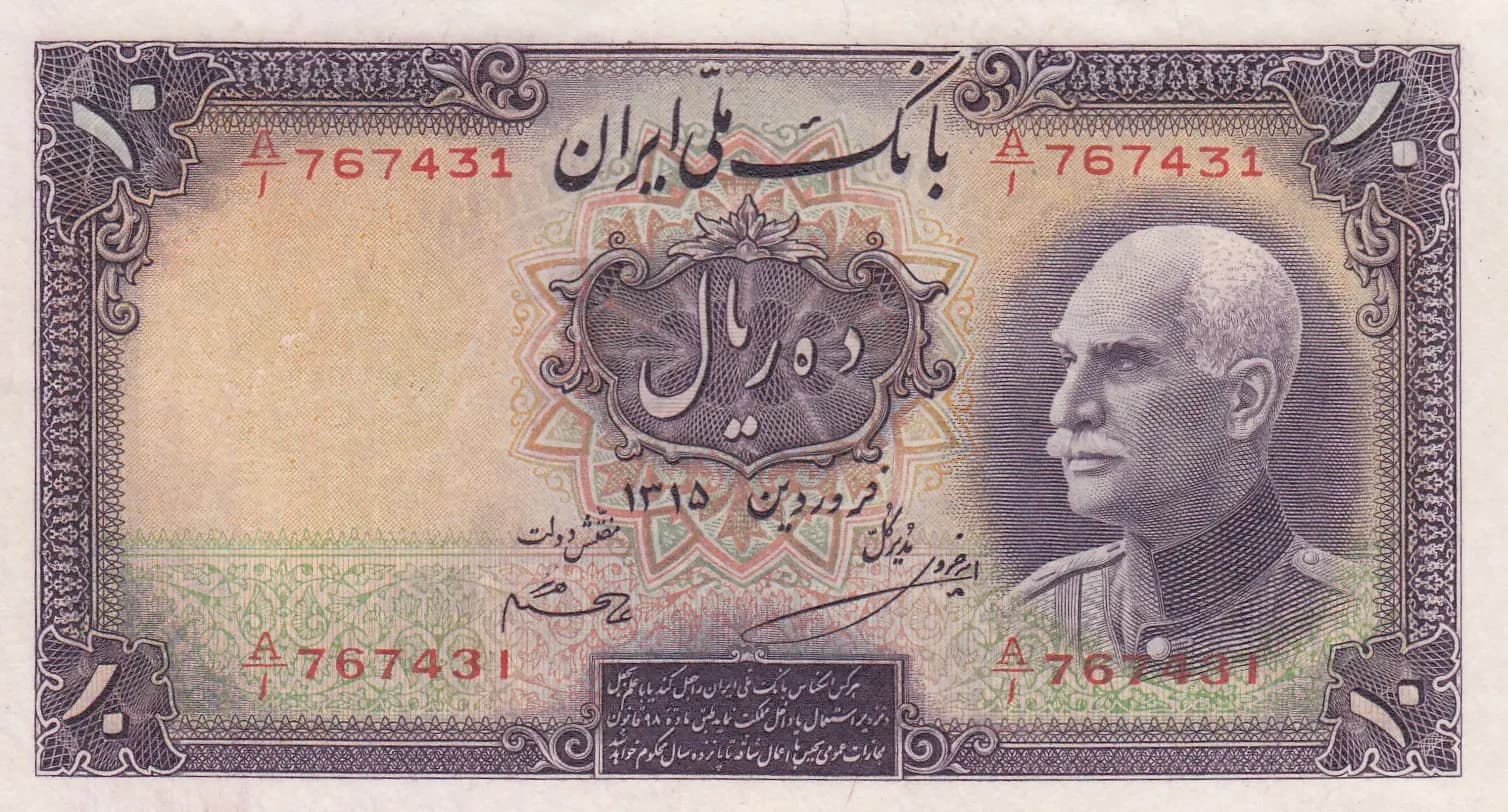
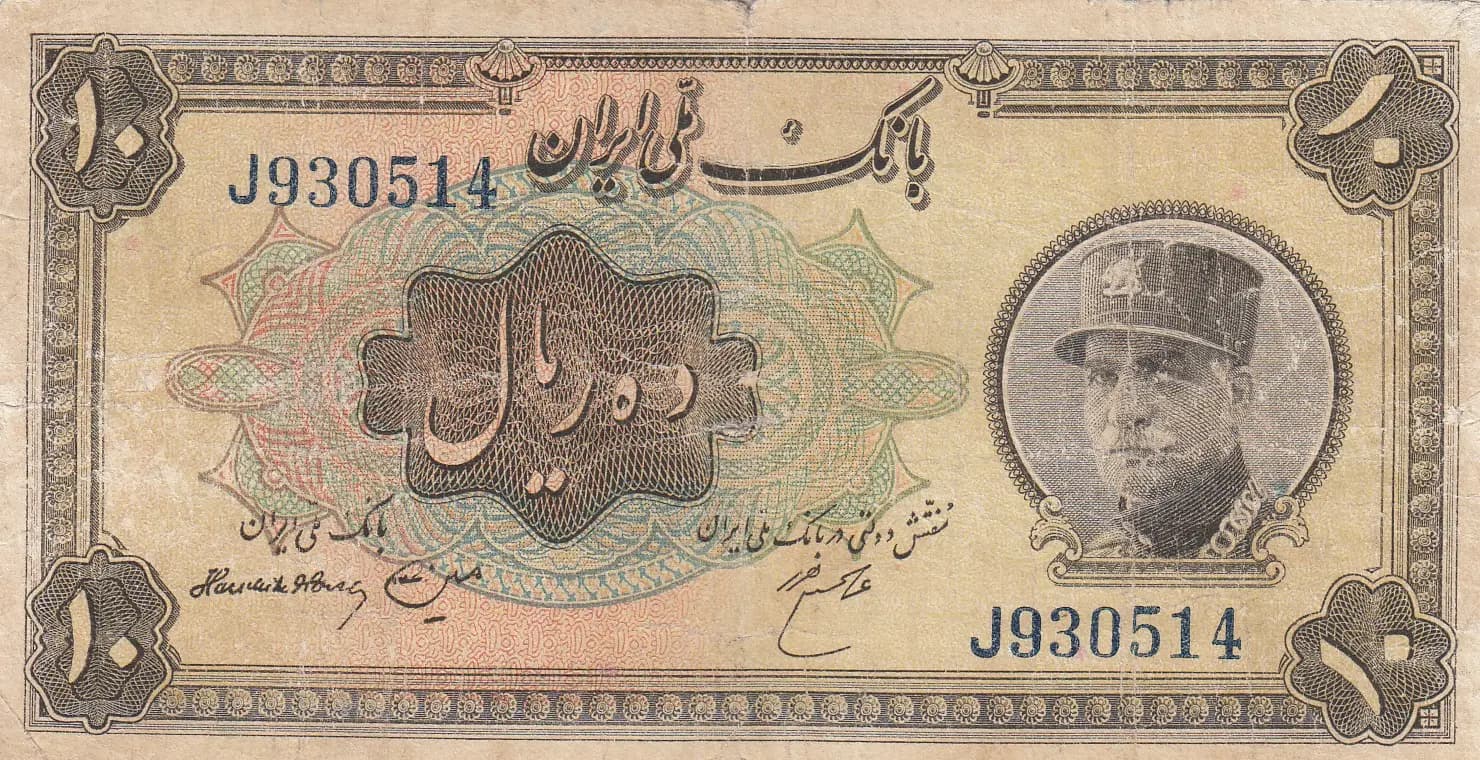
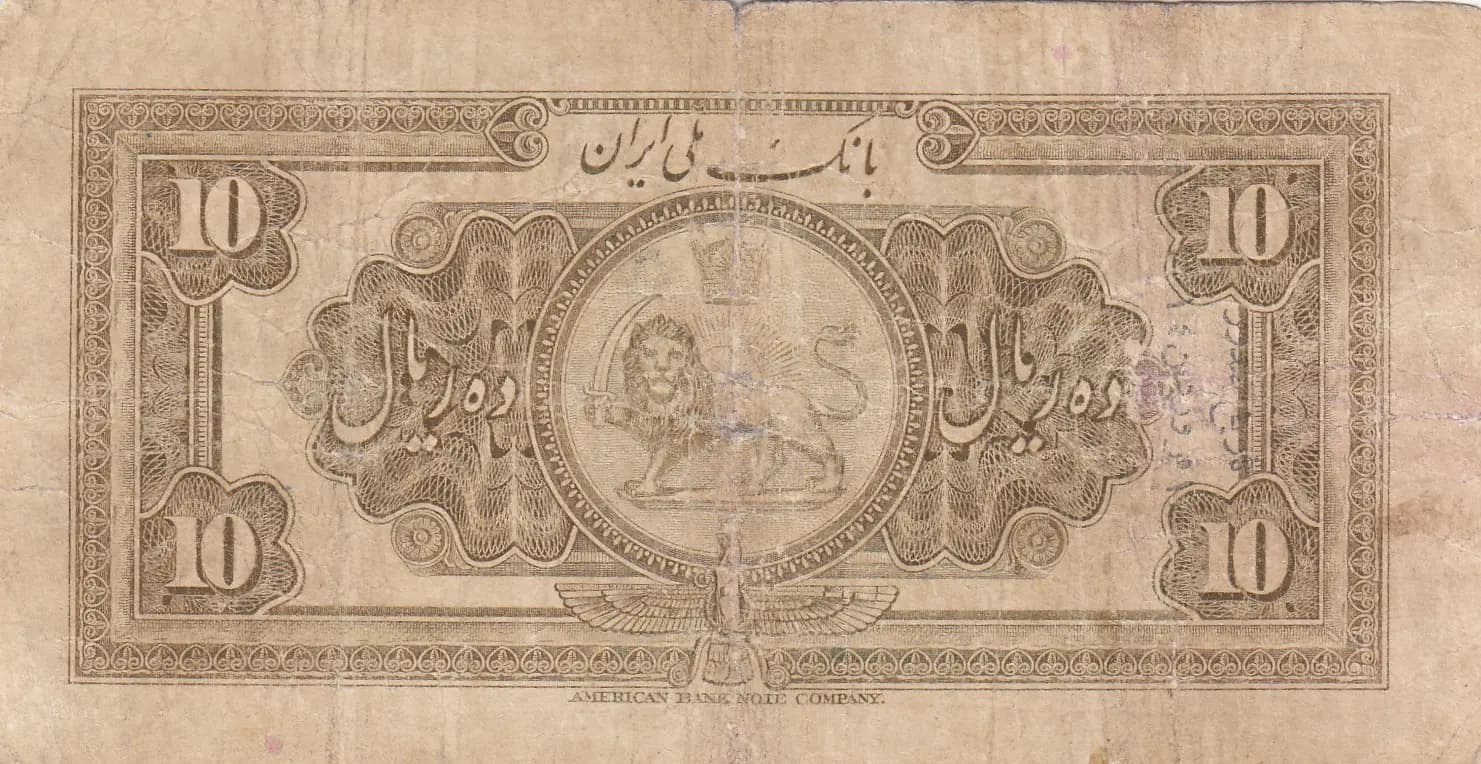
This is a VG-graded 10 Rials banknote from 1934 (SH 1311-1314), issued by Bank Melli Iran and printed by the American Bank Note Company. The note features a striking portrait of Reza Shah Pahlavi in military uniform on the obverse, rendered in brown with multicolor underprint, while the reverse displays the iconic Lion and Sun emblem of Iran. Despite significant aging with visible creasing, foxing, and yellowing throughout the paper, the intricate engraved security details remain well-preserved, making this an important example of early Pahlavi-era currency.
Common. eBay auction price tracking data shows consistent market activity with VG-condition examples selling in the $35-50 range (with a 2013 VG sale at $35.02), well below the upper estimate of $150 in the 2016 catalogue valuation. The note appears regularly in the market with numerous sales across multiple condition grades spanning over a decade. The large print run by a major security printer (American Bank Note Company), the multi-year issue window (1932-1935), and the absence of any recalled or short-lived characteristics indicate this is a standard circulating issue of the period without rarity premium.
This banknote was issued during the reign of Reza Shah Pahlavi (r. 1925-1941), a period of modernization and centralization of Iranian national institutions. Bank Melli Iran, depicted through Persian inscriptions (بانک ملی ایران), was established as the central bank in 1927 and symbolized the Shah's efforts to modernize Iran's financial infrastructure. The prominent display of Reza Shah's portrait in military uniform reflects the nationalist and reformist ideology of the period, while the Lion and Sun emblem on the reverse represents Iran's ancient heraldic tradition, linking the contemporary Pahlavi state to Persia's imperial past.
The obverse features a three-quarter facing portrait of Reza Shah Pahlavi positioned on the right side of the note, depicted in military uniform with a distinctive high military cap, contained within an ornate circular decorative frame. The portrait is rendered through fine engraving with detailed cross-hatching. The left side of the note displays a large, intricate circular medallion with complex interlocking geometric patterns serving as a security feature. The note is bordered by repeating decorative patterns and four-lobed quatrefoil designs in the corners. The reverse is dominated by the central Lion and Sun emblem (Shir-o-Khurshid), Iran's national heraldic symbol, enclosed in an ornate circular frame with radiating sun rays behind the lion. The denomination 10 appears in all four corners in both Western Arabic and Persian numerals. Decorative borders and geometric patterns frame the entire design, with the printer's credit to American Bank Note Company at the bottom center.
Front side: بانک ملی ایران (Bank Melli Iran / National Bank of Iran); نشر دوم (Second Issue/Edition); Serial number J930514 (appears twice); Signature inscriptions in German and Farsi. Back side: اسلام ایران (Islamic Iran); 10 and ۱۰ (Denomination in Arabic and Persian numerals, appearing in all four corners); AMERICAN BANK NOTE COMPANY (printer credit, New York).
Intaglio engraving (line engraving), the standard method employed by American Bank Note Company for security printing. The note exhibits characteristic features of this technique: fine line work, intricate cross-hatching visible in the portrait and decorative medallions, raised ink deposits creating tactile relief, and the complex geometric security patterns throughout. The multicolor underprint was applied using additional printing passes. The combination of brown primary color with green, red/pink, and black inks demonstrates the sophisticated multi-pass color engraving capabilities of American Bank Note Company's New York facility.
This note is Pick 25a, indicating a specific variety within the 10 Rials series. The visual analysis identifies this as an AH 1313 (1934) example with signatures in German and Farsi. The inscription نشر دوم (Second Issue/Edition) on the obverse indicates this is part of the second printing run. Known varieties for this denomination include different date stamps on the back (AH 1312, 1313, 1314, or ND - no date), varying signature combinations, and the distinction of Pick 25a versus other cataloged varieties. The serial number format (J930514) with the letter prefix J is consistent with this issue period. Collectors should note that examples with different date stamps and signature combinations exist as distinct varieties within the same Pick number.