10 rials 1932
Market Prices
2 salesAbout This Note
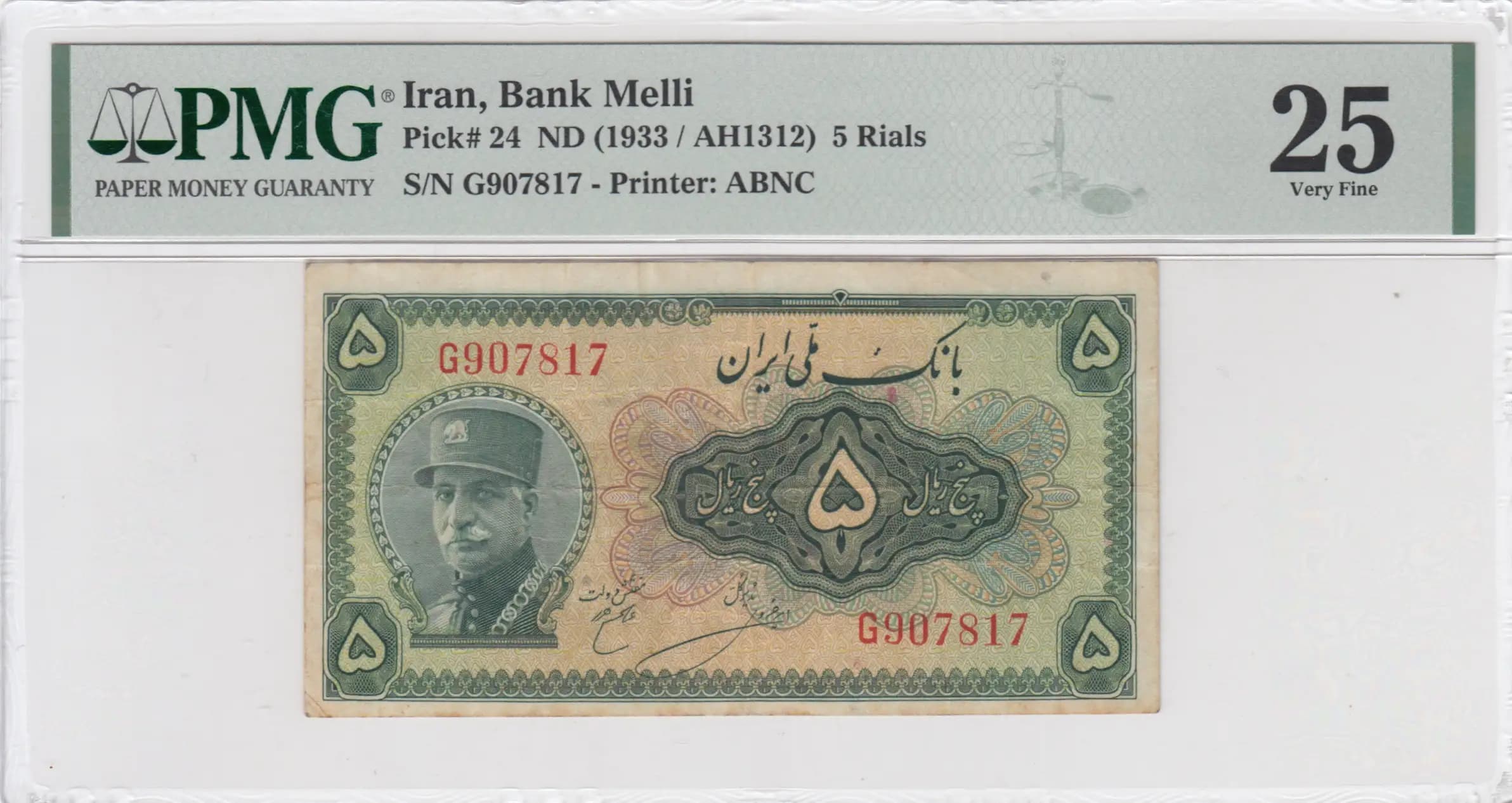
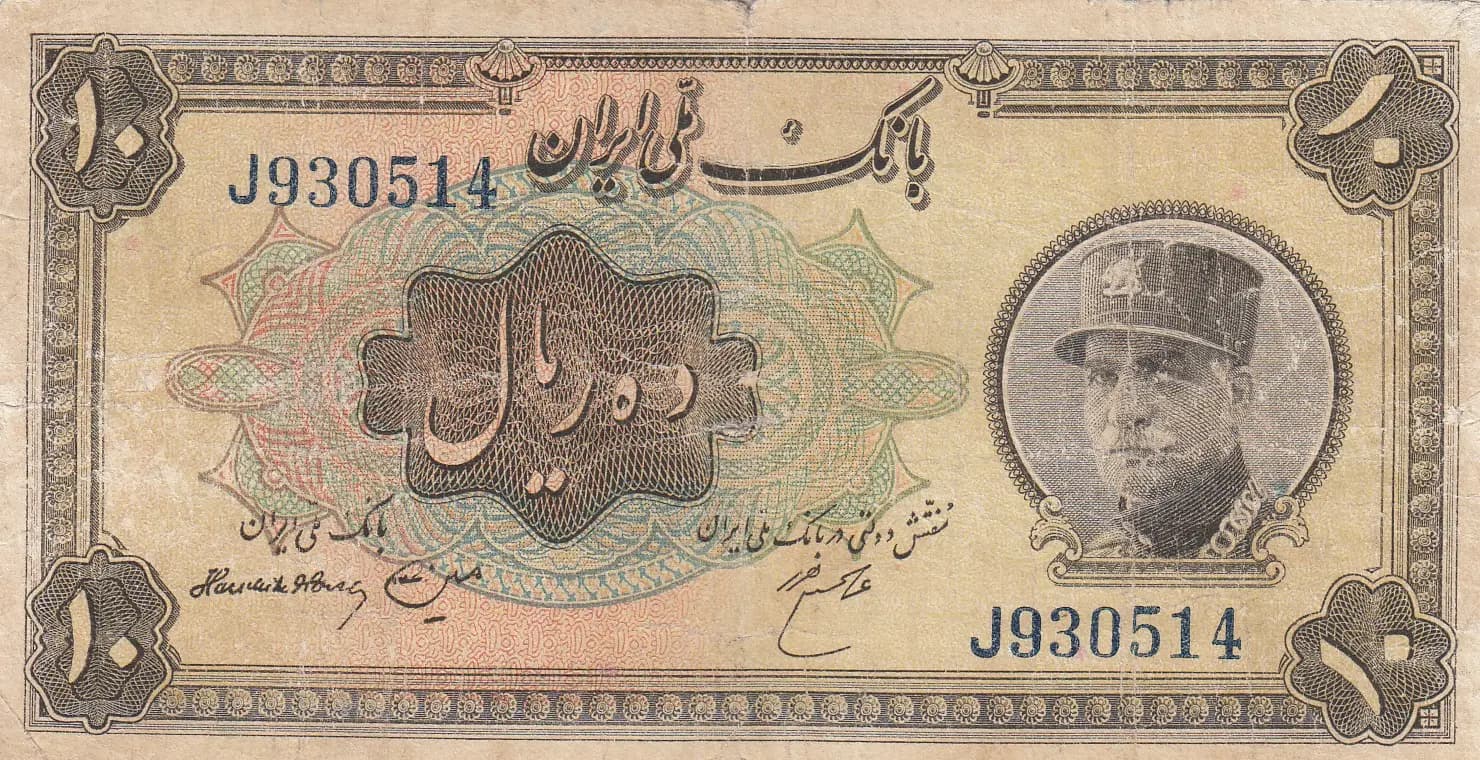
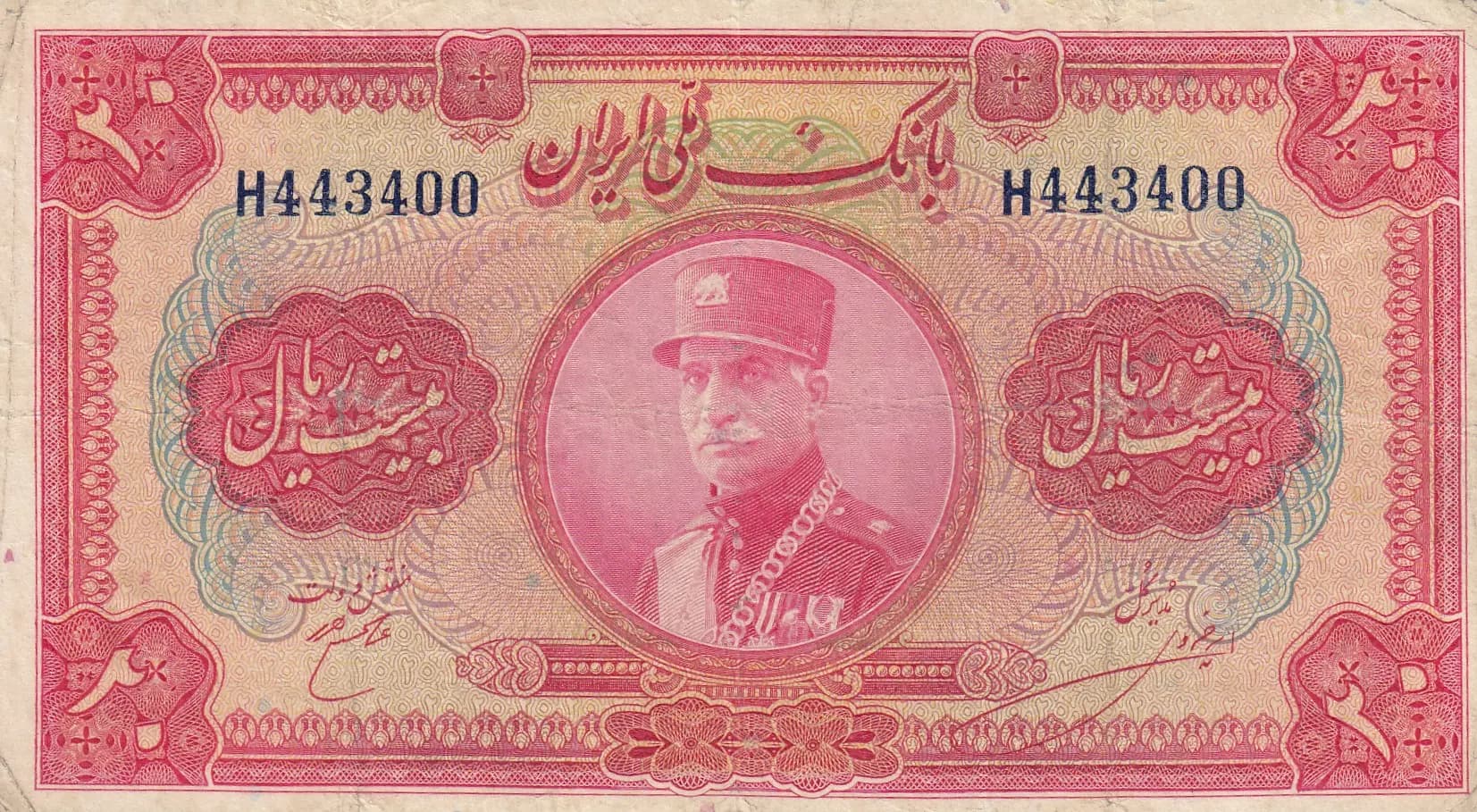
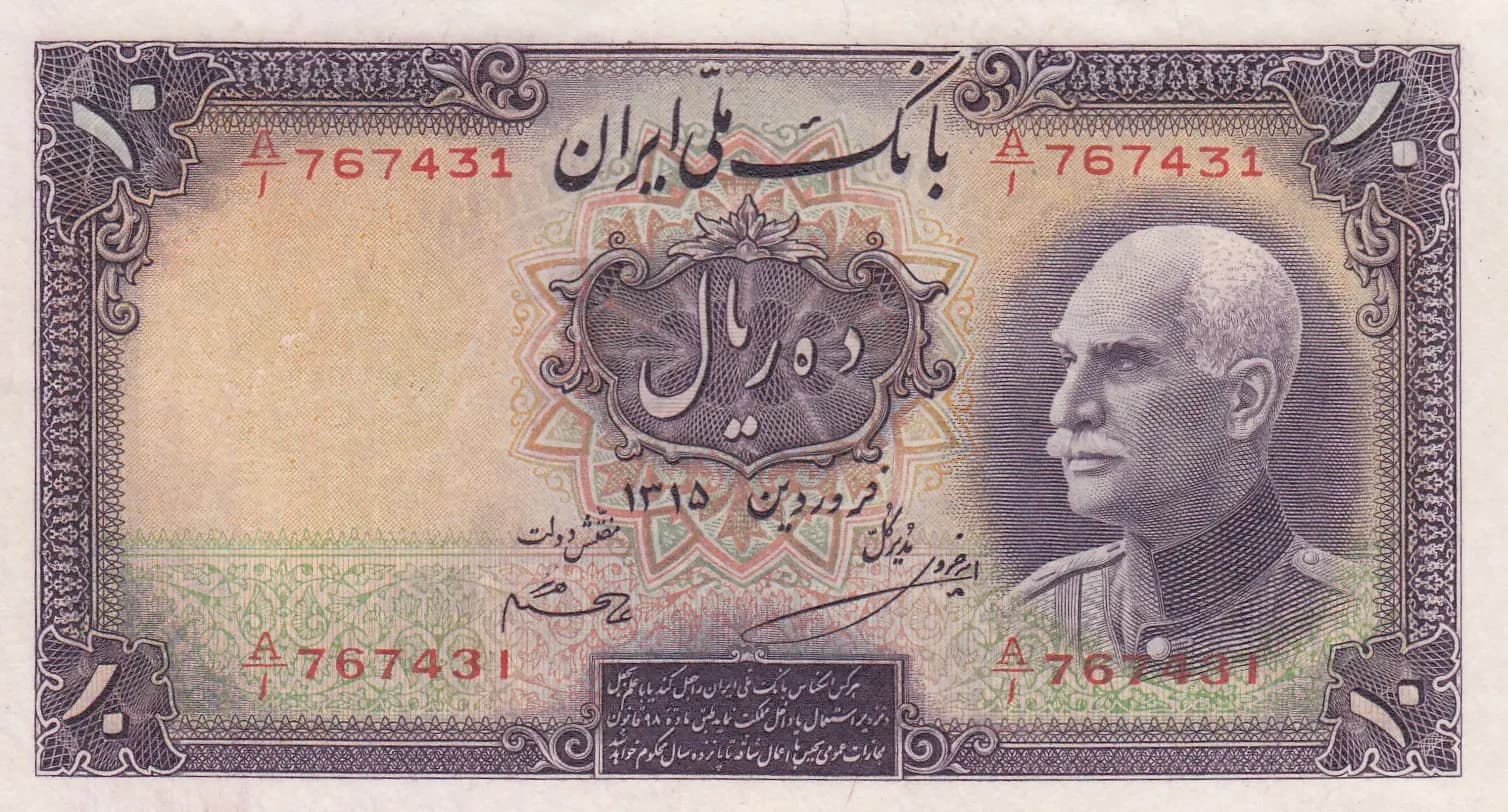
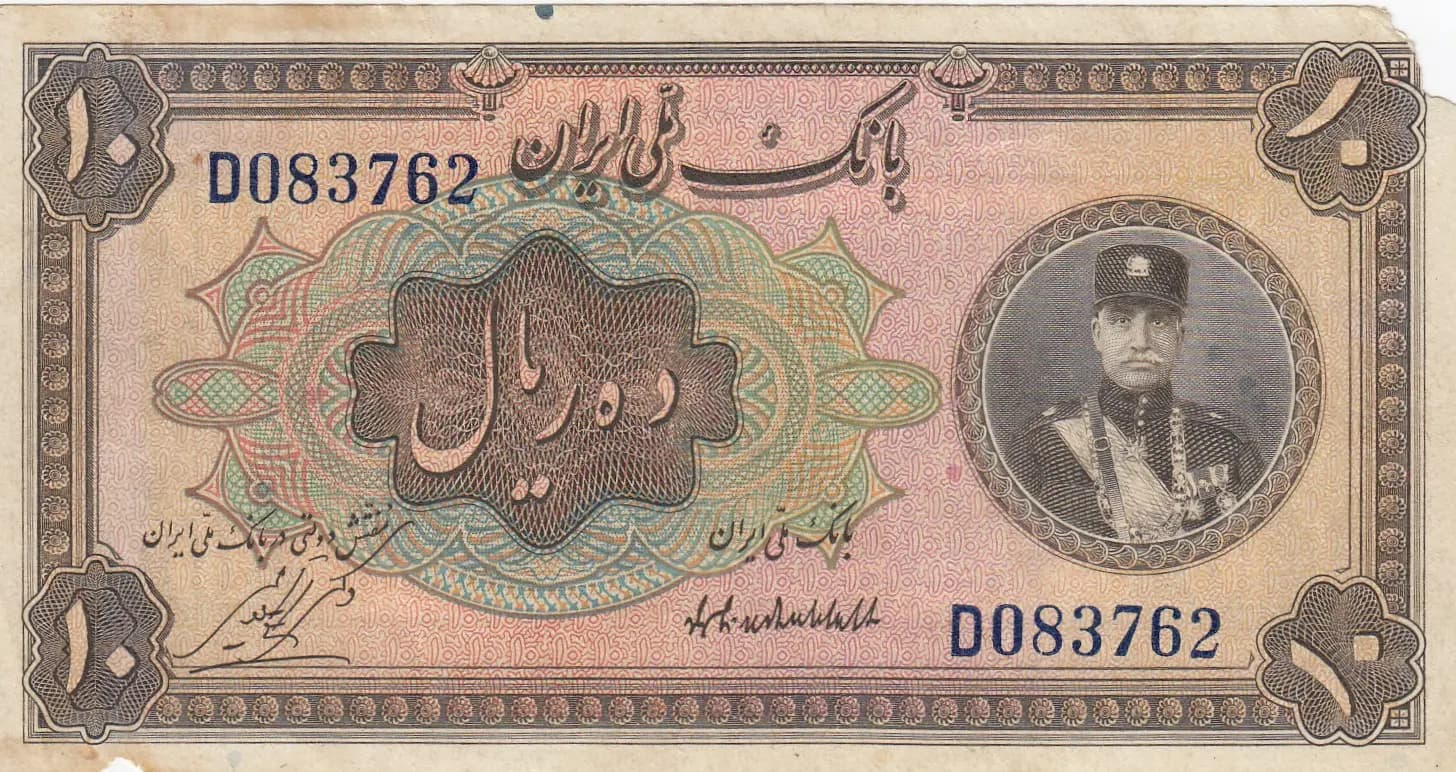
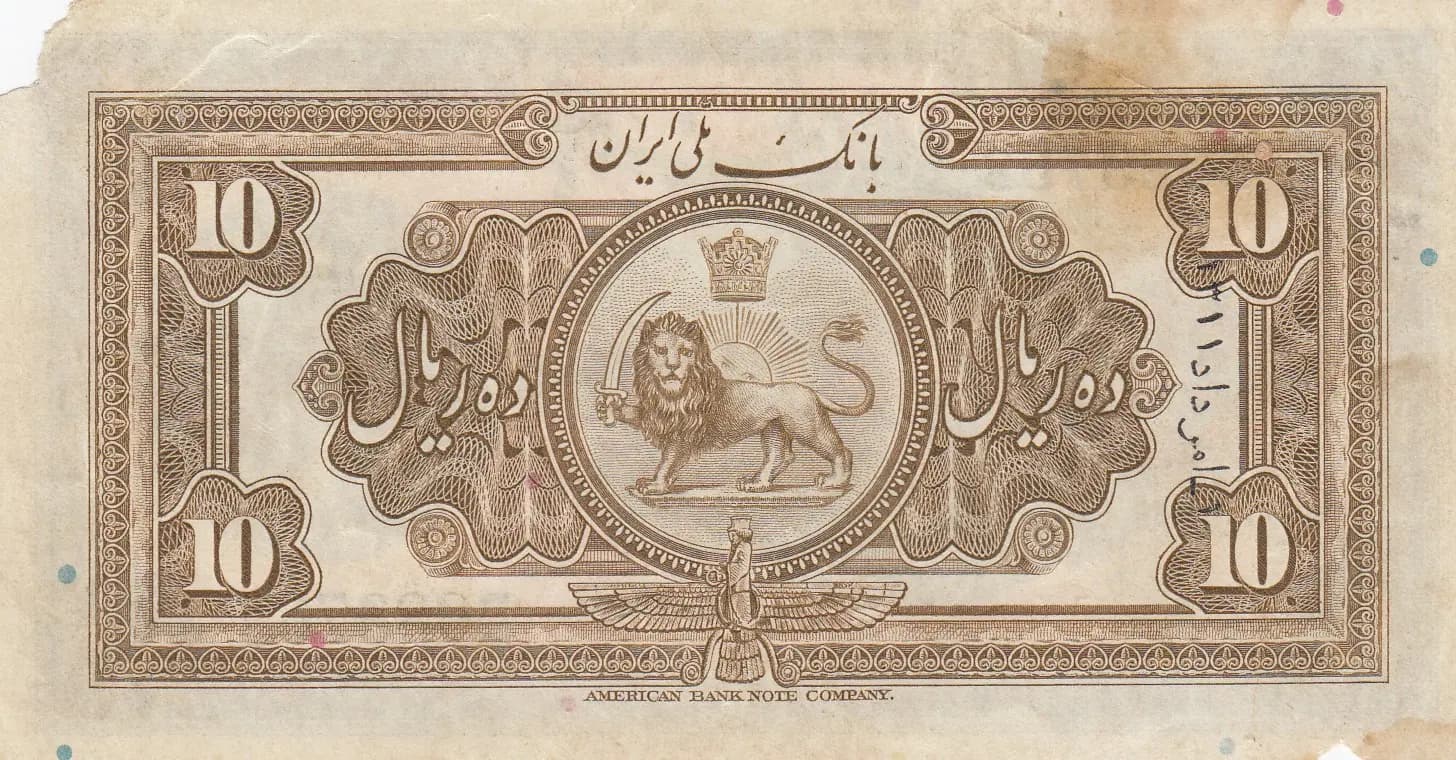
This is a Bank Melli Iran 10 Rials note from 1932 (SH 1311), printed by the American Bank Note Company. The front features a portrait of Reza Shah Pahlavi in military dress with peaked cap within an ornate circular frame, surrounded by elaborate Persian geometric and floral patterns in brown, pink, and green. The reverse displays the iconic Lion and Sun emblem (lion holding a sword with winged eagles) within decorative borders. In Fair condition, the note exhibits age-appropriate patination, light creasing, and minor staining consistent with circulation, yet remains structurally sound with no major tears.
Common. While this is an early Pahlavi-era note from 1932, the catalog reference data shows regular market activity with VG examples selling for approximately $20-72.50 USD and Fair examples documented at $48. The PMG population report indicates this is an established, catalogued variety rather than a scarce issue. The American Bank Note Company's professional production and Bank Melli Iran's substantial issuing authority suggest reasonable original print quantities. For Fair condition specimens, market values align with common circulated early 20th-century Middle Eastern notes.
This note was issued during the reign of Reza Shah Pahlavi (r. 1925-1941), marking the early modernization of Iran under the Pahlavi dynasty. The portrait of the Shah in military uniform symbolized his role as a reformist military leader, while the reverse's Lion and Sun—Iran's national emblem—reinforced state sovereignty and nationalist identity during this transformative period. The use of American Bank Note Company for production reflects Iran's engagement with Western banking and security printing practices in the interwar period.
The obverse presents a formal portrait of Reza Shah Pahlavi facing left in military dress, wearing a high peaked cap (kalpak) and military decorations, contained within an ornate circular frame with radiating lines. The surrounding field features an elaborate Persian cartouche with intricate geometric palmette and floral motifs in a polychromatic scheme. The reverse displays Iran's Lion and Sun national emblem as the central motif—a standing lion in profile facing right, holding an upright scimitar or curved sword, crowned and flanked by two winged eagles. The composition is framed within a decorative circular border with fine line work, surrounded by repeating heart and floral border patterns typical of early 20th-century Persian design aesthetics. Four-petaled flower ornaments appear in all corners on both sides.
Front: 'بانک ملی ایران' (Bank Melli Iran / National Bank of Iran); Serial number 'D083762' appears twice. Back: Denomination '10' appears in all four corners; 'بانک ملی ایران' (Bank Melli Iran); 'AMERICAN BANK NOTE COMPANY.' (printer attribution, English). The date SH 1311 (Solar Hijri calendar, equivalent to 1932) is noted vertically on the reverse.
Intaglio engraving (line engraving), executed by American Bank Note Company of New York, one of the world's premier security printers. The note exhibits characteristic fine line work, intricate cross-hatching, and detailed ornamental patterns achievable only through engraved plate technology. The multi-color printing appears to be achieved through successive plate passes, typical of high-security banknote production of the 1930s era.
Pick catalog P-19. The visual analysis confirms the standard obverse type with Reza Shah portrait and reverse with Lion and Sun emblem. Serial number D083762 is observed. PMG records indicate one primary variant for this base Pick number. No overprints, date variations, or significant printing varieties are evident in this specimen. This represents the regular issue from the 1932 emission, with no distinguishing characteristics suggesting rare varieties or errors.