10 rials 1936
Market Prices
About This Note
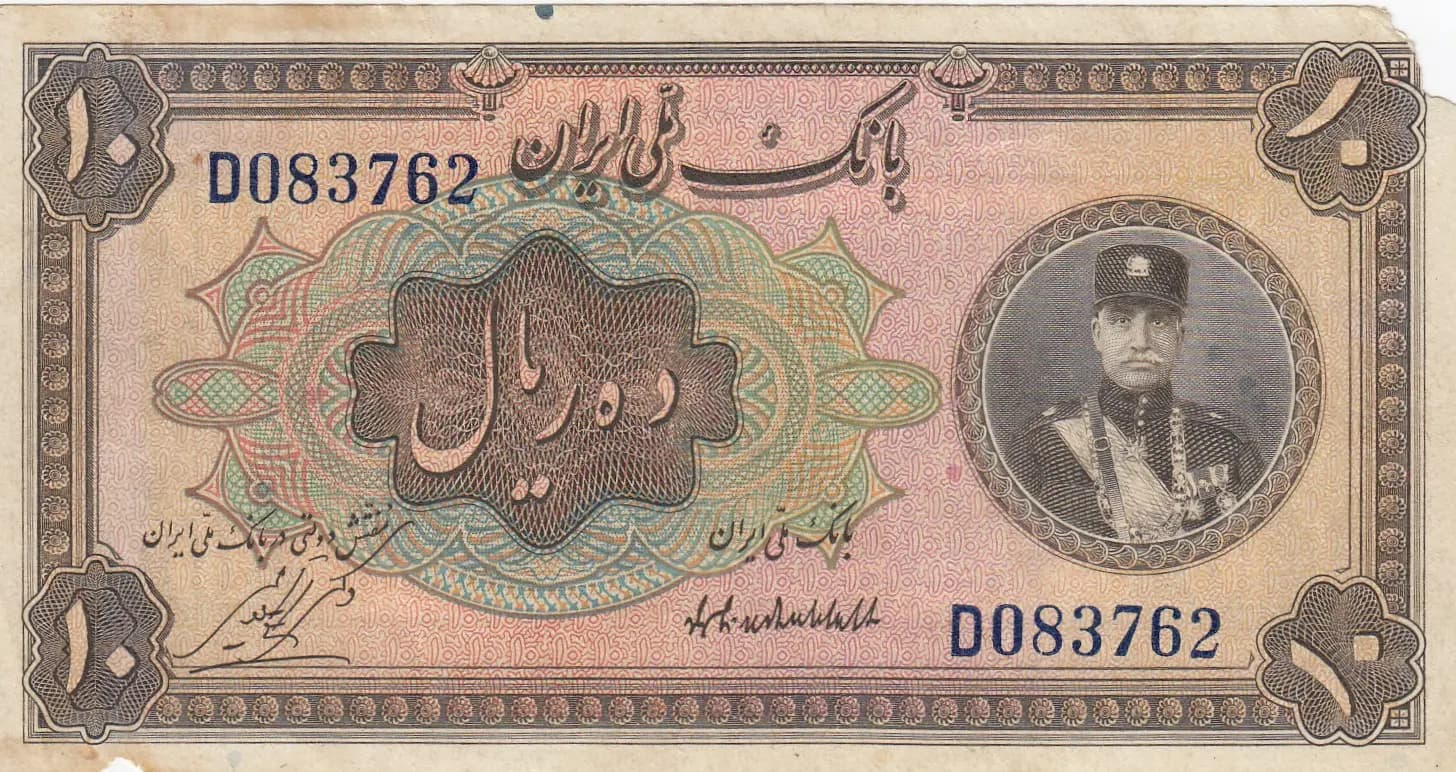
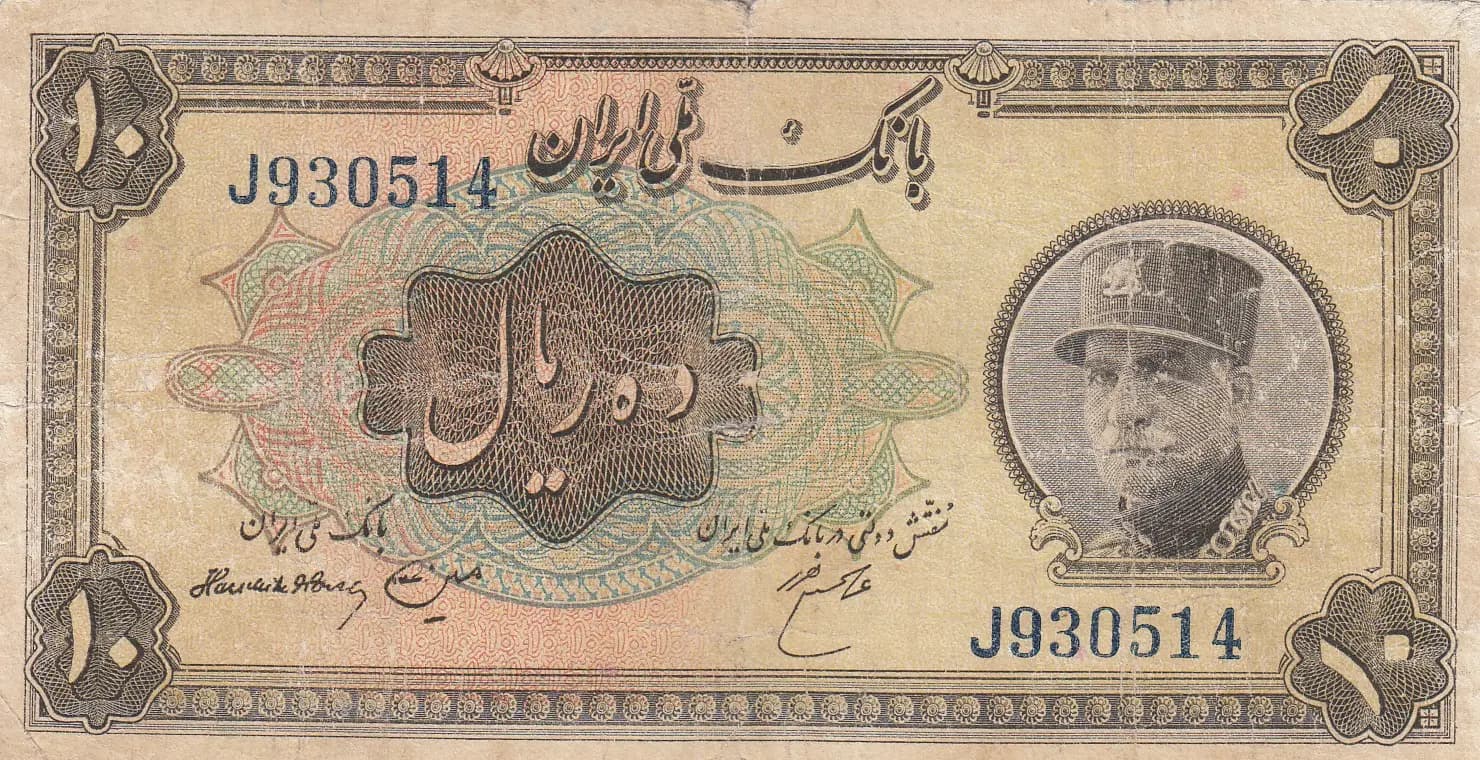
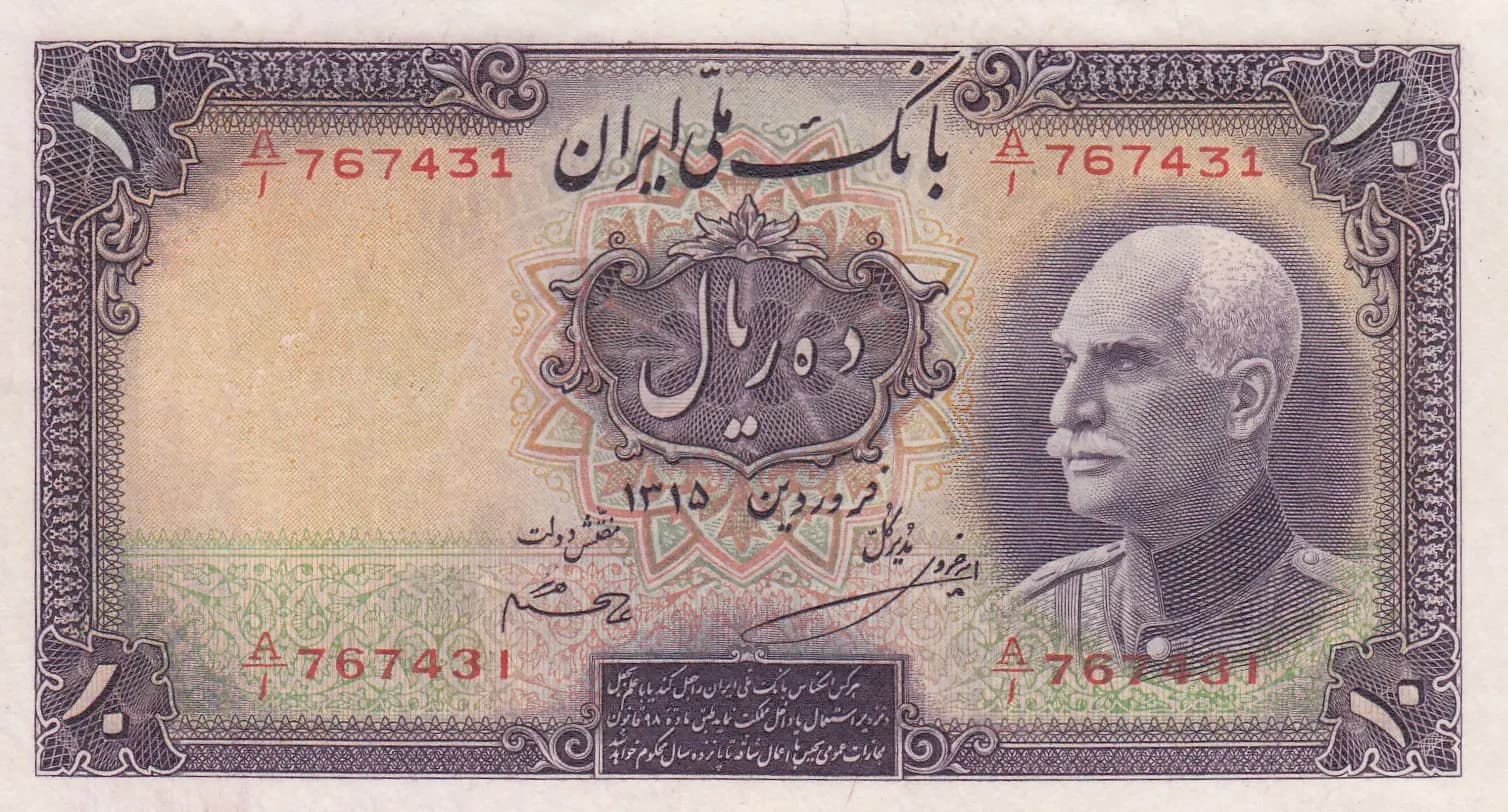
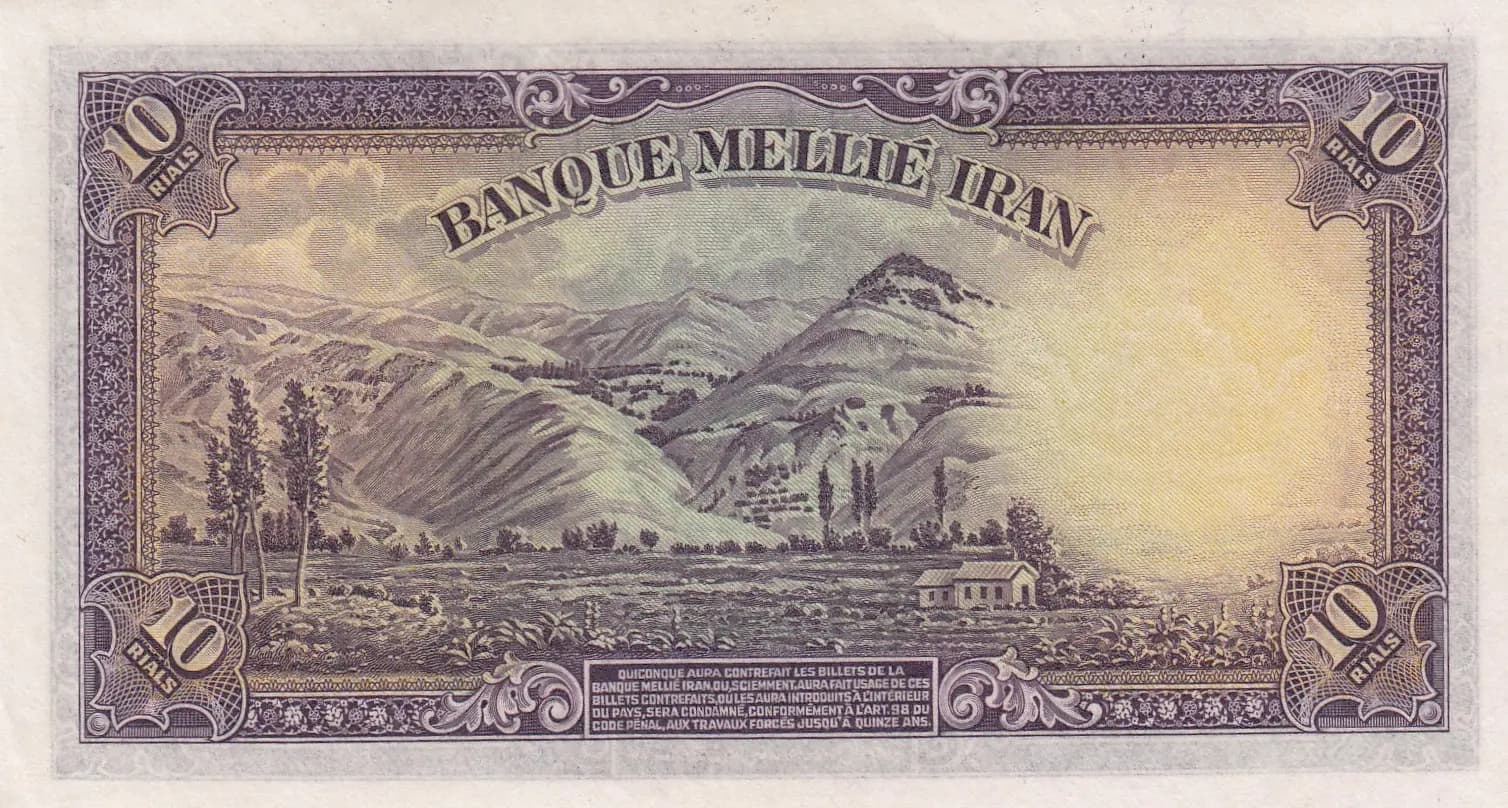
This is an exceptionally well-preserved example of Iran's first modern banknote, the 10 Rials issued by Bank Melli Iran in 1936 (SH 1315). The note displays the characteristic purple and cream color scheme with intricate engraved designs on both sides, showing minimal wear consistent with uncirculated preservation. The front features a distinguished portrait of Reza Shah Pahlavi in profile, while the reverse showcases a detailed landscape of the Alborz mountains with cypress trees and a river valley—imagery reflecting the modernization and national pride of Iran's early Pahlavi era.
Common. While this is an early and historically significant Iranian banknote, the 10 Rials P-31 from 1936 was issued in sufficient quantities to remain common in the numismatic market. Catalog values from 2016 show UNC examples trading at $300, which reflects scarcity relative to modern notes but falls well within the range of commonly available early 20th-century banknotes. The note is widely available in various conditions through dealers and auction platforms, and no specific varieties are known to command premium prices. The visual evidence of minor aging (foxing, creasing) visible in the images is consistent with normal handling of a 90-year-old note, not an indicator of extreme rarity.
This banknote was issued during the reign of Reza Shah Pahlavi (r. 1925-1941), a period of significant modernization and centralization in Iran. The establishment of Bank Melli Iran in 1927 and the introduction of this currency marked a major step in Iran's financial independence and economic development. The Alborz mountains depicted on the reverse symbolize Iran's natural heritage and geographic identity, while the French language inscription reflects the international diplomatic and financial standards of the era.
The obverse features a formal right-facing profile portrait of Reza Shah Pahlavi, the founder of the Pahlavi dynasty, rendered in fine engraved detail. The portrait is positioned on the right side of the note and occupies a prominent position befitting the nation's paramount leader. The central design comprises an ornate Islamic geometric and floral medallion with Persian calligraphic elements, flanked by decorative scrollwork and corner flourishes. The reverse showcases an engraved landscape depicting the Alborz mountain range in the background, with a river or water body in the middle ground, cypress trees characteristic of Persian gardens, rolling hillsides with vegetation, and a small white structure (likely representing rural Iranian architecture) on the right. The entire composition is framed by an ornamental border featuring geometric and floral patterns typical of early 20th-century currency design. The color scheme of purple/violet overprint on cream/tan background creates a distinctive visual identity for this denomination.
FRONT SIDE: 'بانک ملی ایران' (Bank Melli Iran) — the issuing bank; '۱۰' (10) — denomination in Persian numerals; 'فروردین ۱۳۱۵' (Farvardin 1315) — Islamic calendar date corresponding to March 1936; 'محمد علی' (Muhammad Ali) — likely a bank official's name or signature authority; 'A 767431' — serial number. BACK SIDE: 'BANQUE MELLI IRAN' (Bank Melli Iran) — issuing bank in French; '10' and 'RIALS' — denomination; 'QUICONQUE AURA CONTREFAIT LES BILLETS DE LA BANQUE MELLI IRAN OU AURA FAIT USAGE DE CES BILLETS CONTREFAITS SERA POURSUIVI CONFORMEMENT A L'ART.88 DU CODE PENAL AUX TRAVAUX FORCES JUSQU'A DOUSE ANS.' (French anti-counterfeiting warning: 'Whoever has counterfeited the notes of Bank Melli Iran or has made use of these counterfeit notes will be prosecuted in accordance with Article 88 of the Penal Code for forced labor up to twelve years.').
This banknote was produced using intaglio engraving (also known as copperplate or steel plate engraving), the standard security printing method for currency of this era. The fine line work visible throughout the design—particularly in the portrait, landscape details, border patterns, and geometric elements—is characteristic of intaglio printing. The technical excellence and security features suggest production by a European security printing house, likely contracted by Bank Melli Iran. The consistent, high-quality reproduction of fine details and the deep impression of the engraved lines indicate professional-grade currency manufacturing.
Based on the visual analysis, this specimen exhibits serial number A 767431 with the 'A' prefix. The Pick catalog (P-31) lists only one known variant for this base number. The note bears the date 'Farvardin 1315' (March 1936) in the Persian calendar. No overprints, signature varieties, or design variations have been identified in this example. The standard reverse text in French and the consistent design elements across known examples suggest this represents the standard, unmodified issue of the 10 Rials P-31.