20 rials 1938
Market Prices
6 salesAbout This Note
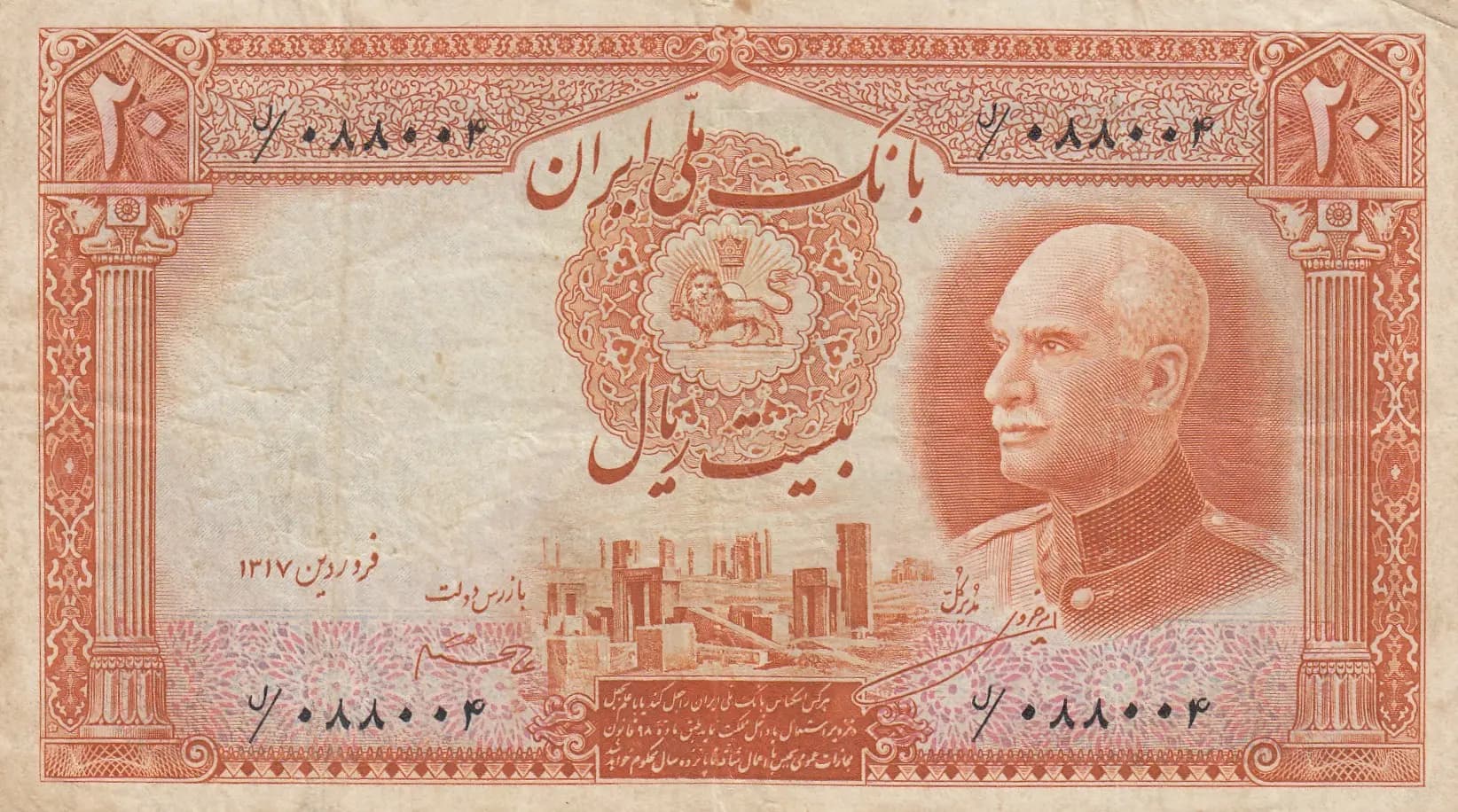
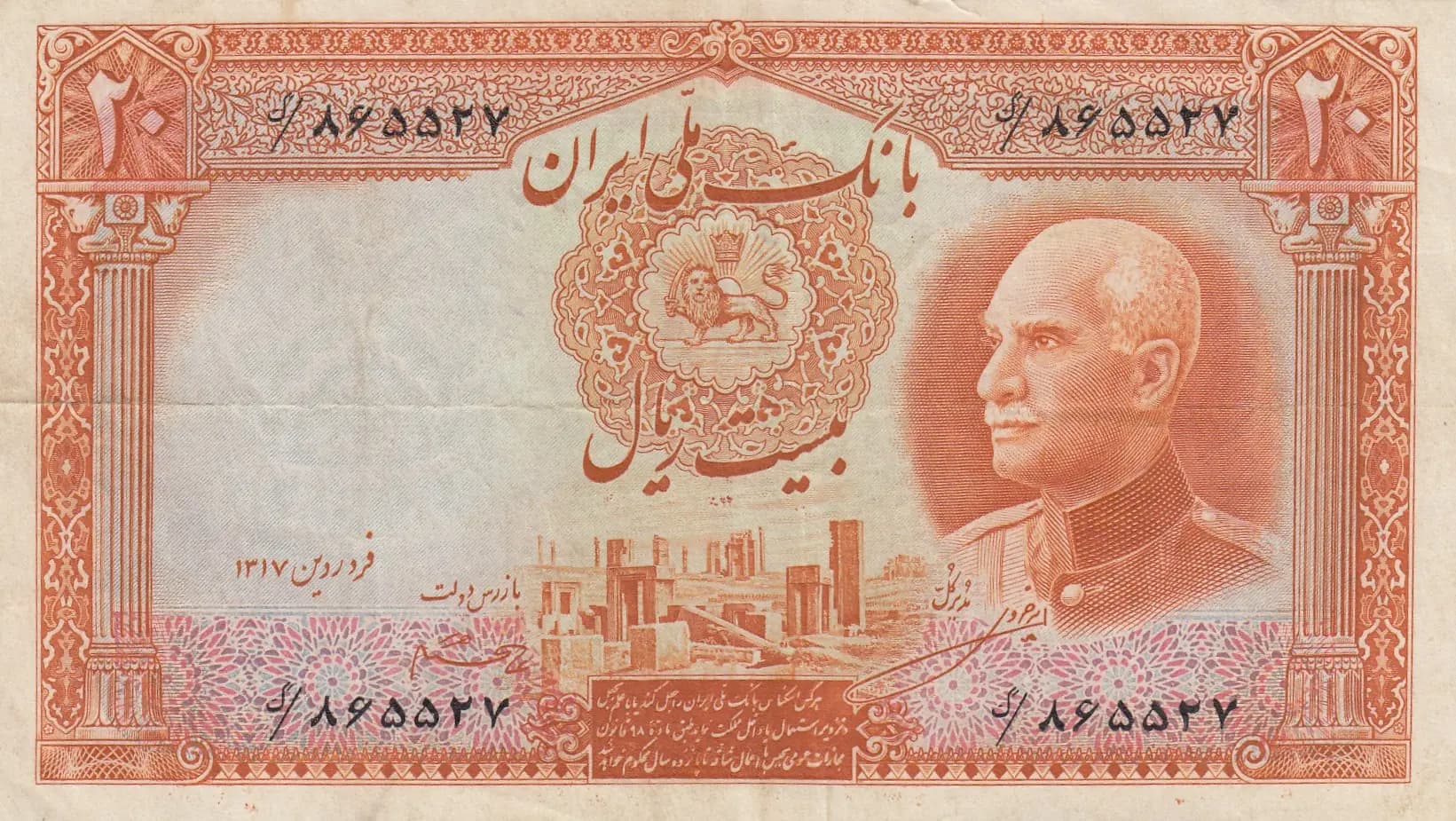
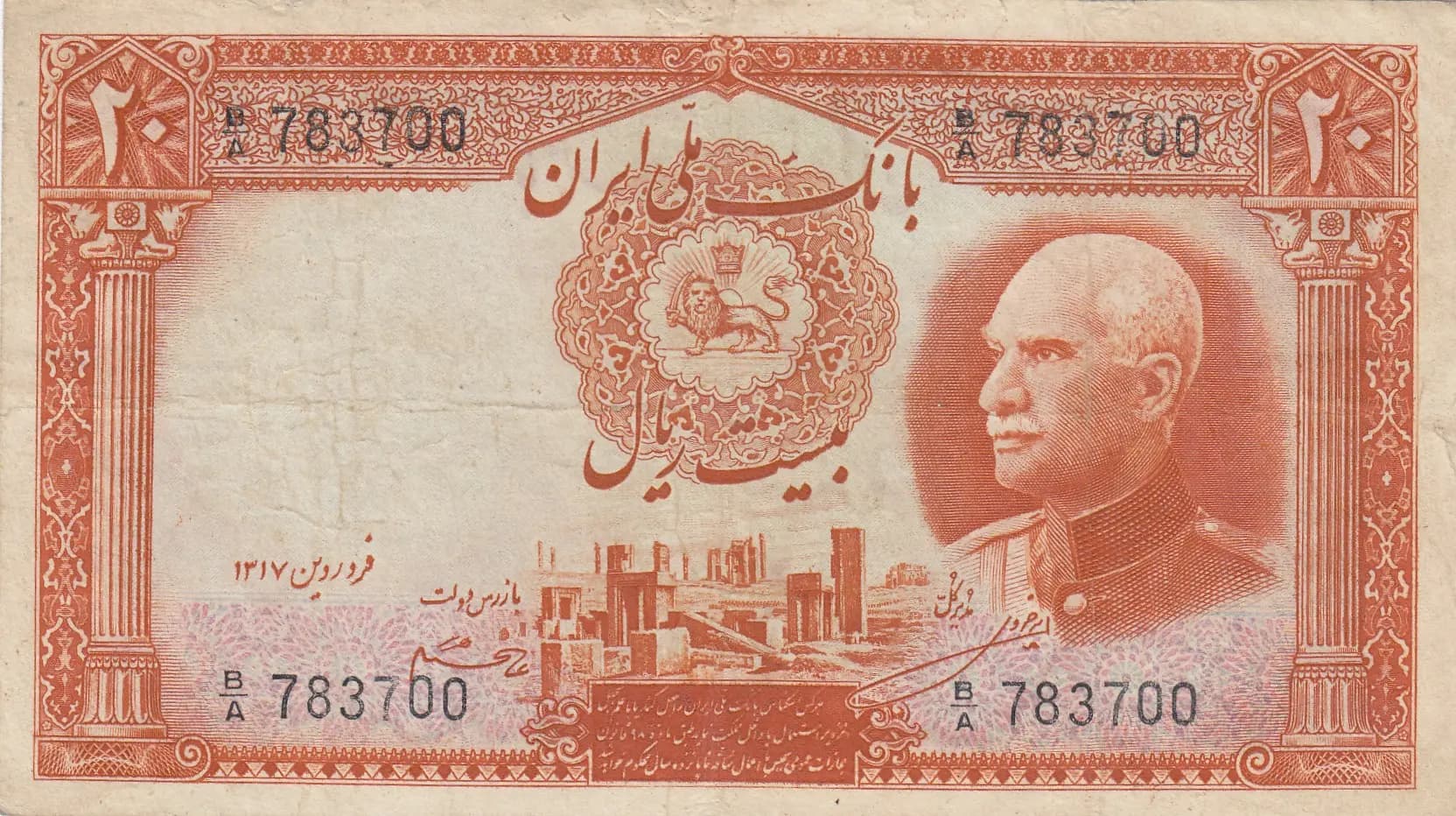
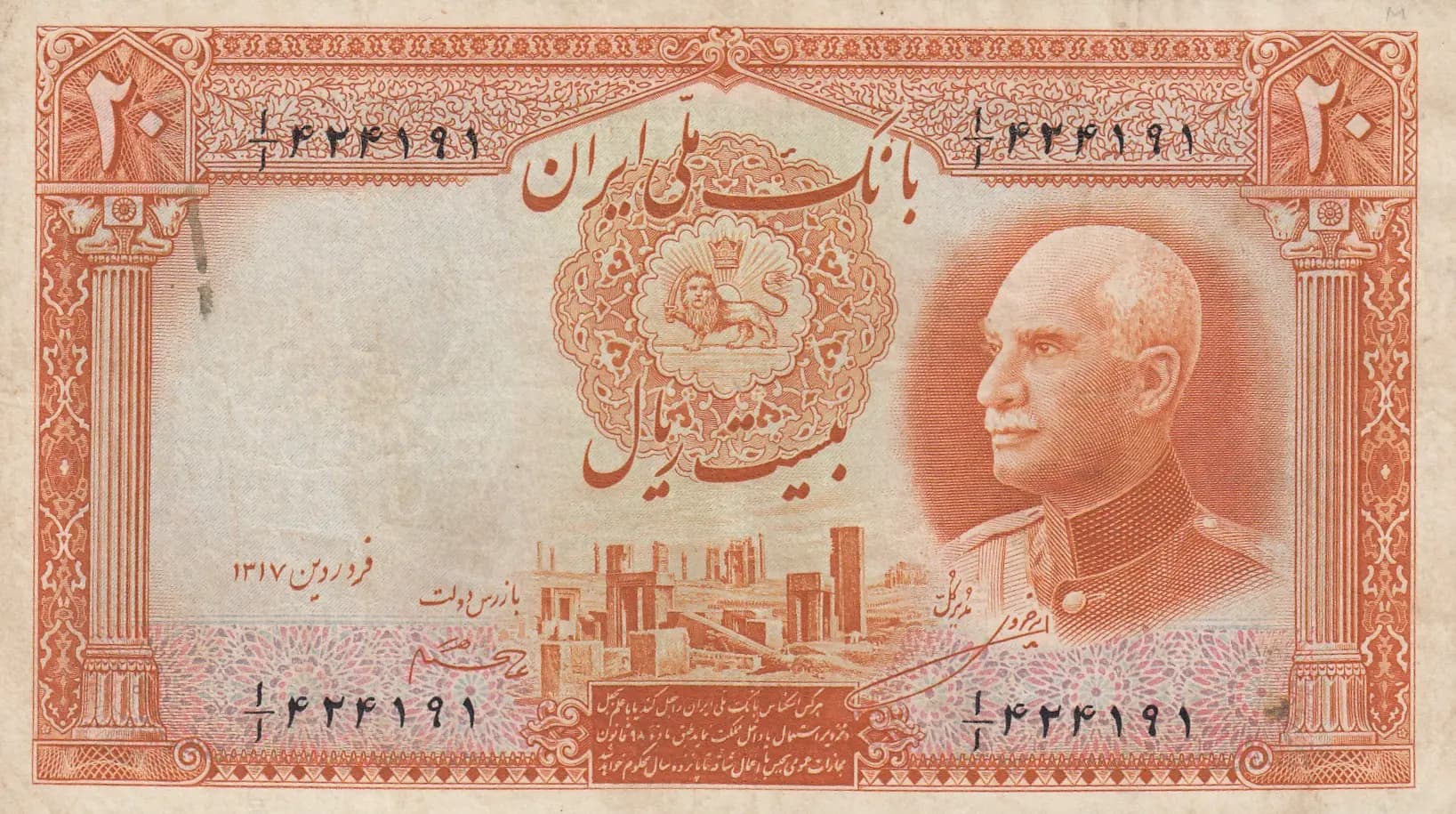
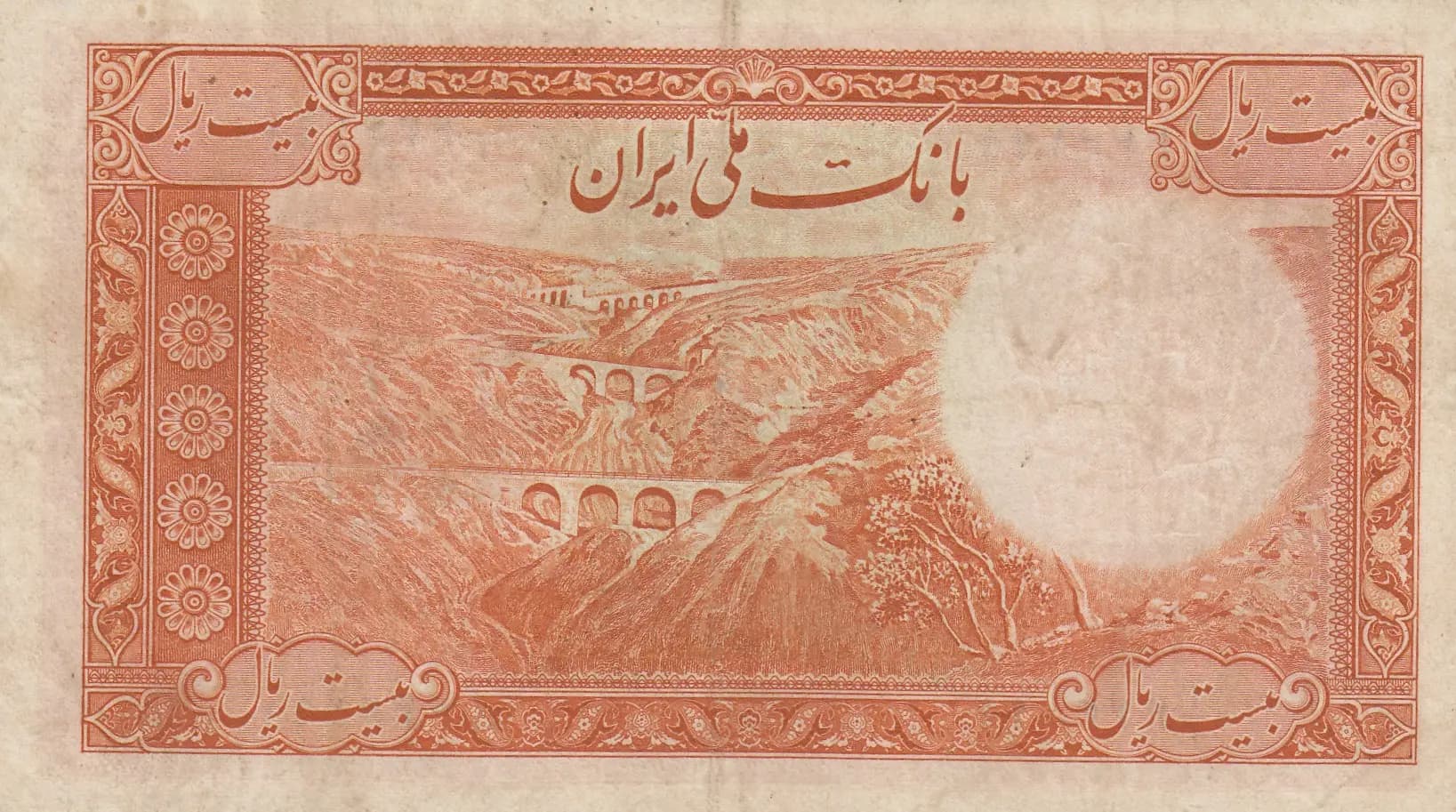
This is a VF-grade 20 Rials note from Bank Melli Iran dated SH 1317 (1938), displaying the characteristic red-orange and cream color scheme typical of early Iranian currency. The obverse features a left-facing portrait of Reza Shah Pahlavi in military uniform alongside a cityscape and central lion emblem, while the reverse depicts the iconic Veresk Bridge of the Trans-Iranian Railway spanning a mountainous landscape. Visible aging with foxing and light discoloration throughout is consistent with the VF grade and extended circulation, making this a desirable example of Iran's interwar-period monetary design.
Common. Market data from realbanknotes.com indicates regular sales activity with VF examples consistently selling in the $5.50–$54 range across multiple transactions from 2009–2017, establishing a liquid secondary market typical of common-grade notes. The 2016 catalog valuation of $150 for VF reflects retail expectations, but actual auction and eBay prices substantially below catalog values confirm this is a readily available note in its grade. Print runs for Bank Melli Iran 20 Rials of this period were substantial, supporting the common classification.
This note was issued during the reign of Reza Shah Pahlavi (r. 1925–1941), a period of significant modernization and national development in Iran. The reverse's depiction of the Veresk Bridge commemorates the completion of the Trans-Iranian Railway, one of the era's most ambitious infrastructure projects connecting the Caspian Sea to the Persian Gulf. The portrait and lion emblem on the obverse reflect the nationalist iconography and state-building initiatives that characterized Pahlavi-era currency design.
The obverse (front) features a formal left-facing portrait of Reza Shah Pahlavi depicted without a cap, wearing a high-collared military uniform with visible button detail, positioned on the right side of the composition. The central design element is an ornate medallion containing the Pahlavi lion and sun symbol within elaborate floral and geometric borders. Below the portrait is a cityscape representing Tehran or another major Iranian urban center, rendered in fine engraving detail. The reverse (back) depicts the Veresk Bridge (also known as the Viaduct of Kazerun), a major engineering achievement of the Trans-Iranian Railway spanning a mountainous valley in northern Iran near kilometer 240 between Veresk and Dowgal. Both sides employ intricate guilloche patterns and scrollwork in the decorative frame borders. The predominant color is red-orange overprinted on a cream or pale yellow base, with fine line engraving providing detailed rendering throughout.
Front Side: بانک ملی ایران (Bank Melli Iran/National Bank of Iran); فروردین ۱۳۱۷ (Farvardin 1317, corresponding to 1938 CE); ۲۰ (20); ریال (Rial). Back Side: بانک ملی ایران (Bank Melli Iran); ریال (Rial). Serial numbers appear in both Western and Persian numerals on the front, with additional Persian text present on the reverse.
Intaglio engraving (taille-douce), utilizing fine line work and guilloche patterns typical of high-security banknote production of the 1930s. The precision of the portrait rendering, architectural detail in the cityscape and bridge, and ornamental borders indicate professional security printing standards. No specific printer attribution is definitively documented for this Pick number variant in readily available sources, though Bank Melli Iran's notes from this period were produced by established European security printers.
This note is cataloged as Pick 34Ab, one of five documented variants (34Aa, 34Ab, 34Ad, 34Ae, 34Af) for the base 20 Rials 1938 issue. The 34Ab variant is distinguished by the presence of French text on the reverse (as noted in the banknote.ws reference), differentiating it from the 34A (without French text). The note displays Persian serial numbers visible in the obverse, consistent with standard 34Ab specimens. The date inscription in Persian calendar (Farvardin 1317) and the absence of a date stamp are characteristic features aligning with this variant.