20 rials 1938
About This Note
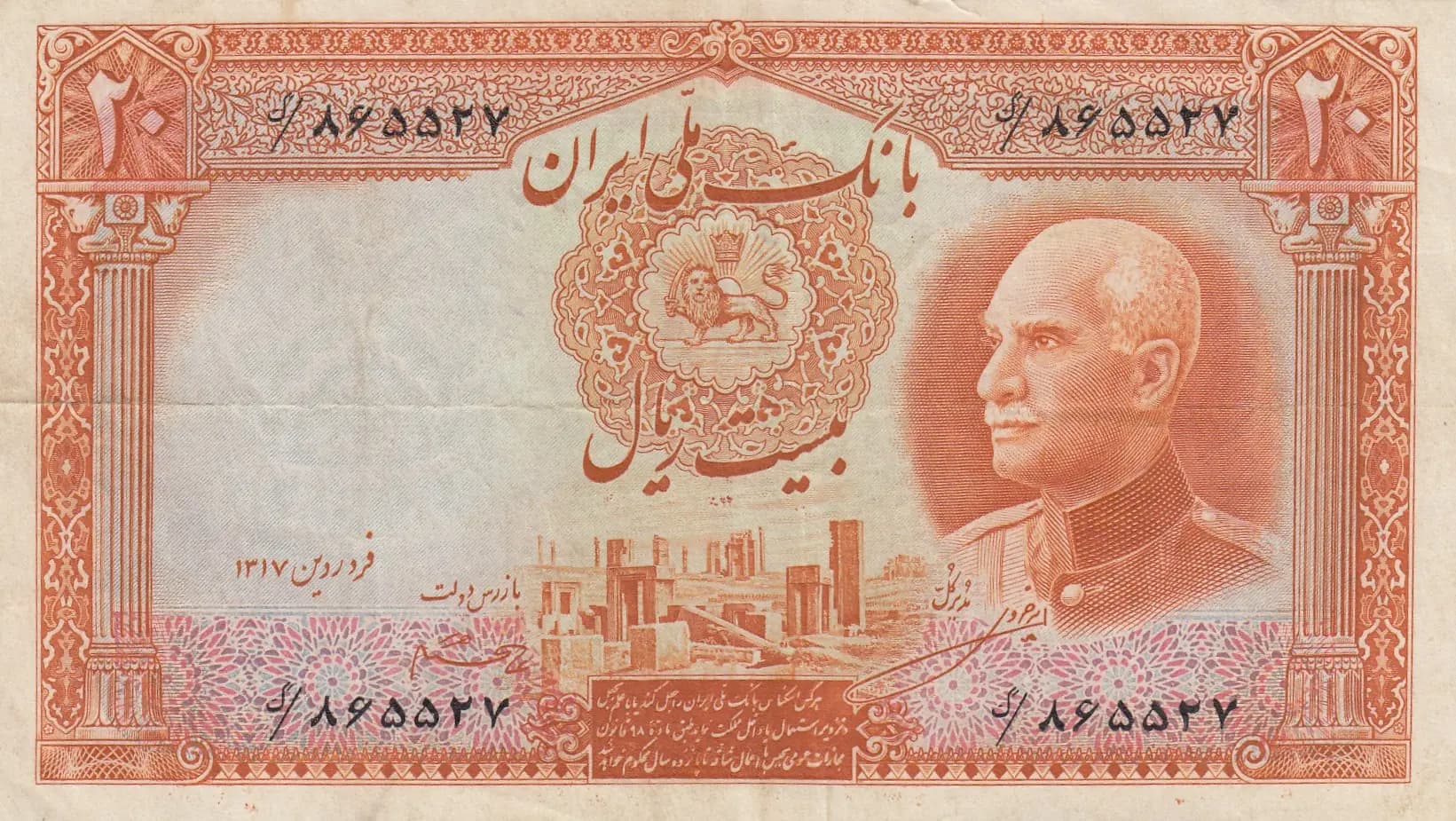
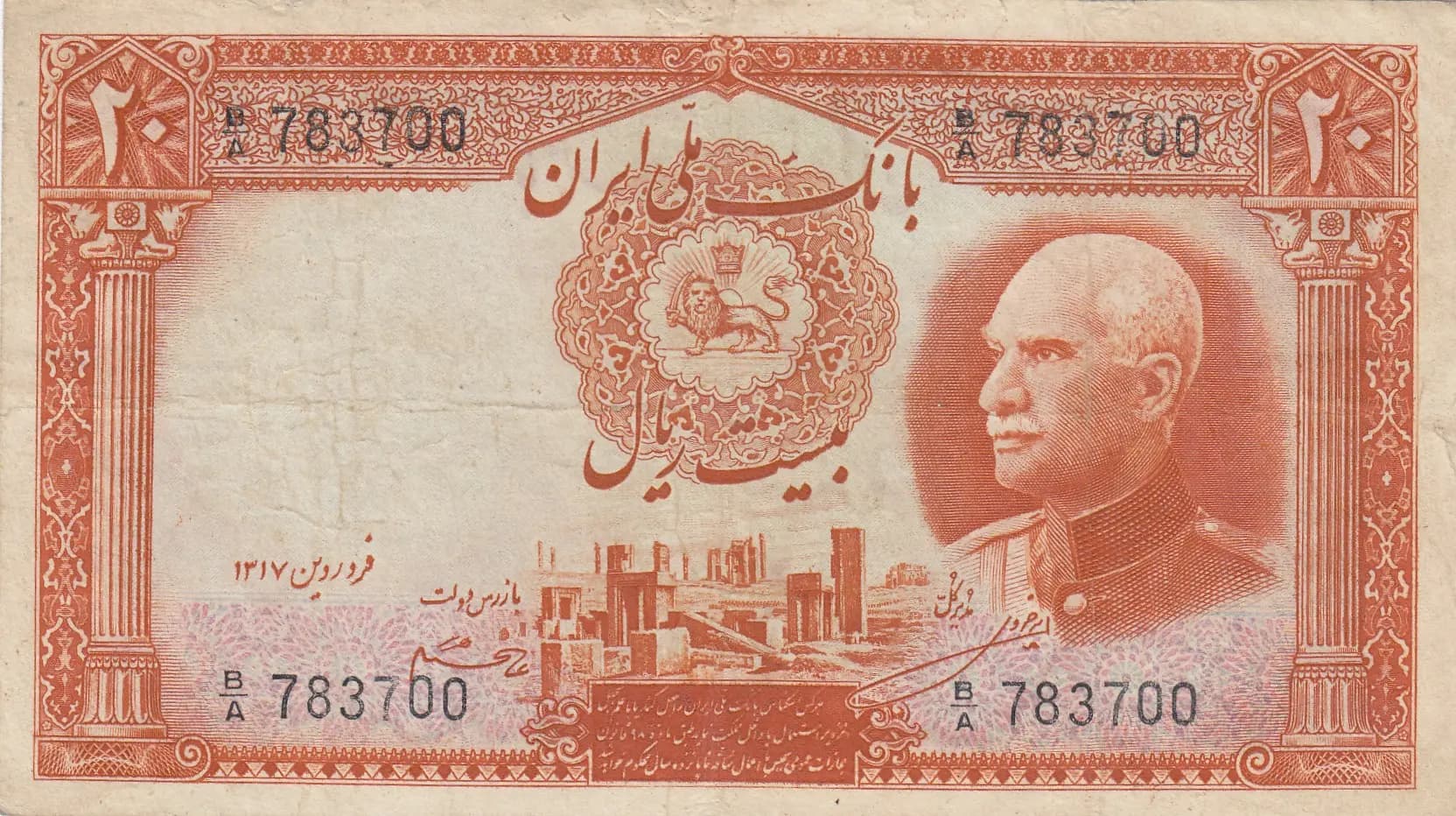
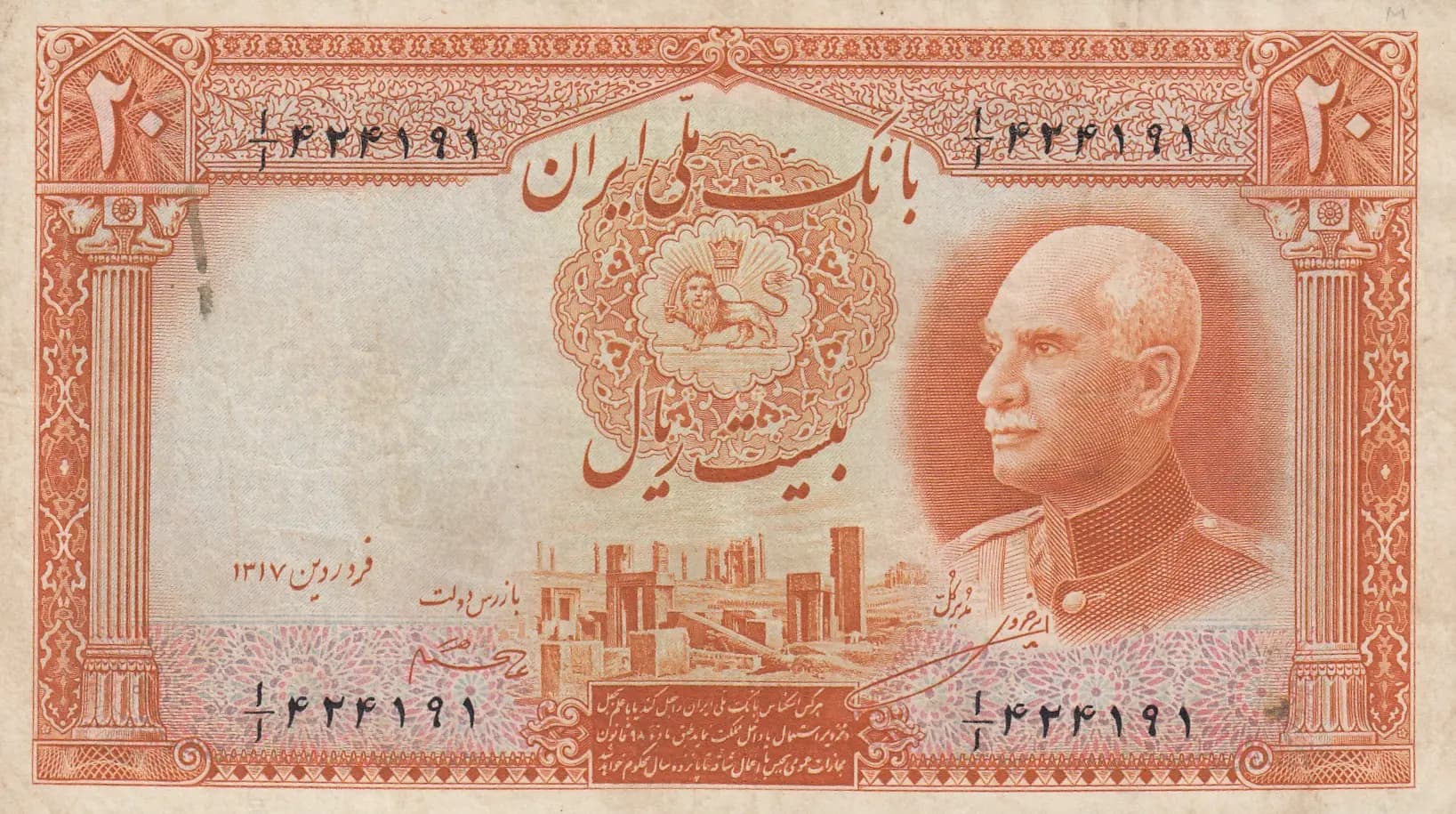
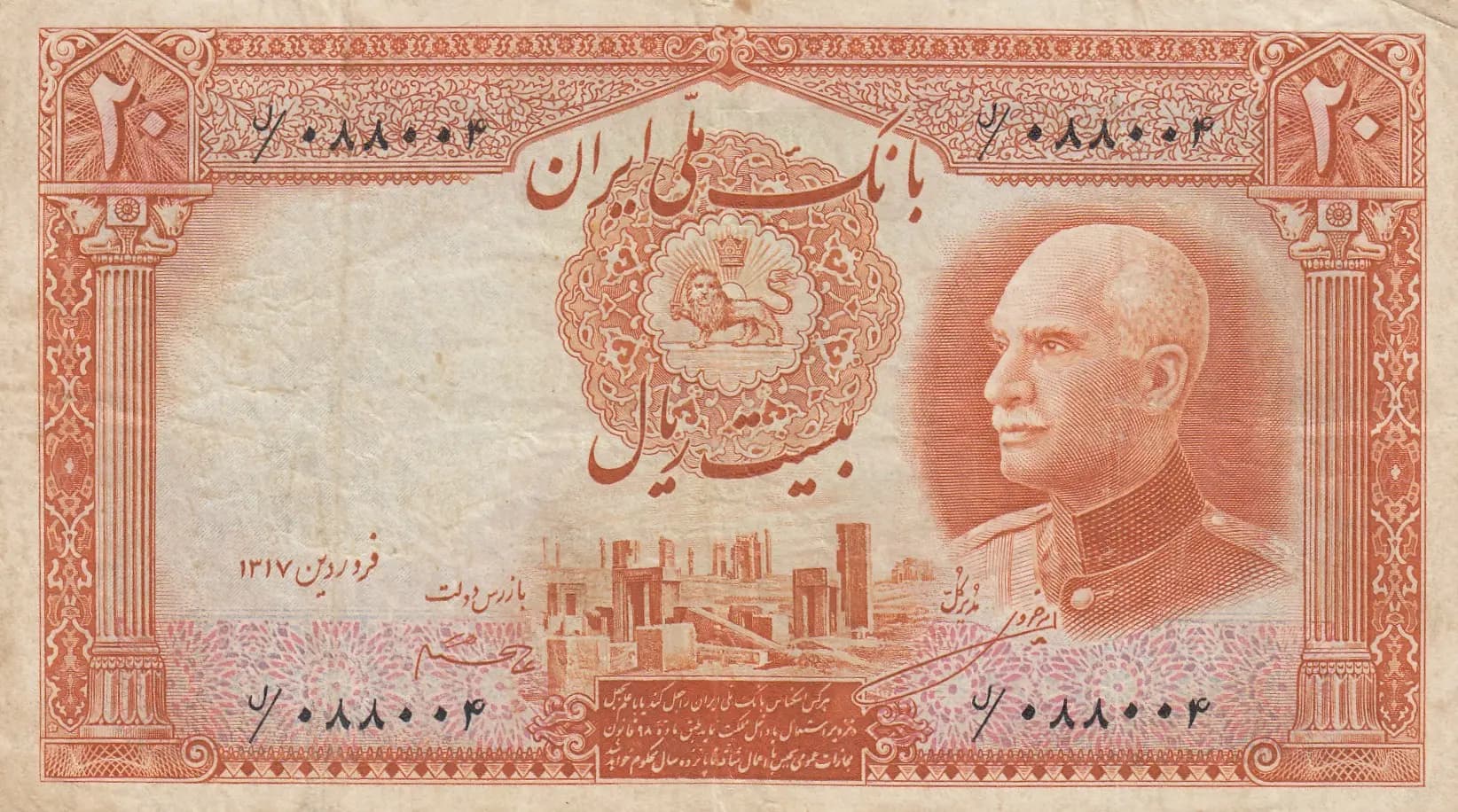
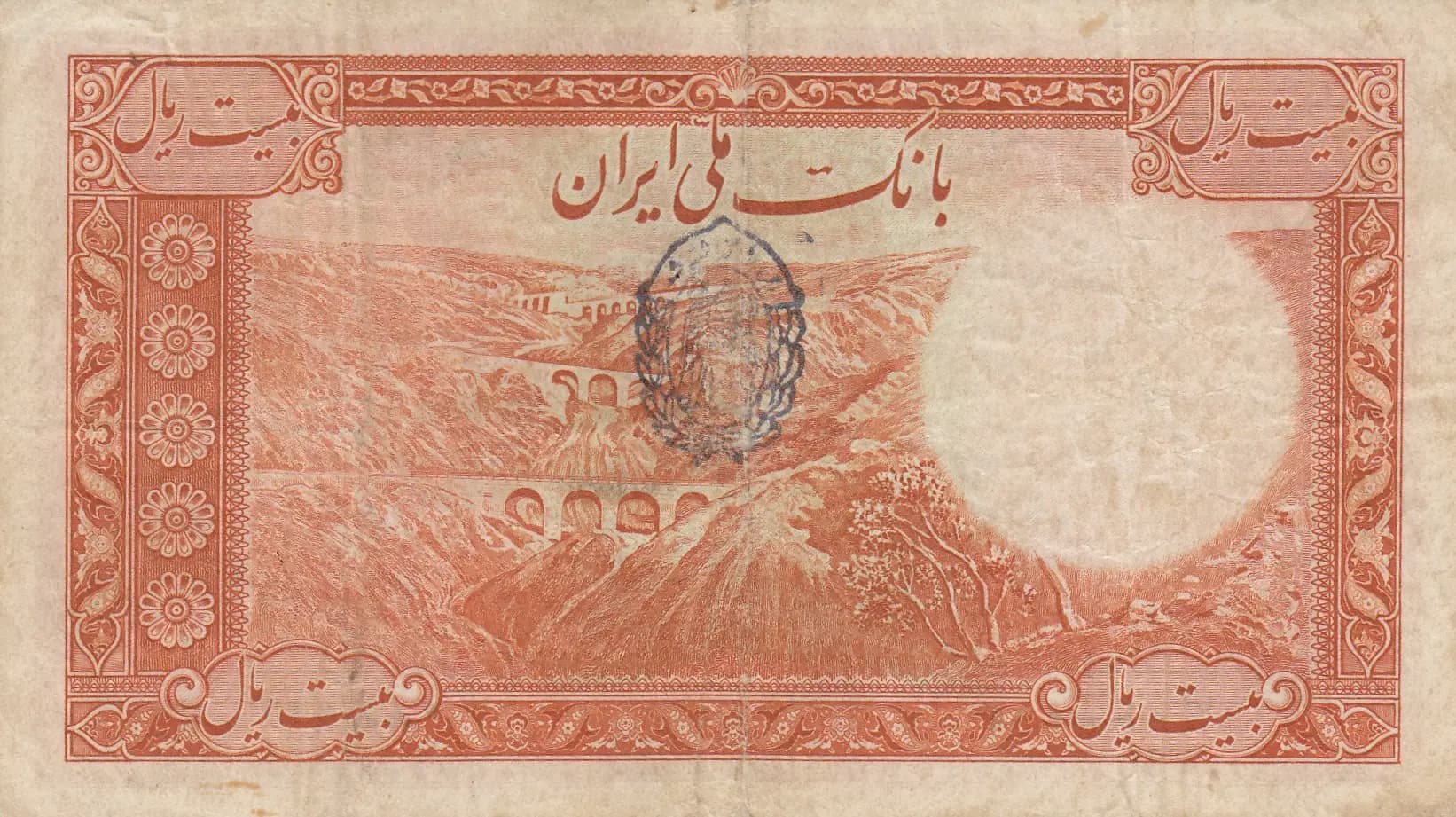
A scarce early Iranian banknote from 1938 (SH 1317) depicting Reza Shah Pahlavi in military profile on the obverse and the dramatic mountain landscape of the Trans-Iranian Railway viaduct region on the reverse. The note exhibits the characteristic red-orange color palette and fine engraving typical of this era's Bank Melli Iran currency. In Fair condition, this note shows age-appropriate foxing, creasing, and patina, with a notable postal/cancellation mark visible across the reverse landscape image, indicating historical circulation and use.
Uncommon. Early Iranian banknotes from the 1930s-1940s Reza Shah period survive in lower numbers than later issues due to age and circulation wear. While not extremely rare, notes from this specific date and denomination in Fair condition with clear postal cancellation marks represent a specialized collector interest. The presence of the cancellation mark may reduce collector demand slightly, offsetting the inherent scarcity of the issue.
This note was issued during the reign of Reza Shah Pahlavi (r. 1925-1941), a period of modernization and centralization in Iran. The front portrait honors the Shah's authoritarian leadership, while the reverse depicts the Trans-Iranian Railway—a flagship infrastructure project completed in 1938 that symbolized national development and connected Iran's northern and southern regions. The railroad viaduct imagery represents the technological and engineering achievements that defined Reza Shah's modernization agenda.
The obverse features a left-facing portrait profile of Reza Shah Pahlavi in formal military dress uniform with decorative collar insignia and buttons, rendered in fine engraving within an ornate oval frame. Below the portrait is an architectural cityscape—likely representing Tehran or another major Iranian city—with detailed building renderings. Ornamental borders feature Islamic geometric and floral patterns with corner palmette designs and decorative column motifs flanking the central composition. The reverse displays an engraved landscape of the Veresk-Dowgal region of North Iran, depicting the spectacular mountain valley with a winding river and the engineered railroad viaduct structures on the hillside, demonstrating the surveyor's attention to topographical detail. The entire design is executed in red-orange tones with cream-beige background, characteristic of this series.
Front: 'بانک ملی ایران' (Bank Melli Iran / National Bank of Iran); 'فروردین ۱۳۱۷' (Farvardin 1317 / approximately March-April 1938 in the Islamic calendar); 'بیست ریال' (Twenty Rials); '۲۰' (20 in Persian numerals). Back: 'بانک ملی ایران' (Bank Melli Iran / National Bank of Iran); 'بیست ریال' (Twenty Rials).
Intaglio engraving (copperplate), a standard security printing technique for high-value currency of this period. The fine line work, intricate border patterns, and detailed topographical rendering on the reverse are hallmarks of hand-engraved intaglio production. Bank Melli Iran employed European security printers for this series; the technical quality and style suggest production by a major contract printer such as Thomas De La Rue or a similar establishment, though attribution requires additional documentary evidence.
The catalog reference indicates this may be P-34A, distinguished by the presence of the bank name 'Bank Melli Iran' in French on the back. The date on this note (Farvardin 1317 / March-April 1938) corresponds to the 1938 dating referenced in the catalog. No visible serial numbers, signatures, or other distinguishing variety markers are clearly discernible from the images provided. The postal/cancellation overprint observed on the reverse is a post-issue marking rather than a printing variety.