20 rials 1938
About This Note
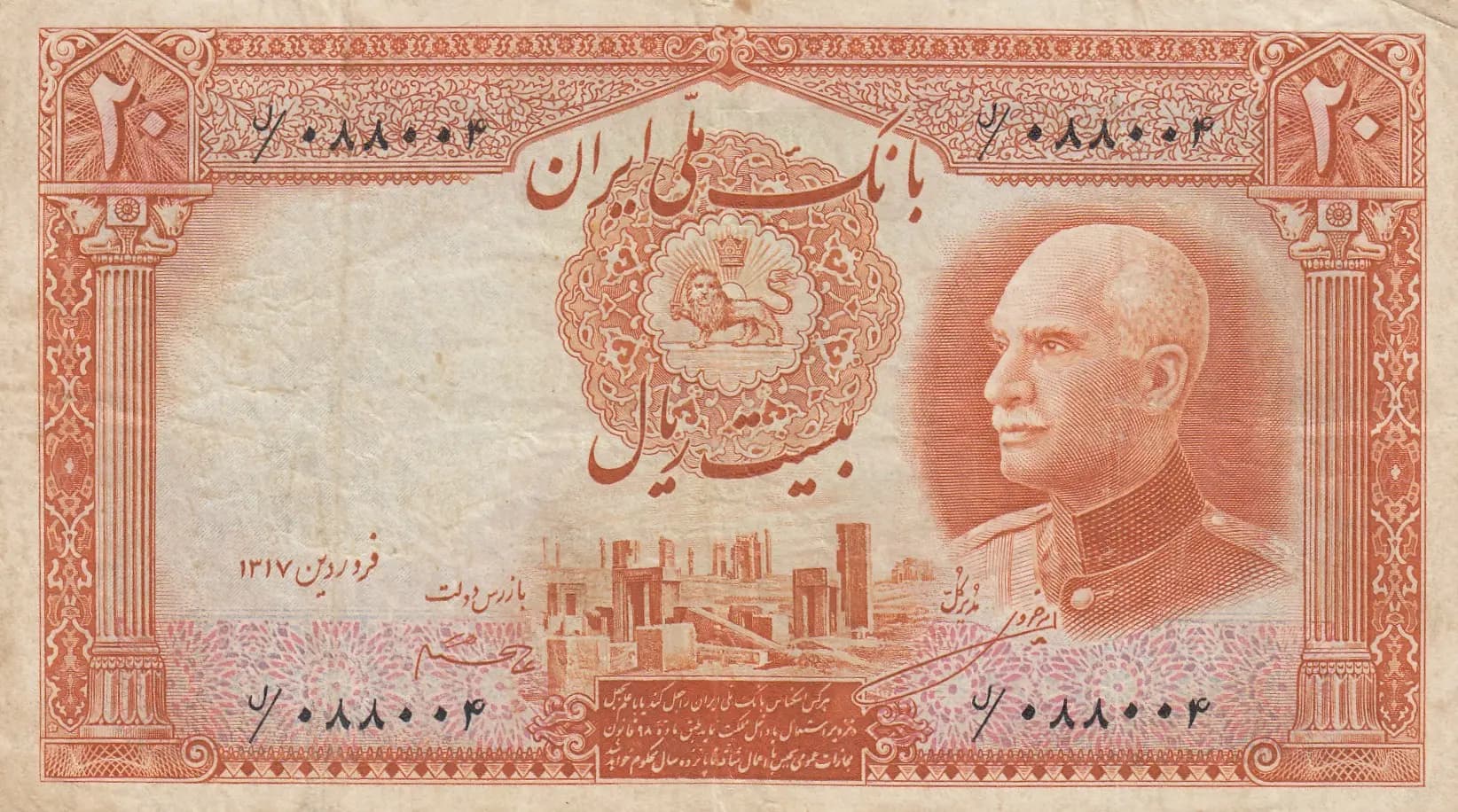
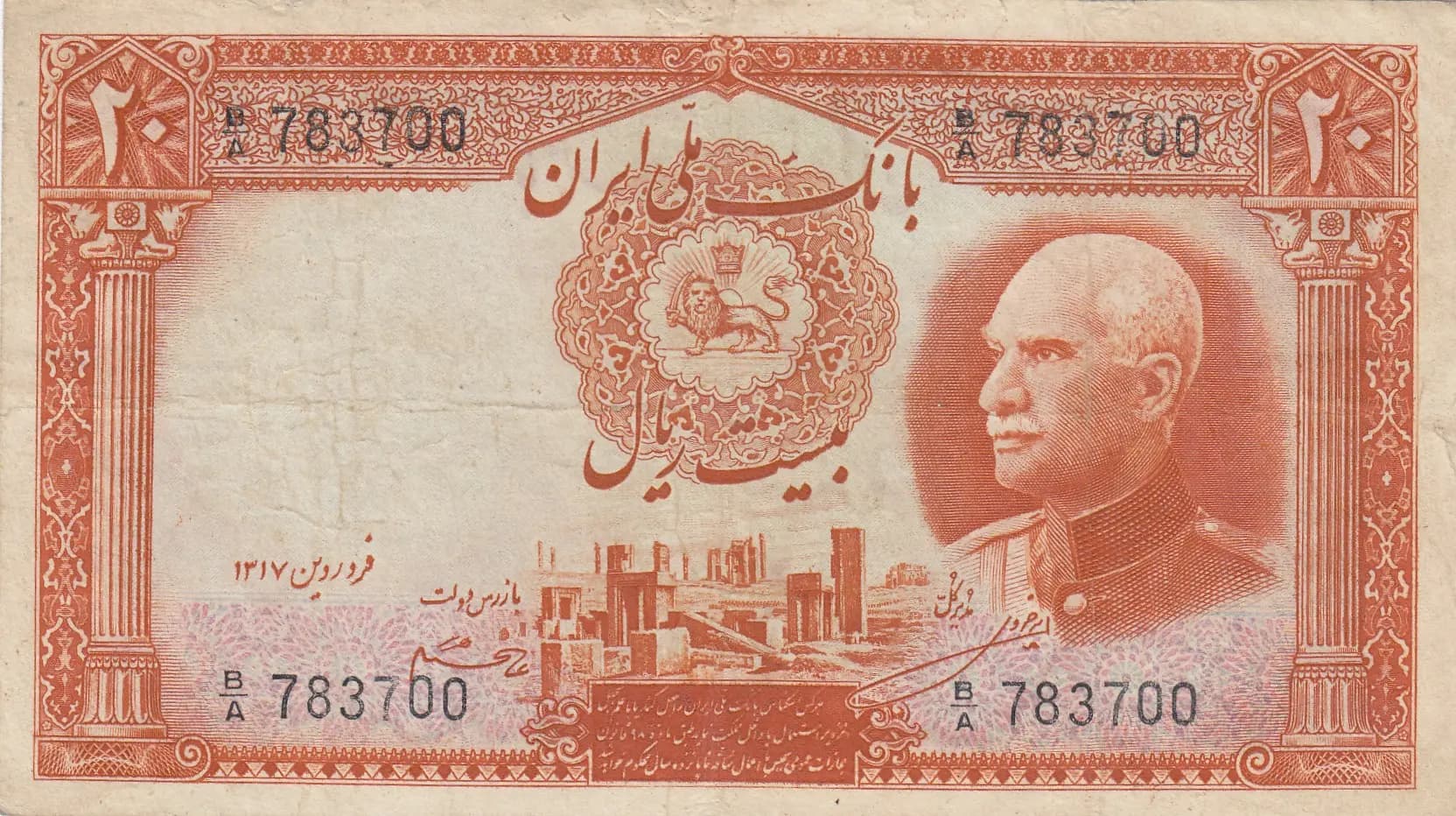
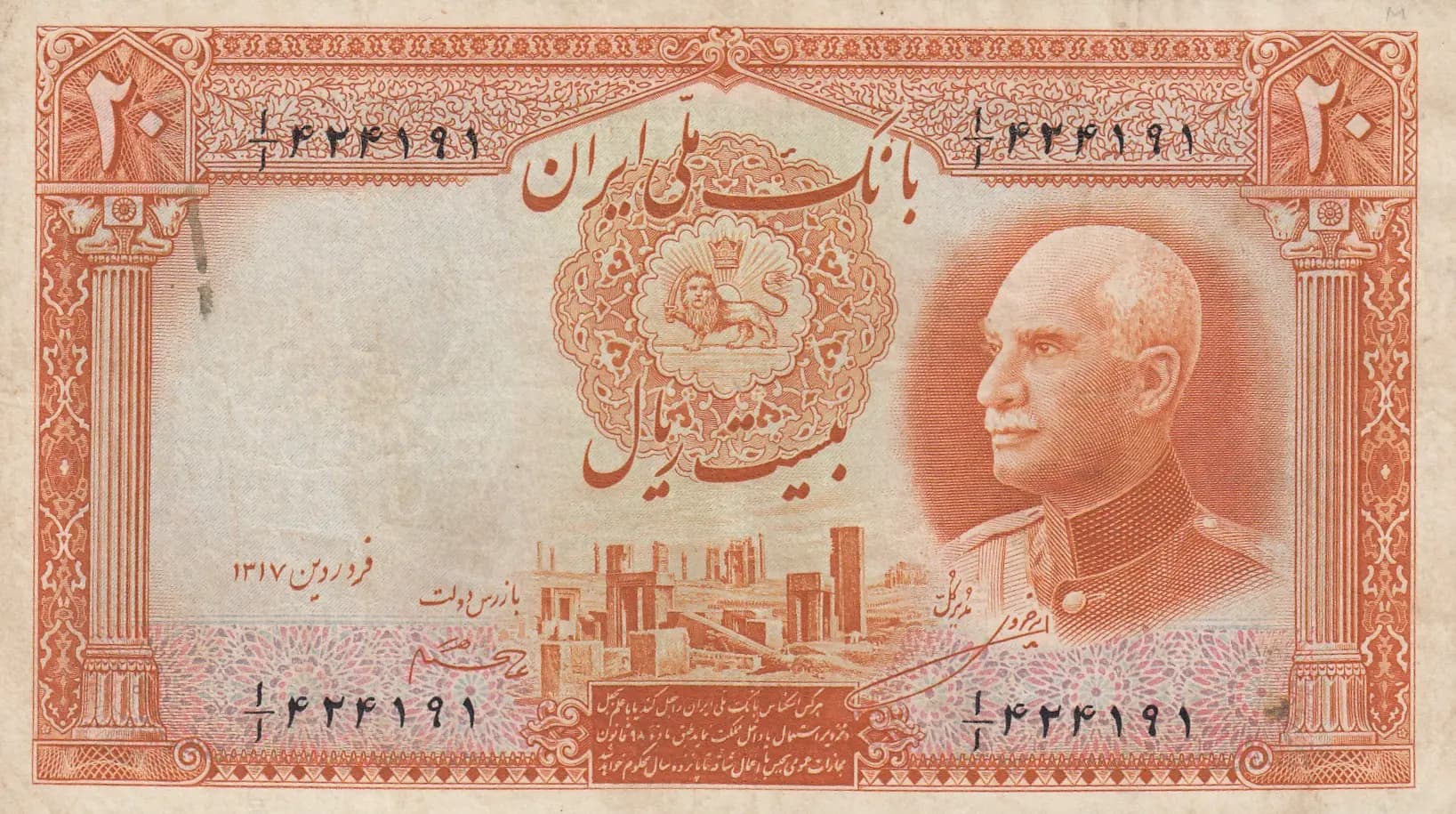
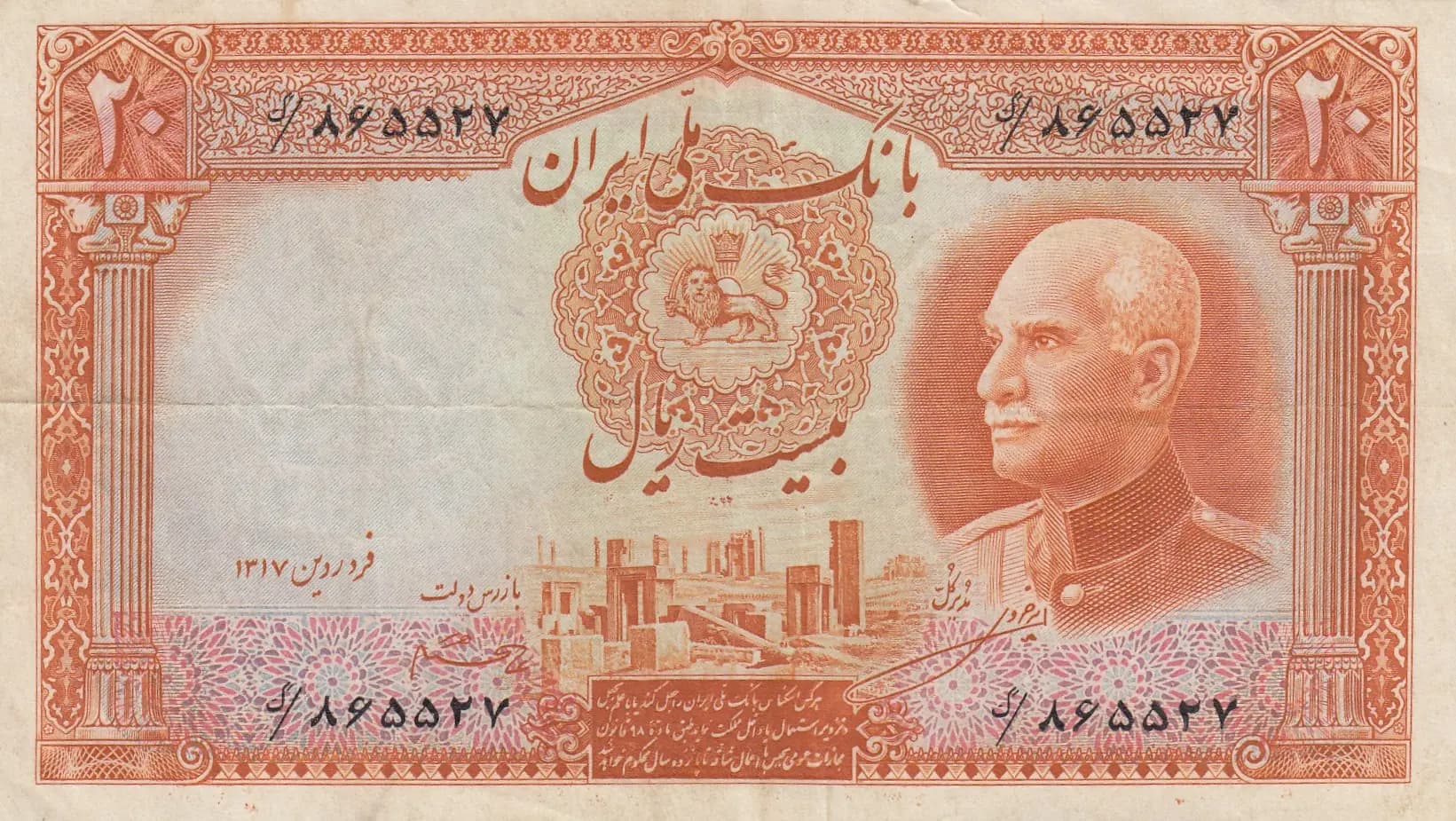
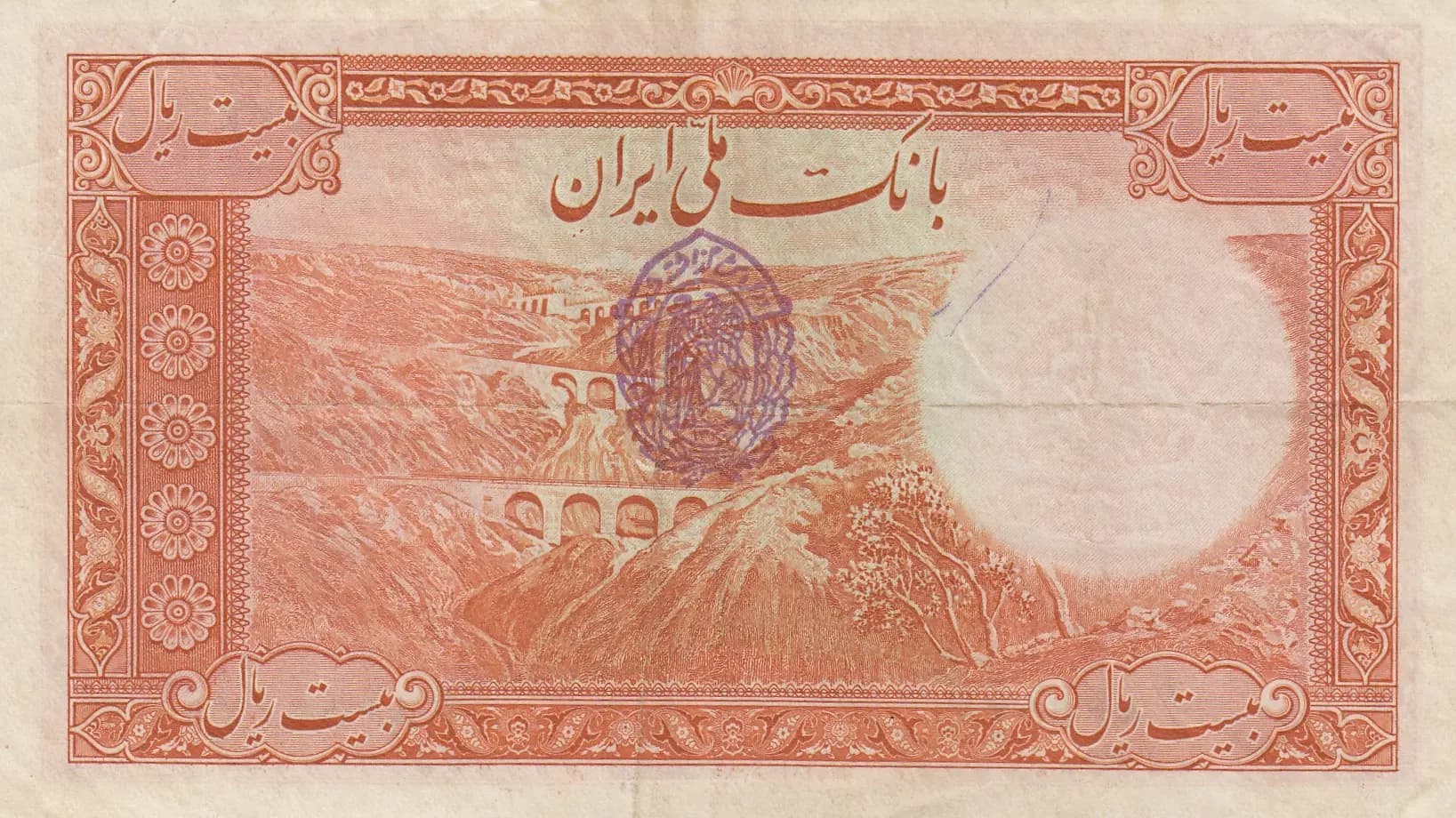
An attractive VF example of the 1938 Bank Melli Iran 20 rials note (Pick 34A), featuring a portrait of Reza Shah Pahlavi in military dress and the iconic ruins of Persepolis on the obverse, with a detailed landscape engraving of the Trans-Iranian Railway viaduct on the reverse. The note displays the typical wear of a circulated specimen with visible creasing and foxing consistent with its age, though the fine line engraving and ornate Persian geometric borders remain clearly defined. This early Iranian banknote represents an important piece of numismatic history from the foundational period of modern Iran's currency.
Common. The 20 rials denomination from the 1938 Bank Melli Iran series represents standard circulation currency from a major issuing authority with substantial print runs. Despite its age and historical significance, this note type appears regularly in the numismatic market in various grades. The VF condition grade is achievable and frequently encountered. Without evidence of a small print run, early recall, or this being a short-lived variety, and given the note's appearance in regular market circulation, it should be classified as common to this denomination and period.
Issued in 1317 SH (1938 CE) during the reign of Reza Shah Pahlavi, this note celebrates two defining symbols of Iran's modernization: the portrait of the Shah himself, who implemented sweeping reforms to centralize and develop the nation, and the Trans-Iranian Railway, a monumental infrastructure project connecting the Persian Gulf to the Caspian Sea that symbolized the country's technological advancement. The Persepolis imagery on the obverse, showing the ruins of the Tachara Palace, invokes Iran's ancient Persian heritage, linking the Pahlavi dynasty's contemporary reforms to the glorious pre-Islamic past. Bank Melli Iran, established in 1927, served as the instrument of monetary modernization and nationalist economic policy during this transformative period.
The obverse depicts Reza Shah Pahlavi (r. 1925-1941) in formal military dress uniform, shown in left-facing profile on the right side of the note with characteristic features including receding hairline and strong facial profile. Dominating the upper-center is an ornate lion emblem within a decorative frame, representing the Pahlavi dynasty's symbolic heraldry. Below the portrait, rendered in fine detail, are the ruins of the Tachara Palace at Persepolis (Takht-e Jamshid), with its distinctive columned architecture and fortified structures visible. The reverse features an expansive landscape engraving depicting the famous Veresk Bridge (Pol-e Veresk) of the Trans-Iranian Railway in mountainous northern Iran, showing the architectural grandeur of the railway viaduct spanning a valley with natural terrain, cultivated fields, and scattered vegetation. The note employs traditional Persian geometric and floral border motifs throughout, with ornamental corner pieces and columned designs on both sides.
Front side: بانک ملی ایران (Bank Melli Iran) in Persian script, فروردین ۱۳۱۷ (Farvardin 1317 SH, corresponding to March 1938), ۲۰ ریال (20 rials), and BANK MELLI IRAN in English. Back side: بانک ملی ایران (Bank Melli Iran) and ۲۰ ریال (20 rials) in Persian script. The date on the front converts to 1938 CE, though the catalog references SH 1316 (1937), reflecting the difference between the Islamic calendar and the Farvardin-based year designation.
Steel plate engraving (intaglio/gravure), characteristic of high-quality banknotes of the 1930s-1940s era. The fine line work visible throughout the design, the detailed landscape rendering on the reverse, and the complex geometric border patterns are consistent with skilled engraving production. The complexity of the Persepolis architectural detail and the intricate railway viaduct engraving suggest work by a specialized European security printer, likely Waterlow & Sons or De La Rue, who produced Iranian banknotes during this period. The note exhibits the characteristic sharp impressions and fine detail recovery typical of intaglio printing, though these have softened somewhat through circulation.
The Pick catalog reference indicates this as P-34A, with the 'A' designation typically distinguishing notes with specific marking, inscription, or design characteristics. The visual analysis confirms 'BANK MELLI IRAN' text appears in English on the front, and the inscription 'فروردین ۱۳۱۷' (Farvardin 1317 SH) is visible. The presence of the large purple cancellation/stamp mark on the reverse is significant, indicating this specimen underwent official cancellation or was used in banking operations requiring such marking. This cancellation mark is not a standard feature but rather a post-issuance annotation, possibly from archival or banking use. No visible serial numbers or signature varieties are clearly discernible from the provided analysis.