100 rials 1971
Market Prices
7 salesAbout This Note
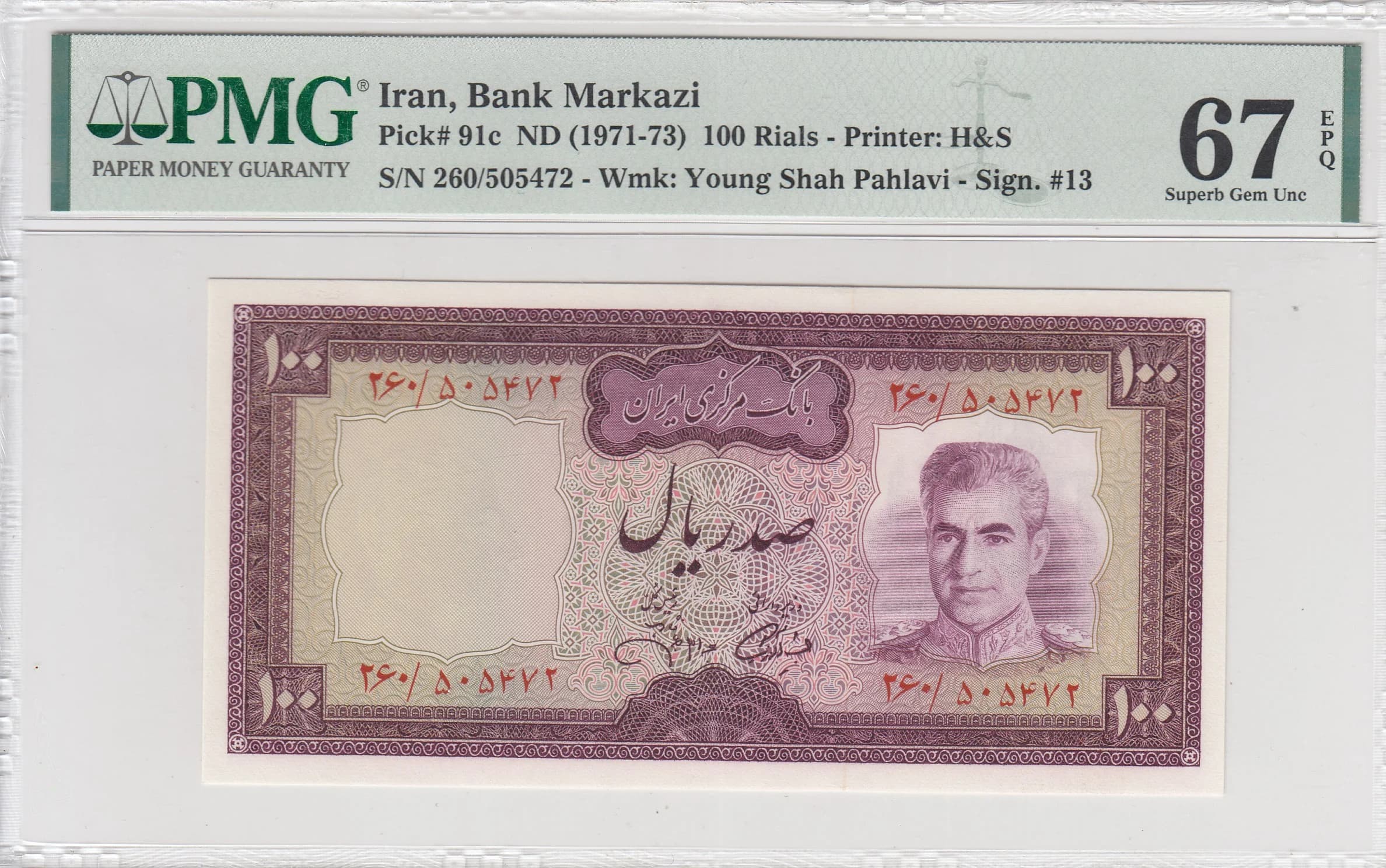
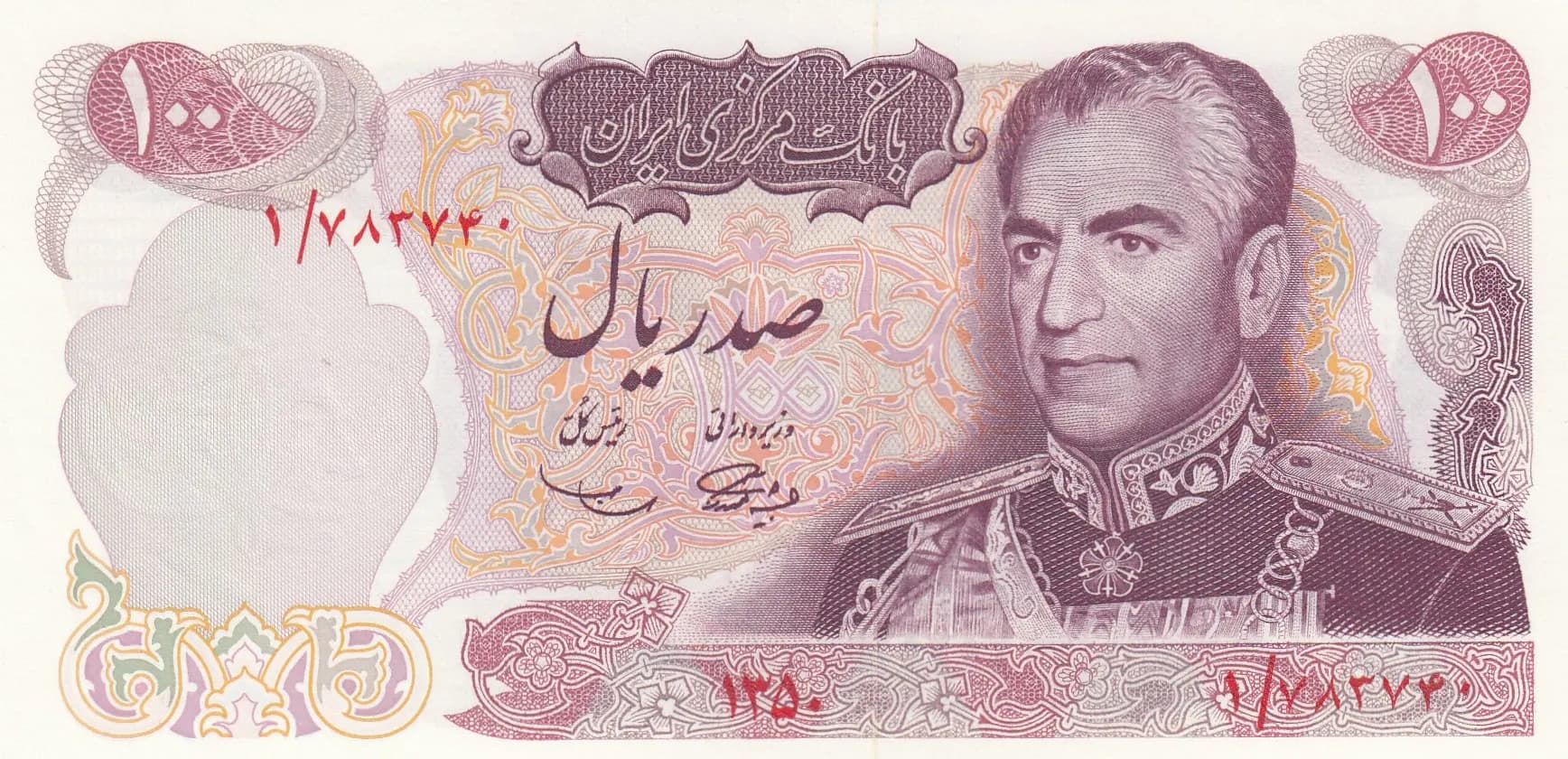
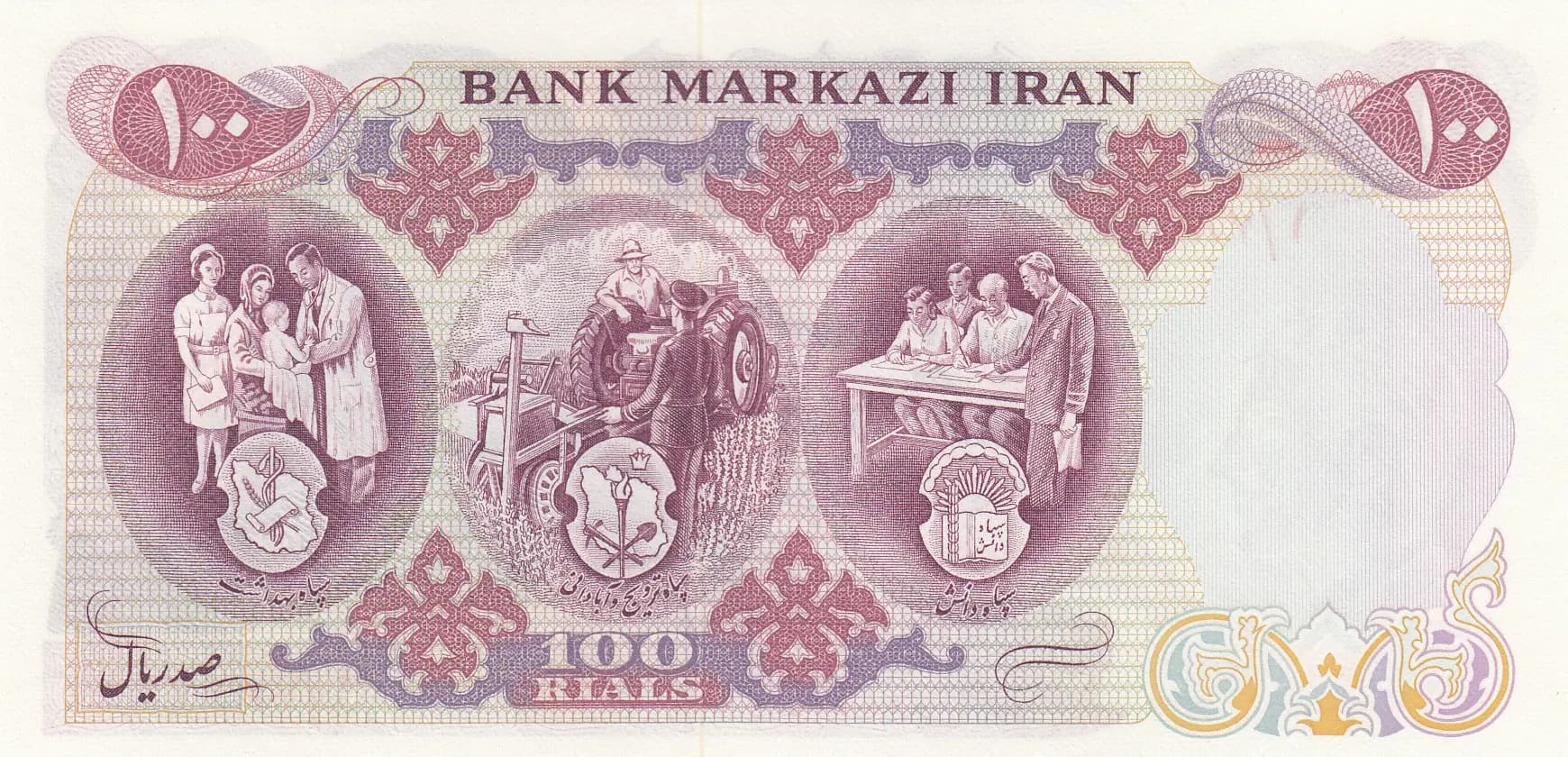
This is an uncirculated example of Iran's 100 Rials commemorative note from 1971 (SH1350), issued by Bank Markazi Iran to celebrate the 2500th anniversary of the Persian Empire. The note features a striking portrait of Shah Mohammad Reza Pahlavi in full military dress uniform on the obverse, with elegant purple and mauve tones complementing the cream background and intricate ornamental designs. The reverse displays three symbolic vignettes representing Health, Agriculture, and Education—the cornerstones of the Shah's modernization agenda—all rendered in pristine condition with no wear, creases, or imperfections.
Common. This commemorative 100 Rials note from 1971 is a common issue in the numismatic market. The eBay pricing data shows multiple sales of similar examples ranging from $4.81 to $12.05 for various grades over a period spanning 2009–2022, with UNC examples catalogued at $22.50 (2019 estimate) and regularly selling in the $11–$12 range. These modest prices and consistent market activity indicate a well-circulated and readily available commemorative issue with no significant print run restrictions or rarity factors. Commemorative issues of this era from major central banks were typically printed in substantial quantities to mark national celebrations.
This commemorative issue was released during the reign of Mohammad Reza Pahlavi to mark the 2500th anniversary of the founding of the Persian Empire, a significant milestone in Iran's national identity and a moment of celebration for the Pahlavi regime's modernization efforts. The three vignettes on the reverse—Health, Agriculture, and Education—visually represent the Shah's key development initiatives and his vision for Iran's progress in the mid-20th century. The prominence of the Shah's portrait in military regalia underscores the close association between the monarchy and national strength during this period of rapid industrialization and social change in Iran.
The obverse features a right-facing profile portrait of Shah Mohammad Reza Pahlavi, identifiable by his military uniform adorned with medals and decorative collar, positioned on the right side of the note. The composition is framed by ornate oval medallions with geometric patterns on both sides of the portrait, and the entire field is filled with intricate guilloche patterns, calligraphic flourishes, and decorative borders characteristic of high-security banknote engraving. The reverse displays the note's commemorative purpose through three circular vignettes: the left depicts a healthcare/medical scene with multiple figures, the center shows agricultural labor with machinery, and the right illustrates administrative or clerical work, each medallion bearing Persian imperial emblems. The color scheme of cream, purple, mauve, and gold accents unifies both sides, creating an elegant and distinctly Iranian aesthetic appropriate to the celebratory nature of this special issue.
Front side: 'بانک مرکزی ایران' (Bank Markazi Iran / Central Bank of Iran), 'صد ریال' (One Hundred Rials), serial number '1/128374'. Back side: 'BANK MARKAZI IRAN' (Central Bank of Iran), '100 RIALS' (One Hundred Rials denomination), with three circular vignettes labeled in English as HEALTH, AGRICULTURE, and EDUCATION, each accompanied by Persian emblems or coat of arms symbols beneath.
This note was produced using intaglio engraving (also called recess printing or steel engraving), evidenced by the fine line work, detailed guilloche patterns, intricate vignettes, and three-dimensional quality of the portrait and design elements visible throughout both sides. The printer was TDLR (a security printer for Bank Markazi Iran), as confirmed by catalog data. The use of multiple color layers in the intaglio process created the multicolored underprint effect noted in the visual analysis, with the distinctive purple/mauve and cream base combined with orange and gold accent overprinting.
This example carries the serial number '1/128374', placing it early in the print run. No major varieties are known for this Pick number (P-98) beyond standard serial number variations. The note is identified as the standard commemorative issue for the 2500th anniversary, with no known overprints, signature variations, or printing errors that would constitute a distinct variety. The condition grade of UNC indicates this is an unissued example from the original Bank Markazi Iran stock, likely preserved since 1971.