100 rials 1971
Market Prices
20 salesAbout This Note
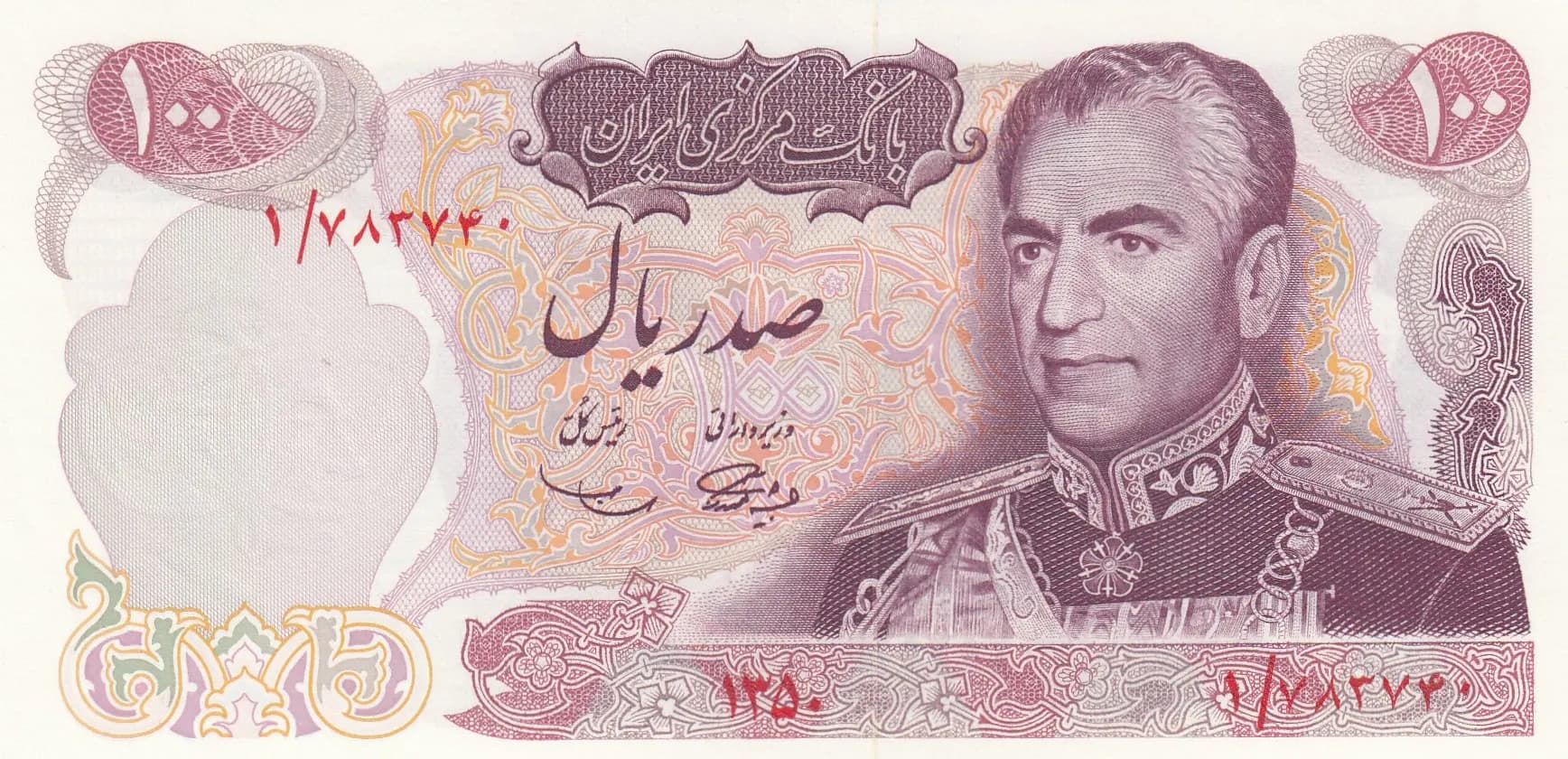
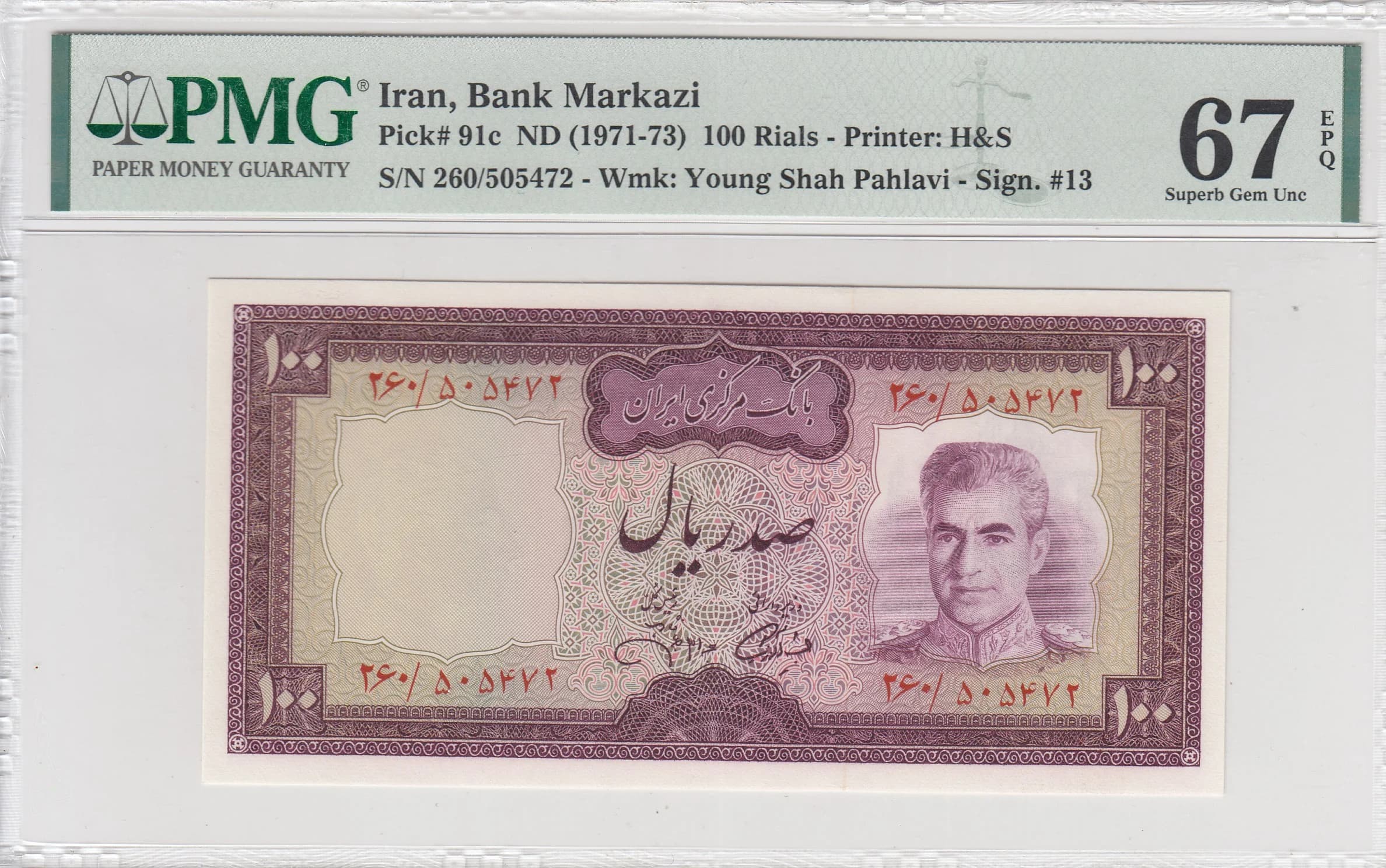
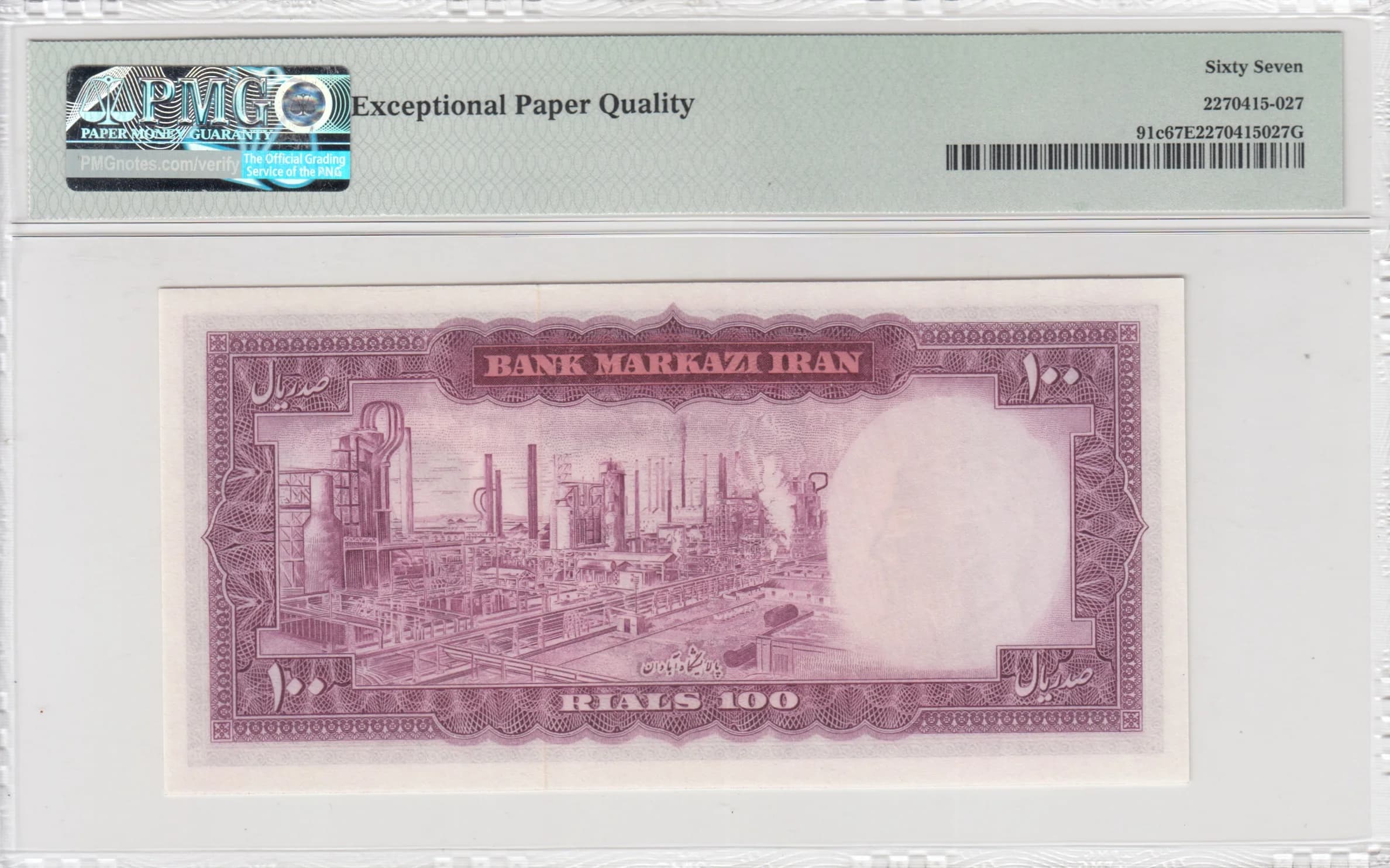
This is a PMG 67 EPQ example of the Iranian 100 Rials P-91c from 1971, representing the "Light Panel" variety issued by Bank Markazi Iran. The note displays pristine uncirculated condition with sharp printing, vibrant purple/mauve and cream coloring, and exhibits the characteristic ornate Islamic geometric design work throughout. The specimen features Shah Mohammad Reza Pahlavi's portrait in military uniform on the obverse and the iconic Abadan oil refinery on the reverse, making it a desirable example of Iran's mid-century petroleum-era currency.
Common. This is a regular issue with substantial circulation during its period of use. eBay market data shows consistent sales ranging from $3 to $32 depending on condition, with typical UNC grades averaging $8-15 and VF grades under $10. The PMG 64 comparable sold for $22.50 in 2017, and the current PMG 67 EPQ specimen, while a superior grade, aligns with the established market trajectory showing this as a widely available note rather than a scarce issue.
This 1971 banknote was issued during the reign of Shah Mohammad Reza Pahlavi and reflects Iran's strategic focus on petroleum production and modernization during the pre-Islamic Revolution era. The prominent depiction of the Abadan oil refinery on the reverse underscores the critical importance of oil wealth to Iran's economy and national identity in this period. The note's design, with its sophisticated security features and Persian/English bilingual inscriptions, represents the Shah's vision of a modernized, internationally engaged Iran.
The obverse features Shah Mohammad Reza Pahlavi in formal military dress, positioned on the right side of the note facing left. His portrait is rendered with fine engraved detail and is the dominant figurative element. The center of the note contains the Bank Markazi Iran cartouche on a contrasting light ornamental panel (the defining characteristic of the P-91c "Light Panel" variety, distinguishing it from the earlier "Dark Panel" P-86 notes). Intricate Islamic geometric patterns form elaborate borders and background elements throughout. The reverse depicts the Abadan oil refinery as a central industrial vignette, showing multiple smokestacks, storage tanks, and processing facilities rendered in fine line engraving. The design maintains consistent color treatment across both sides in purple/mauve with cream accents.
FRONT: بانک مرکزی ایران (Bank Markazi Iran / Central Bank of Iran) appears in the ornamental center cartouche. Serial numbers are printed in red in Arabic numerals (example shown: 260/505472). BACK: 'BANK MARKAZI IRAN' appears across the top in English letters. Denomination markings read 'RIALS 100' in English and '۱۰۰' (100) in Persian numerals.
Intaglio engraving (recess printing) is the primary technique, evidenced by the fine line work, geometric detail, and depth visible in both the portrait and industrial landscape. The sharp registration, intricate border patterns, and precise denomination numerals are characteristic of high-security banknote engraving. Multiple color printing in purple/mauve, cream, and red (for serials) indicates multi-plate intaglio production. Bank Markazi Iran banknotes of this era were typically produced by De La Rue or similar specialized security printers, though specific attribution for P-91c requires manufacturer documentation.
This note is identified as the P-91c "Light Panel" variety, characterized by the contrasting light ornamental panel containing the Bank Markazi Iran cartouche on the front center. This distinguishes it from the earlier P-86 "Dark Panel" variety. The 1971-1973 dating range given in external catalogs likely reflects production spanning multiple years. Serial number prefix and signature varieties may exist but require direct comparison across multiple specimens to document definitively. The observed serial number (260/505472) should be catalogued as part of the specific specimen record.