500 rupiah 1952
Market Prices
22 salesAbout This Note
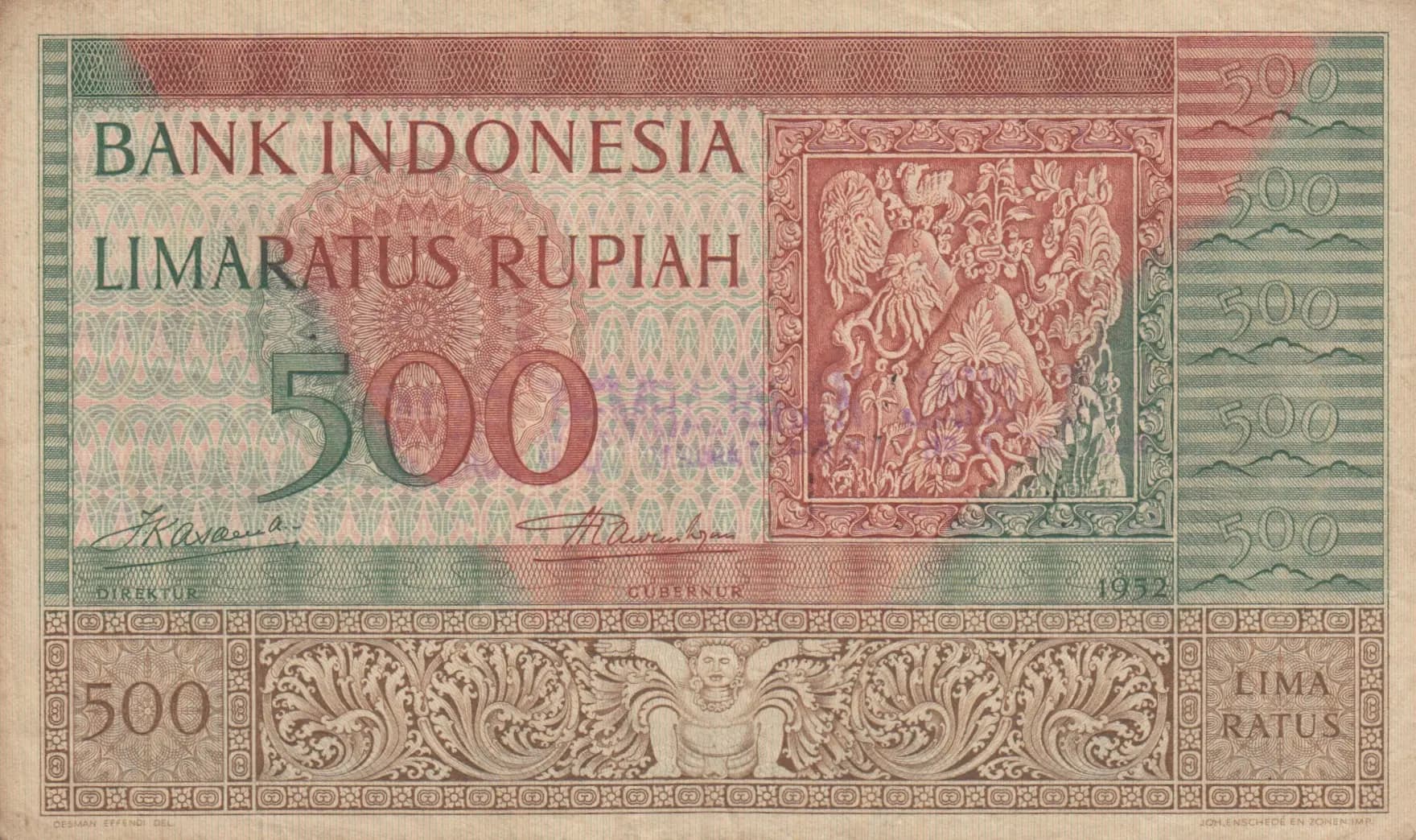
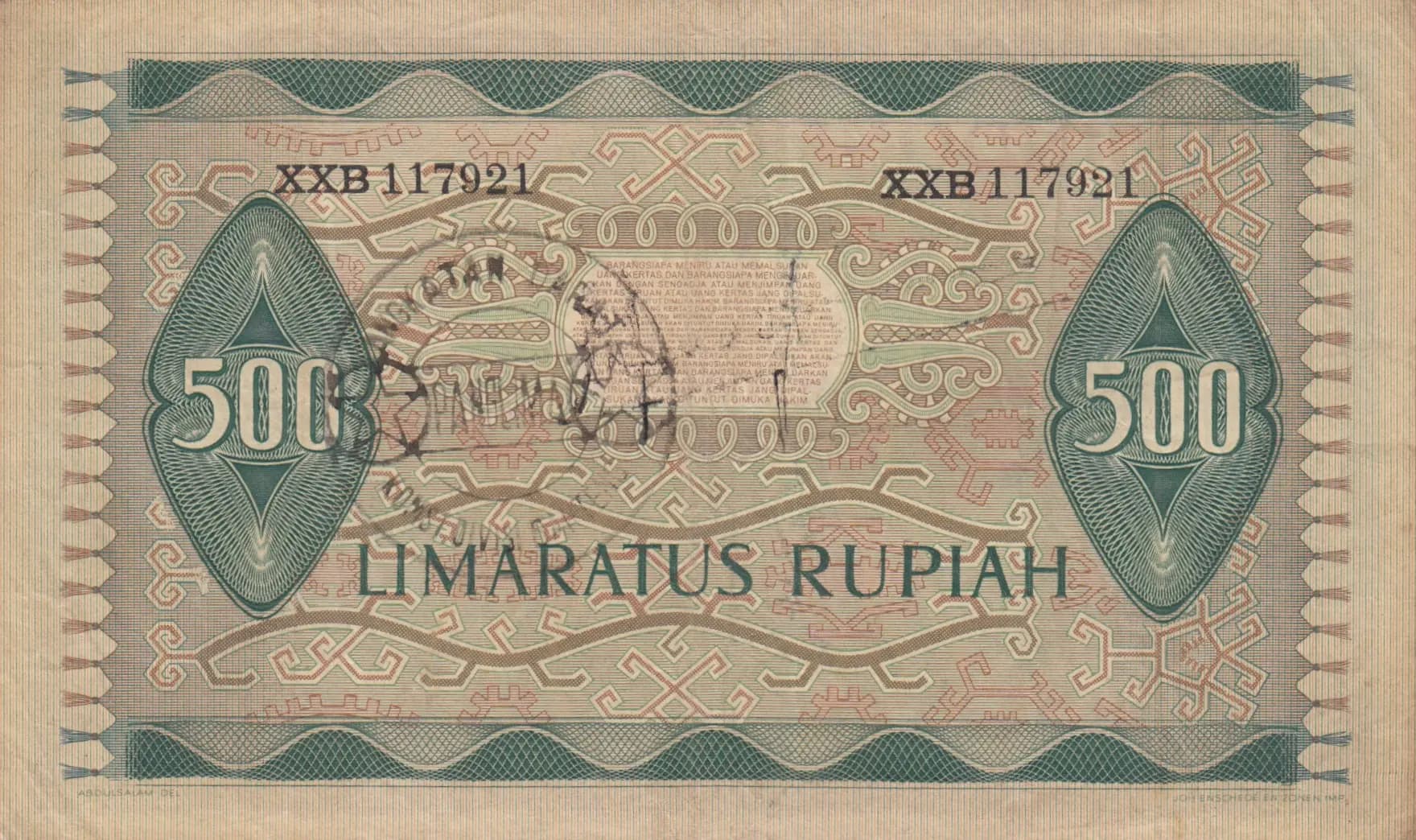
This is a 1952 Bank Indonesia 500 Rupiah note (Pick P-47) in Very Fine condition, featuring elaborate ornamental designs rendered in red/pink and green colors. The note displays intricate decorative friezes and batik-inspired patterns characteristic of early Indonesian currency, with ornate floral medallions and geometric elements throughout both obverse and reverse. While showing light age-related foxing and evidence of circulation, the note remains well-preserved with no major damage, making it a desirable example of Indonesia's early post-independence currency.
Common. This note appears regularly in the secondary market with consistent availability across multiple condition grades. eBay transaction data shows numerous sales across a wide range of prices ($1.54 to $36.79 for VF examples between 2009-2020), indicating healthy supply. The 2016 catalog valuation of $12 for VF examples aligns with observed market pricing. No specific rarity indicators such as limited print runs, short-lived issuing authority, or recall status are noted for Pick P-47.
This 500 Rupiah note was issued in 1952, just one year after Indonesia gained full independence from the Netherlands (1949). The Bank Indonesia's use of ornate decorative friezes and batik-inspired design elements reflects the nation's effort to establish a distinct cultural identity in its new currency, moving away from colonial-era designs. The elaborate floral and geometric patterns are rooted in Indonesian artistic traditions, particularly batik textile design, symbolizing national pride during the formative years of the Indonesian republic.
The obverse features a symmetrical layout with the denomination '500' prominently displayed in the center-left area, flanked by ornate floral and botanical decorative panels. The upper right contains an elaborate carved or embossed ornamental panel with intricate botanical motifs. The design employs fine guilloche patterns and repeating geometric borders in a traditional security printing style. The reverse displays two large oval medallions containing diamond-shaped geometric patterns positioned symmetrically on the left and right sides, with denomination numerals '500' incorporated within each medallion. A central rectangular panel with decorative borders and wavy frame elements completes the design. The overall aesthetic emphasizes ornamental security features without depicting portraits or identifiable landmarks, reflecting the decorative frieze and batik design elements noted in catalog references.
Front side: 'BANK INDONESIA' (Bank Indonesia); 'LIMARATUS RUPIAH' (Five Hundred Rupiah); 'LIMA RATUS' (Five Hundred); '500' (Five Hundred in numerals); '1952' (year of issue); 'DIREKTUR' (Director); 'GOVERNOR' (Governor). Back side: 'LIMARATUS RUPIAH' (Five Hundred Rupiah); '500' (Five Hundred in numerals); Serial number 'XXB117921'; Multiple '0' numerals displayed across upper section.
Intaglio engraving (line engraving) on banknote paper. The note was printed by Johan Enschede of the Netherlands, a premier security printer of the era. The fine-line engraving patterns, complex guilloche designs, and intricate ornamental details visible throughout both sides are characteristic of traditional intaglio banknote production. The depth and clarity of the decorative patterns, particularly in the floral panels and geometric medallions, demonstrate the high-quality engraving work typical of Enschede's production standards.
The observed specimen displays serial number prefix 'XXB117921'. PMG population reports indicate a single variant cataloged for this Pick number (P-47) with printer designation JEZ (Johan Enschede & Zonen). No distinguishing overprints, signature varieties, or other noted variants are apparent from the visual analysis. The note appears to be a standard regular issue of the 1952 500 Rupiah denomination.