5 rupiah 1960
Market Prices
23 salesAbout This Note
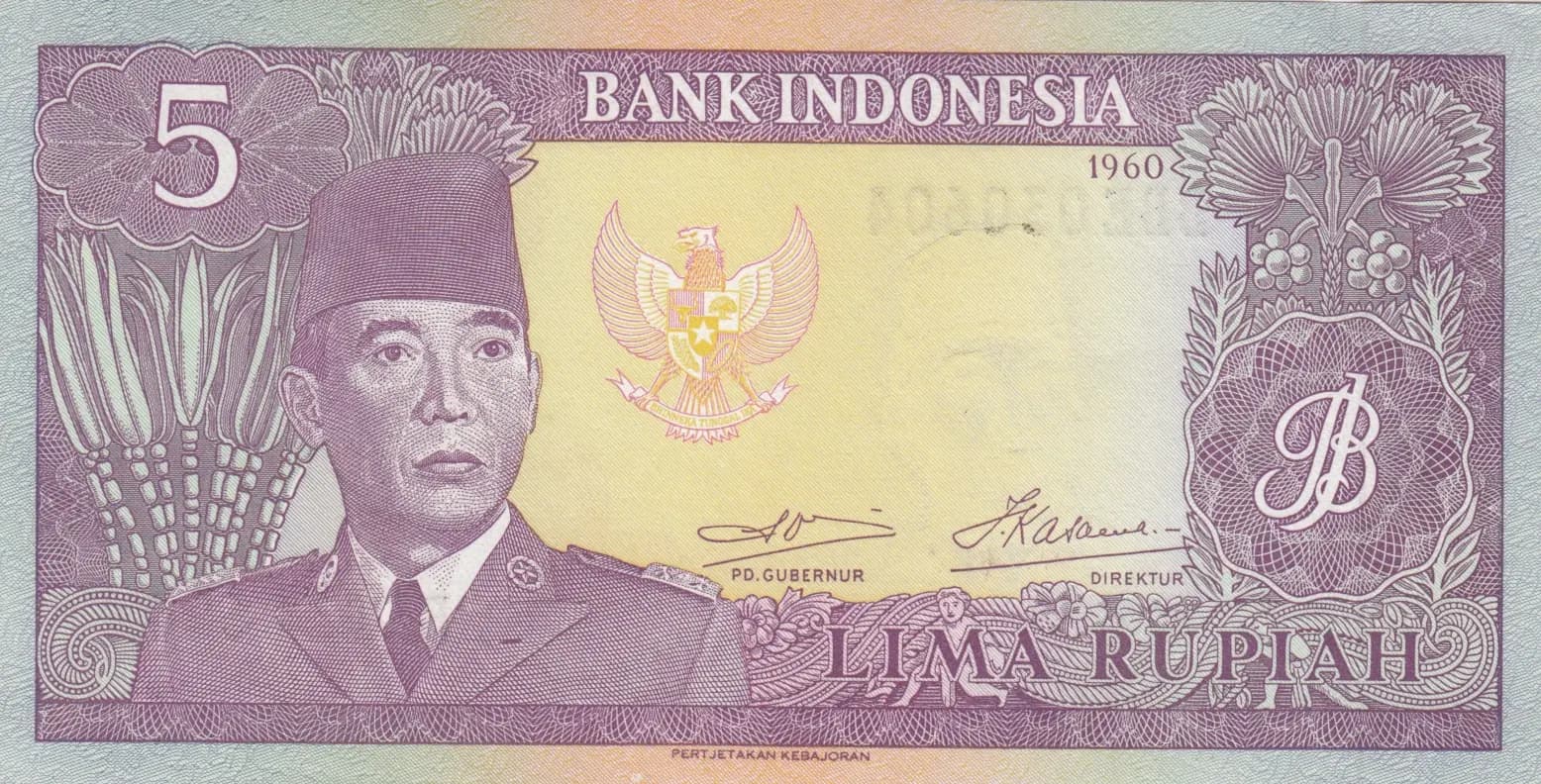
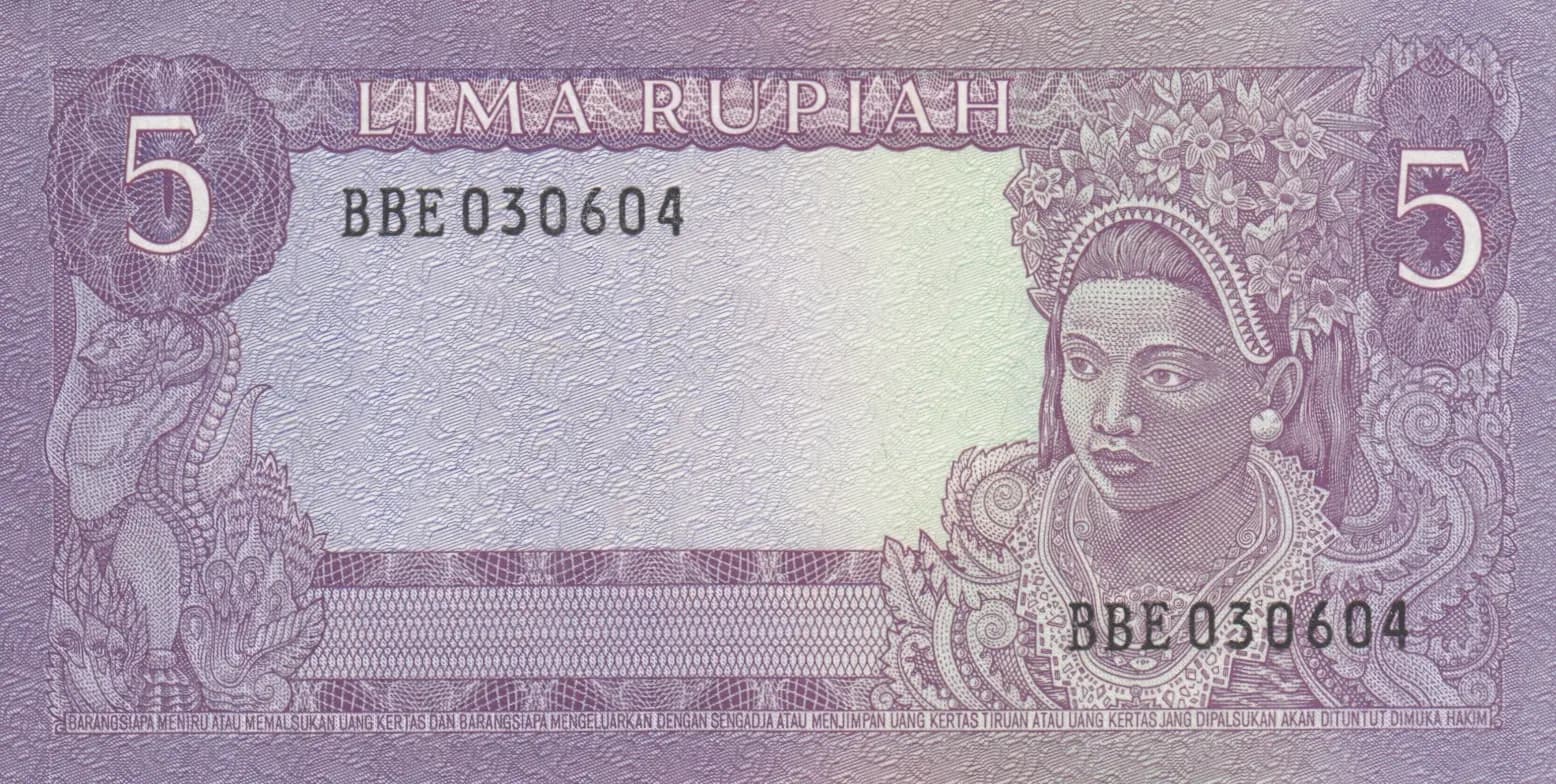
This is an uncirculated example of the 1960 Bank Indonesia 5 rupiah note (Pick P-82), featuring a striking purple and mauve color scheme with cream panels. The obverse displays President Sukarno in formal attire with a traditional peci hat, while the reverse showcases a Javanese female dancer in ornate traditional dress. The note exhibits age-related patina consistent with UNC grades, with clear, legible printing throughout and no major damage, representing a significant early post-independence Indonesian currency issue.
Common. This is a regular issue from Indonesia's early post-independence period with substantial print runs. eBay market data shows UNC examples selling in the $3.99 to $20.50 range with relatively low auction activity (1-12 bids for UNC pieces), indicating modest but consistent collector demand. The 2016 catalog value for UNC is listed at $5, and recent sales data confirms typical UNC specimens command $10-$30, well within the common range. The denomination and period are popular with collectors, but the note was printed in quantities sufficient to make it readily available.
Issued in 1960, this note reflects the early years of independent Indonesia under President Sukarno's leadership, just over a decade after independence from Dutch colonial rule in 1949. The design prominently features the Garuda Pancasila national emblem and incorporates both Sukarno's portrait and traditional Indonesian cultural imagery (the Javanese dancer), symbolizing the new nation's identity and Sukarno's cultural nationalism during the Guided Democracy period.
The obverse features President Dr. Ir. Achmed Sukarno (Indonesia's first president) positioned on the left side in formal Western attire complemented by a traditional Indonesian peci hat, rendered in profile/three-quarter view. The center-top displays the Garuda Pancasila, Indonesia's national emblem showing a winged eagle clutching a shield, in gold/yellow tones. The reverse depicts a female Javanese classical dancer wearing ornate traditional dress and an elaborate crown/headdress characteristic of Javanese court dance traditions. Both sides feature the Bank Indonesia seal/logo and are framed with intricate floral and geometric patterns. The dominant color palette of purple/mauve with cream panels creates distinctive visual separation of design elements.
FRONT SIDE: 'Bank Indonesia' (Bank of Indonesia), '1960' (year of issue), '5' (denomination), 'Lima Rupiah' (Five Rupiah in Indonesian), 'Pd. Gubernur' (Governor), 'Direktur' (Director), 'Pertjejakan Kebajoran' (Printed in Kebayoran). BACK SIDE: 'Lima Rupiah' (Five Rupiah), '5' (denomination), 'BBE030604' (serial number), and a legal warning text regarding counterfeiting: approximately translates to 'Guarantee regarding counterfeiting of banknotes and legal penalties — counterfeiting or deliberately circulating counterfeit or forged banknotes will be prosecuted before a judge.'
Intaglio (engraved) printing, evidenced by the fine-line engraving quality, complex background patterns, and precise detail work visible throughout the note. The printer is identified on the note as 'Pertjejakan Kebajoran' (Kebayoran Printing Works). The catalog reference indicates multiple printer variants exist, though the primary security printer for this issue was Pertjetakan Kebajoran, a Jakarta-based printer employed by Bank Indonesia.
The observed serial number 'BBE030604' represents one printing variant. Based on visual analysis, this note shows signatures labeled 'Pd. Gubernur' (Governor) and 'Direktur' (Director) in standard positions. Known varieties for Pick P-82 include different signature combinations and potentially different watermark presentations of Sukarno, though the primary catalog recognizes this as a single major type. The printer attribution to Pertjejakan Kebajoran is confirmed by the inscription visible on the note face.