1000 rupiah 1975 replacement
About This Note
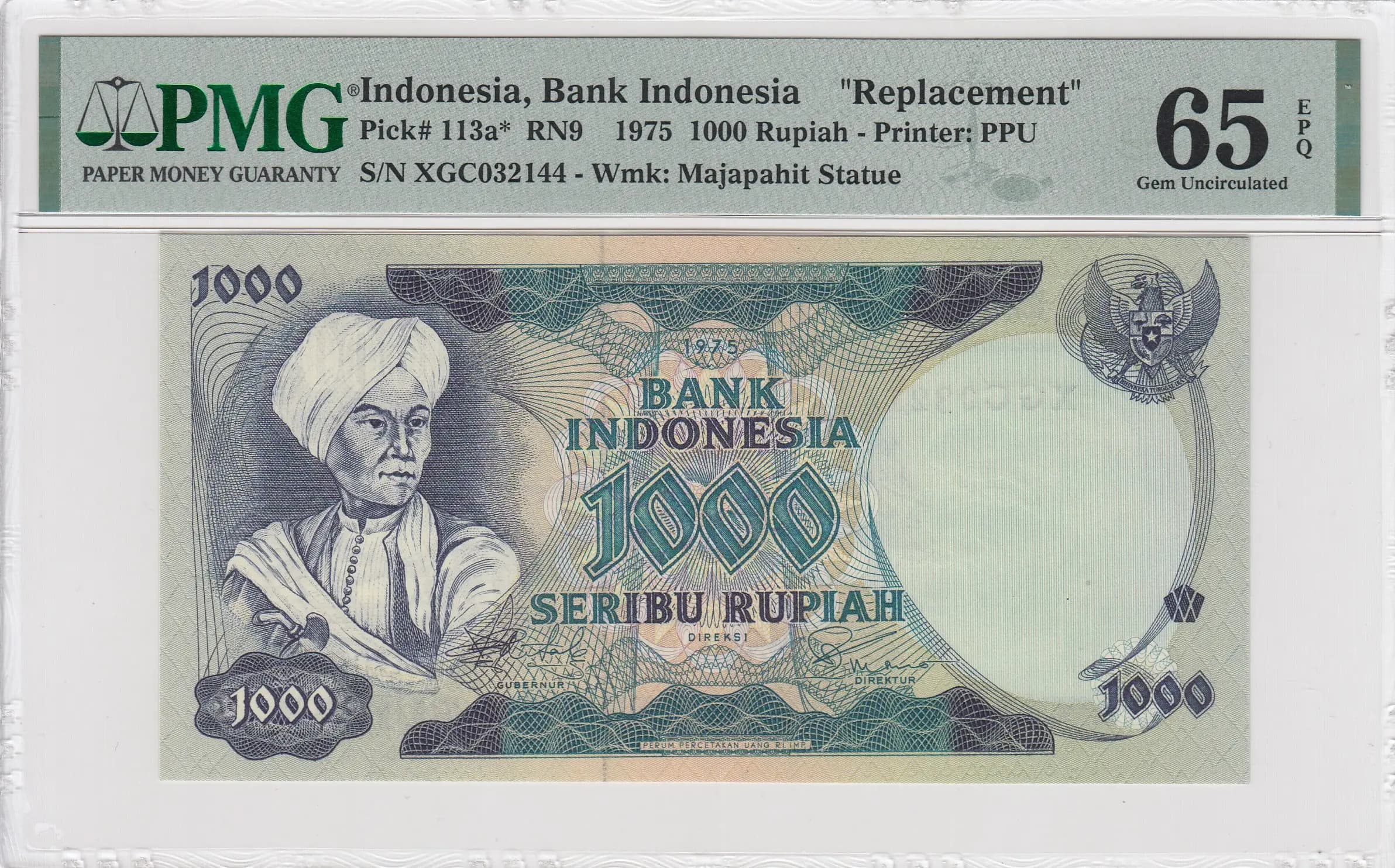
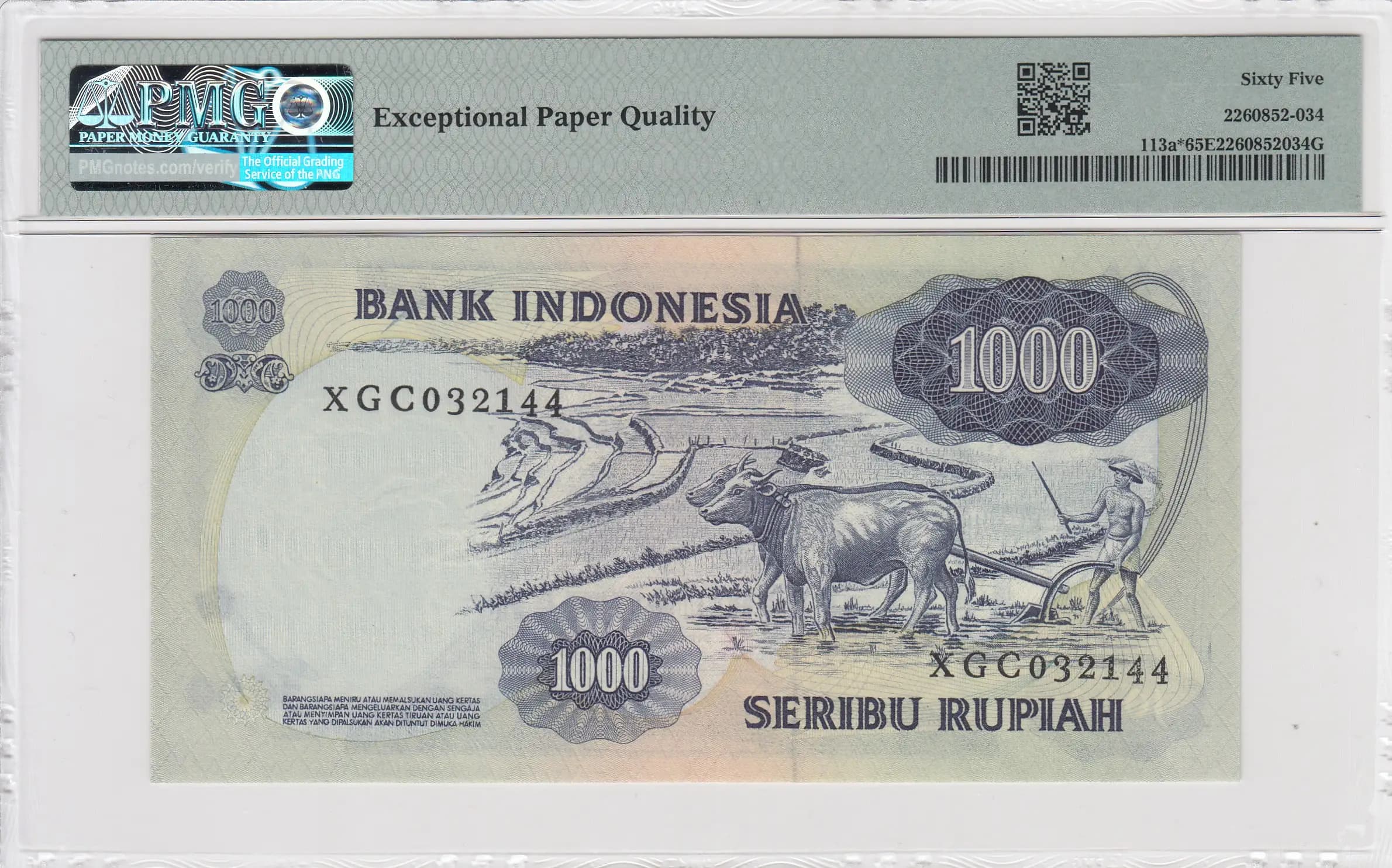
This is a pristine example of the 1975 Indonesian 1000 Rupiah replacement note (Pick 113a*), professionally graded by PMG as Gem Uncirculated 65 EPQ. The note showcases exceptional paper quality with crisp, detailed engraving throughout both sides—the obverse featuring Prince Diponegoro in traditional dress with the Garuda emblem, and the reverse depicting traditional agricultural scenes of oxen plowing rice paddies. The asterisk (*) designation indicates this is a replacement note from the original printing run, making it a notable variant for collectors of Indonesian currency.
Common. The 1000 Rupiah denomination from 1975 was widely circulated and represents a standard issue from Bank Indonesia's regular currency production during this period. Despite the replacement note designation (marked with asterisk), these notes are frequently encountered in the collector market. The Gem Uncirculated condition grade is less common than circulated examples, which accounts for the PMG 65 grade's value premium, but the base note type itself is not scarce.
Issued by Bank Indonesia in 1975, this banknote reflects the nation's post-independence economic period and celebrates Indonesia's cultural heritage through its imagery. The obverse portrait honors Prince Diponegoro, a significant historical figure in Indonesian resistance, while the reverse celebrates the agrarian foundation of the Indonesian economy through its depiction of traditional farming with oxen and rice terraces—imagery central to Indonesian national identity and rural life during this period.
The obverse features a three-quarter portrait of Prince Diponegoro (1785-1855), the Javanese prince and military leader, rendered in fine detail wearing a white turban and traditional Indonesian clothing. The Indonesian national emblem, Garuda Pancasila, appears prominently on the right side of the obverse. The reverse depicts a classical Indonesian agricultural scene with water buffalo or oxen being used for plowing, set within a rural landscape with rice terraces and vegetation, featuring a farmer operating the plow. Both sides are framed by ornate geometric borders with rosette medallions containing the denomination. The color palette employs blue, green, and cream tones characteristic of 1970s Bank Indonesia currency design.
Front side: '1000' (denomination, appears twice in decorative rosettes), 'BANK INDONESIA' (issuing authority), '1975' (date of issue), 'SERIBU RUPIAH' (Indonesian: One Thousand Rupiah), 'DIREKTUR' (Indonesian: Director), 'GUBERNUR' (Indonesian: Governor). Back side: 'BANK INDONESIA' (issuing authority), '1000' (denomination, appears twice in decorative rosettes), 'SERIBU RUPIAH' (Indonesian: One Thousand Rupiah), 'XGC032144' (serial number, repeated on both sides of reverse).
Intaglio engraving (recess printing), executed by Perum. Percetakan Uang (the Indonesian state printing works). The fine line engraving visible throughout both designs, including intricate geometric patterns, microprint elements in decorative borders, and the detailed landscape rendering on the reverse, are hallmarks of intaglio production. The exceptional clarity and crispness of all design elements, as noted in the PMG EPQ (Exceptional Paper Quality) assessment, indicates precise engraving plates and premium paper stock.
This note is cataloged as Pick 113a*, where the asterisk (*) designation indicates a replacement note from the original print run. According to the PMG population data referenced, the base Pick 113 includes at least two variants: 113a and 113s. The serial number observed (XGC032144) provides the specific prefix for this individual note. The replacement designation is a notable variety marker for collectors specializing in Indonesian currency, as it indicates this note was part of a specific replacement printing rather than the initial circulation issue.