1000 rupiah 1968
Market Prices
35 salesAbout This Note
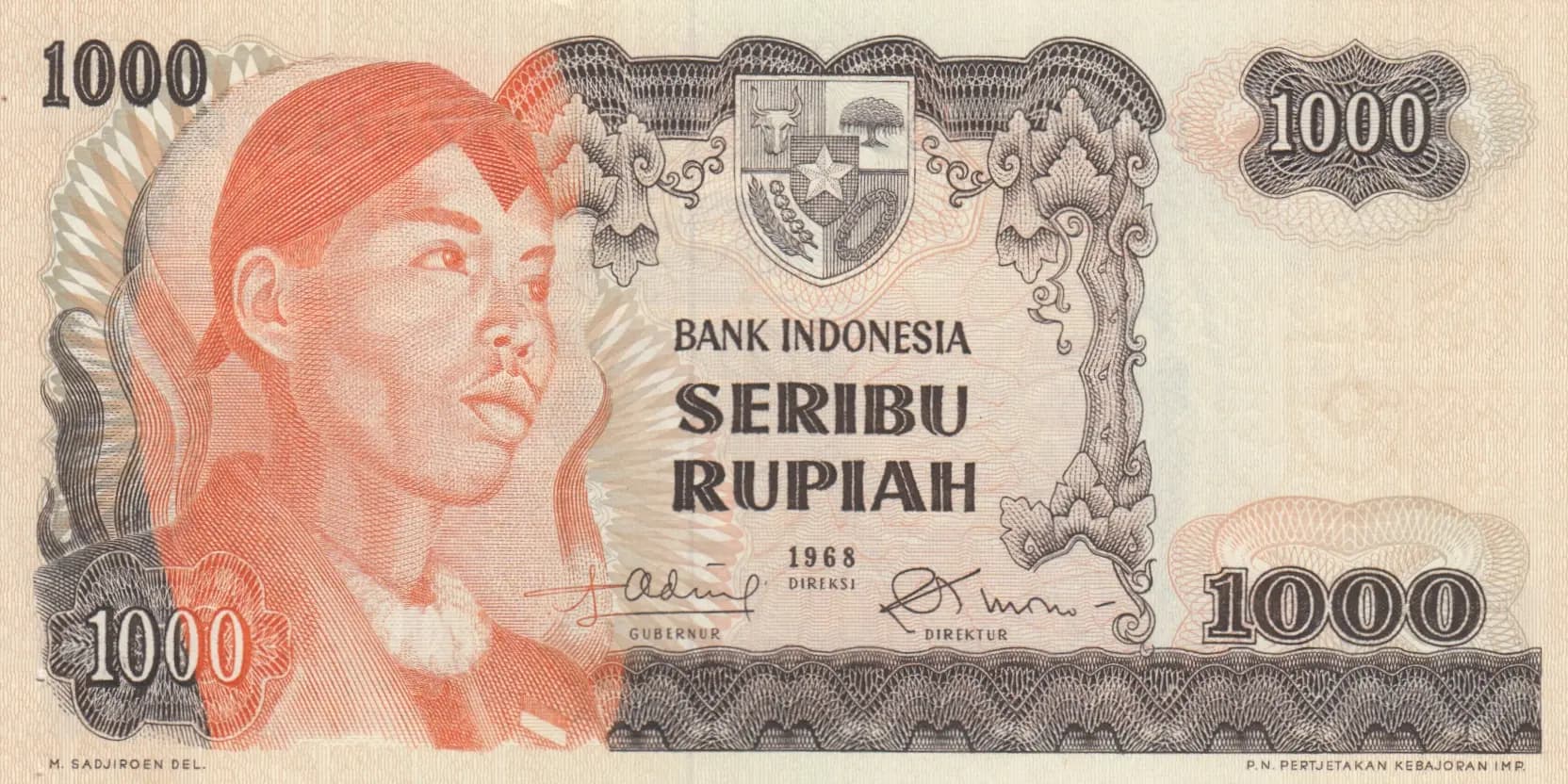
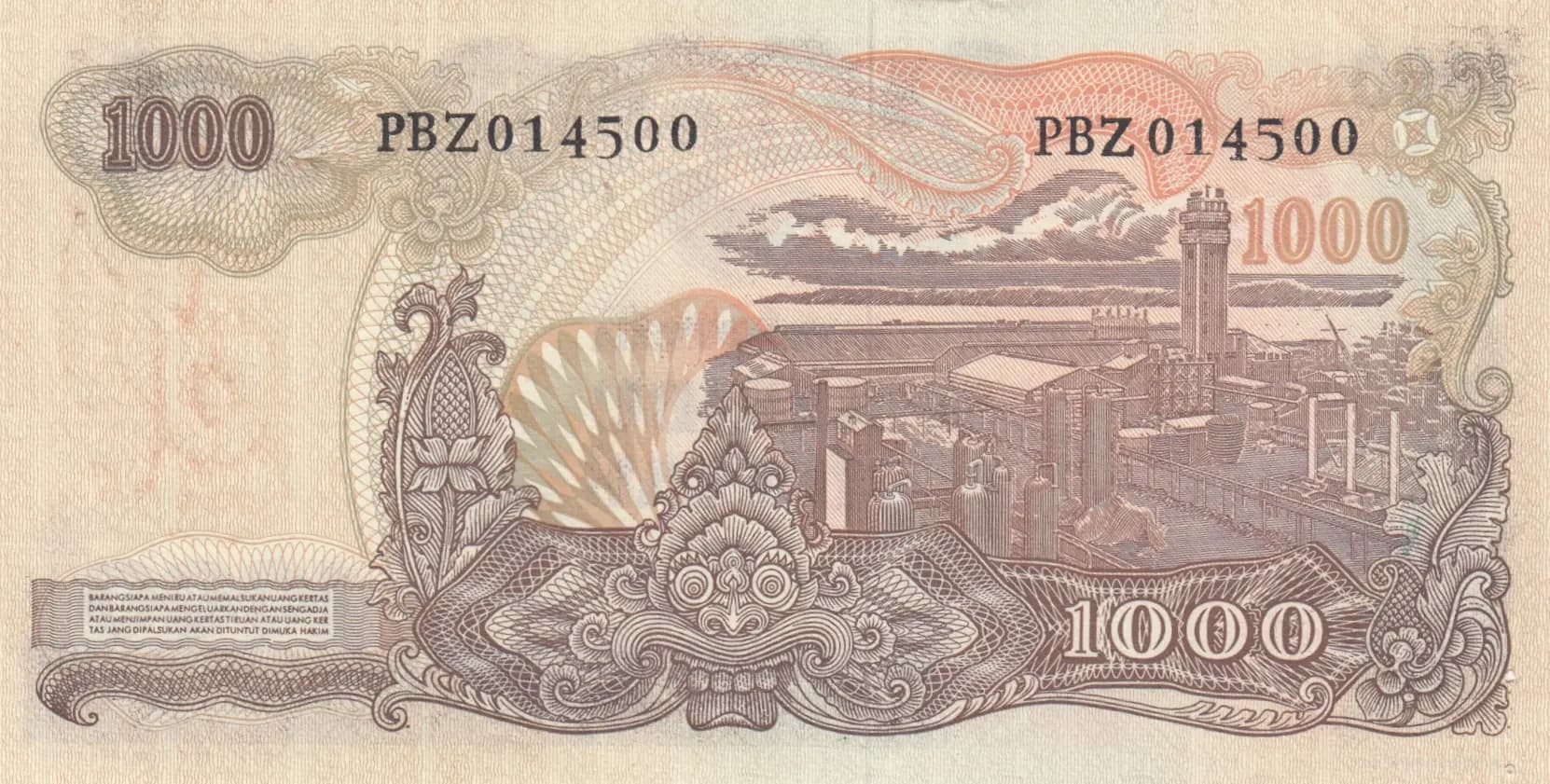
A beautifully preserved example of Indonesia's 1000 Rupiah note from 1968, graded AU and displaying the characteristic red/coral and black intaglio engraving of this issue. The obverse features General Sudirman in left profile with elaborate heraldic ornaments, while the reverse depicts the P.T. Pusri fertilizer plant complex in a detailed landscape composition. The sharp printing quality and vibrant colors throughout indicate minimal circulation, making this an excellent specimen for collectors of Indonesian currency from the early post-independence era.
Common. The eBay market data provided shows consistent pricing in the $3-40 range for examples in VF to AUNC condition across multiple transactions spanning 2009-2025, with catalog values from 2019 listing VF at $3 and UNC at $12. These low valuations and consistent supply indicate this is a widely available note with a substantial print run. While AU examples command mid-range prices (approximately $20-40 based on historical sales), the note itself remains common in the collector market.
Issued by Bank Indonesia in 1968, this note represents the nation's currency during a period of economic reorganization following Sukarno's regime. The Pusri fertilizer plant depicted on the reverse symbolizes Indonesia's focus on agricultural development and industrial modernization in the late 1960s. General Sudirman, featured prominently on the obverse, was a revered national hero of Indonesia's independence struggle, making him an appropriate choice for the nation's currency during this formative economic period.
The obverse features a right-facing profile portrait of General Sudirman, rendered in fine coral/red intaglio engraving on the left third of the note. The central design showcases an ornate heraldic shield with baroque scrollwork and decorative floral elements characteristic of mid-20th century Indonesian currency design. Four corner denomination blocks display '1000' in a classical arrangement. The reverse depicts the P.T. Pupuk Sriwijaya (Pusri) fertilizer manufacturing complex, a significant industrial facility shown in a detailed coastal landscape composition complete with prominent tower structures, waterfront features, and surrounding buildings. Both sides employ elaborate baroque-style ornamental borders with shell motifs and flourishes, emphasizing the note's security features through complex engraved detail work.
FRONT SIDE: '1000' (denomination, appears four times in corners); 'BANK INDONESIA' (issuing authority); 'SERIBU RUPIAH' (One Thousand Rupiah in Indonesian); '1968' (year of issue); 'DIREKSI' (Management/Direction); 'GUBERNUR' (Governor); 'DIREKTUR' (Director); 'M. SADIROEN DEL.' (artist/designer credit); 'P.N. PERTJETAKAN KEBAJORAN IMP.' (Pertjetakan Kebajoran printing house imprint). BACK SIDE: '1000' (denomination, appears three times); Serial numbers 'PBZ014500' (repeated); Legal warning in Indonesian regarding counterfeiting penalties: 'Barangsiaapa mengurus at auomejsi surannjung kertas dan barangsiaapa menerima uang kertas atau uang kertas yang dipalsu akan dituntut dimuka rani' (Anyone who manages or receives counterfeit banknotes shall be prosecuted).
This note was produced using traditional intaglio (engraved plate) printing, the primary security printing method for Indonesian banknotes of this era. The printer was Pertjetakan Kebajoran (P.N. Pertjetakan Kebajoran), as noted in the imprint credit. The fine line work evident throughout both sides, the precise portrait rendering, intricate architectural details on the reverse, and complex ornamental borders are all hallmarks of intaglio printing, which creates tactile relief on the banknote surface and remains highly resistant to counterfeiting.
The observed serial number prefix 'PBZ014500' suggests this example belongs to the standard series printed by Pertjetakan Kebajoran during the 1968 issue. PMG records indicate one cataloged variant (P-110s) with printer designation PNPK (likely an alternate designation for Pertjetakan Kebajoran). The visual analysis shows this to be a standard variety with standard signatures and date, featuring no overprints or special markings that would distinguish it as a rare variety.