100 rupiah 1964
Market Prices
36 salesAbout This Note
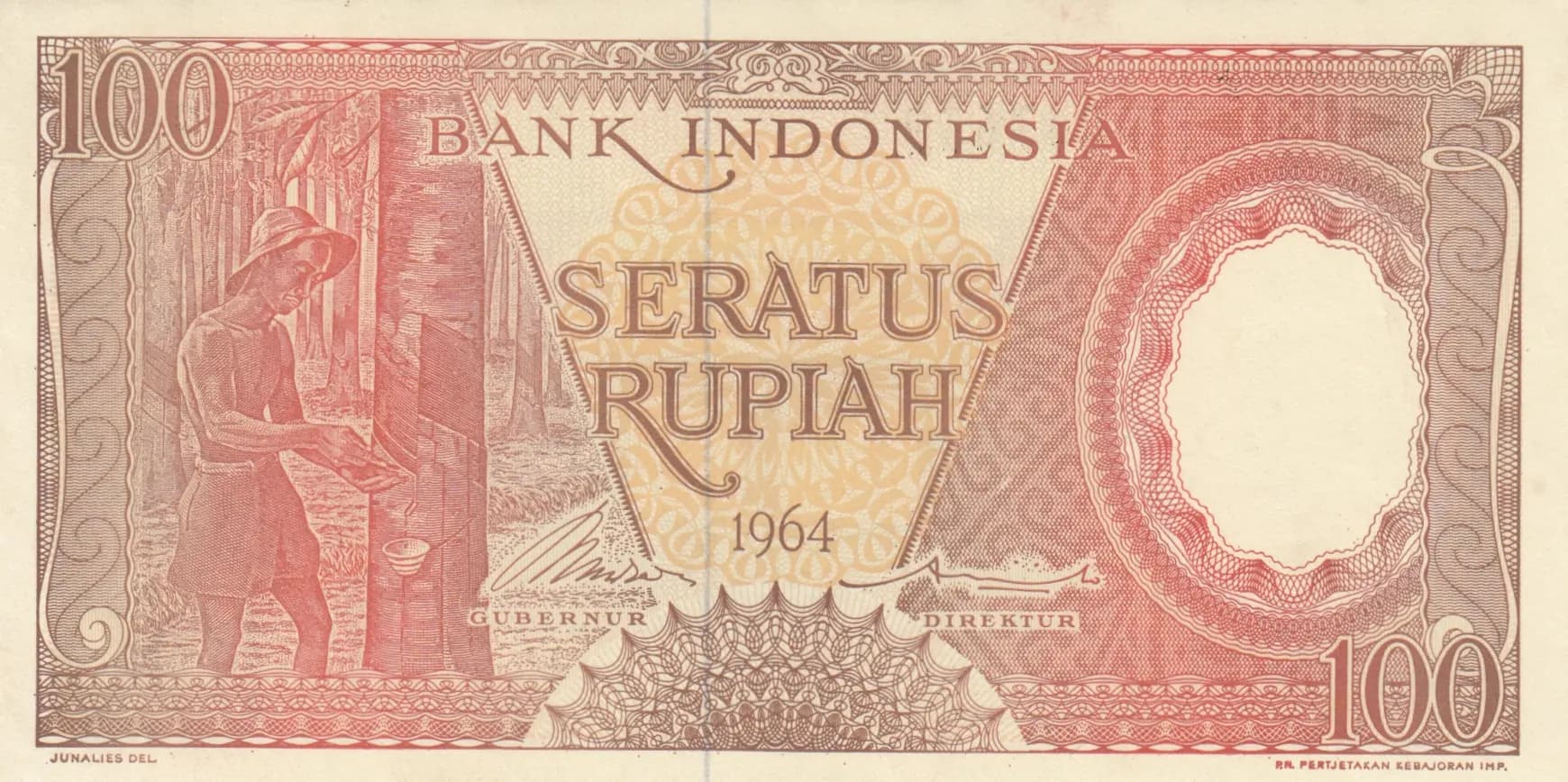
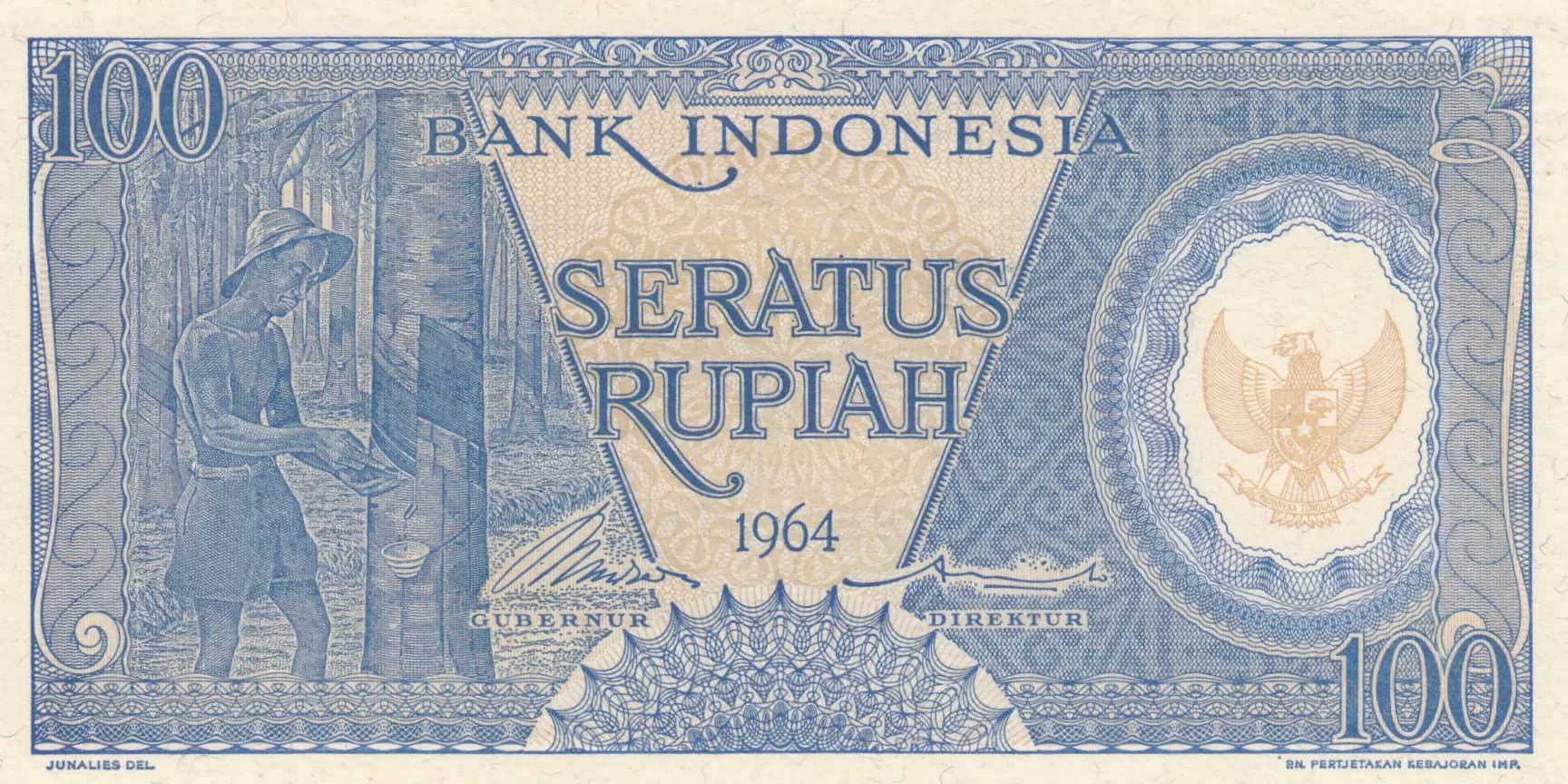
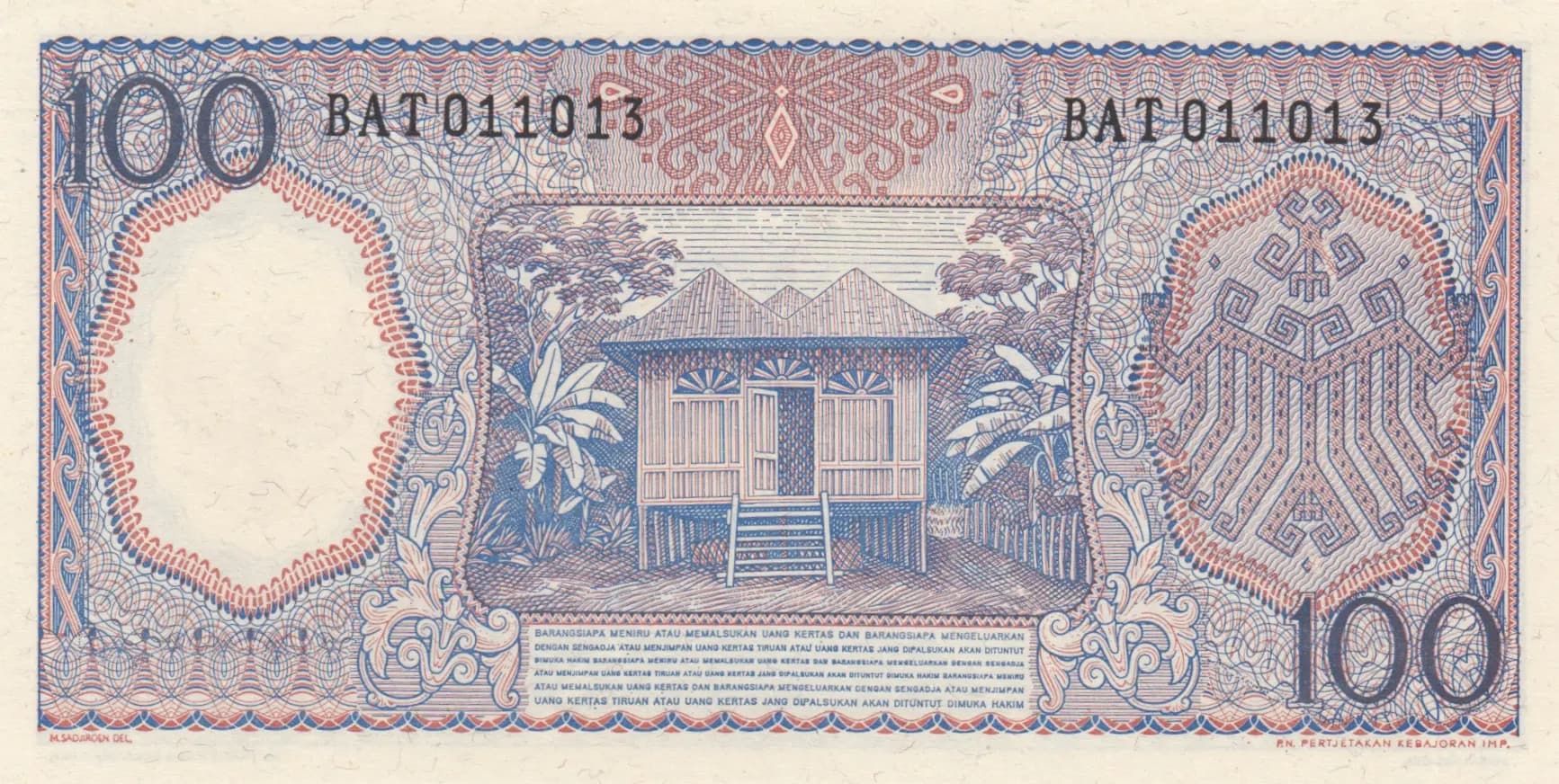
This is an exceptional example of Indonesia's 1964 100 Rupiah note (Pick P-98) in uncirculated condition, displaying the characteristic blue and cream color scheme with intricate engraved detailing throughout. The obverse features a rubber tapper in traditional working dress on the left with a portrait in an ornamental oval frame on the right, while the reverse depicts a traditional Kalimantan house set in a natural landscape with mountains and vegetation. The note exhibits sharp, vibrant printing with no visible wear, folds, or stains, making it an attractive specimen for collectors of early Indonesian currency.
Common. While this note is scarce in exceptional grades (PMG 67 examples have sold for $70-127 in recent years), the UNC grade population is substantial, with numerous examples trading on secondary markets between $3-23 over the past 13 years. The eBay price history shows consistent availability across various grade levels, with UNC examples regularly appearing and selling for modest premiums ($5-20 range typical for UNC per 2019 catalog values of $5). The large print run and stable availability indicate this is a common date in the series, though high-grade examples command collector interest.
Issued during Indonesia's early post-independence period under Bank Indonesia's stewardship, this 1964 note reflects the nation's economic development and cultural identity during the Sukarno era. The imagery—featuring a rubber tapper and traditional Kalimantan architecture—celebrates Indonesia's natural resources and regional diversity, symbolizing the country's focus on agricultural and resource-based economy following independence in 1945. The note's high-quality engraving and security features demonstrate Bank Indonesia's commitment to establishing a professional, modern currency system during this formative period of the nation's economic development.
The obverse features a left-positioned figure of a rubber tapper wearing a wide-brimmed hat, rendered in detailed engraving to emphasize Indonesia's agricultural heritage and the labor-intensive rubber industry that was crucial to the nation's economy. An ornamental oval portrait frame on the right side contains a profile portrait facing rightward. The reverse showcases a traditional Kalimantan house with a distinctive steeply pitched roof and decorative architectural elements, positioned centrally within a mountainous landscape with framing vegetation. Both sides are framed by ornate geometric border patterns in red and blue, with large blank oval spaces positioned left and right (likely intended for watermark visibility or security features). The overall composition employs fine-line engraving throughout, with complex decorative flourishes serving as anti-counterfeiting measures. The color scheme emphasizes blue on the obverse against cream/beige underprint, while the reverse employs red and blue geometric patterns on a light background.
FRONT SIDE: '100' (denomination numerals), 'SERATUS RUPIAH' (One Hundred Rupiah in Indonesian), 'BANK INDONESIA' (Bank Indonesia - issuing authority), '1964' (year of issue), 'GUBERNUR' (Governor - signature line), 'DIREKTUR' (Director - signature line), 'JUNALIES DEL' (artist/engraver credit), 'BN. PERTJETAKAN KEBAJORAN IMP.' (BN. Kebajoran Printing Imprint). BACK SIDE: '100' (denomination numerals), 'BAT01101S' (serial number), 'M. SADIRAN DEL' (artist/engraver credit), 'BN. PERTJETAKAN IMP.' (BN. Printing Imprint), plus regulatory text regarding counterfeiting penalties (approximately 8-10 lines of legal Indonesian text too small to fully resolve in provided images).
Intaglio engraving (steel plate engraving), as evidenced by the fine line work, detailed shading, and three-dimensional quality visible in both the portraits and architectural elements. The note was printed by Pertjetakan Kebajoran (PN Pertjetakan Kebajoran Imp.), Indonesia's primary security printer at the time. The complex geometric border patterns, ornamental frames, and detailed engraved portraiture are characteristic of traditional intaglio security printing techniques employed for high-security currency production.
Serial number BAT01101S observed on this specimen indicates it is from the regular production run with standard Bank Indonesia serial numbering. The note exhibits signatures from the Governor (Gubernur) and Director (Direktur) positions as is standard for this issue. The engraver credits 'JUNALIES DEL' (obverse) and 'M. SADIRAN DEL' (reverse) are documented engravers for this series. No obvious varieties such as overprints, color variants, or denomination differences are apparent; this represents the standard variety of Pick P-98 from the 1964 issue.