100 rupiah 1964
Market Prices
15 salesAbout This Note
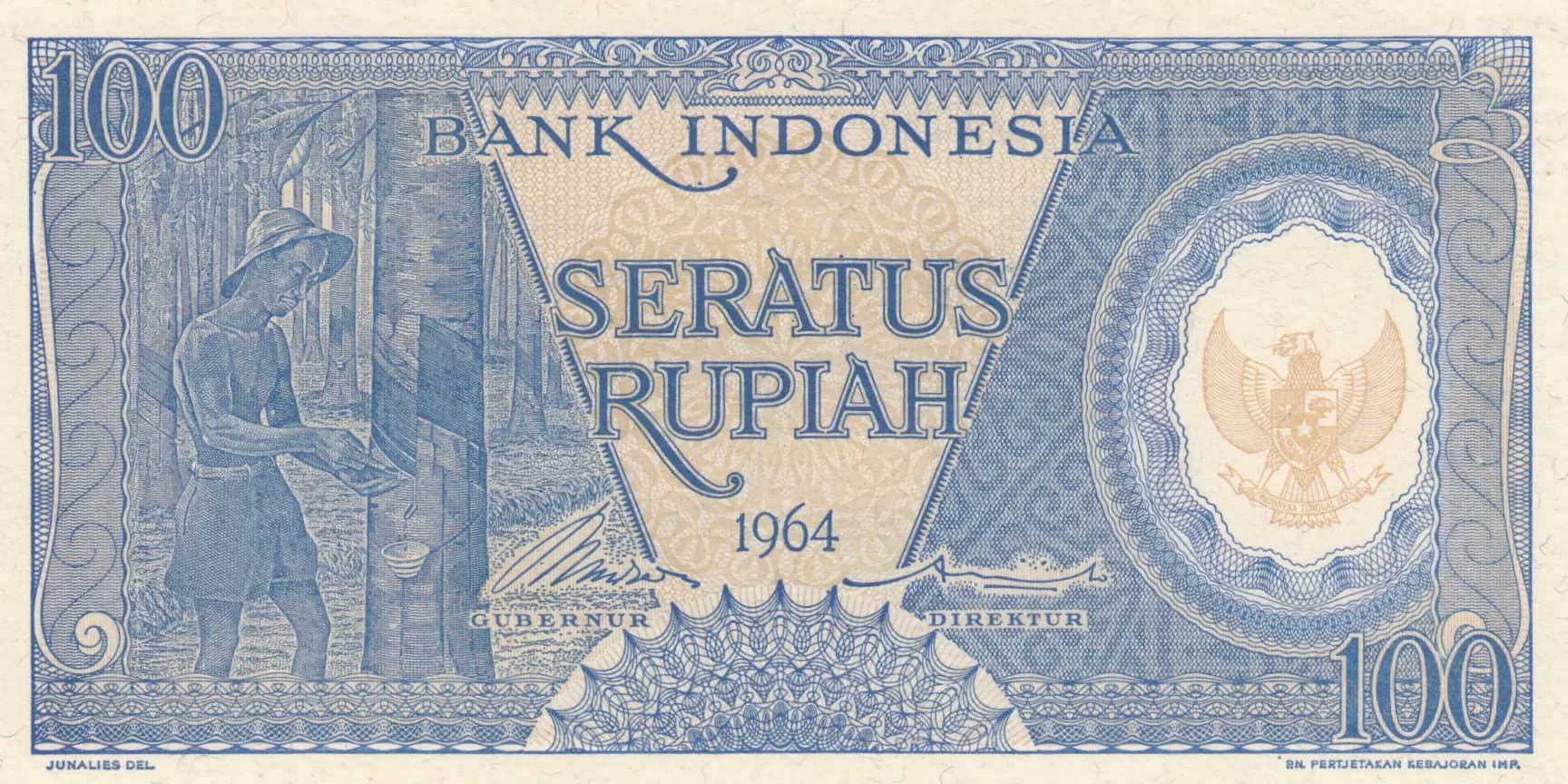
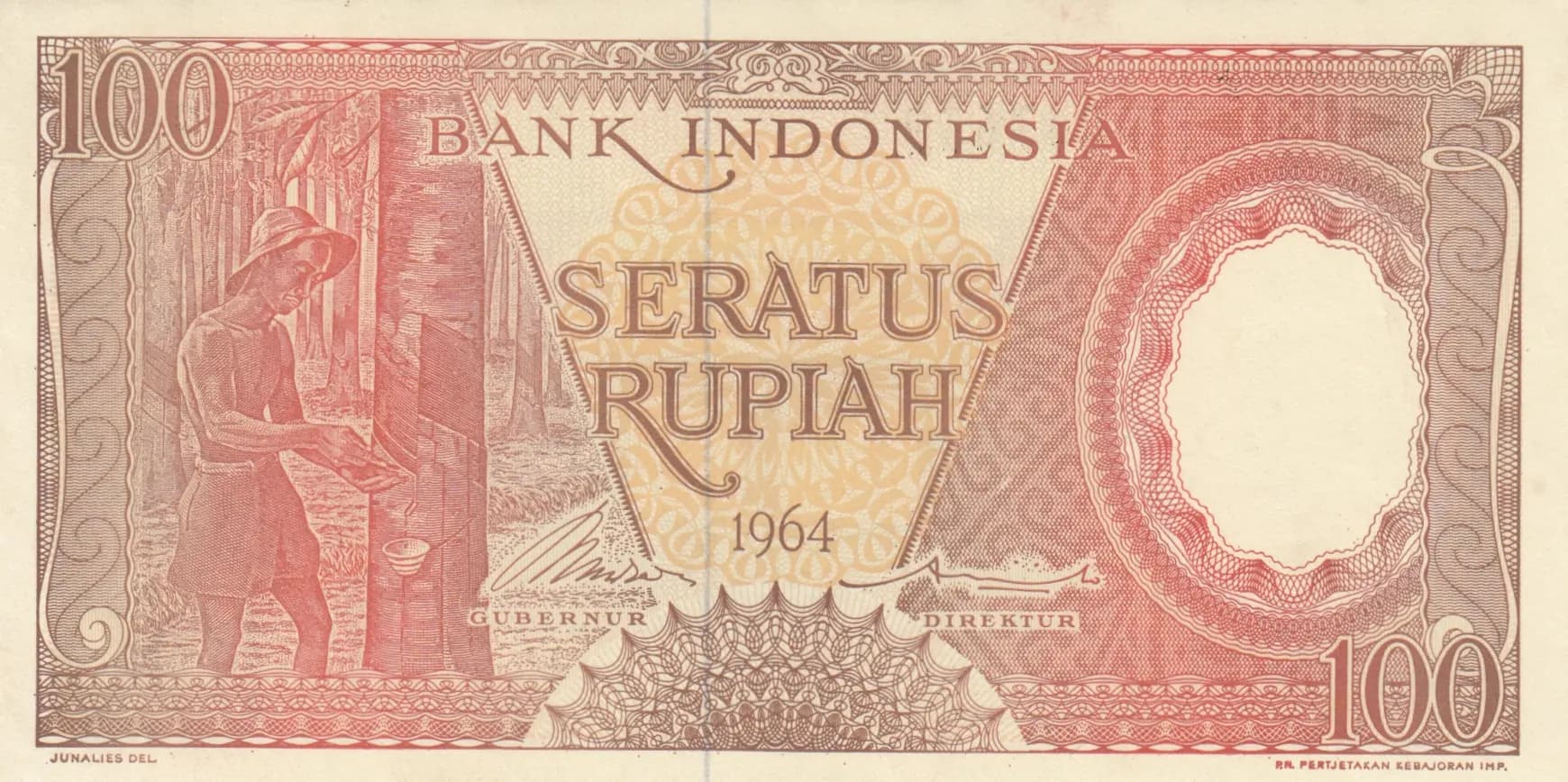
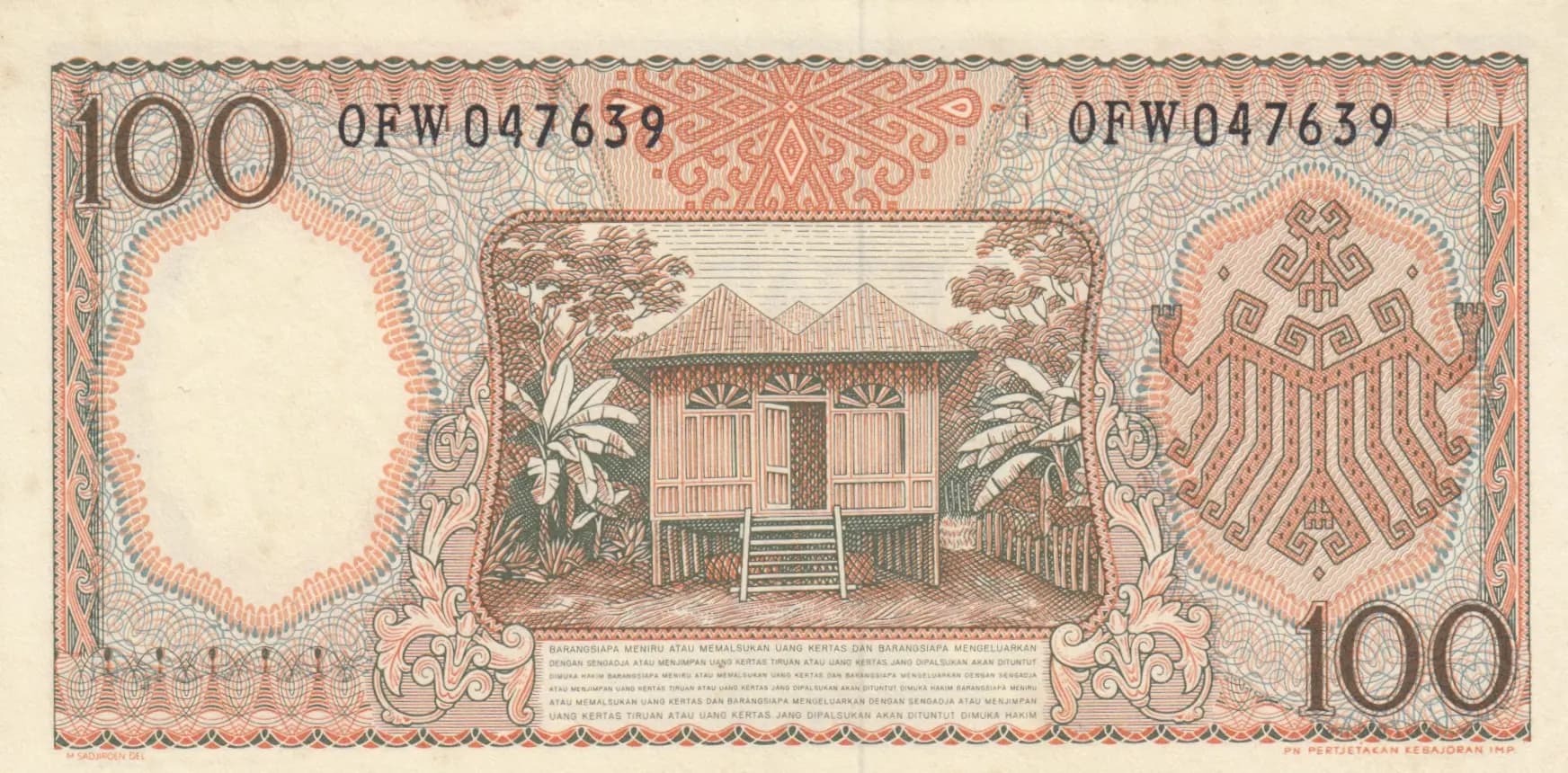
This is an uncirculated specimen of the 1964 Indonesia 100 rupiah note (Pick-97b), displaying exceptional condition with sharp printing and clean margins throughout. The obverse features a finely engraved portrait of a rubber tapper in traditional dress in rust and brown tones on a light tan underprint, while the reverse depicts a detailed tropical landscape with a traditional elevated Kalimantan house surrounded by palm trees and vegetation. The intricate engraved borders, fine line work, and geometric security elements demonstrate the high quality of Bank Indonesia's currency production during this period.
Common. This is a regular-issue banknote from a standard printing run of the 1964 Indonesian 100 rupiah denomination. Market data shows consistent availability with eBay sales ranging from under $1 to approximately $40 depending on condition grade and certification. UNC examples catalogued at $4 in 2019 values, and actual sales of uncirculated specimens have occurred at under $1. The note was printed in substantial quantities and remains readily available to collectors, with no evidence of rarity in any grade.
Issued in 1964 during Indonesia's early post-independence period under President Sukarno, this note represents the nation's efforts to establish a distinctive national currency with imagery celebrating traditional economic activities and indigenous architecture. The depiction of a rubber tapper reflects Indonesia's significant role as a major rubber producer, while the Kalimantan house on the reverse showcases the diverse regional cultures and vernacular architecture of the newly unified Indonesian state. The ornamental design aesthetic and engraving quality reflect the technical capabilities of Pertjetakan Kebajoran, Indonesia's primary security printer of the era.
The obverse features a portrait of an Indonesian rubber tapper wearing traditional Javanese or regional headgear (likely a blangkon or similar traditional hat), depicted in profile in a seated or kneeling position, rendered in fine engraved line work. The reverse depicts a characteristic Kalimantan longhouse (rumah tradisional), an elevated structure with a distinctive peaked roof, wooden railings, and external stairs, surrounded by tropical vegetation including coconut palm trees. The note displays classical numismatic design principles with elaborate ornamental borders featuring interlocking geometric and scrollwork patterns in the upper and lower margins, corner blocks with geometric designs, and a detailed geometric symbol or coat of arms on the reverse right side. The color scheme of rust/brown and red on cream/beige creates strong visual contrast typical of early post-independence Indonesian currency.
FRONT: 'BANK INDONESIA' (Bank Indonesia), 'SERATUS RUPIAH' (One Hundred Rupiah), '1964' (year of issue), '100' (denomination in numerals, repeated at bottom right), 'GUBERNUR' (Governor), 'DIREKTUR' (Director), 'JUNALIES DEL' (artist/engraver attribution), 'BR. PERTJETAKAN KEBAJOEAN IMP.' (BR. Kebajoean Printing Inc.). BACK: '100' (denomination in numerals at corners), serial number 'OFW047639' (left and right), 'BARANGSIAPA MENIRU ATAU MEMALSUKAN UANG KERTAS DAN BARANGSIAPA MENGELUARKAN DENGAN SENGAJA ATAU MENERIMA UANG KERTAS YANG DIPALSUKAN AKAN DIHUKUM DENGAN HUKUMAN YANG LAYAK MENURUT UNDANG-UNDANG YANG BERLAKU' (Whoever counterfeits or falsifies banknotes and whoever intentionally circulates or receives falsified banknotes will be punished with appropriate punishment according to applicable law).
Intaglio (copperplate) engraving, as evidenced by the fine line work, intricate border details, geometric patterns, and the characteristic depth and clarity of the portrait and landscape vignette. Printed by Pertjetakan Kebajoran (BR. Pertjetakan Kebajoean IMP.), Indonesia's primary security printing facility. The fine engraving quality, especially visible in the decorative borders, portrait details, and the complex geometric symbol on the reverse, indicates professional intaglio production standards.
Pick-97b designation indicates this is the second variety of the 1964 100 rupiah issue. The observed serial number 'OFW047639' represents one of the serial number ranges used in the regular circulation printing. Known varieties of this issue include different signature combinations (Gubernur and Direktur positions) and serial number prefixes. The specimen observed appears to be from a standard production run with no overprints, commemorative markings, or special varieties noted. Minor variations may exist in signature combinations and serial number prefixes, typical for notes of this era.