100 rupiah 1977
Market Prices
84 salesAbout This Note
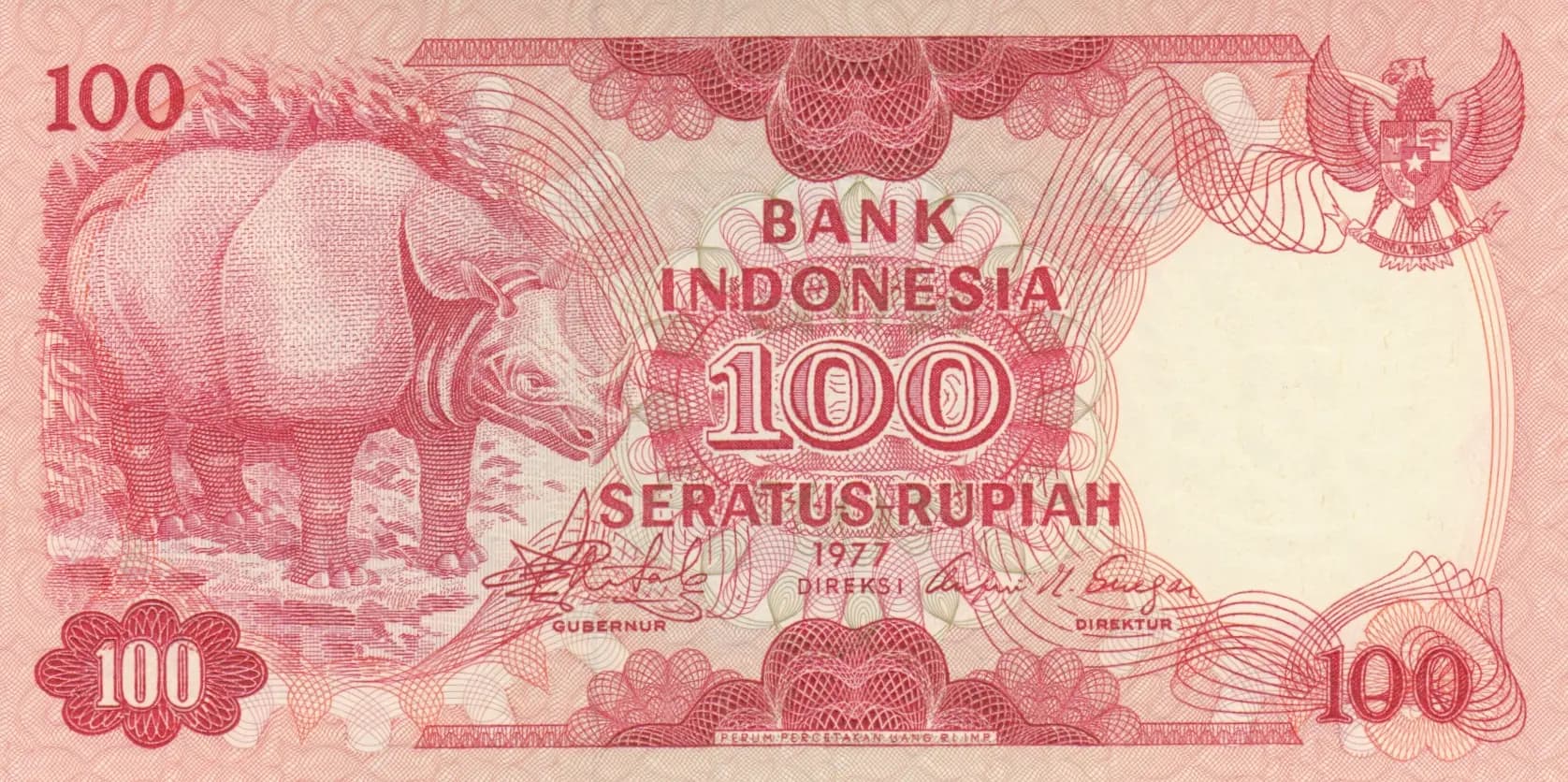
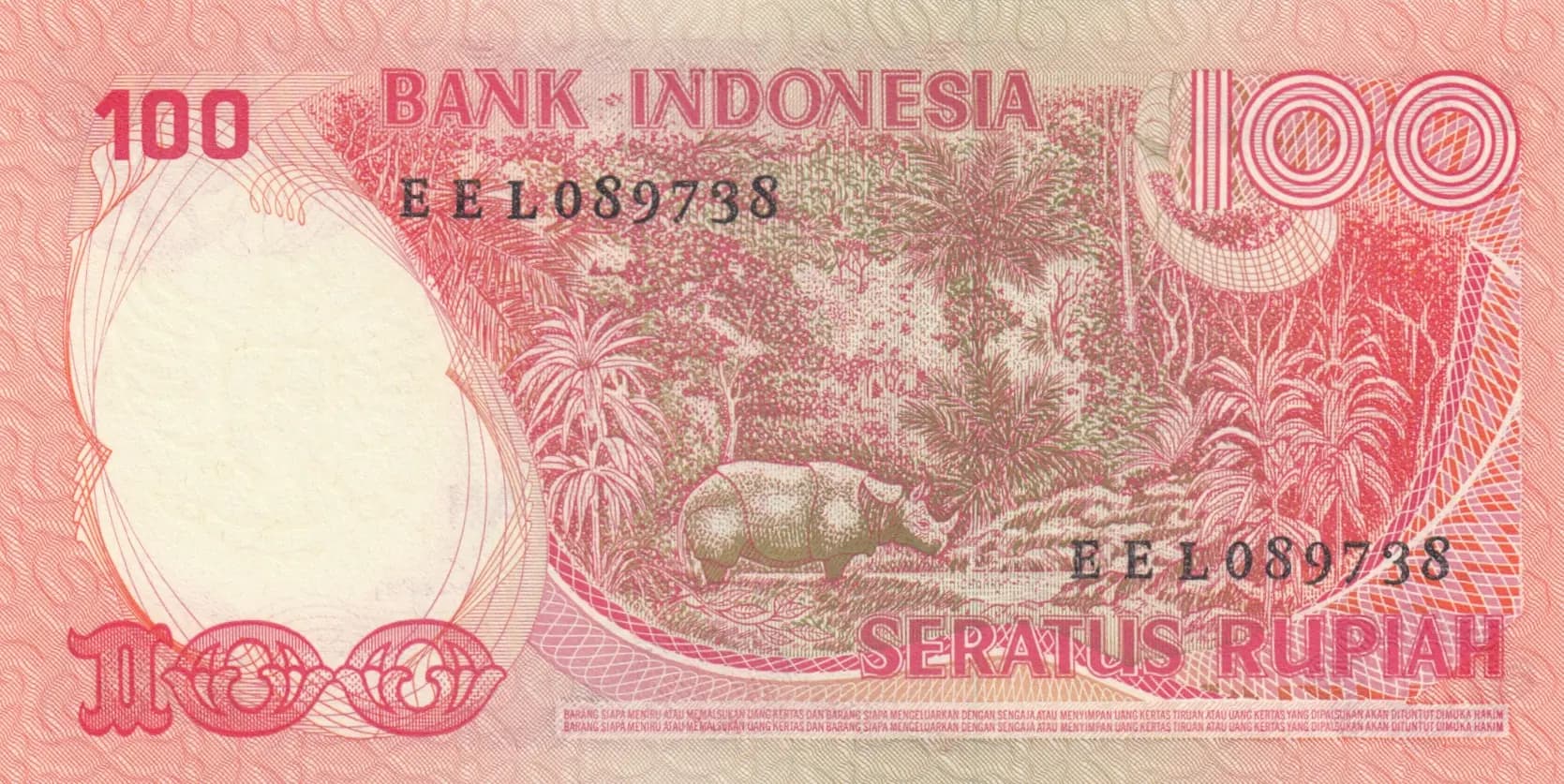
This is a pristine uncirculated example of Indonesia's 1977 100 Rupiah note (Pick P-116), featuring the iconic Java Rhinoceros on both obverse and reverse. The note displays excellent condition with crisp, clean appearance and no signs of circulation, exhibiting the fine engraved detail characteristic of Bank Indonesia's 1970s currency production. The ornate baroque-style design with pink/rose coloring and intricate guilloche patterns makes this an attractive example of Indonesia's wildlife-themed currency series.
Common. This note is widely available in the numismatic market as evidenced by the extensive eBay sales history provided, with UNC examples regularly selling for $2-7 USD. The 2019 catalog value for UNC is listed at $2, and consistent sales across multiple years and conditions confirm robust market supply. Large print runs during this period, combined with the note's current abundance in circulation and dealer stocks, establish it as a standard, readily obtainable issue.
Issued in 1977 by Bank Indonesia during a period of post-independence nation-building and economic development, this note reflects Indonesia's commitment to showcasing its natural heritage and biodiversity. The Java Rhinoceros depicted on both sides represents the country's endangered wildlife conservation awareness, while the Garuda Pancasila emblem on the obverse reinforces national identity and sovereignty during Indonesia's stable authoritarian period under Suharto's New Order regime.
The obverse features an ornate design with a male portrait (likely an Indonesian historical figure) in profile on the left side, rendered in fine engraving style with detailed parallel line work. The upper right displays the Garuda Pancasila, Indonesia's national emblem featuring a winged eagle with shield, symbolizing national sovereignty. Decorative rosette patterns and scalloped ornamental designs frame the top and bottom of the note, with elaborate baroque-style guilloche patterns throughout. The reverse depicts the Java Rhinoceros (Rhinoceros sondaicus), an endangered species, positioned in a natural jungle landscape with tropical flora including palm trees and dense vegetation. Large decorative oval frames with geometric patterns appear on the left side, while concentric circle patterns feature prominently in the large denomination numerals on the right. The consistent pink/rose color scheme with cream and beige backgrounds creates visual harmony across both sides.
Front side: 'BANK INDONESIA' (Bank Indonesia), '100' and 'SERATUS RUPIAH' (One Hundred Rupiah), '1977' (year of issue), 'DIREKSI' (Directorate), 'GUBERNUR' (Governor), 'DIREKTUR' (Director). Back side: 'BANK INDONESIA' (Bank Indonesia), '100' and 'SERATUS RUPIAH' (One Hundred Rupiah), 'BBL089738' (serial number appearing twice), and fine print legal text regarding banking regulations and the note's legal status.
Intaglio engraving (the primary method), executed by Perum. Percetakan Uang (Indonesian State Printing Works). The fine parallel line work visible in the portrait area, the intricate guilloche patterns, complex geometric designs, and detailed landscape engraving are all characteristic of high-quality intaglio production. The crisp, clean impression and fine detail preservation indicate professional security printing standards of the era.
The observed serial number is 'BBL089738'. Pick catalog notes P-116a and P-116s as variant entries, though those appear to reference different denominations (50 Gulden) and may represent catalog errors or cross-references. The base Pick P-116 represents the standard 1977 100 Rupiah issue. No significant varieties beyond normal serial number variations have been identified for this specific denomination and year combination.