10 000 rupiah 1964
Market Prices
55 salesAbout This Note
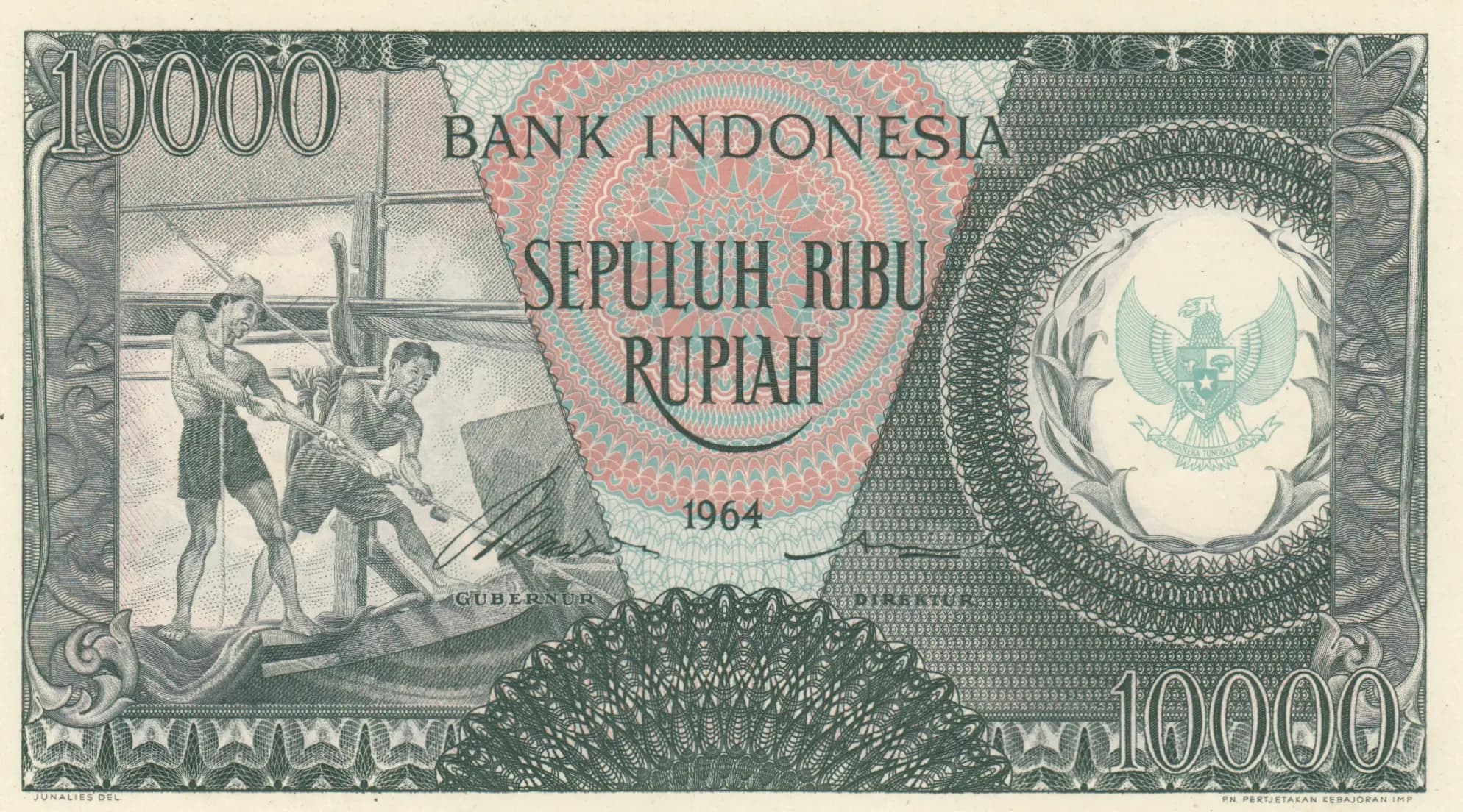
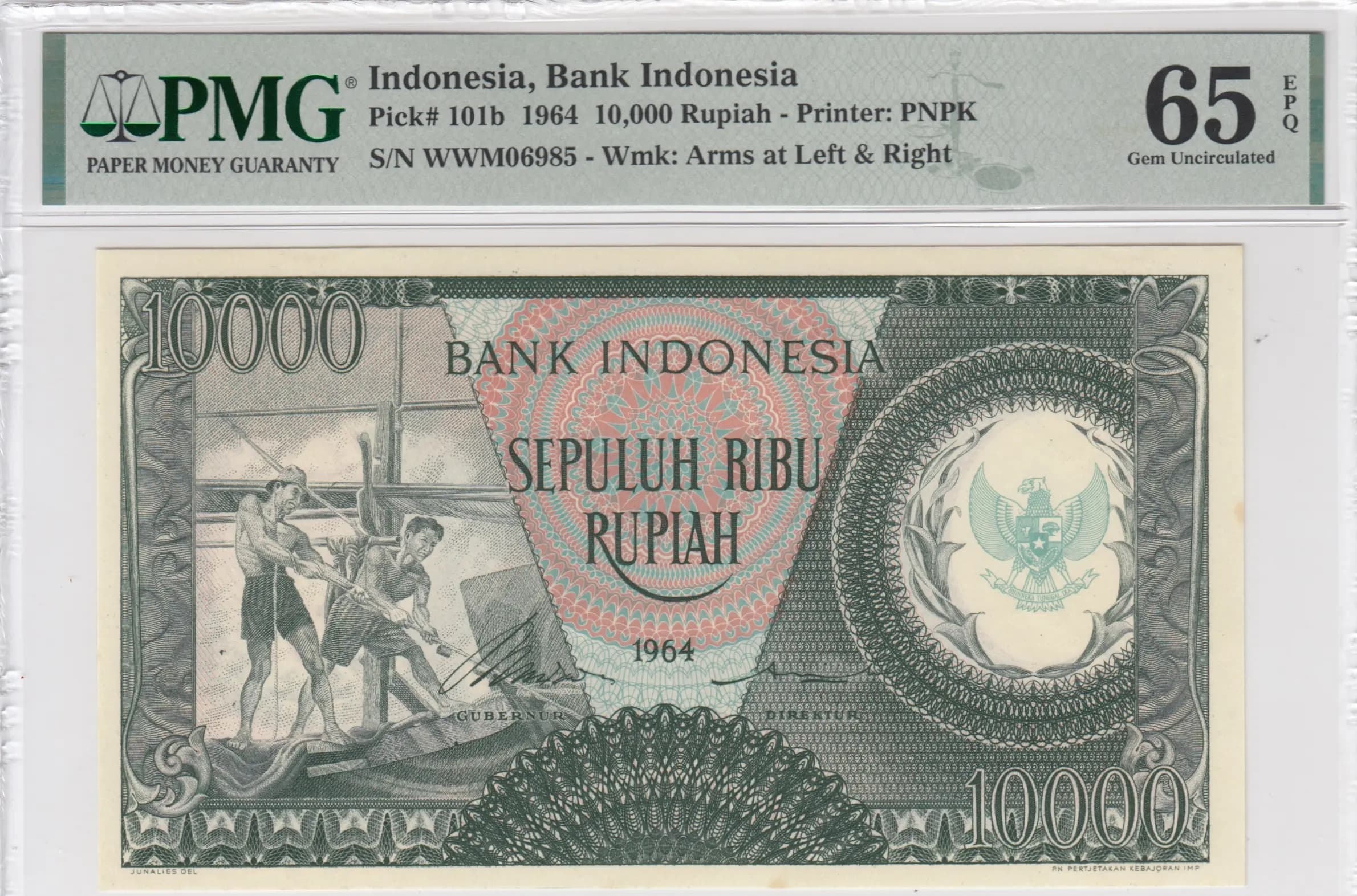
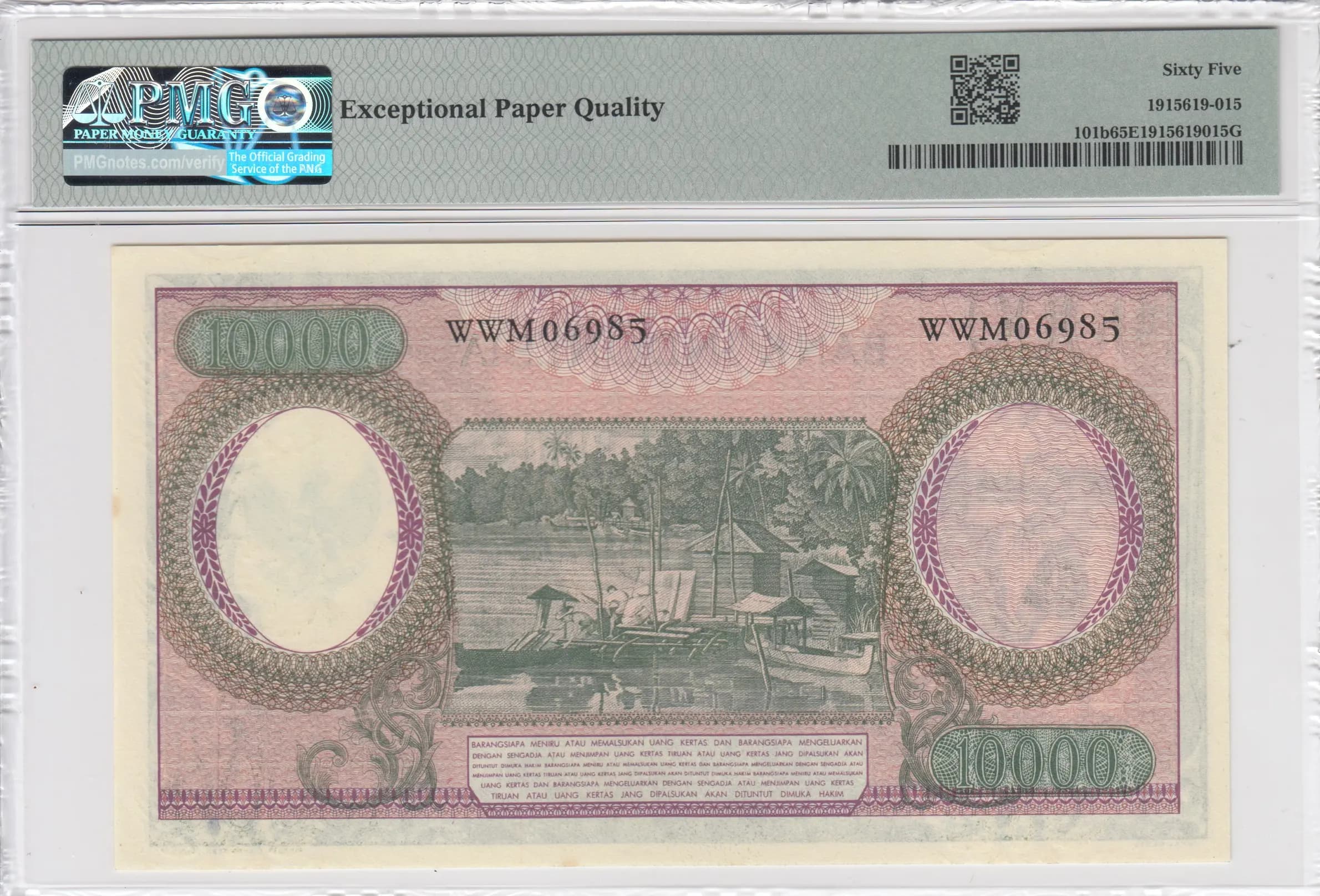
This is a PMG 65 EPQ (Gem Uncirculated) example of Indonesia's 10,000 Rupiah note from 1964, featuring a striking green and multicolor design with labor/agricultural workers on the obverse and a scenic tropical coastal settlement on the reverse. The note displays sharp printing, excellent color preservation, and no visible circulation wear, representing a desirable mid-grade example of this early post-independence Indonesian currency. The presence of the printed arms watermark distinguishes this as variety P-101b, making it slightly more collectible than the variant without arms (P-100).
Common. The eBay price history provided shows consistent sales across multiple grades (PMG 64-67, AUNC, EF, UNC) spanning from 2009 through 2025, with PMG 65 examples regularly selling in the $50-$80 range. The note was part of a regular issue with substantial circulation, and current market prices reflect typical availability. Despite being from 1964, the denomination was commonly issued, and uncirculated examples remain readily available to collectors.
Issued in 1964, this note reflects Indonesia's early post-independence period under President Sukarno's administration, during a time of significant economic and political transformation. The imagery—featuring laborers engaged in productive work and traditional coastal villages with palm-thatched structures—emphasizes the nation's agricultural and maritime heritage while promoting themes of national development and unity. The prominence of the Indonesian national emblem (Garuda eagle with shield) reinforces state authority and national sovereignty during this formative period.
The obverse features two laborers (identified as fishermen in catalog data, depicted as workers on the left side) engaged in productive activities, symbolizing Indonesia's working population and economic activity. The dominant feature is the large circular emblem containing the Garuda Pancasila (Indonesian national eagle symbol) with shield, positioned prominently on the right side, emphasizing national identity. The reverse depicts a tropical coastal landscape with traditional palm-thatched dwellings (floating houses), boats, palm trees, and waterside settlement—representing Indonesia's maritime culture and village life. Both sides feature ornate decorative borders with intricate guilloche patterns and geometric designs in the corners, with denomination numerals displayed in ornamental frames. The color scheme transitions from green/gray tones on the obverse to pink/mauve tones on the reverse.
FRONT: 'BANK INDONESIA' (Bank Indonesia), 'SEPULUH RIBU RUPIAH' (Ten Thousand Rupiah), '10000' (denomination in numerals, appears upper left and lower right), '1964' (issue year), 'GUBERNUR' (Governor, indicating space for governor's signature). BACK: '10000' (denomination in numerals, appears in corner frames), 'WWM06985' (serial number, repeated on both sides), [Indonesian legal disclaimer and conditions of use in fine print across lower center section].
Intaglio/engraved printing combined with multicolor lithography, produced by Pertjetakan Kebajoran (Kebajoran Printing). The sharp line work visible in the decorative borders, the fine-line guilloche patterns, and the precision of the portrait and emblem rendering are characteristic of intaglio production. The multicolor application and the watermark containing printed arms indicate sophisticated security printing techniques typical of central bank currency production in the 1960s.
This note is identified as Pick P-101b, which is distinguished by the presence of watermarked printed arms in the pale green area at the right side of the front. The catalog reference notes that variety P-100 represents a similar note without these arms on the watermark area, making P-101b the more complete security feature variant. Serial number WWM06985 is visible on this example. The presence of the 'GUBERNUR' (Governor) inscription with space for signature indicates this is from the standard release with designated signature authority space.