10 000 rupiah 1964
Market Prices
55 salesAbout This Note
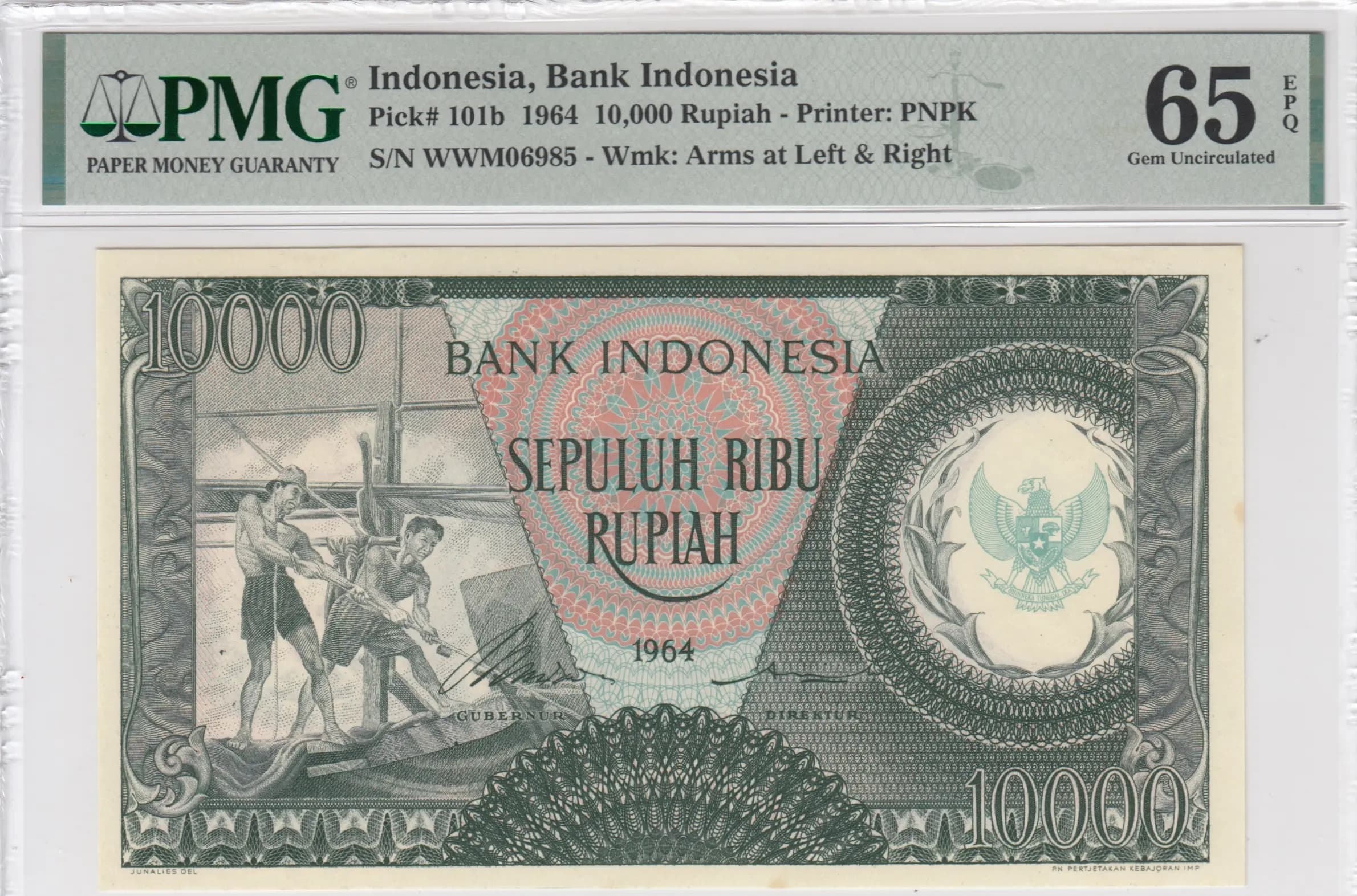
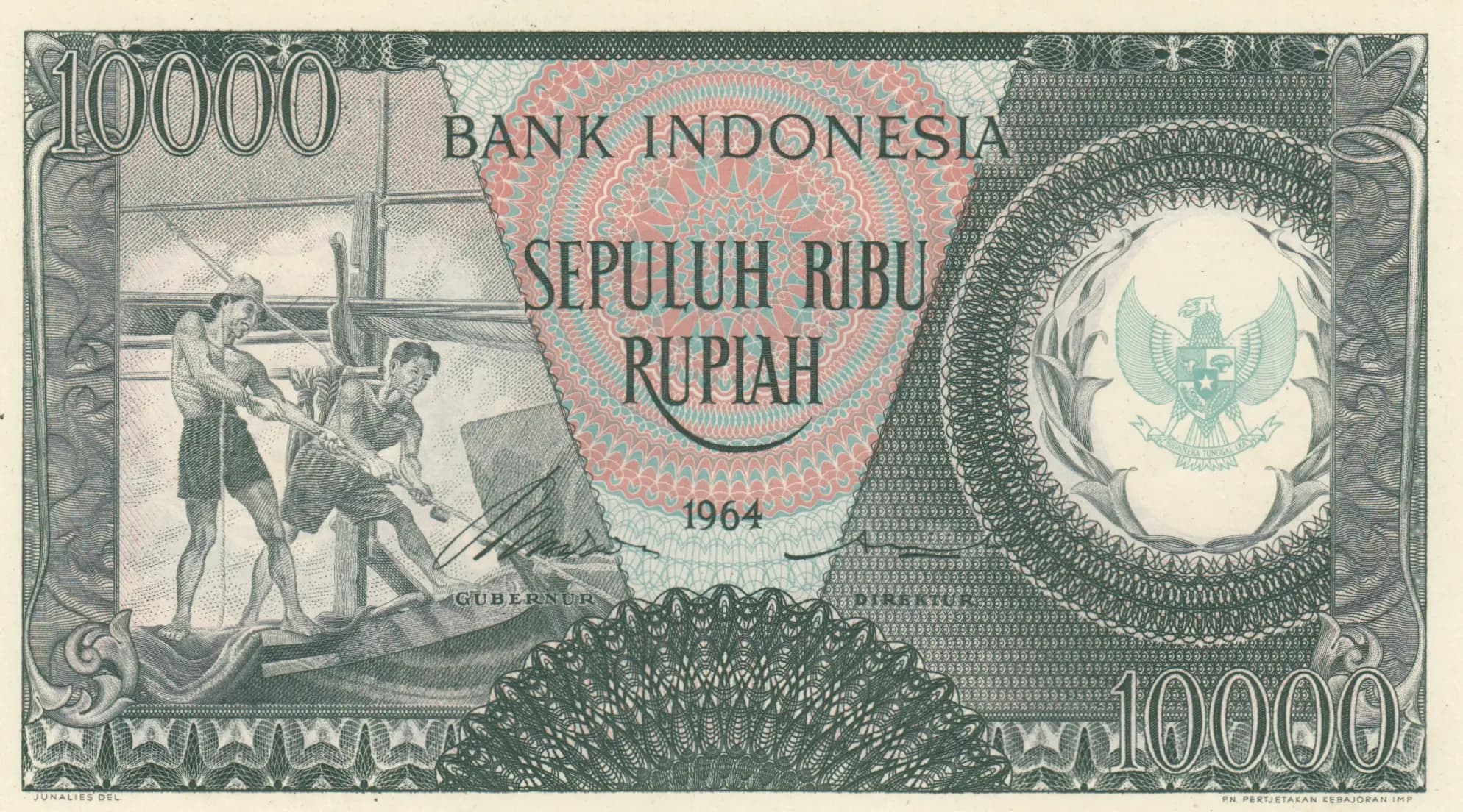
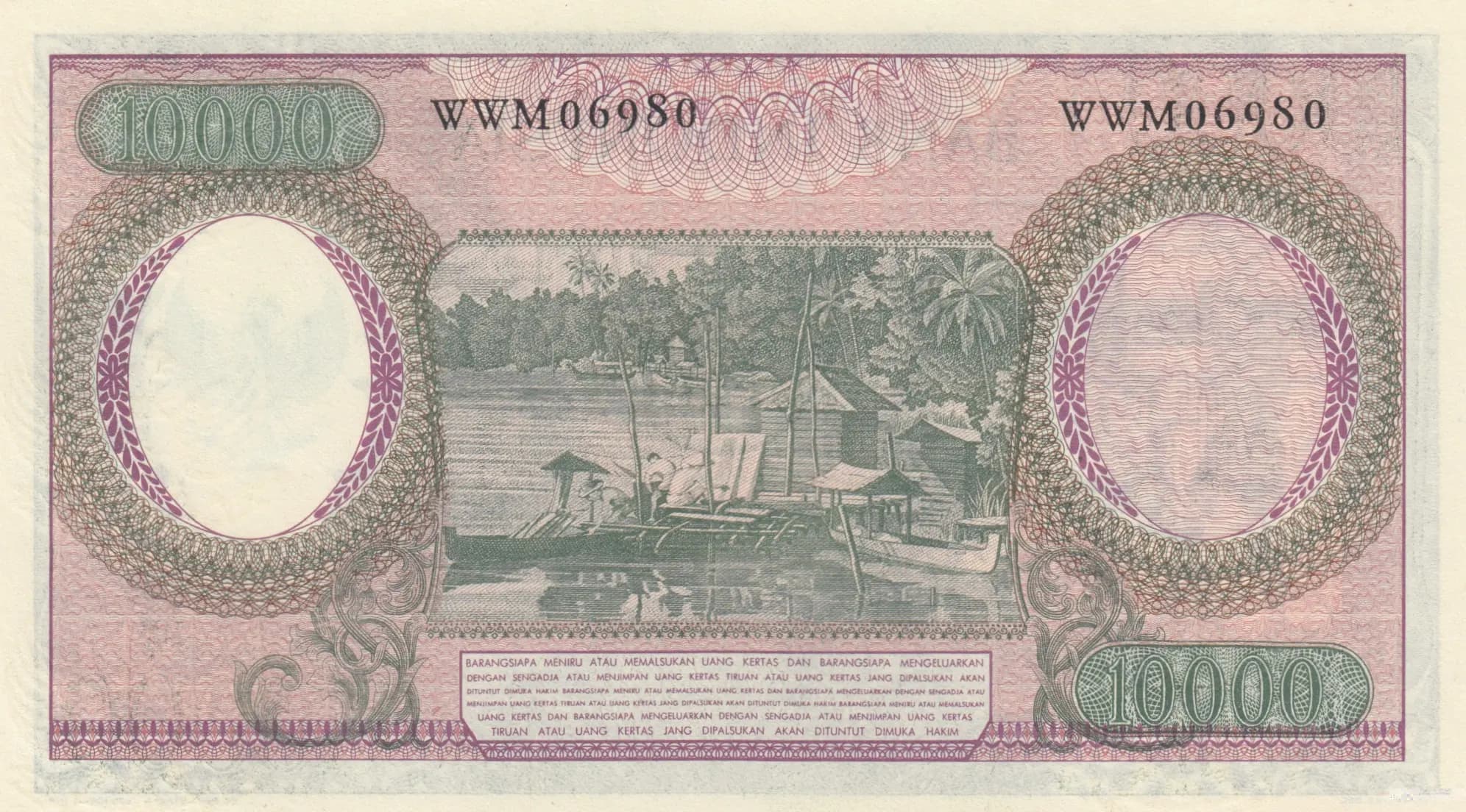
An exceptionally preserved example of Indonesia's 1964 10,000 rupiah note (Pick P-101b) in uncirculated condition, featuring masterfully engraved scenes of fishermen on the obverse and a tropical coastal village on the reverse. The note displays the characteristic green and pink color scheme with intricate security engraving and the prominent Garuda Pancasila emblem, representing the artistic peak of Bank Indonesia's mid-1960s currency design. This Pick number is distinguished by the presence of printed arms in the watermark area on the front, setting it apart from the earlier P-100 variety.
Common. Despite being nearly 60 years old, this note remains abundant in international markets. eBay transaction history shows consistent availability with numerous UNC examples selling in the $20-25 range (2023), and even PMG-graded specimens (64-67) typically commanding $30-100. The 2019 catalogue value of $25 for UNC reflects moderate collector demand without scarcity premium. Print runs for Bank Indonesia's 1964 denominations were substantial, and the denomination is popular among general collectors rather than scarce.
Issued during Indonesia's early post-independence period under President Sukarno, this 1964 note reflects the nation's economic priorities through its imagery of fishermen and coastal settlements, emphasizing maritime resources and rural development. The prominent display of the Garuda Pancasila national emblem and references to judicial penalties for counterfeiting underscore the government's efforts to establish currency sovereignty and combat fraud during a period of significant economic reorganization. The note's sophisticated intaglio design, produced by the Pertjetakan Kebajoran printer, demonstrates Indonesia's commitment to modern security printing standards.
The obverse features an allegorical labor scene depicting two male figures (fishermen) engaged in productive work on the left side, symbolizing Indonesia's working class and maritime economy. Centered is an ornate circular medallion with elaborate floral patterns in red and pink tones, framed by decorative cream and green border elements. The right side displays the Indonesian national emblem—the Garuda Pancasila (the mythical eagle with shield and motto)—enclosed in a formal oval frame, representing state authority. Denomination numerals appear in all four corners. The reverse presents a picturesque landscape engraving of a tropical coastal village with palm trees, water bodies, and traditional pile-built dwellings characteristic of Indonesian maritime settlements, with matching oval cartouches flanking the central scene. Both sides employ fine-line guilloche patterns and decorative borders in green and cream against pink/mauve backgrounds, creating visual harmony across the composition.
FRONT: '10000' (denomination numerals, top left and bottom right); 'BANK INDONESIA' (issuing authority); 'SEPULUH RIBU RUPIAH' (Ten Thousand Rupiah in Indonesian); '1964' (issue year); 'GUBERNUR' (Governor); 'SUNALIES DEL' (engraver credit); Reference to 'PERTJETAKAN KEBAJORAN' (printer). BACK: '10000' (denomination in oval cartouche, bottom left); 'WWM06980' (serial number, appears twice); Extended Indonesian legal warning regarding counterfeiting: 'Barangsiapa meniru atau memalsukan uang kertas dan barangsiapa mengeluarkan dengan sengaja atau menghimpun uang kertas tiruan atau uang kertas yang dipalsukan akan dihukum dimuka hakim...' (Anyone who counterfeits or falsifies banknotes, and anyone who intentionally issues or accumulates counterfeit or falsified banknotes will be punished before a judge...).
Intaglio engraving (recess printing) executed by Pertjetakan Kebajoran, the official security printer for Bank Indonesia. The visual analysis confirms exceptional fine-line detail throughout, particularly visible in the background guilloche patterns, portraiture work, landscape elements, and decorative medallions. Multiple layers of intricate engraving and cross-hatching provide substantial counterfeit resistance. The precision of the registration between color elements and the clarity of fine lines indicate high-quality steel plate engraving with careful ink application, typical of 1960s central bank security printing standards.
This example is specifically Pick P-101b, distinguished from Pick P-100 by the presence of printed arms depicted within the watermark area on the front obverse. The serial number visible on this specimen is 'WWM06980' with the WWM prefix. Catalog references note that P-100 (similar note without arms on watermark) exists as a related variety. No overprints, signature variations, or date markings beyond '1964' are evident on this example.