2 rupee 1943
Market Prices
1 saleAbout This Note
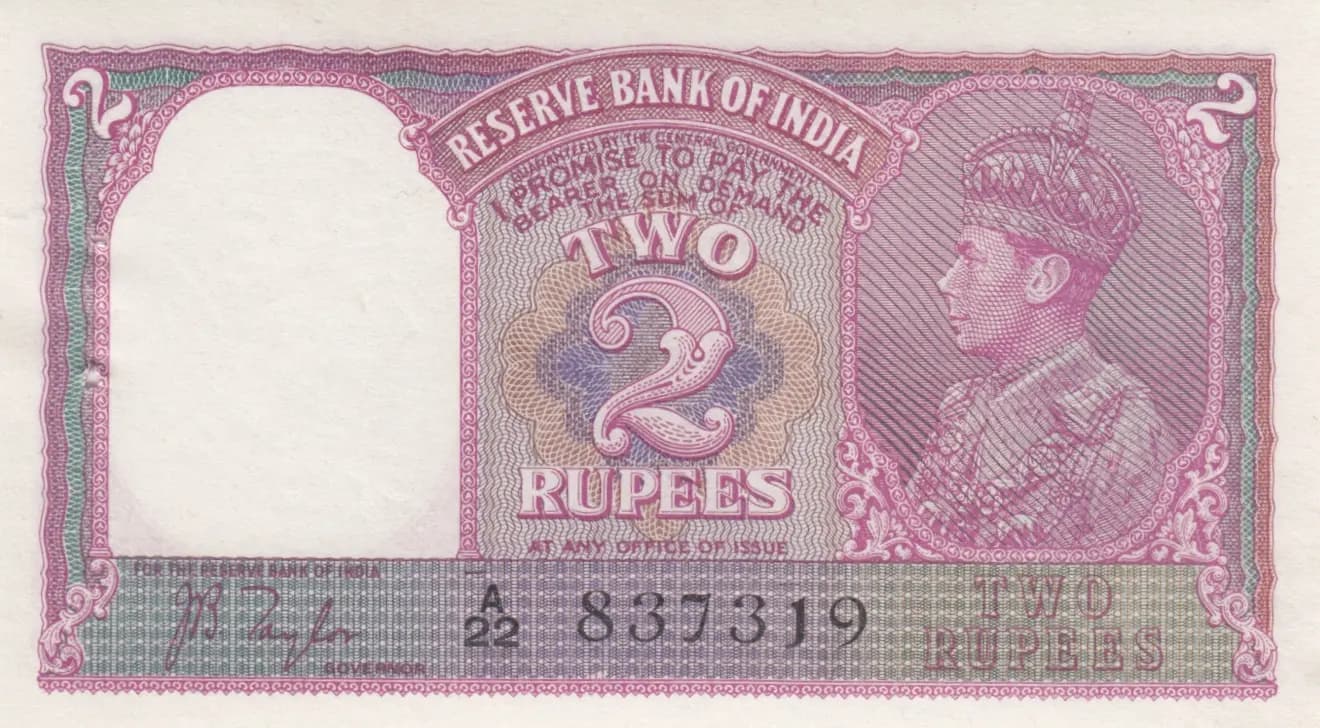
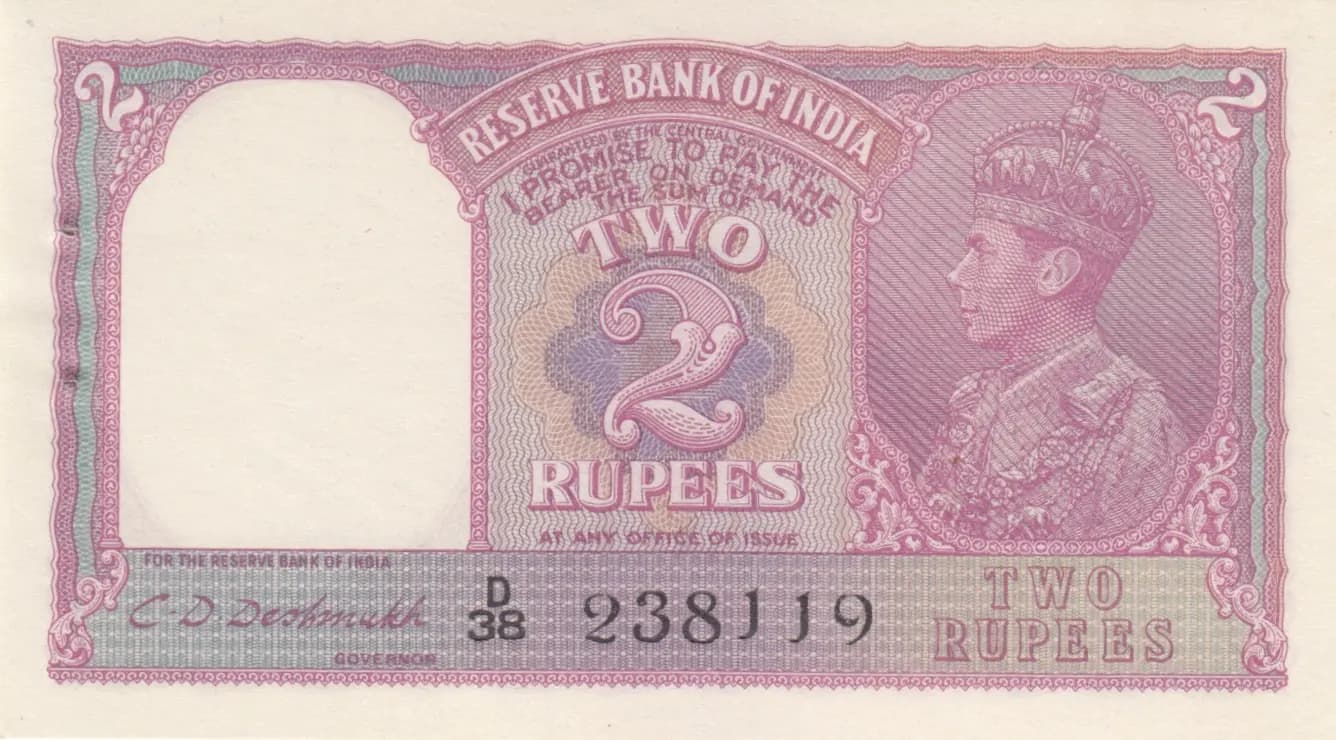
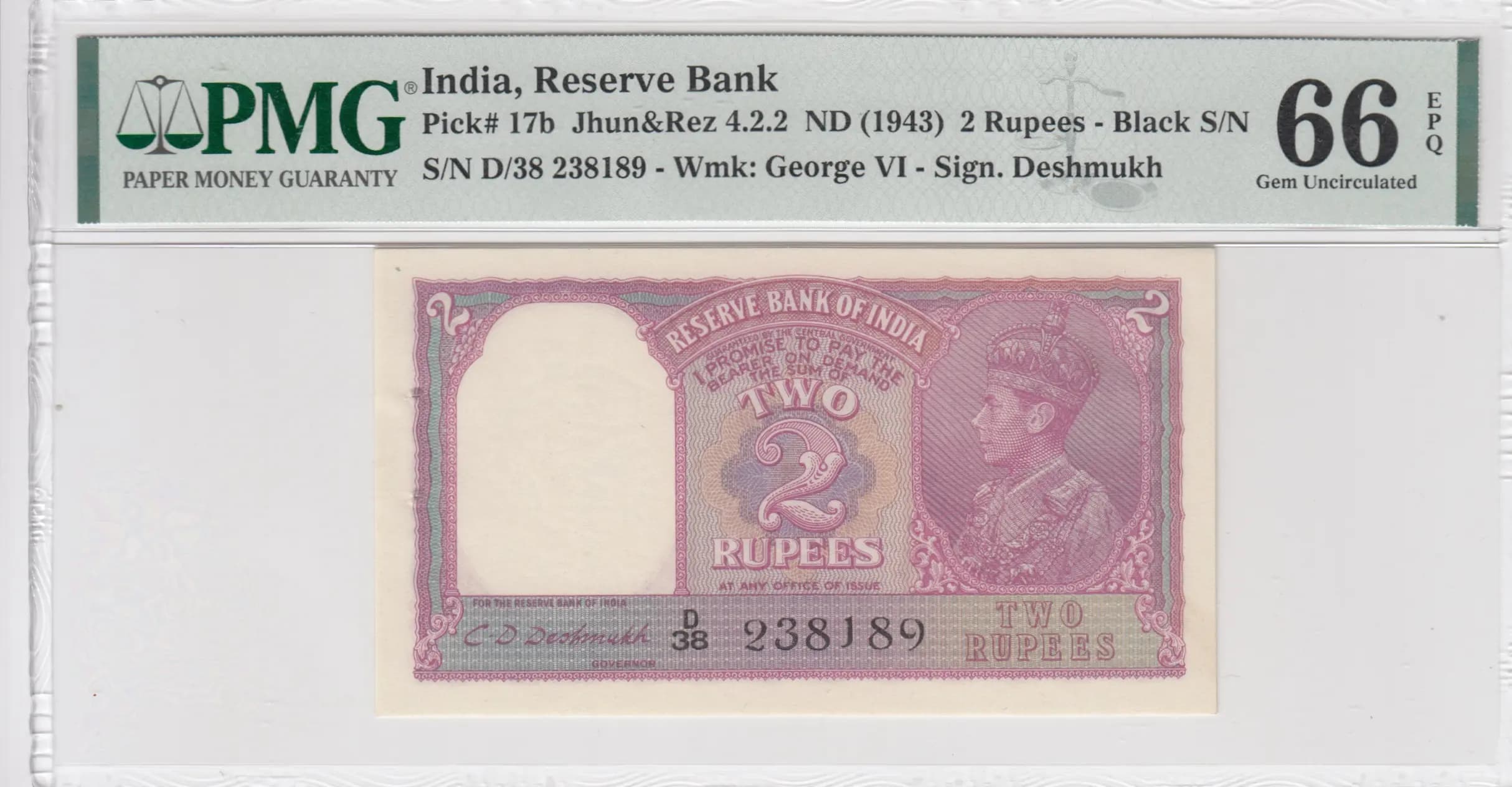
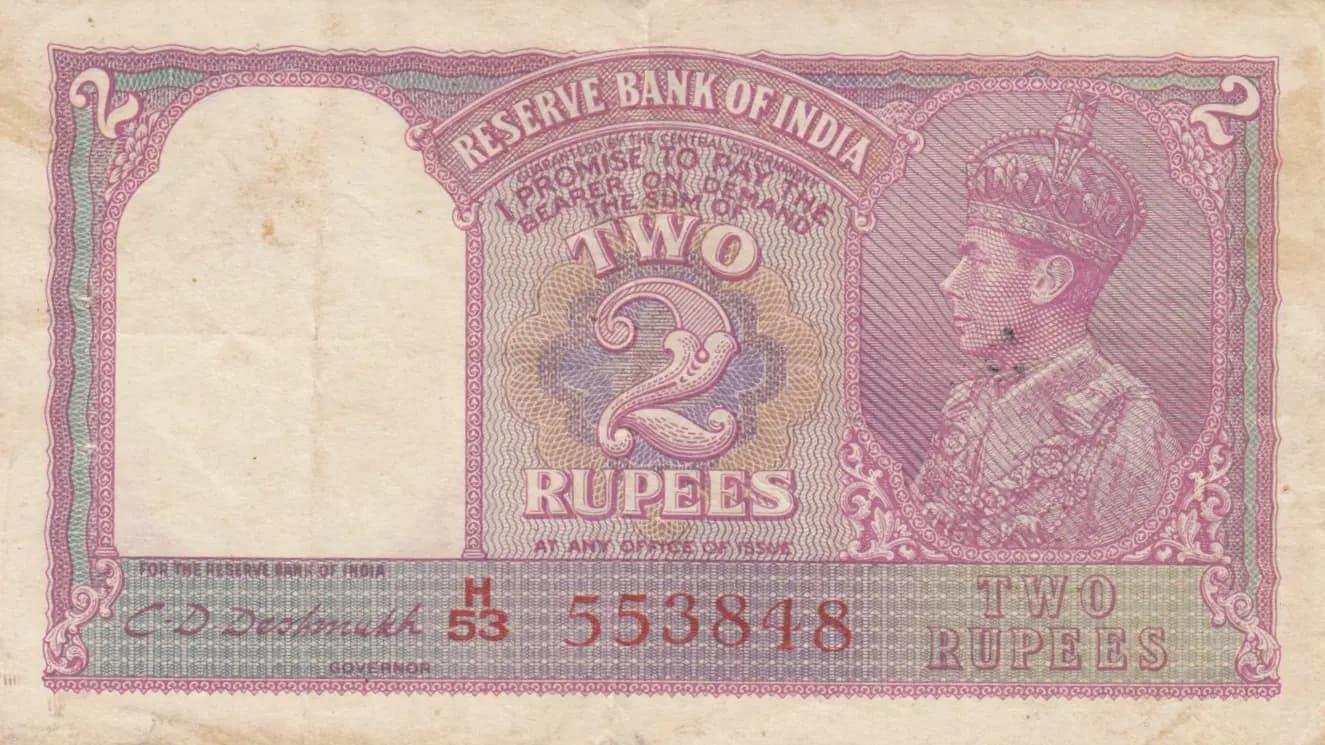
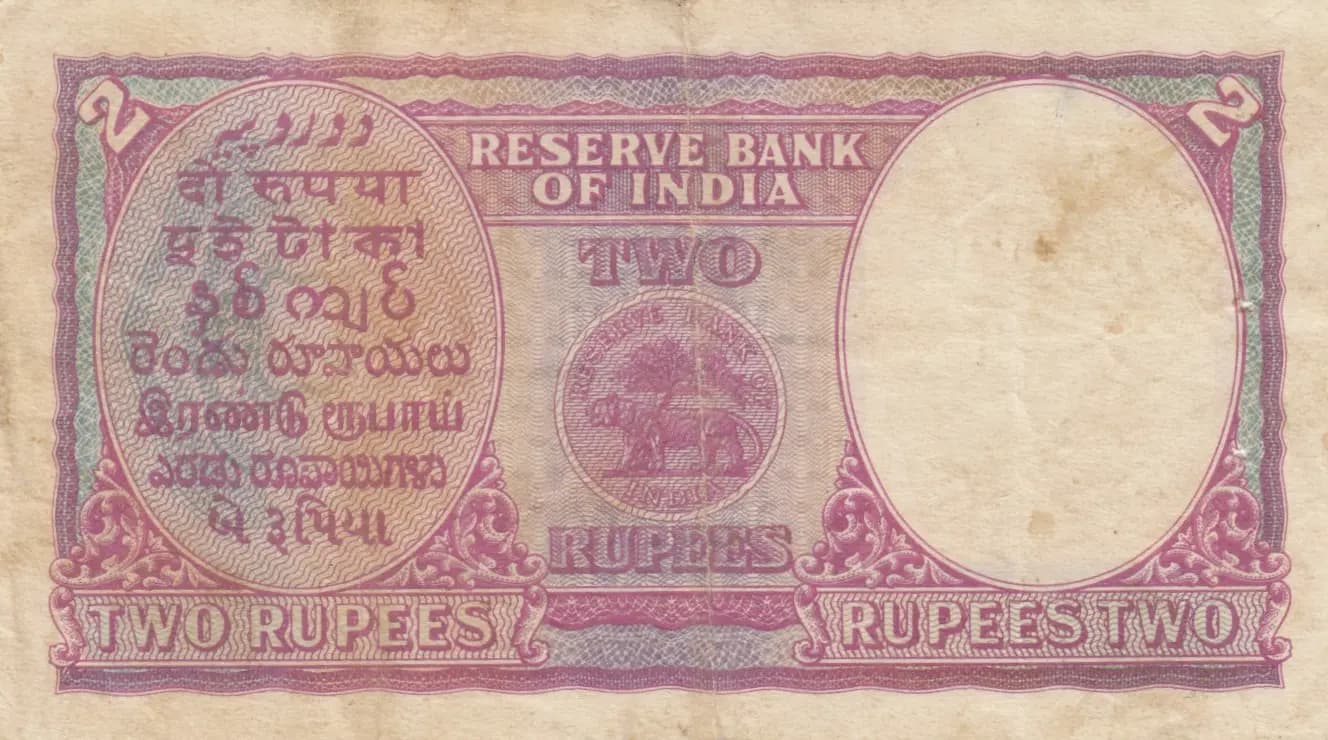
A scarce 1943 Indian 2 Rupee banknote (Pick P-17c) in Very Fine condition, featuring a striking purple/mauve color scheme with intricate ornamental borders and geometric guilloche patterns throughout. The note displays the profile portrait of King George VI on the obverse alongside architectural imagery, with both sides showing classical circular vignettes and fine line work characteristic of mid-20th century British-Indian currency design. Expected aging and foxing consistent with an 80-year-old note are present, with cream/beige patina and age spots visible, yet the design elements and inscriptions remain clearly legible.
Scarce in Very Fine condition. While the 1943 2 Rupee note is not rare in lower grades (common in circulated conditions), the VF grade is less frequently encountered. eBay market data shows a comparable note in Fine condition sold for $305 in 2021 with significant bidding competition, and catalog valuations place VF examples at $250 with UNC reaching $700. This pricing activity and the condition-dependent valuation spread indicate that high-grade examples are moderately scarce rather than common, though the note itself was issued in sufficient quantities during its production run. Print runs for this denomination during WWII were substantial, but survival in VF condition is notable.
Issued during World War II when India was still under British rule, this 2 Rupee note reflects the transitional period of the Reserve Bank of India's early governance under the British Crown. The prominent portrait of King George VI on the obverse symbolizes the colonial monetary authority of the era, while the note's sophisticated design and security features demonstrate the RBI's establishment as a modern central banking institution despite the political upheaval of the 1940s. This series predates India's independence in 1947 by several years, making it a tangible artifact of the late colonial period.
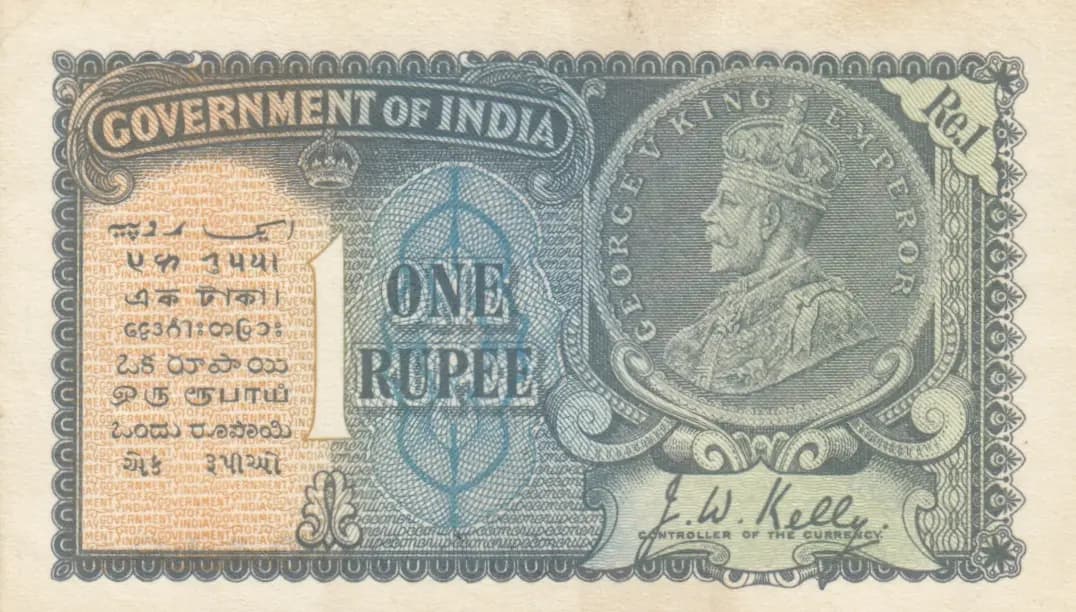
The obverse features a right-facing profile portrait of King George VI positioned in the upper right quadrant, a symbol of the Crown's monetary authority over India during the colonial period. Below the portrait is an ornamental architectural vignette, likely representing institutional or colonial administrative buildings. The reverse displays two circular medallion frames—the left containing regional language text and the right appearing as a complementary decorative element. Both sides employ elaborate scrollwork, corner flourishes, and repeating geometric border patterns executed in fine line work and guilloche technique. The color palette of purple and mauve with cream background was characteristic of RBI 2 Rupee notes of this series, creating strong visual distinction from other denominations.
Front side: 'RESERVE BANK OF INDIA', 'TWO RUPEES', 'TWO', 'RUPEES', '2', and serial number components '53' and '553848'. Back side: 'RESERVE BANK OF INDIA', 'TWO RUPEES', 'RUPEES TWO', and text in an Indian language script (likely Hindi or a regional script) within the left circular vignette, which is too small/unclear in the provided image to translate with certainty. All primary inscriptions are in English; the note uses bilingual design with additional script elements typical of RBI currency of this era.
Intaglio (recess) printing on banknote paper, utilizing fine line engraving and guilloche pattern generation to create the complex security designs visible throughout. The intricate background patterns, ornate borders, and detailed portraiture are hallmarks of high-security intaglio printing. The note was likely produced by Bradbury, Wilkinson & Co. or De La Rue, standard security printers for RBI currency during the 1940s, though specific attribution would require examination of imprints not clearly visible in the provided images.
This note is cataloged as Pick P-17c, with the 'c' variant designation indicating a Red serial number variety. The visual analysis confirms red serial numbers ('53' and '553848' visible on the front). The catalog data indicates ND (No Date) designation with range 1937-1943, placing this within the later George VI series. The specific date of 1943 provided in the catalog, combined with the red serial number characteristics, establishes this as the P-17c variant. No overprints or unusual markings are evident in the images provided.