2 rupee 1937
Market Prices
31 salesAbout This Note
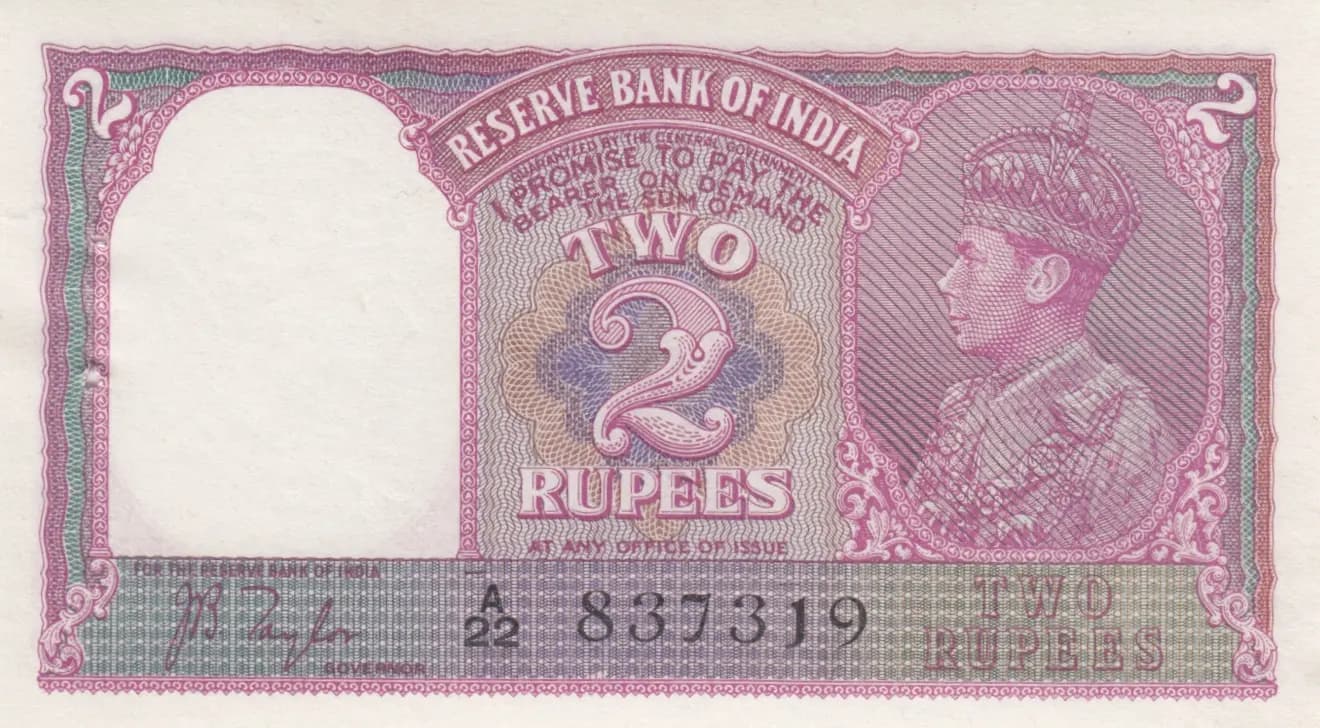
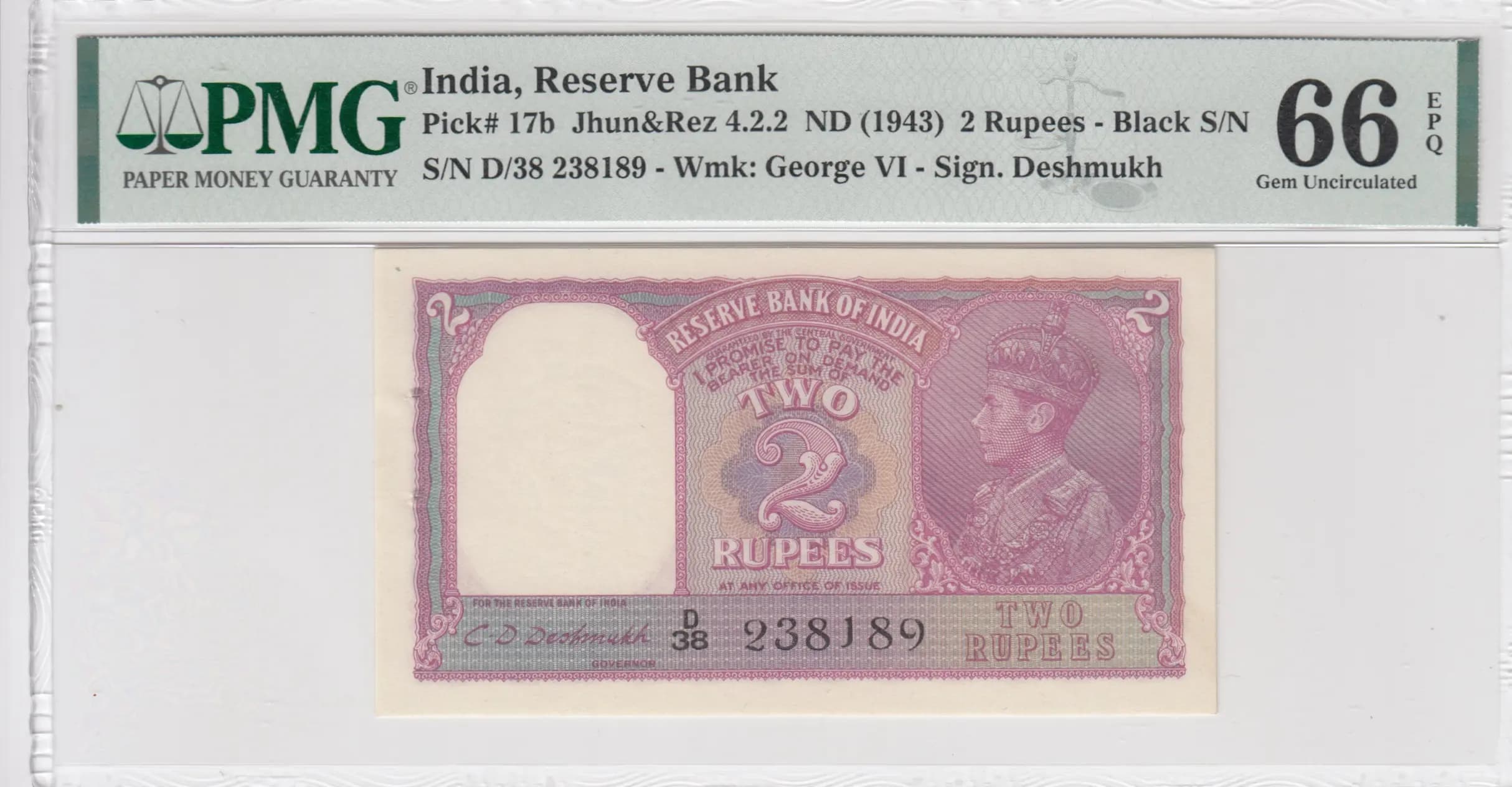
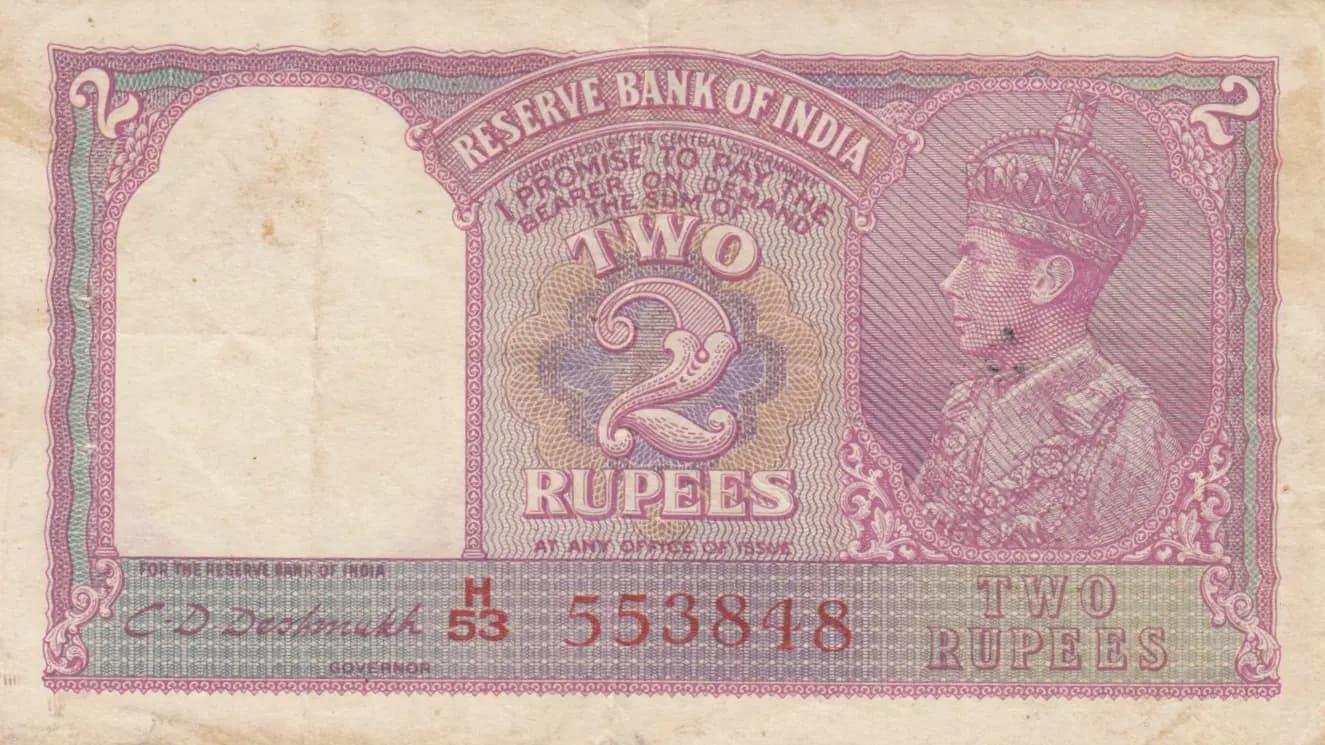
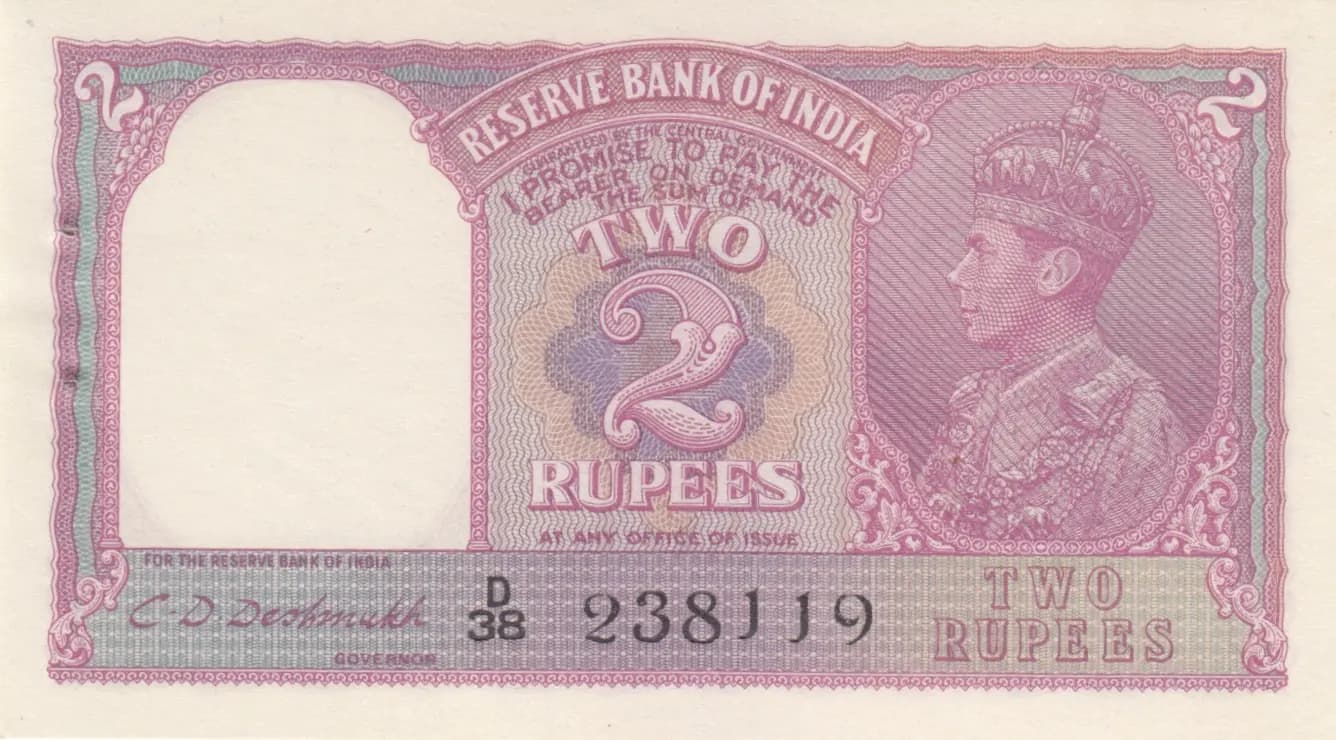
This is an exceptionally well-preserved 2 Rupee banknote from the Reserve Bank of India, catalogued as Pick P-17b and dating to the 1937-1943 issue period. The note displays the characteristic pink/mauve coloring of this series with intricate engraved borders and ornamental designs in all four corners. In UNC condition with sharp printing throughout and no visible wear, creasing, or damage, this example represents a high-quality specimen of this classic Indian currency issue, with eBay market data supporting valuations in the $120-240 range for notes in this grade.
Common. While this is a classic and desirable note from the early Reserve Bank of India period, eBay market data confirms robust supply at all grade levels, with VF examples regularly selling for $30-70 and UNC examples trading in the $120-240 range. The consistent availability across multiple sales spanning from 2011 to 2026, including multiple examples in PMG grades, indicates this is a relatively common issue despite its age and historical significance. The Pick P-17b designation represents a standard regular issue with substantial print runs.
This banknote was issued during the late colonial period in India, featuring the formal portrait of a dignitary in period dress consistent with the George VI era referenced in external catalogs. The Reserve Bank of India, established in 1935, was asserting monetary control during the transitional years leading to Indian independence in 1947. The elaborate engraved design work and security features reflect the security printing standards of the 1930s-1940s, when complex filigree and stipple patterns were primary defenses against counterfeiting.
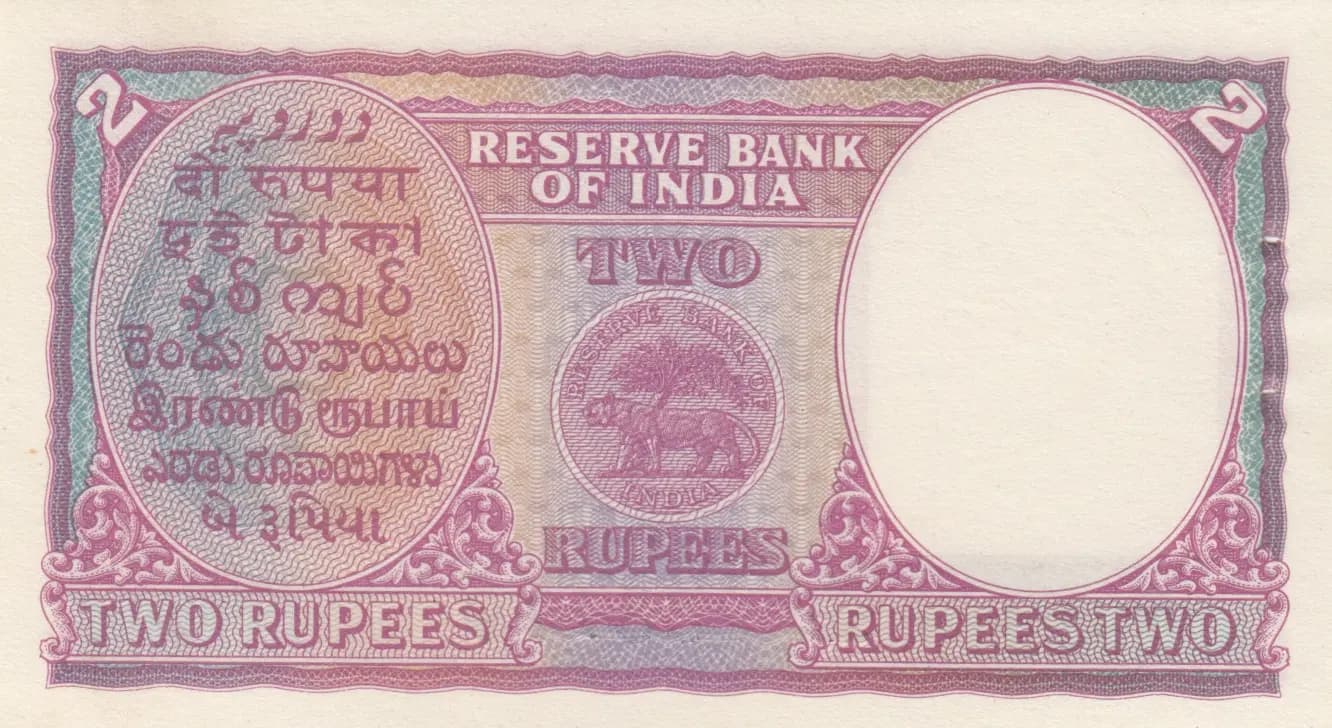
The obverse features a formal portrait on the right side in profile facing left, depicting a dignitary in period formal attire with decorative insignia, consistent with British colonial-era portraiture standards. The reverse employs a symmetrical design with two prominent oval medallions: the left contains intricate stipple/dot pattern work with Hindi script text, while the right provides a blank space. The central reverse features a heraldic lion emblem, representing the official seal of the Reserve Bank of India. The border design throughout consists of elaborate filigree scrollwork and ornamental corner vignettes in all four quadrants, characteristic of high-security engraving from this period. The dominant color scheme of pink/mauve with green accents creates strong visual distinctiveness.
Front side: 'RESERVE BANK OF INDIA' (English); 'PROMISE TO PAY TO THE BEARER ON DEMAND OF BANKS' (English); 'TWO RUPEES' and 'TWO' (English denomination text); Serial number: D 38 238J119. Back side: 'RESERVE BANK OF INDIA' (English); 'TWO RUPEES', 'RUPEES TWO', and 'TWO' (denomination text in English); Devanagari/Hindi script text within left oval medallion (not clearly legible in images provided). All inscriptions are in English with supporting Hindi/Devanagari script elements on the reverse.
This note was produced using traditional intaglio (engraved) printing, the standard security printing method for banknotes of this era. The fine line work, stipple patterns, and intricate filigree visible throughout the design would have been created by steel plate engraving. The sharp clarity of the printing in this UNC example demonstrates the high quality of the engraving plates and printing process employed by the Reserve Bank of India's security printer for this issue.
This specimen displays serial number prefix 'D' with sequential numbering (D 38 238J119), typical of the standard circulation series. The PMG population report notes the existence of variant P-17c with red serial numbers, suggesting that serial number color variations exist within this issue. The catalog distinction between P-17b and P-17c indicates that the red serial number variant is a recognized cataloging variety. This particular specimen, with black serial numbering, represents the more commonly encountered P-17b variety. No date varieties are apparent; this issue spans both 1937 and 1943 dates per external references, though the specific date on this specimen is not clearly legible in the provided images.