2 rupee 1937
Market Prices
31 salesAbout This Note
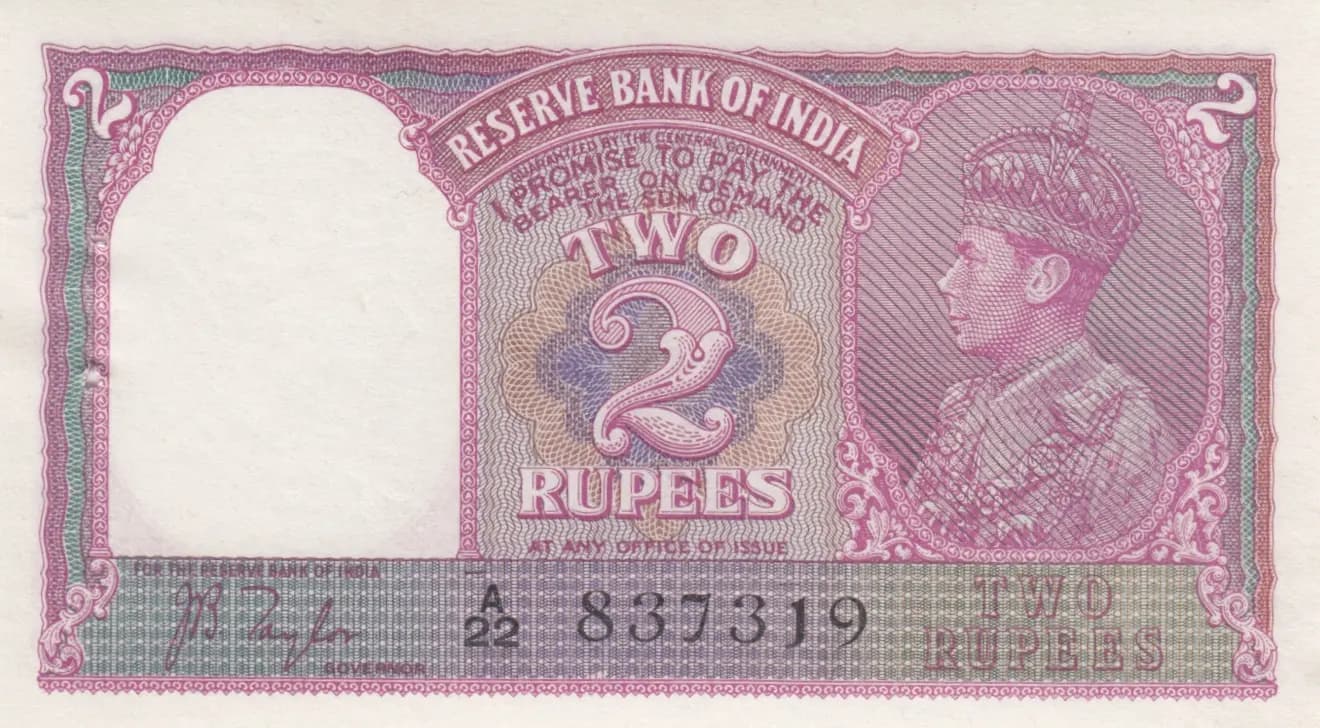
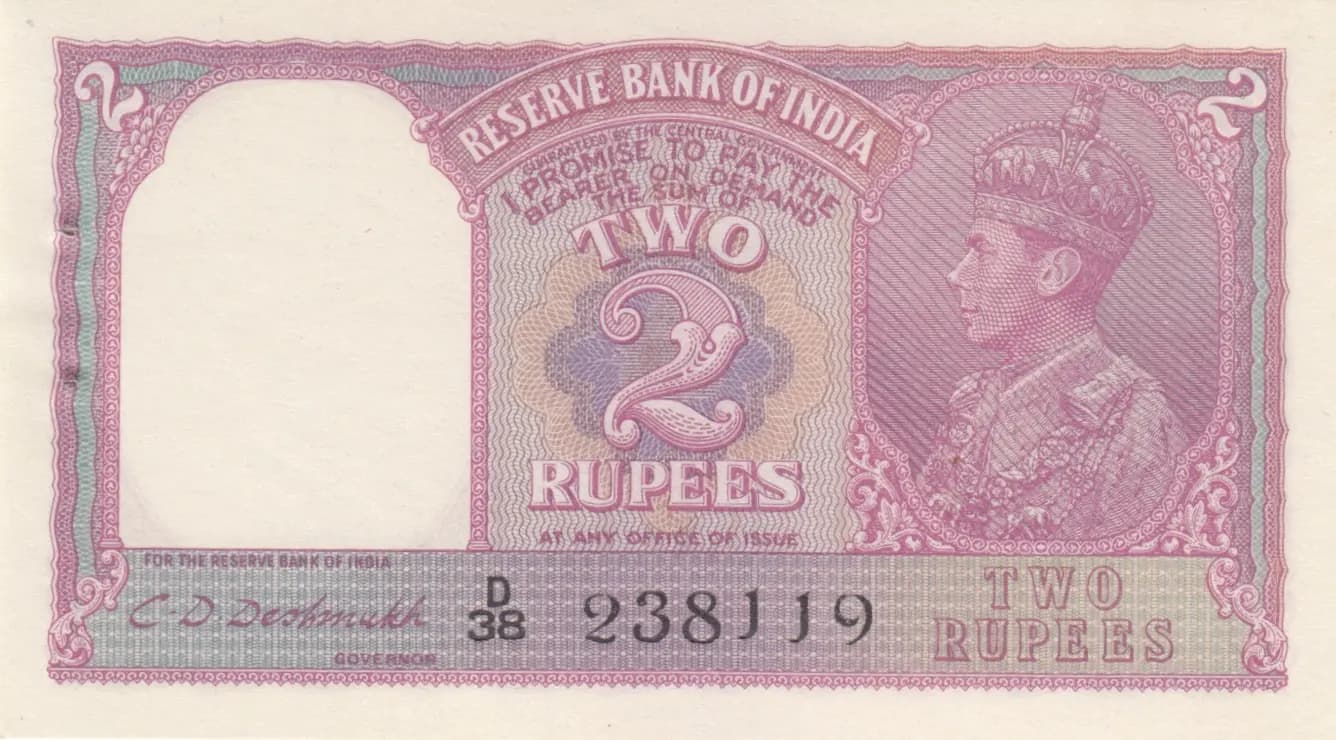
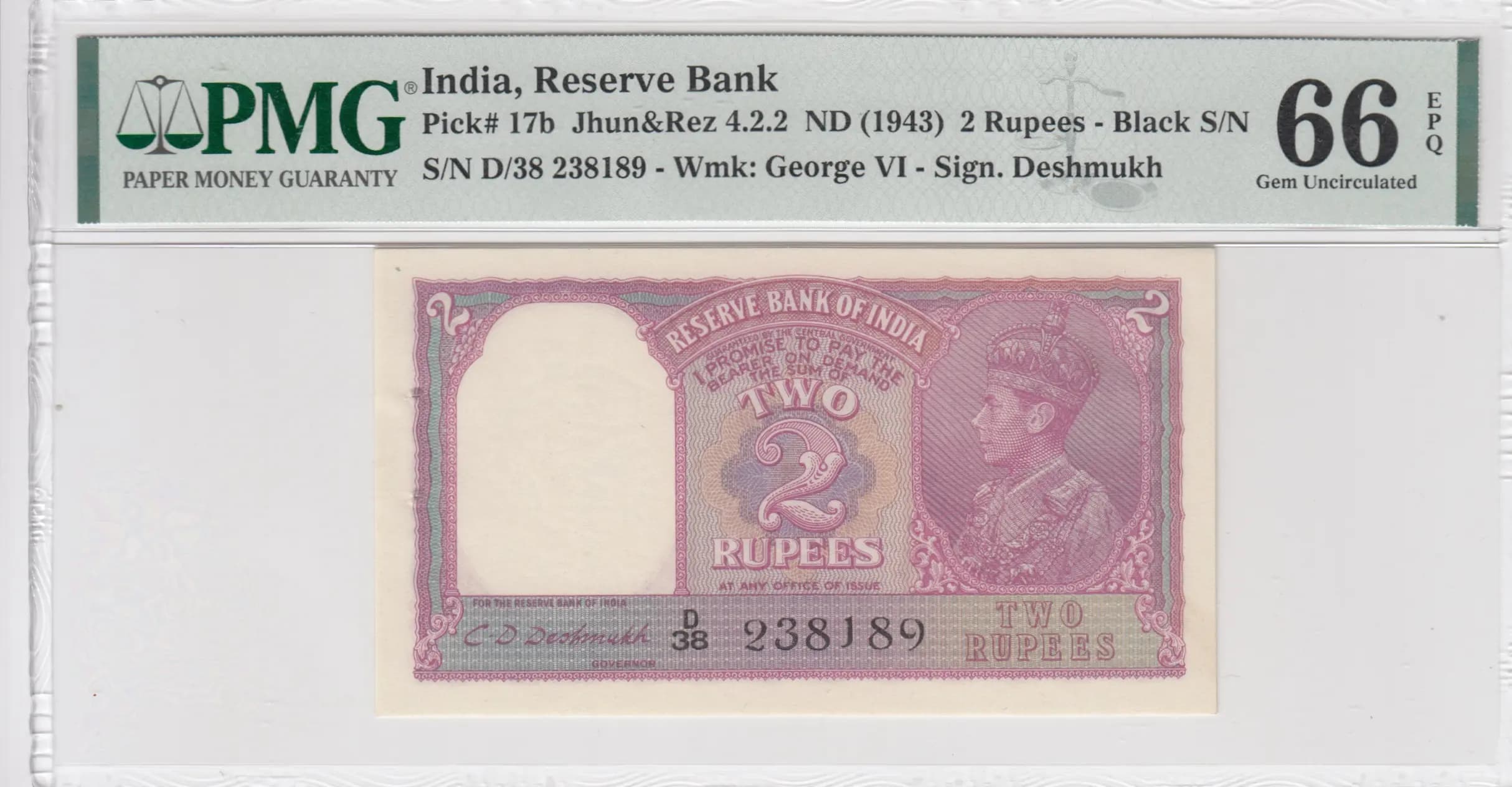
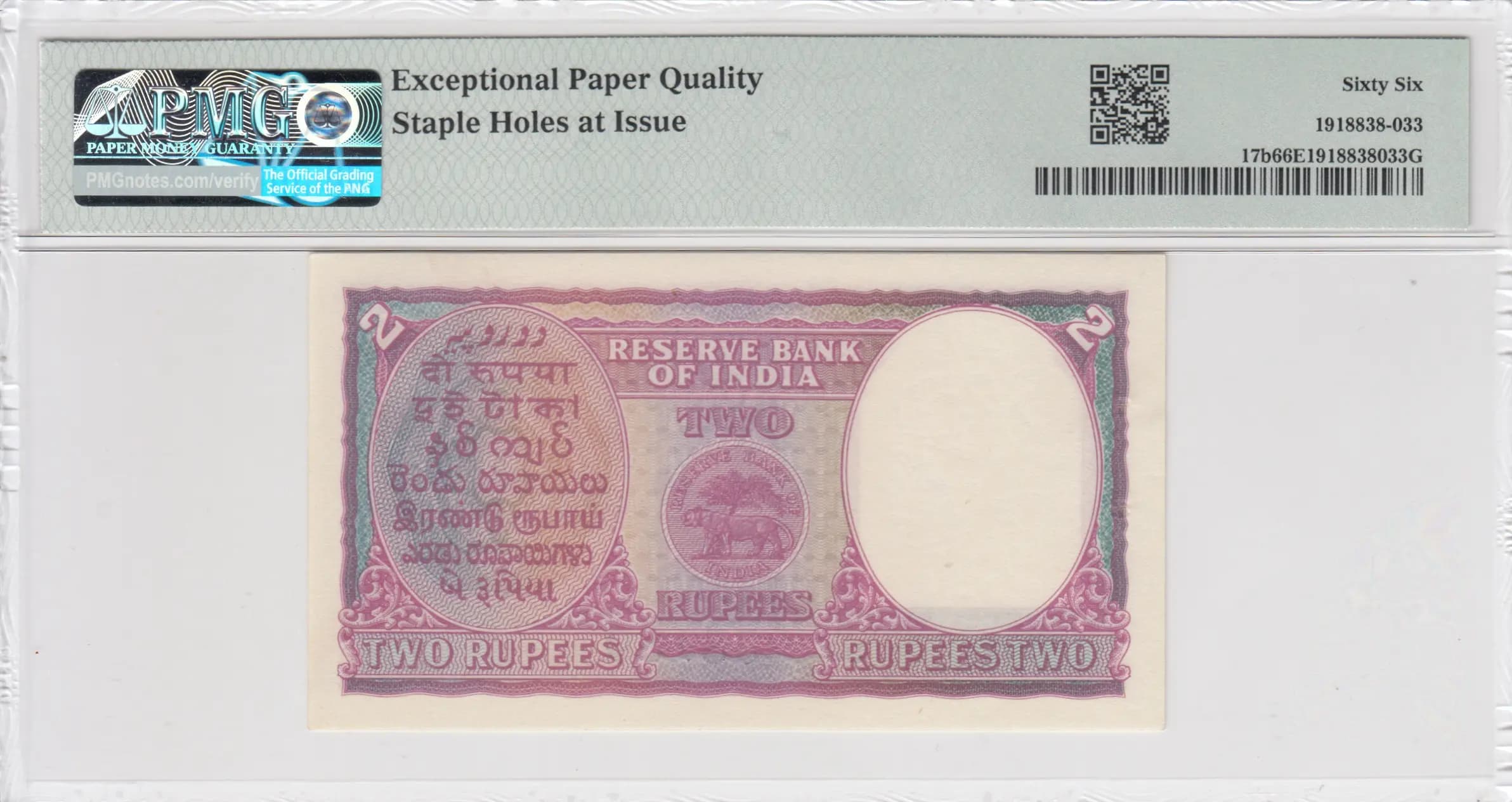
This PMG 66 Gem Uncirculated Indian 2 Rupees note from 1937 represents an exceptional example of early Reserve Bank of India currency in pristine condition. The note features a portrait of King George VI in military dress on the obverse and ornate circular medallions on the reverse, printed in distinctive mauve and purple tones with cream backgrounds. The specimen exhibits no wear or circulation, with documented staple holes at issue, making it a desirable collectible for specialists in British Commonwealth and Indian numismatic material.
Common. While specific print run data for the P-17b variety is not definitively established, the eBay transaction history provides clear market signals: this exact grade (PMG 66) sold for $355 in 2026 and $281 in 2018, with consistent pricing for PMG 65 examples ($224.50, $217.50, $178.50) and lower grades (VF specimens consistently $33-$92). The regular appearance of this note in auction markets over multiple decades (transactions from 2011-2026 in the provided data) indicates substantial surviving quantities. While the PMG 66 Gem Uncirculated condition is exceptional and commands premium prices relative to circulated examples, the underlying note itself is not rare—it represents a standard regular-issue banknote from a major central bank with substantial historical circulation.
Issued during the final years of British colonial rule in India, this 2 Rupees note reflects the transitional period of Indian monetary sovereignty under the Reserve Bank of India, which was established in 1935. The prominent portrait of King George VI in military uniform underscores the Commonwealth connection during this era, while the ornate circular medallions on the reverse (likely depicting architectural or symbolic Indian imagery) represent the cultural synthesis of the period. The bilingual English and Hindi inscriptions on the reverse document the gradual transition toward independent India's post-1947 currency design principles.
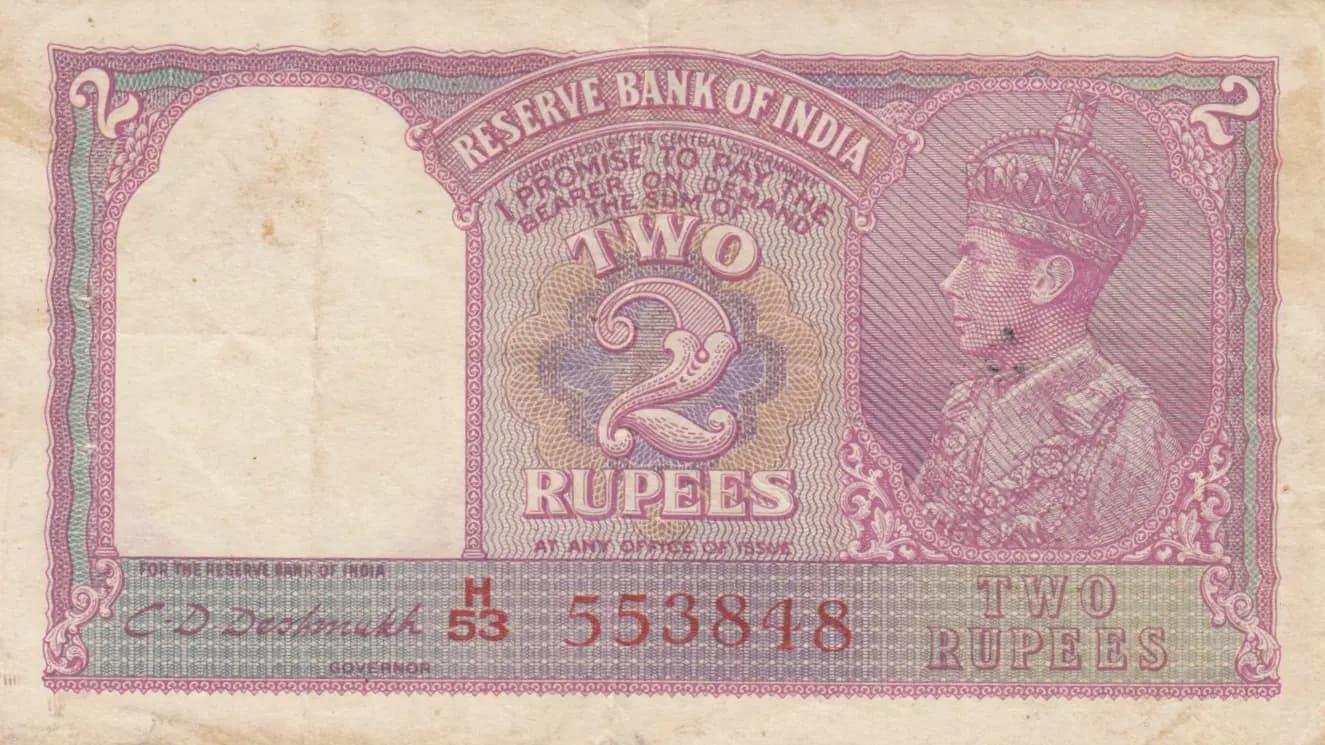
The obverse features a right-facing profile portrait of King George VI in full military dress uniform positioned on the right side of the note, a standard element of Commonwealth currency from this period. The design incorporates ornate Victorian-style scrollwork and flourishes in all four corners, with decorative numeral '2' denominations in the top corners. A large oval space on the left side accommodates the security watermark. The reverse displays two prominent circular medallions with ornate borders—the left medallion contains architectural imagery (likely an Indian temple or monument), while the center-upper medallion features wildlife or figurative imagery. The design maintains bilateral symmetry with matching corner flourishes and denomination markings. The color scheme of mauve and purple printing on cream stock is characteristic of this era of RBI currency production.
FRONT: 'RESERVE BANK OF INDIA' (English), 'I PROMISE TO PAY THE BEARER ON DEMAND THE SUM OF' (English promise clause), 'TWO' and 'TWO RUPEES' (denomination in words), Serial number designation 'D/38 238189' (serial number), 'Deshmukh' (signature of C.D. Deshmukh, RBI Governor). BACK: 'RESERVE BANK OF INDIA' (English), 'TWO' and 'TWO RUPEES' (denomination in English), 'RUPEES TWO' (alternative denomination formatting), Devanagari script text (Hindi language inscription, content not fully legible in provided images but consistent with RBI standard reverse text of the period).
This note was produced using traditional intaglio/engraving printing methods, evidenced by the fine detail and quality of the portrait rendering, the crisp definition of ornamental scrollwork, and the precise line work visible in the border designs and circular medallions. The multi-color printing (mauve/purple with teal/green accents) indicates use of multiple printing passes—a standard security practice for high-denomination currency of the 1930s-1940s period. The Reserve Bank of India's currency during this era was typically printed by established British security printers such as Waterlow & Sons or De La Rue, though specific attribution to this Pick number variant would require consultation of RBI archives.
This note is cataloged as P-17b in the Pick standard. The visual analysis confirms characteristics of the 1937-1943 issuance period, with the signature of Deshmukh (C.D. Deshmukh, Governor 1943-1949) and serial number prefix 'D/38', consistent with later printings of this type. The PMG population data indicates P-17c (Red S/N variant) exists as a documented variant for this base Pick number. The observed black serial numbers and the absence of any red overprint or alternative numbering suggests this specimen represents the standard P-17b variety rather than the P-17c Red Serial Number variant.