2 rupee 1937
Market Prices
14 salesAbout This Note
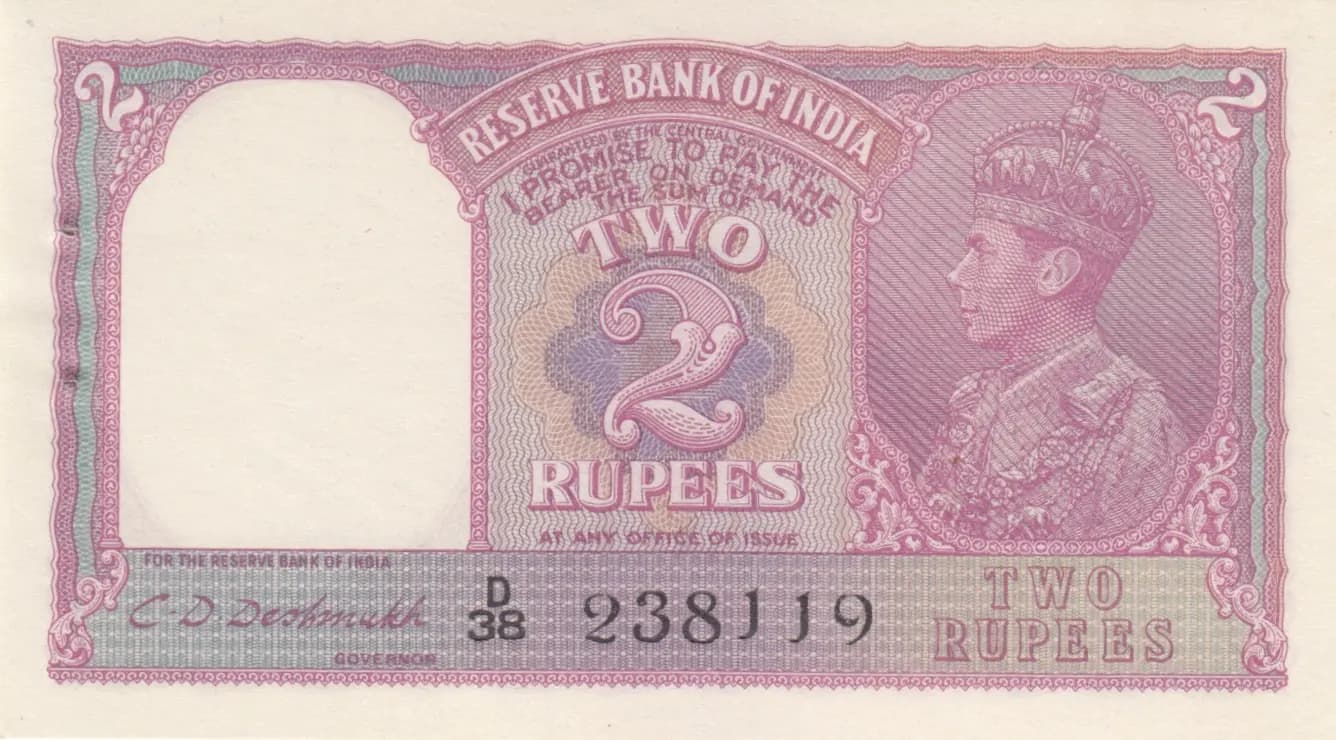
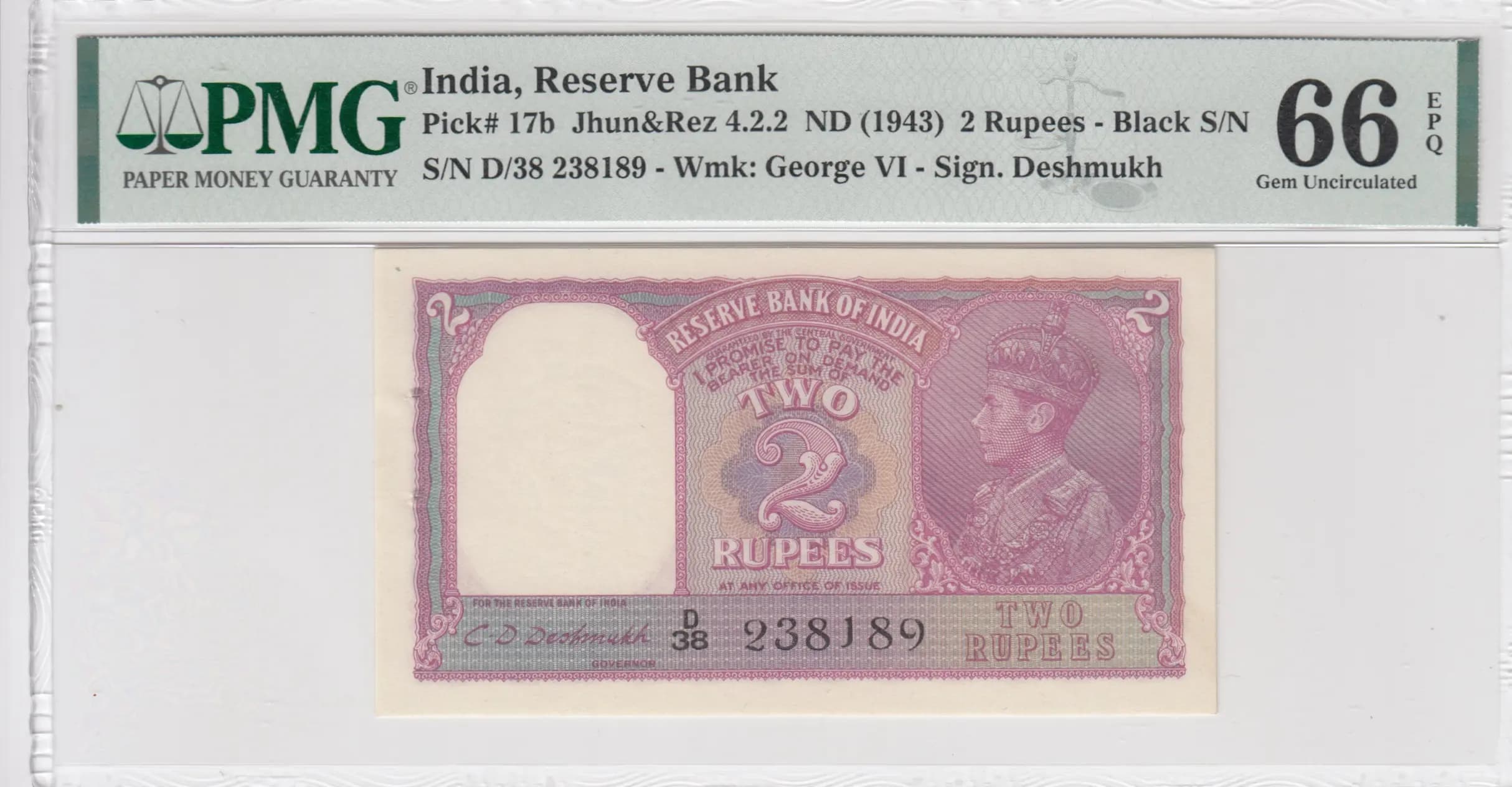
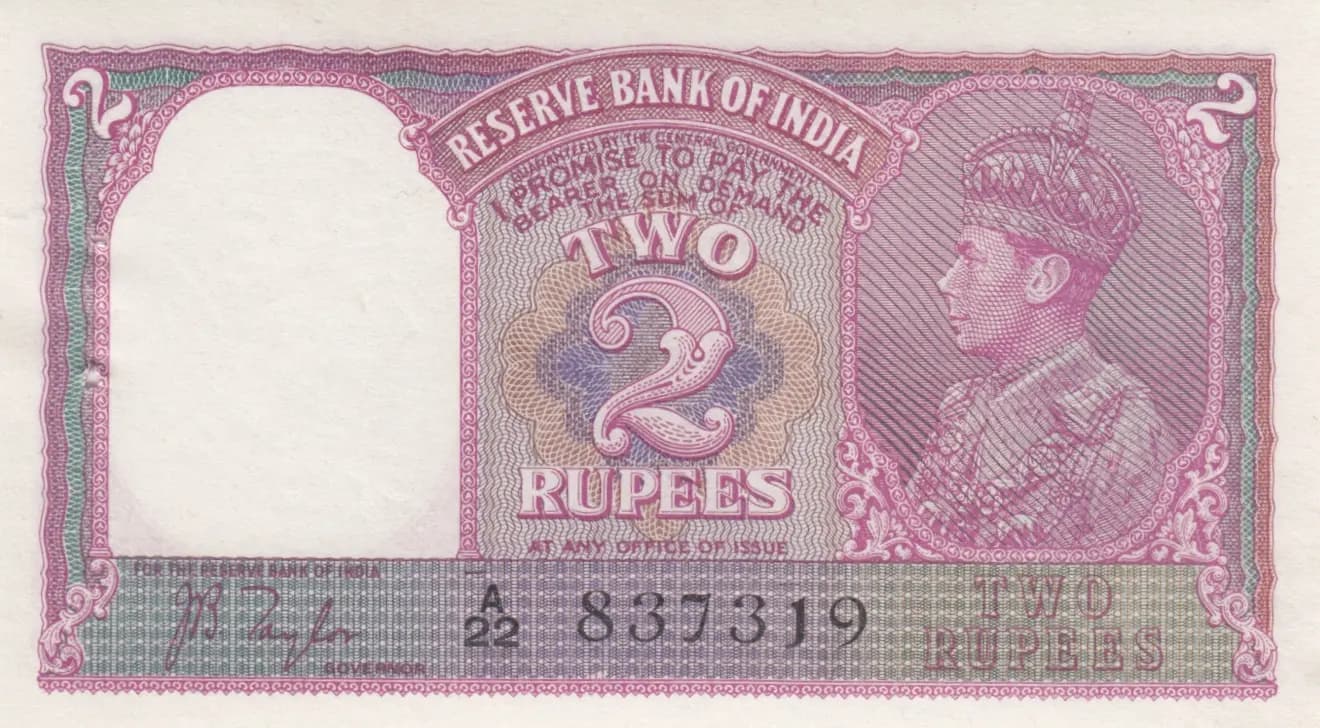
An exceptional uncirculated example of India's 2 Rupee note from 1937, issued by the Reserve Bank of India featuring a formal portrait of King George VI on the obverse. The note displays pristine condition with no visible wear, creases, or foxing, and exhibits the distinctive pink/magenta and green color scheme characteristic of this series. With catalog values around $180 in UNC condition and strong market performance, this represents a desirable early Reserve Bank of India regular issue.
Common. While this specific Pick-17a variant from 1937 is desirable among collectors, the denomination and issue date indicate a substantial print run typical of regular circulation issues. eBay market data shows consistent sales ranging from $25-$365 depending on grade, with the 2016 catalog value of $180 for UNC representing reasonable collector demand rather than scarcity. Notes in this condition grade regularly appear in the market, and price trends reflect normal collector interest rather than rarity premiums.
This 1937 note was issued during the early years of the Reserve Bank of India's operations following its establishment in 1935, a period of significant monetary modernization for India under British rule. The portrait of King George VI reflects India's constitutional status within the British Commonwealth at this time, while the bilingual English and Devanagari inscriptions represent the evolving linguistic identity of independent India's emerging currency system. The ornamental design aesthetic is characteristic of 1930s Commonwealth banknote production, blending traditional security printing techniques with classical decorative motifs.
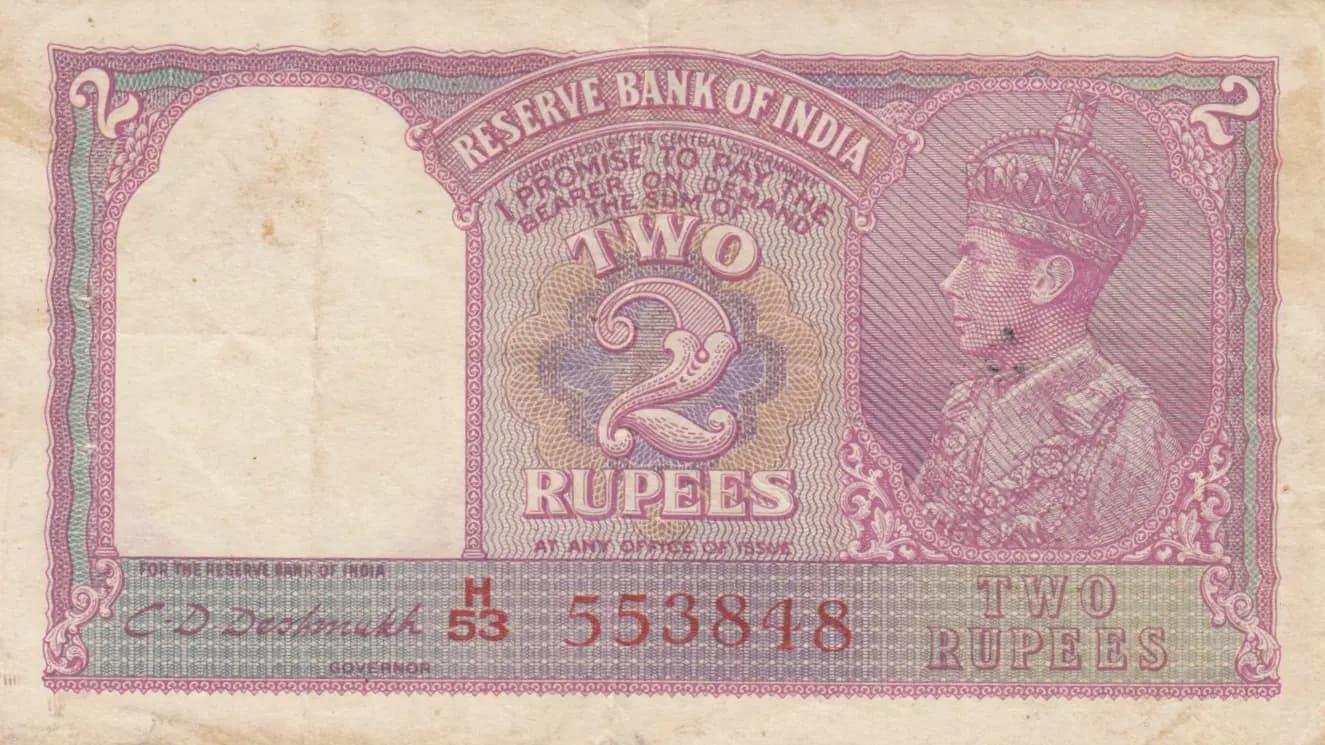
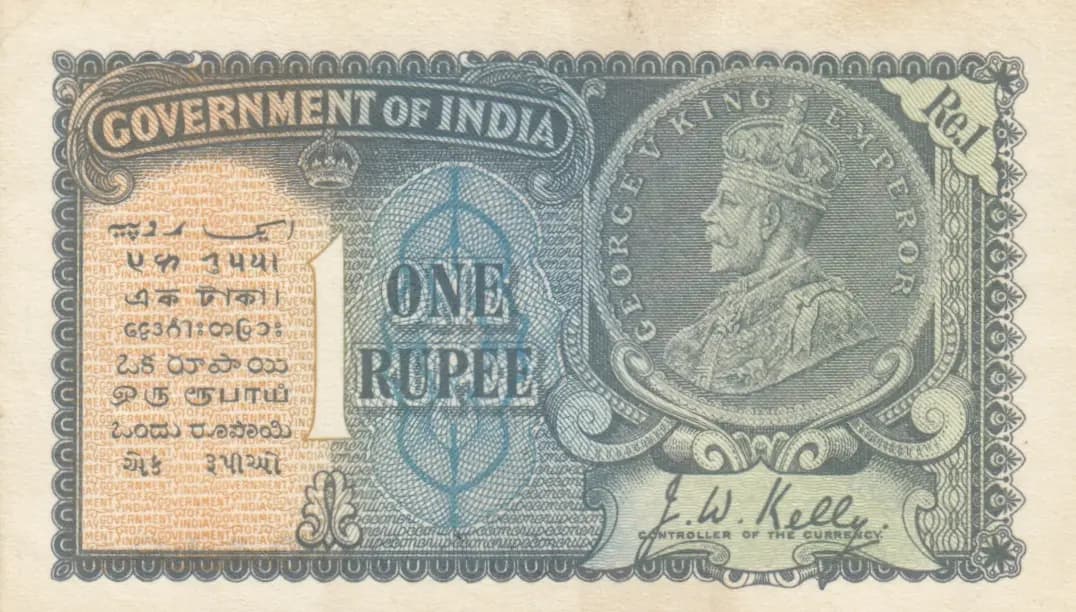
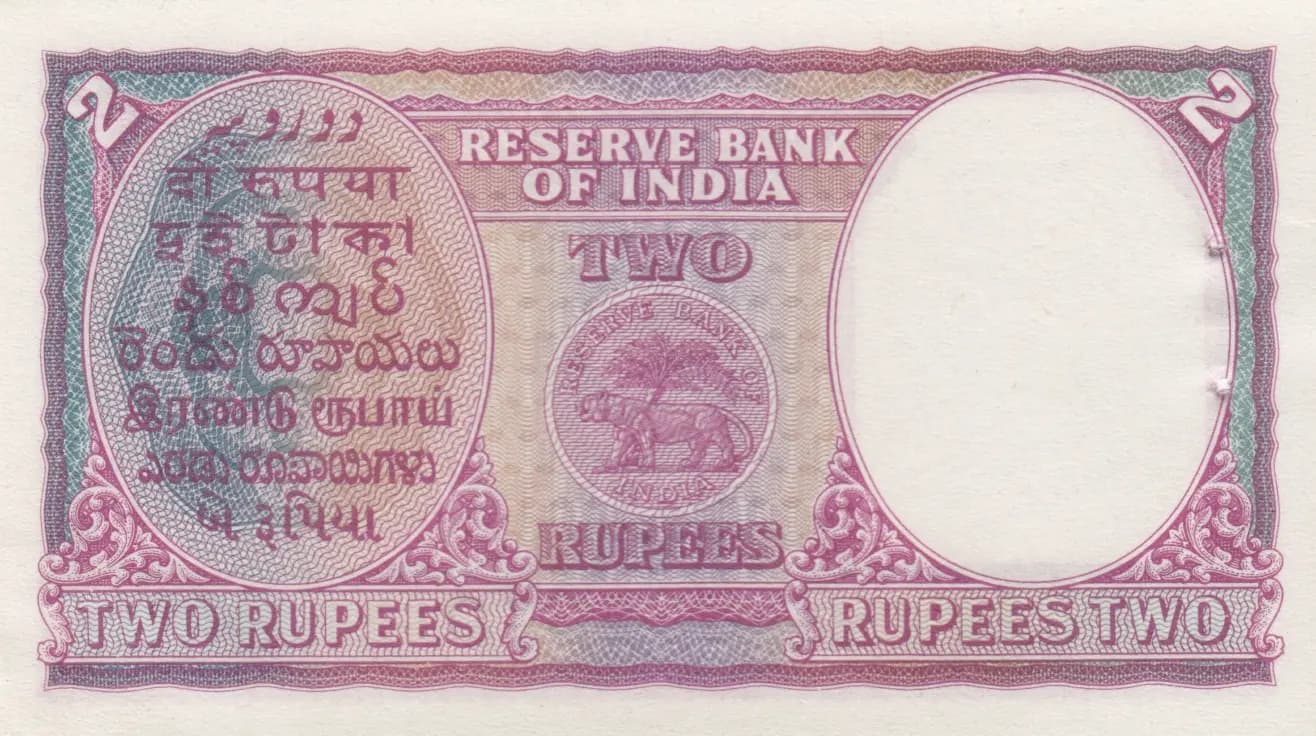
The obverse features a formal right-facing profile portrait of King George VI positioned on the right side of the note, depicted in classical Commonwealth style with formal attire. The reverse contains two circular vignette medallions: the left contains ornamental Devanagari script and what appears to be a heraldic elephant or lion emblem within an elaborate circular frame, while the right medallion remains blank for potential overprinting. The entire design is framed with ornamental scrollwork, guilloché patterns, and decorative corner flourishes in the dominant pink/magenta and green color palette, with cream off-white background. The denomination numeral '2' is prominently displayed in an ornamental cartouche on the obverse.
FRONT: 'RESERVE BANK OF INDIA' (English), 'TWO' (English), 'RUPEES' (English), Serial Number 'A 22 8373119' (English). BACK: 'RESERVE BANK' and 'OF INDIA' (English), 'TWO RUPEES' (English), 'RUPEES TWO' (English), and Devanagari script text in Hindi within the left circular vignette (ornamental script rendering the denomination in the regional language).
Intaglio engraving (line engraving) on high-quality banknote paper, executed by the security printer for Reserve Bank of India during this period. The fine line work, complex guilloché background patterns, and intricate decorative borders are characteristic of premium intaglio production techniques employed by the Government of India's security printing facilities (likely India Security Press, Nashik or the British American Bank Note Company, which contracted with RBI during early issues).
Pick-17a (1937 issue). The PMG Population Report identifies P-17c as a variant with Red Serial Numbers, suggesting this UNC example with standard numbering represents the base variety. The serial number prefix 'A 22' indicates this note from the early printing runs. The specific variety can be confirmed by the serial number style and color; this appears to be the standard black serial number variant of the 1937 issue.