1 rupee 1978
Market Prices
9 salesAbout This Note
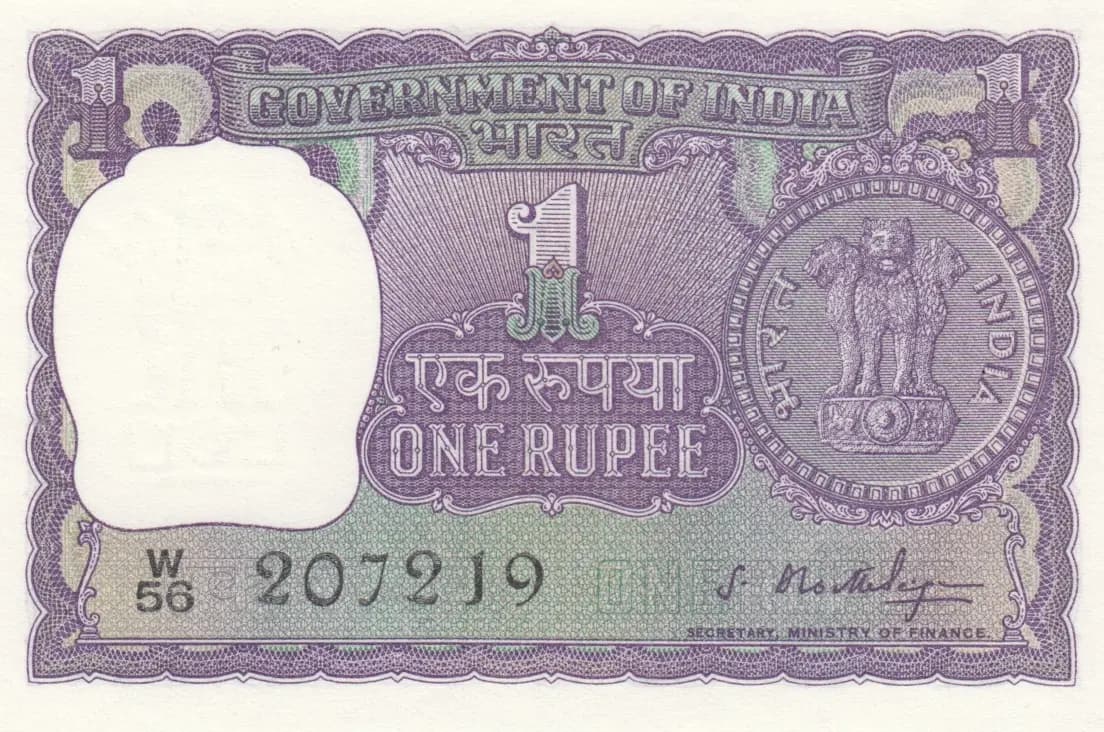
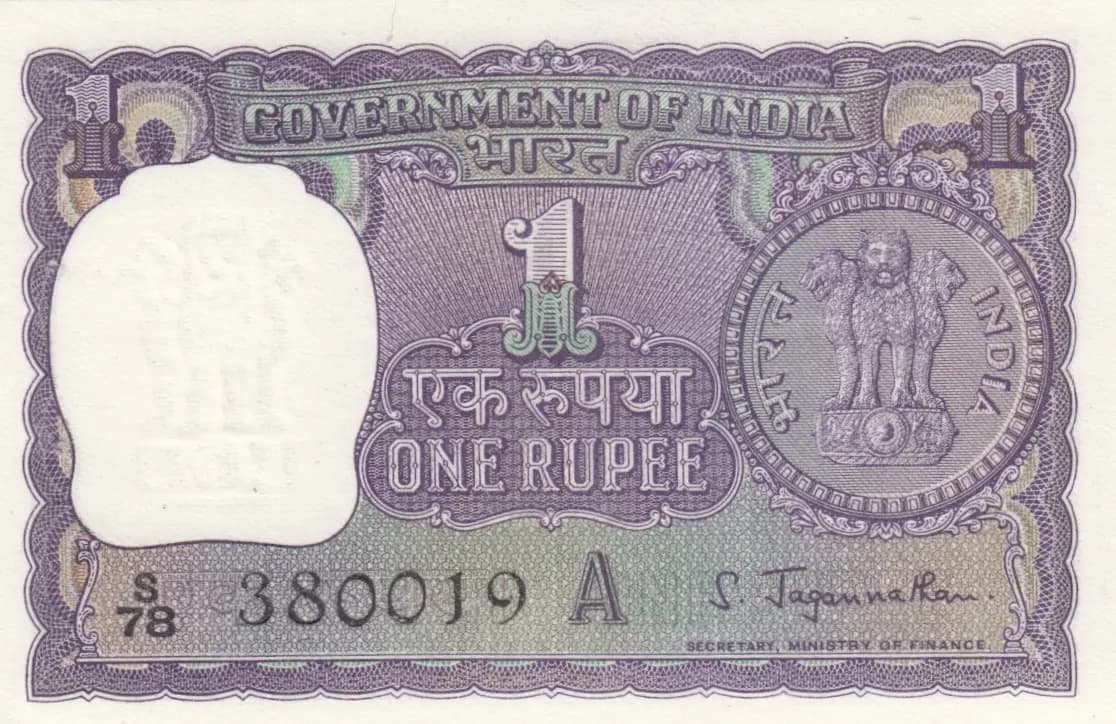
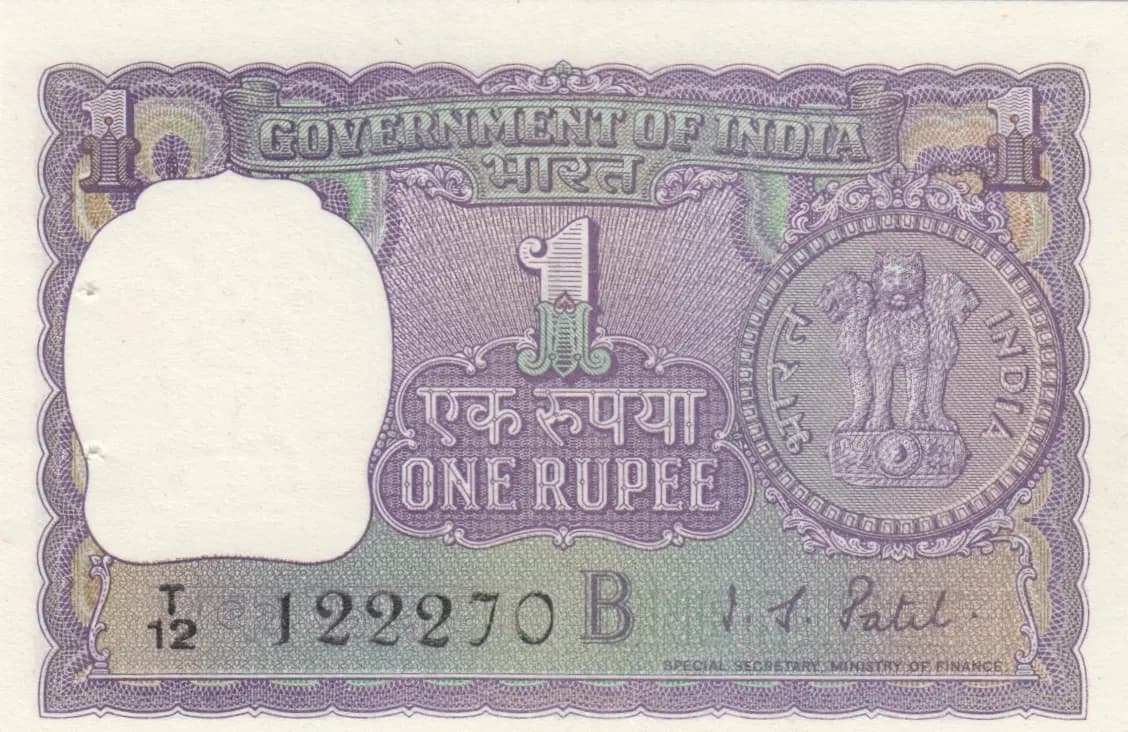
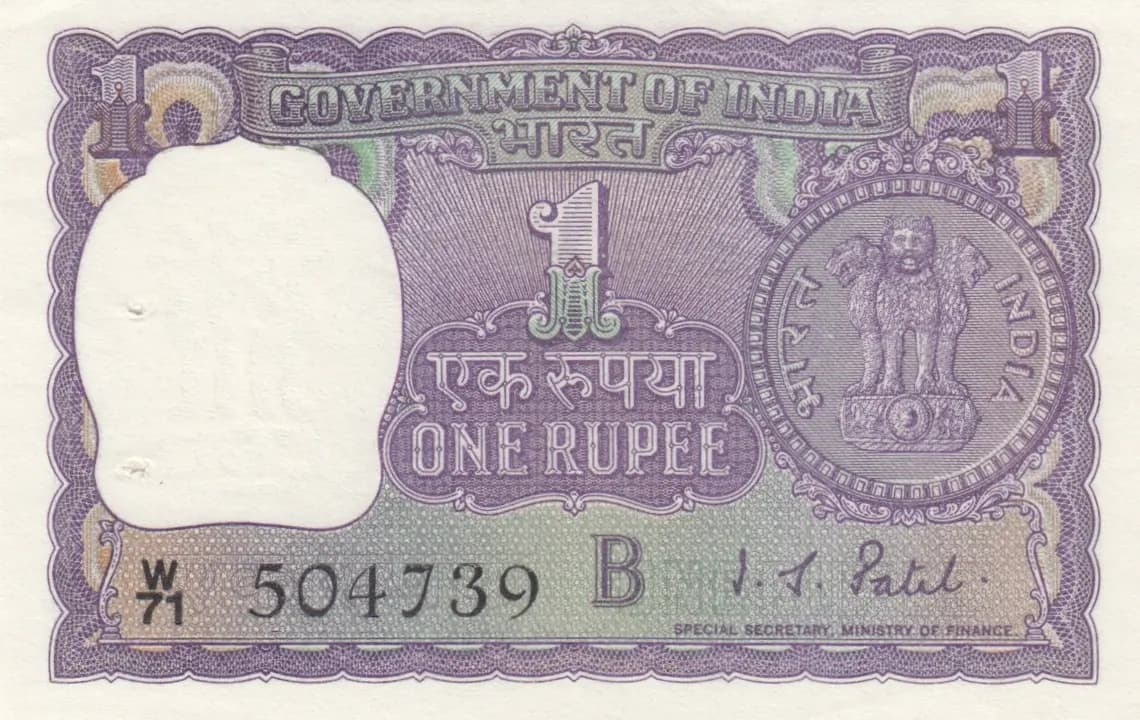
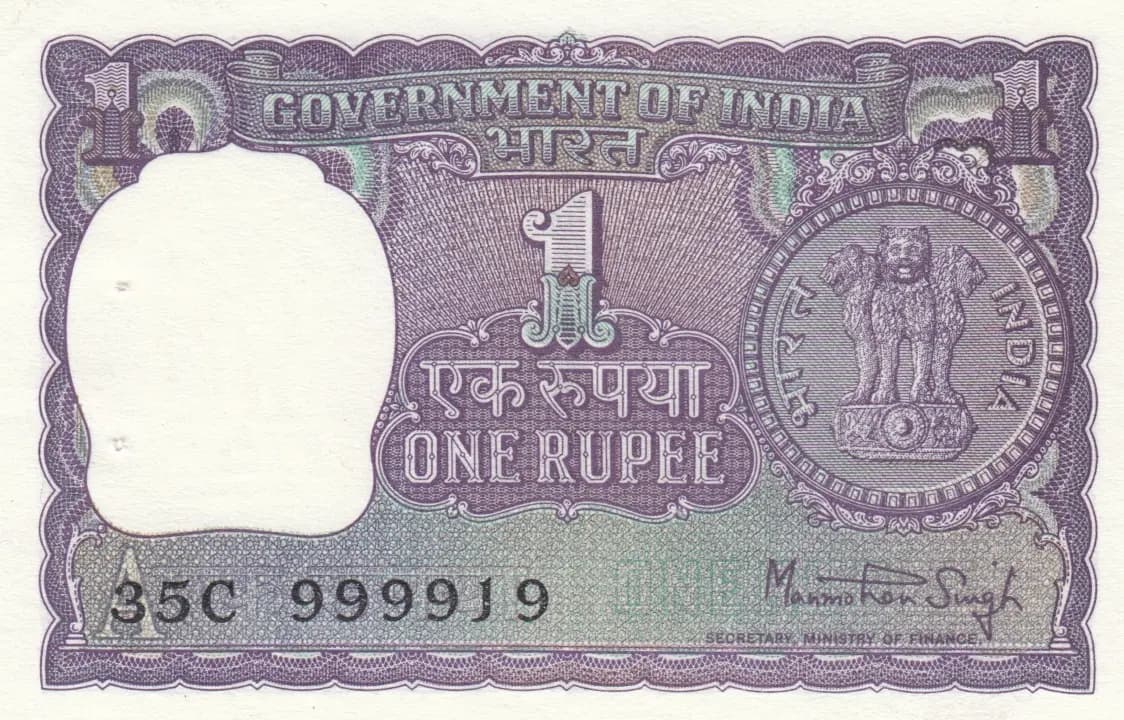
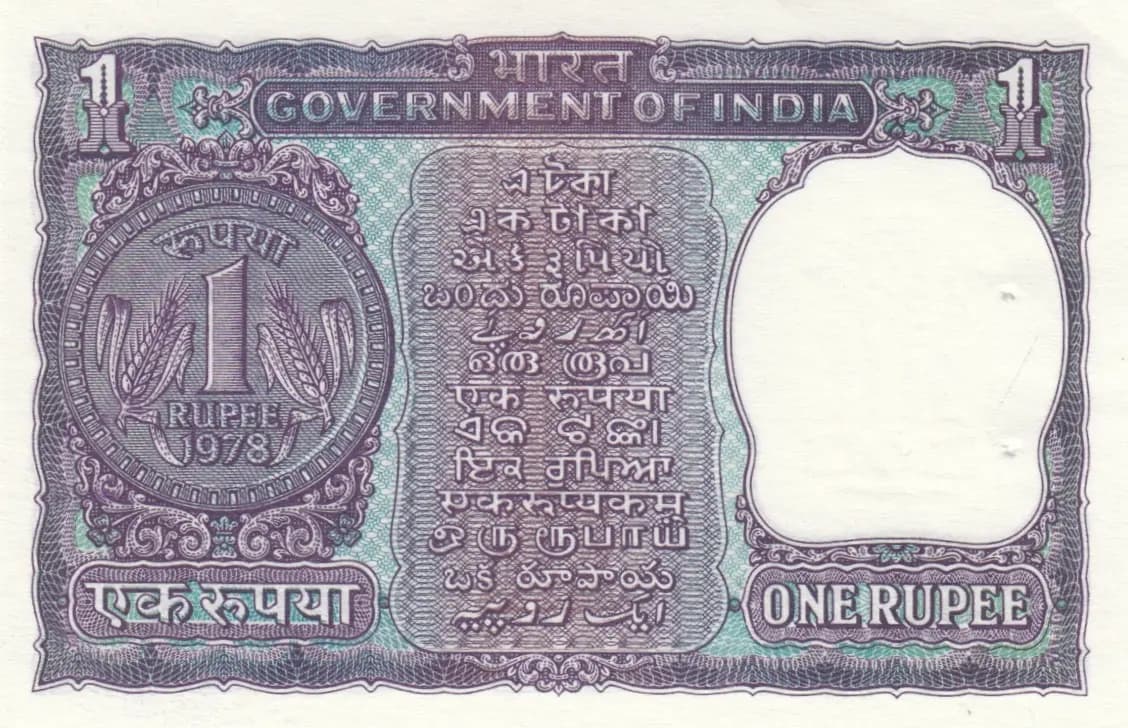
This is a 1978 Government of India 1 Rupee note (Pick P-77v) in uncirculated condition, featuring the iconic Lion Capital of Ashoka emblem prominently displayed on both the obverse and reverse. The note exhibits the characteristic violet/purple color scheme with gray-green accents and fine line engraving throughout, with pristine white condition and no visible wear, creases, or stains. This denomination represents an important issue in India's post-independence currency period and remains a common but collectible example of Indian rupee banknotes from the 1970s era.
Common. The 1 Rupee P-77v from 1978 is a standard circulation note from a long production run spanning 1966-1980. Market data from eBay sales indicates typical prices of $1–$5 for examples in VF-UNC condition, with UNC graded notes cataloging at approximately $5 as of 2019. The note experienced massive print circulation and remains readily available in the collector market. Absence of rare printing errors, limited mint marks, or historical scarcity indicators confirms this as a common issue.
Issued during the governorship of the Reserve Bank of India in 1978, this note reflects India's commitment to nationalist symbolism through its use of the Lion Capital of Ashoka, derived from the ancient Mauryan Empire pillar at Sarnath. The Asoka emblem serves as the watermark and primary design element, connecting the modern Indian state to its pre-colonial heritage and reinforcing national identity during the post-independence period. This series (P-73 through P-77) represents the standard circulation currency of India during the 1960s-1980s, a period of economic consolidation and nation-building.
The obverse features the Lion Capital of Ashoka—a majestic four-lion emblem derived from the ancient Mauryan pillar at Sarnath—rendered in an ornate circular frame on the right side of the note. The reverse mirrors this design on the left side, with the year '1978' visible within or adjacent to the emblem, and decorative wheat or grain stalks incorporated into the design. Both sides feature large blank oval spaces where portraits would typically appear, a distinctive characteristic of this Indian rupee series. The design employs fine line engraving with elaborate ornamental corner flourishes and geometric patterns throughout, creating a sophisticated and distinctly Indian aesthetic. The bilingual presentation in English and Devanagari script reflects India's official commitment to Hindi alongside English in currency design.
FRONT SIDE: 'GOVERNMENT OF INDIA' (English), 'भारत' (Bharat/India in Devanagari), '१' (Devanagari numeral 1), 'रुप्पया' (Rupaya/Rupee in Devanagari), 'ONE RUPEE' (English), Serial number '25C 9999919', 'SECRETARY, MINISTRY OF FINANCE' (English), and signature of 'Manmohan Singh' (official signatory). BACK SIDE: 'GOVERNMENT OF INDIA' (English), 'भारत' (Bharat/India in Devanagari), '१' (Devanagari numeral 1), 'एक रुप्या' (Ek Rupya/One Rupee in Devanagari), 'RUPEE 1978' (English), 'ONE RUPEE' (English), and additional Devanagari text containing legal or descriptive matter relating to the currency denomination and issuing authority.
This note was produced using intaglio printing (line engraving), evidenced by the fine, detailed line work visible throughout the design, the precision of the ornamental patterns, and the crisp rendering of the Lion Capital emblem. The printing technique is characteristic of Indian currency from this period, produced by the Government of India's security printers. The consistent quality and fine detail visible in the uncirculated specimen indicate professional security printing standards typical of Reserve Bank of India currency production.
This specimen carries the serial number prefix '25C' and signature of Manmohan Singh, who served as a signatory official during this period. The visible serial number '25C 9999919' may indicate a specific printing batch or series, though without specialized Indian currency reference materials, precise variety attribution based on serial prefix alone is not definitively possible. The 1978 date places this within the middle of the P-77v production period. No overprints, commemorative markings, or obvious printing varieties are evident in the visual analysis. Collectors should note that Indian rupee notes of this era were produced in multiple series with variations in signatories and serial prefixes; the specific signatory and serial range may be of interest to specialized collectors of Indian currency.