1 rupee 1967
Market Prices
1 saleAbout This Note
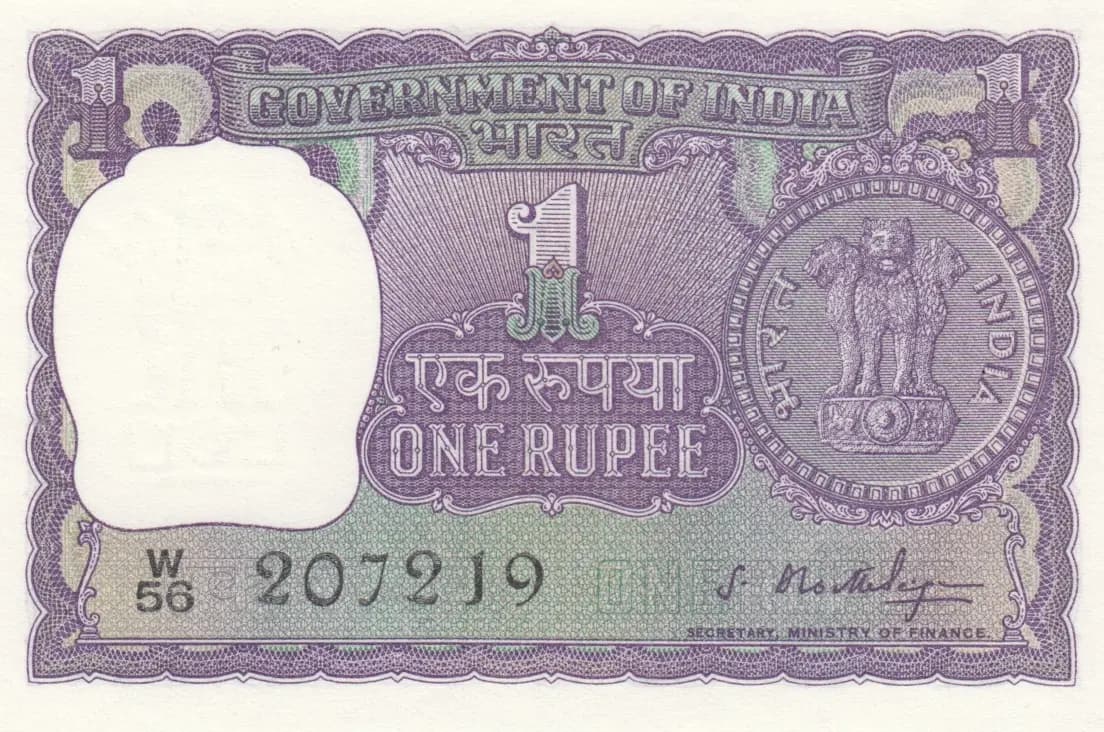
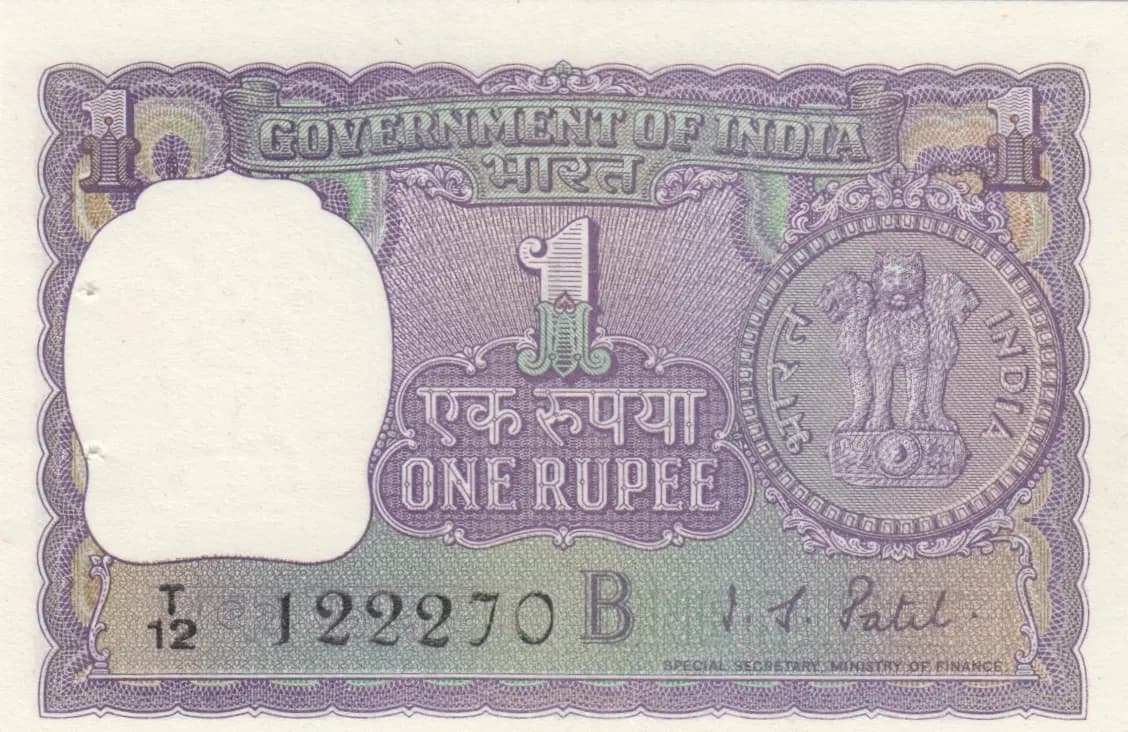
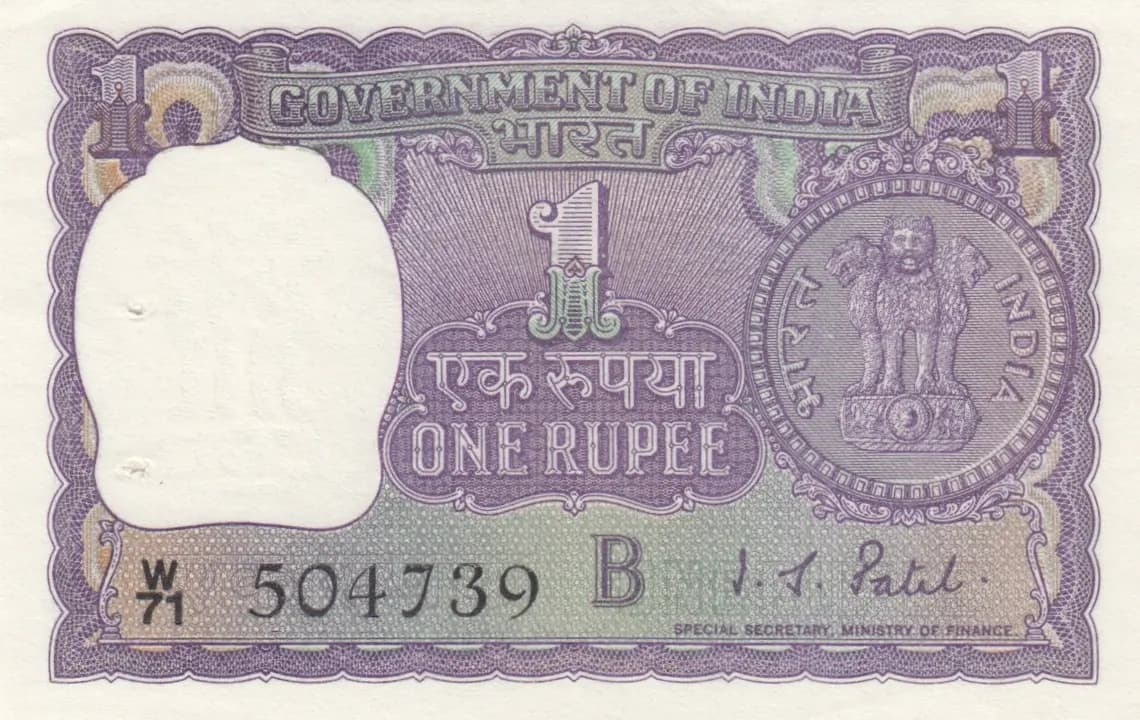
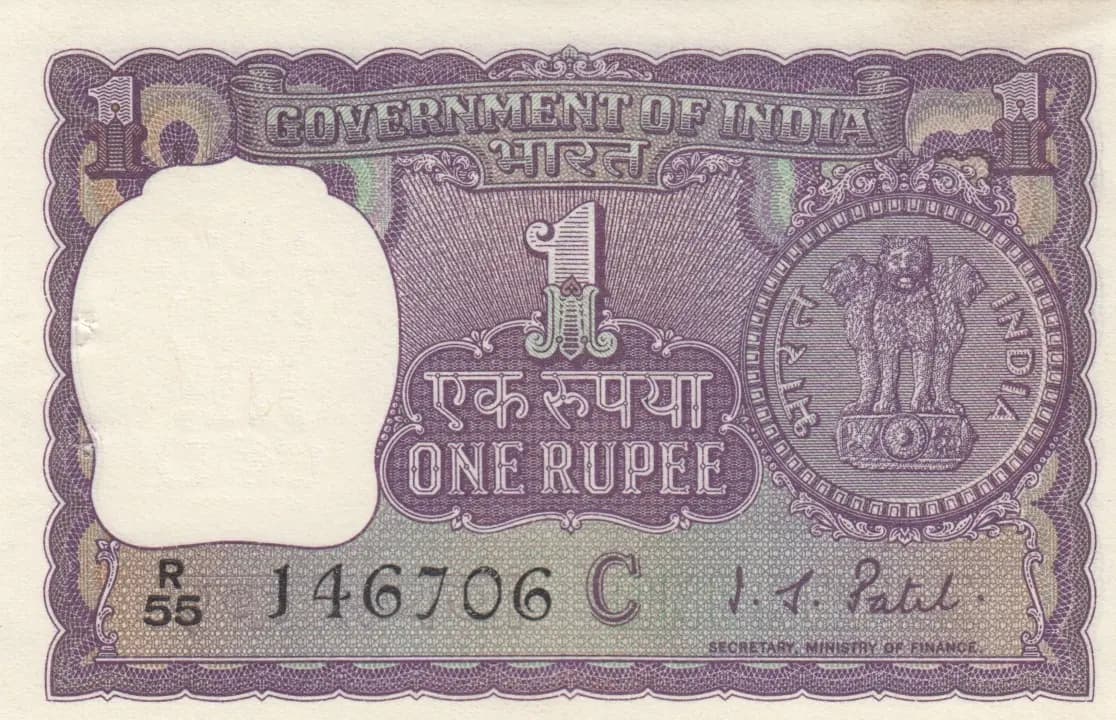
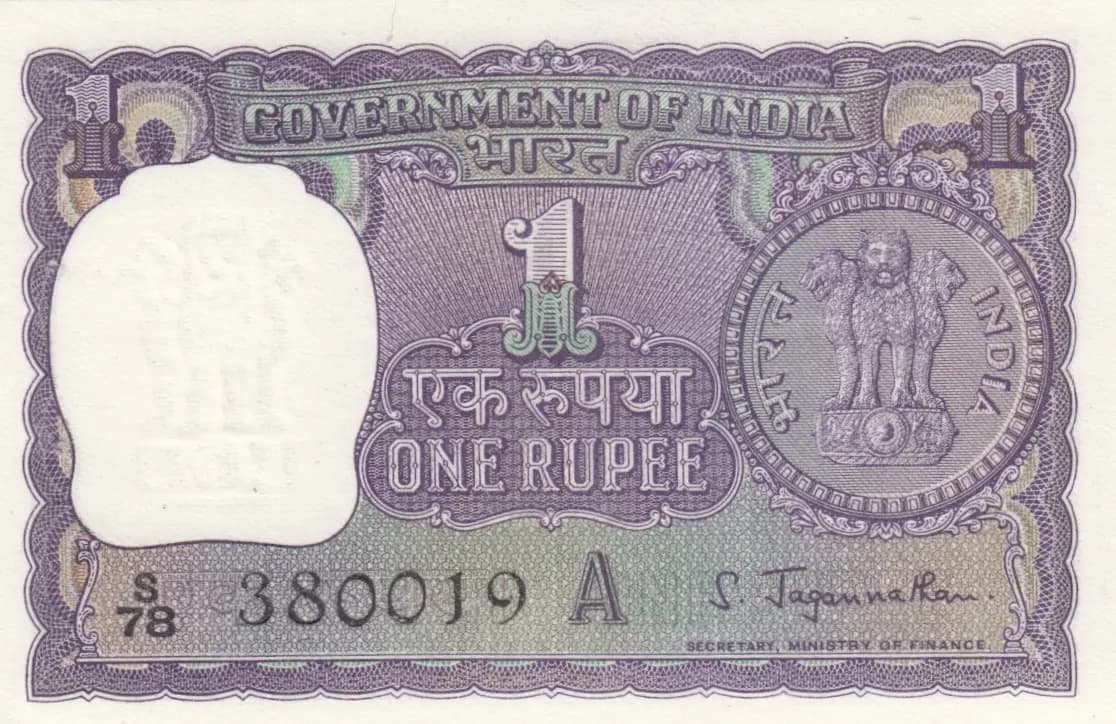
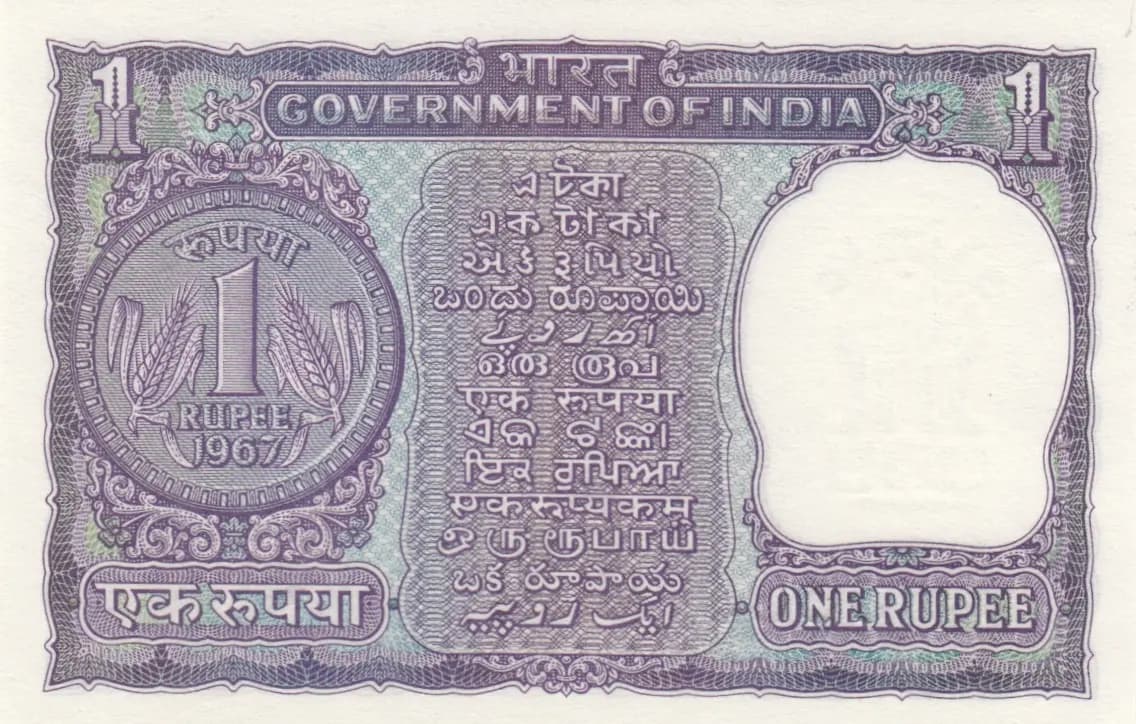
This is a 1967 Indian 1 Rupee note (Pick P-77b) in uncirculated condition, featuring the iconic Lion Capital of Ashoka emblem on the obverse and a denomination coin design on the reverse. The note displays crisp printing with violet, green, and cream coloring throughout, and includes multilingual text reflecting India's linguistic diversity. The specimen exhibits no wear, creases, or stains, with sharp printing quality consistent with an uncirculated grade.
Common. The 1 Rupee P-77b was issued in substantial quantities during the 1966-1980 circulation period. eBay market data shows UNC specimens selling for $14 (2019 catalog value) with recent sales at $2.99, indicating ready availability in the collector market. No evidence of limited print runs, recalls, or short-lived issuing authority characteristics suggests this is a standard, widely available note.
Issued during the post-independence period of the Indian Republic, this 1 Rupee note reflects the consolidation of India's national identity through the prominent display of the Lion Capital of Ashoka—the symbol adopted from the Mauryan Empire and enshrined in India's state emblem. The inclusion of the denomination in multiple regional scripts (Devanagari, Tamil, Telugu, Kannada, and Malayalam) demonstrates the Indian government's commitment to linguistic pluralism and national unity across its diverse regions during the 1960s.
The obverse features an ornate scalloped border framing a cream-colored oval space (traditionally reserved for a portrait, though left blank on this series) with the denomination '1' and 'ONE RUPEE' prominently displayed in the center. The right side displays the Lion Capital of Ashoka in a circular emblem—the three-lion symbol representing the Mauryan Empire and serving as India's national seal. The reverse presents a similar ornamental border with a circular emblem on the left containing the numeral '1' flanked by wheat sheaf or leaf motifs and dated '1967', reflecting the coin-like design referenced in the catalog. A large blank oval space occupies the right side of the reverse. Multilingual inscription blocks demonstrate the pan-Indian nature of the currency.
Front side: 'GOVERNMENT OF INDIA' (English), 'भारत' (Bharat - India in Devanagari), 'एक रुपया' (One Rupee in Devanagari), 'ONE RUPEE' (English), with signature line reading 'SECRETARY, MINISTRY OF FINANCE'. Serial number includes '78' (likely plate number) and '380019' (note serial) with letter 'A' prefix. Back side: 'GOVERNMENT OF INDIA' and 'भारत' (India), '1967' (issue year), 'RUPEE' (English), 'ONE RUPEE' (English), and multilingual denomination block containing: 'एक रुपया' (Devanagari), 'ஒரு ரூபாய்' (Tamil), 'ఒక రూపాయి' (Telugu), 'ಒಂದು ರೂಪಾಯಿ' (Kannada), and 'ഒരു രൂപ' (Malayalam).
This note was produced using intaglio (relief) printing, evidenced by the crisp, well-defined impressions of ornamental borders, text, and emblems visible in both images. The sharp line work and fine detail in the Lion Capital emblem and decorative elements are characteristic of currency-grade intaglio printing. Indian Currency Press (ICP) or the Security Printing Press (SPP) likely produced this issue, as standard for Government of India banknote production during this period.
The observed specimen features serial number prefix 'A' with plate number '78' and note serial '380019'. The 1967 date on the reverse confirms this as the catalog variant P-77b (as opposed to earlier variants P-73 through P-76 referenced in external sources). Variations in this series are primarily distinguished by letter prefix (A, B, C, etc.) and printer identification rather than major design changes. The blank oval portrait space is standard for all notes in this Lion Capital series, distinguishing it from later issues with presidential portraits.