1 rupee 1966
Market Prices
2 salesAbout This Note
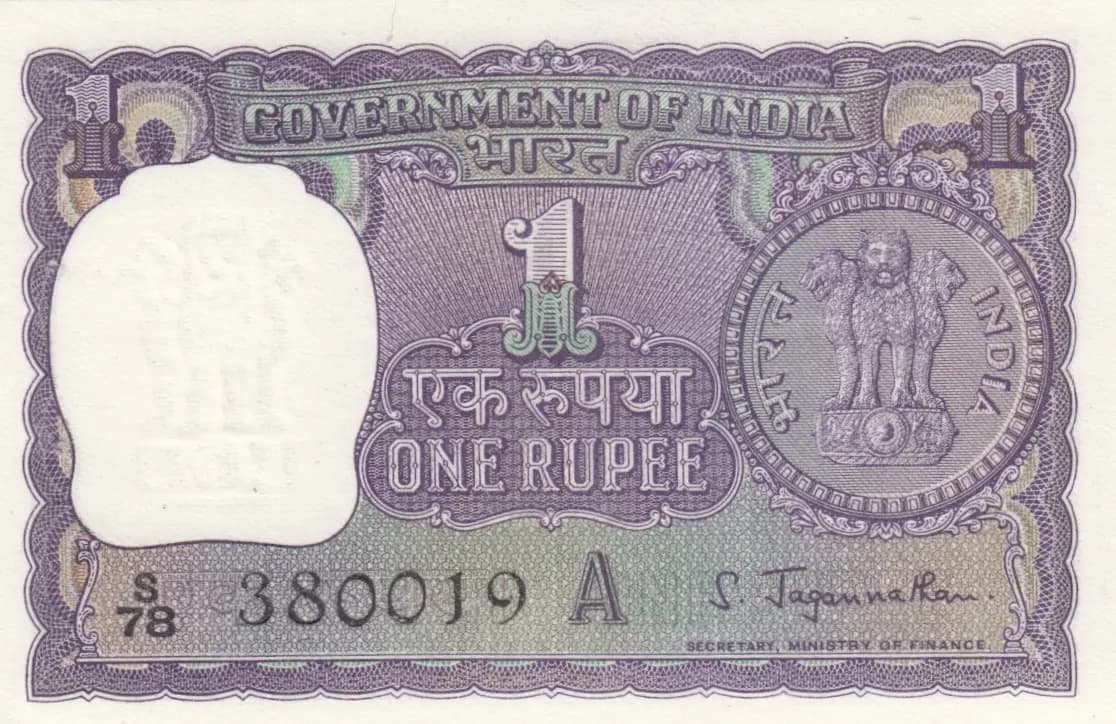
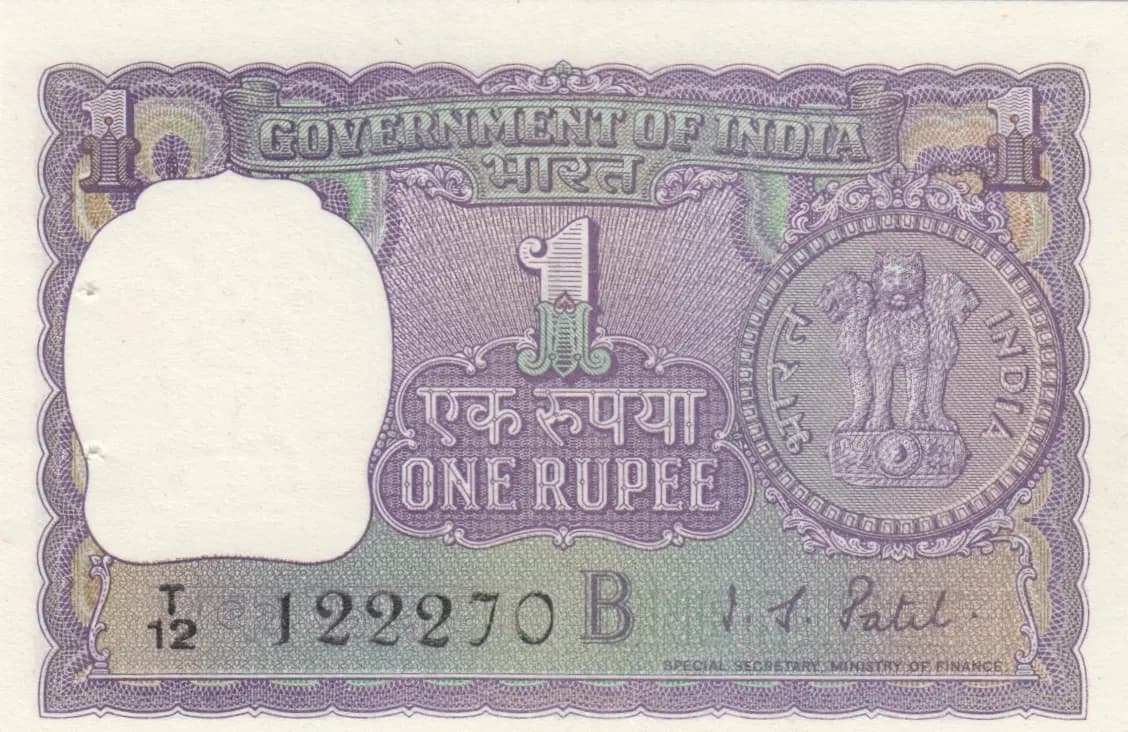
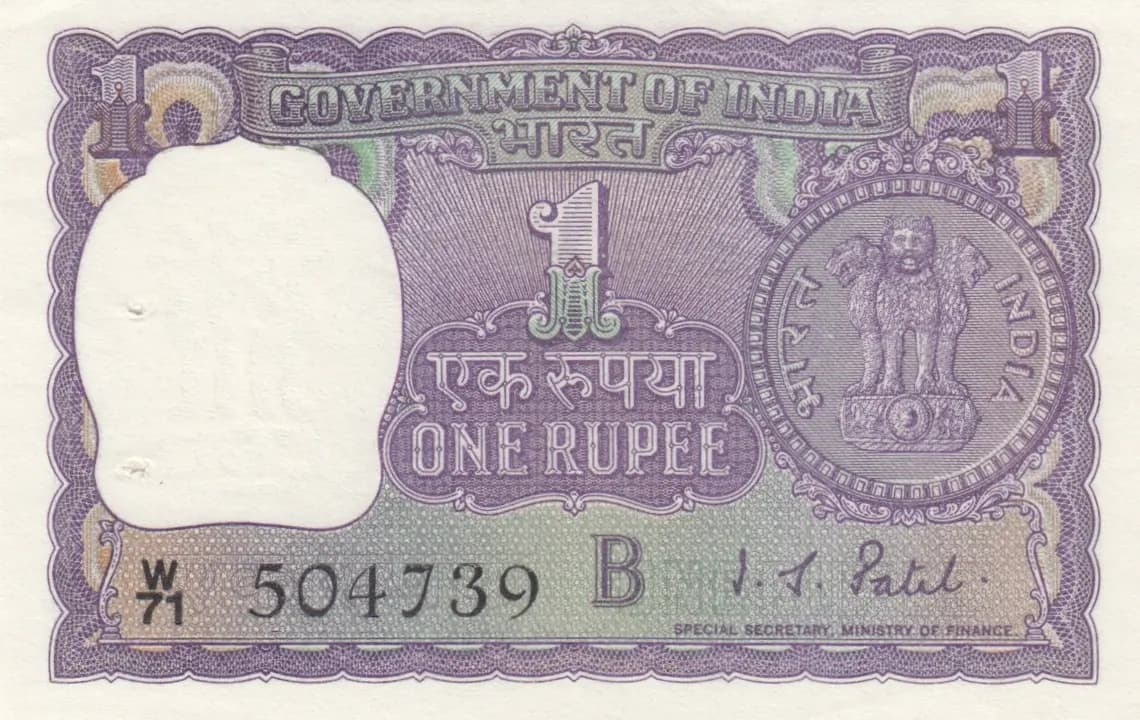
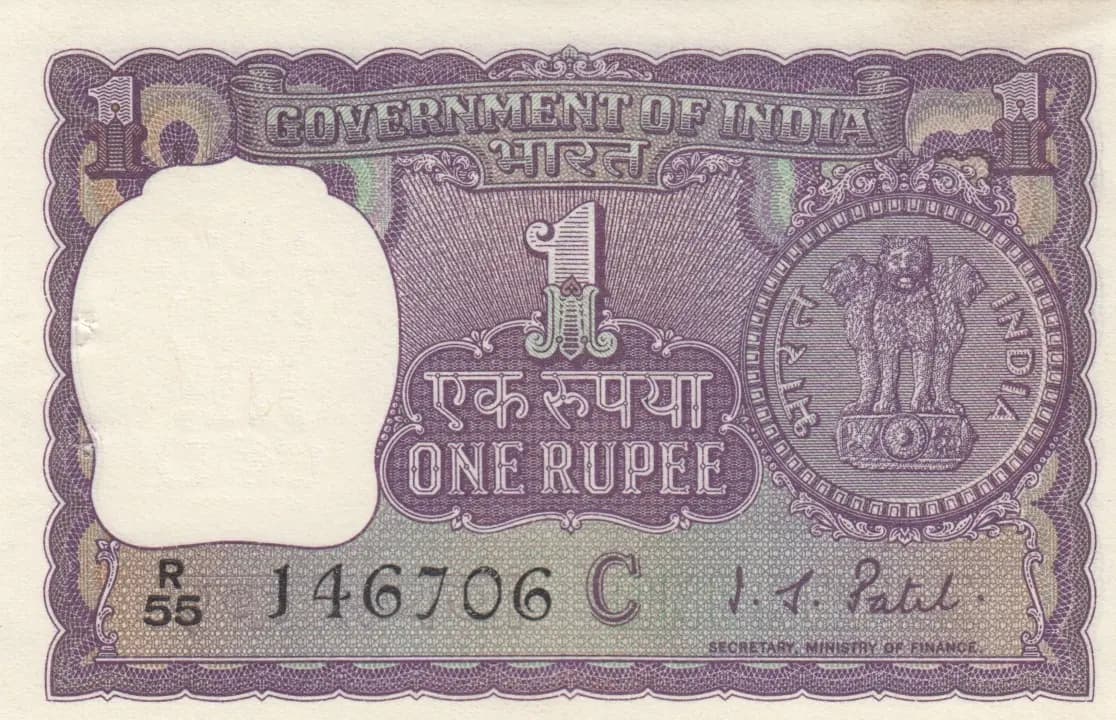
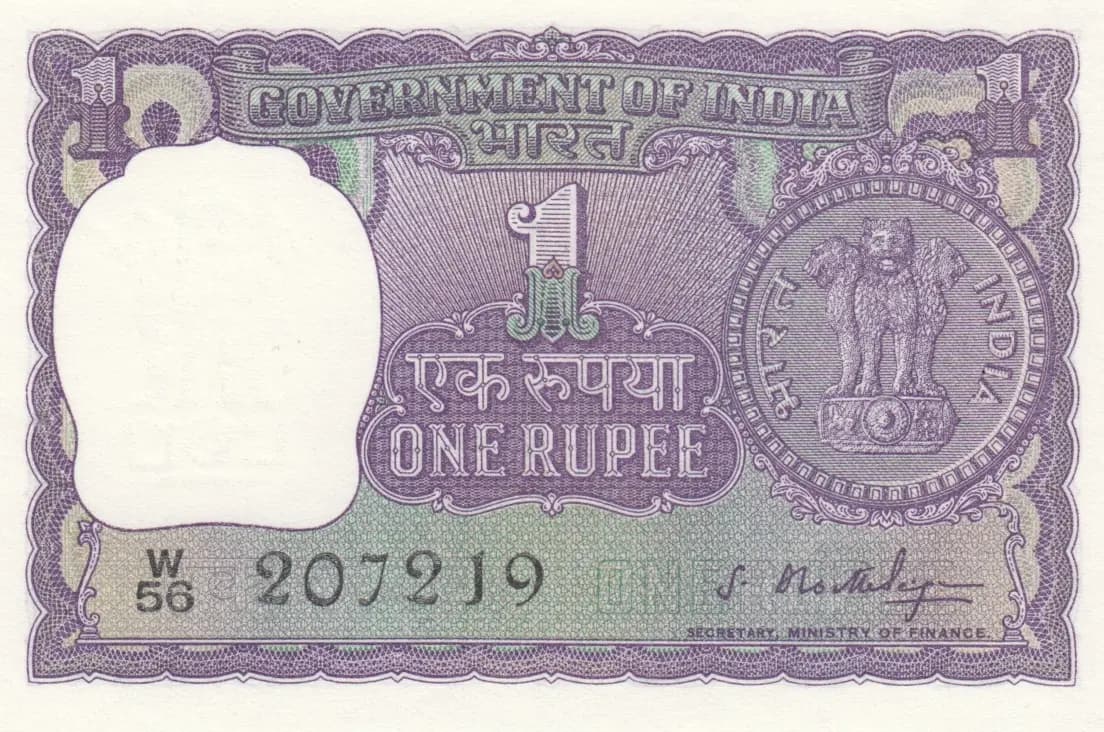
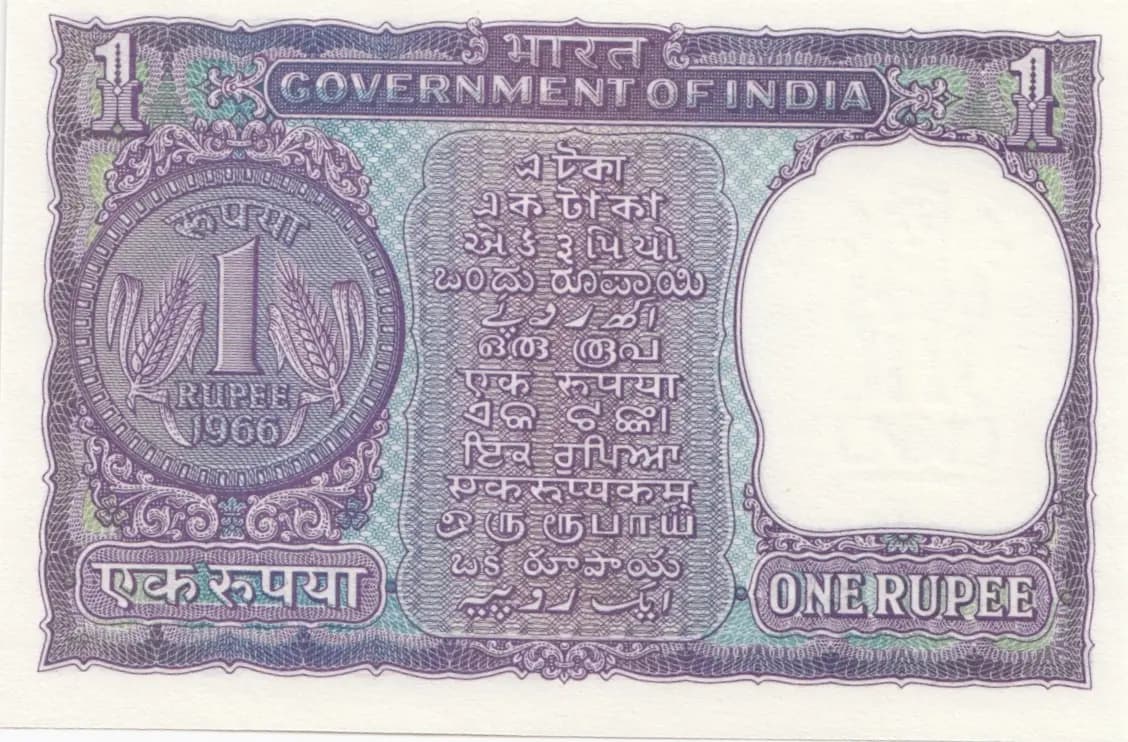
This is an exceptional uncirculated example of India's 1966 one rupee note (Pick 77a), featuring the iconic Lion Capital of Ashoka emblem on the obverse and a denomination coin design on the reverse. The note displays crisp printing with no wear, creases, or stains, maintaining sharp margins and vibrant purple/violet coloring throughout. This is a foundational note in Indian numismatic collecting, representing the post-independence monetary system during India's second decade as a republic.
Common. This denomination and Pick number were issued in large quantities across the 1966-1980 date range to meet India's substantial currency circulation needs during a period of economic expansion. Market data confirms common status: catalog values list UNC examples at $9 (2019), and eBay transaction records show typical prices under $15 even for graded examples. The widespread circulation and high original print run ensure abundant availability in the numismatic market today.
Issued in 1966, this one rupee note commemorates India's republican identity through the prominent Lion Capital of Ashoka—a symbol directly referencing the Ashokan column now housed in the Sarnath Museum. The note's design reflects India's commitment to displaying indigenous cultural and historical symbols on its currency following independence in 1947, with inscriptions in both English and Hindi/Devanagari script emphasizing the nation's linguistic diversity and sovereignty.
The obverse features a purple and violet color scheme with ornate decorative borders in green and cream. The dominant design element is the circular emblem of the Lion Capital of Ashoka positioned on the right side, showing the four lions of the Sarnath column with its characteristic wheel beneath. The left side contains a large blank rectangular space reserved for watermark security features. Denomination markings in both English ('ONE RUPEE') and Hindi ('एक रुपया') are clearly presented. The reverse displays a complementary purple color palette with another circular emblem containing '1 RUPEE 1960' to represent the coin design, surrounded by ornamental scrollwork and corner decorations in green and cream. Multi-script text indicating the denomination in various Indian languages appears throughout the design, reflecting the Reserve Bank's commitment to linguistic inclusivity.
FRONT SIDE: 'GOVERNMENT OF INDIA' (English); 'भारत' (Hindi: Bharat/India); 'ONE RUPEE' (English); 'एक रुपया' (Hindi: Ek Rupya/One Rupee); 'W 56' (plate marking); '2072J19' (serial number); 'SECRETARY, MINISTRY OF FINANCE' (English). REVERSE SIDE: 'GOVERNMENT OF INDIA' (English); 'भारत' (Hindi: Bharat/India); '1 RUPEE 1960' (English, in circular emblem); 'एक' (Hindi: Ek/One); 'एक टिका' (Hindi: Ek Tika/One Rupee); 'ब्रह्मी' (Hindi: Brahmi/script reference); 'ONE RUPEE' (English); '1960' (year reference); 'एक रुपया' (Hindi: Ek Rupya/One Rupee).
This note was produced using traditional intaglio (engraved) printing methods, characteristic of Indian currency production during this period. The crisp, sharp impressions visible on both sides, the depth of color saturation, and the precise decorative borders are hallmarks of intaglio printing. The Reserve Bank of India employed security printers experienced in this technique; for notes of this era, production typically involved either the India Security Press (Nashik) or De La Rue operations under RBI supervision.
This example is cataloged as Pick 77a, a specific variant designation within the 1966 series. The serial number '2072J19' and plate marking 'W 56' are specific to this individual note's production run. The note references '1960' in the coin design on the reverse, which represents the year of initial design conception rather than issue date. Varieties within Pick 77a may exist based on different plate numbers, signature variants of the Finance Secretary, and watermark configurations, though the standard watermark is the Asoka column without letter designation.