1 rupee 1968
Market Prices
About This Note
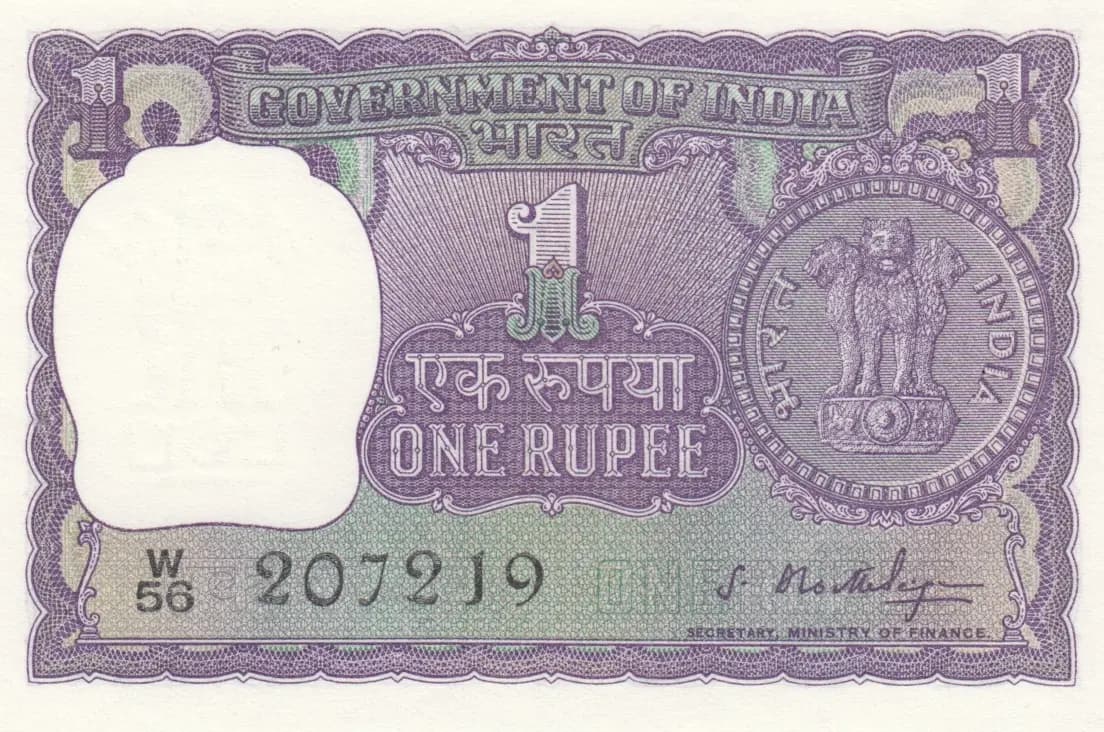
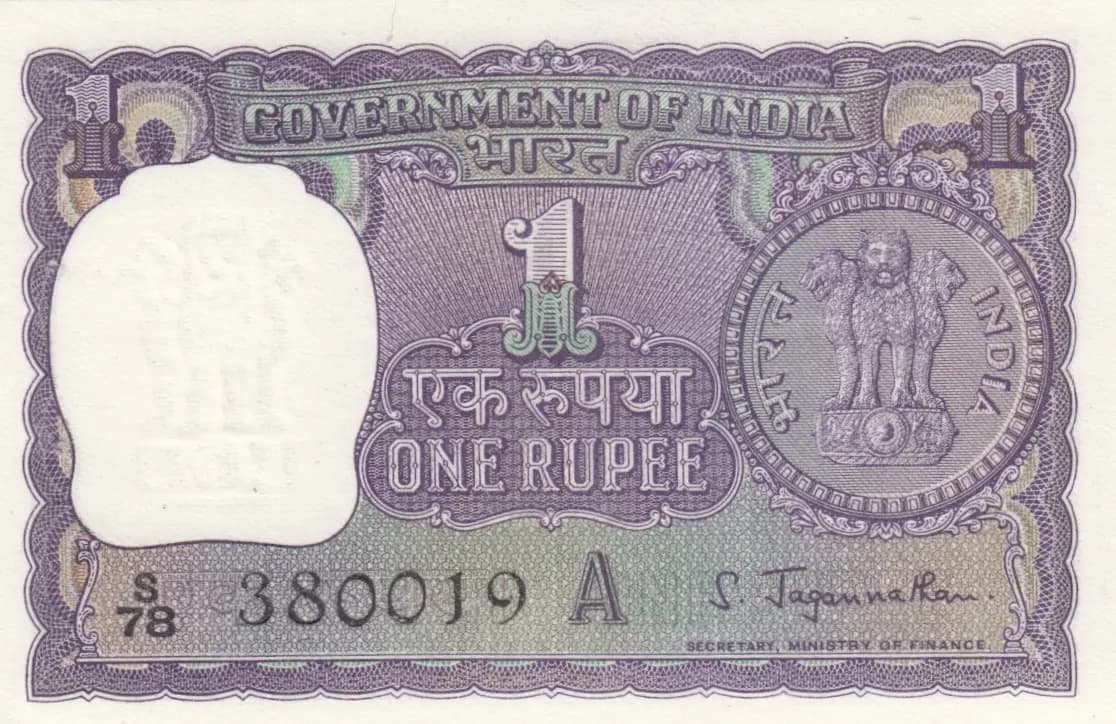
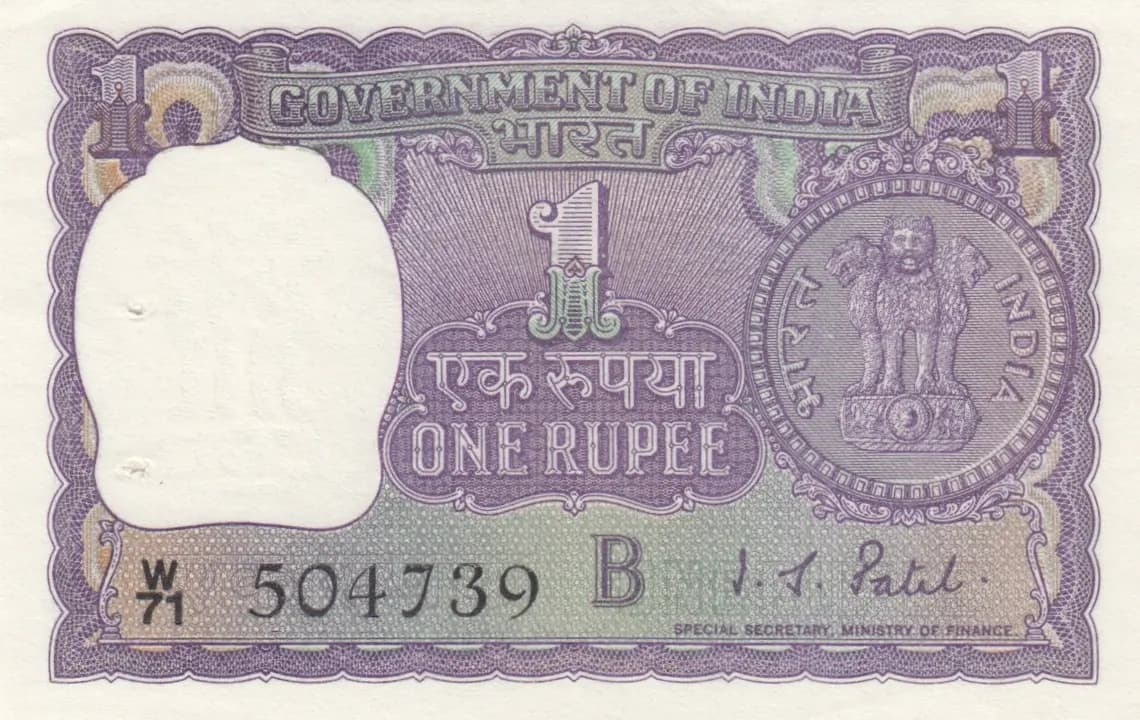
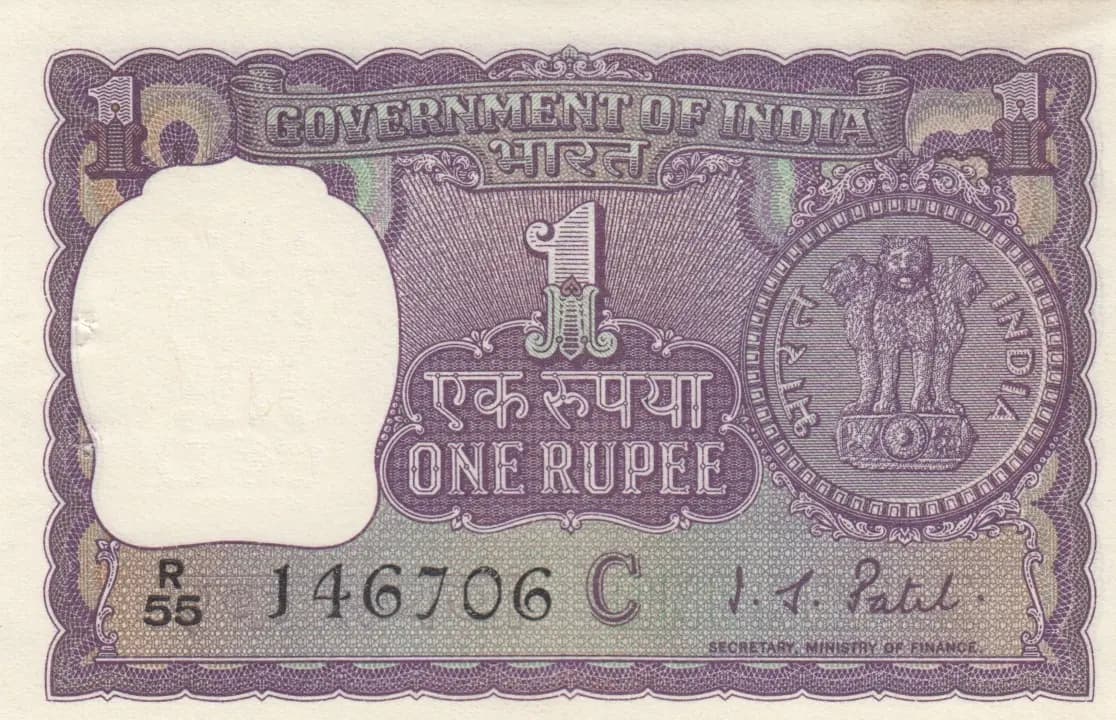
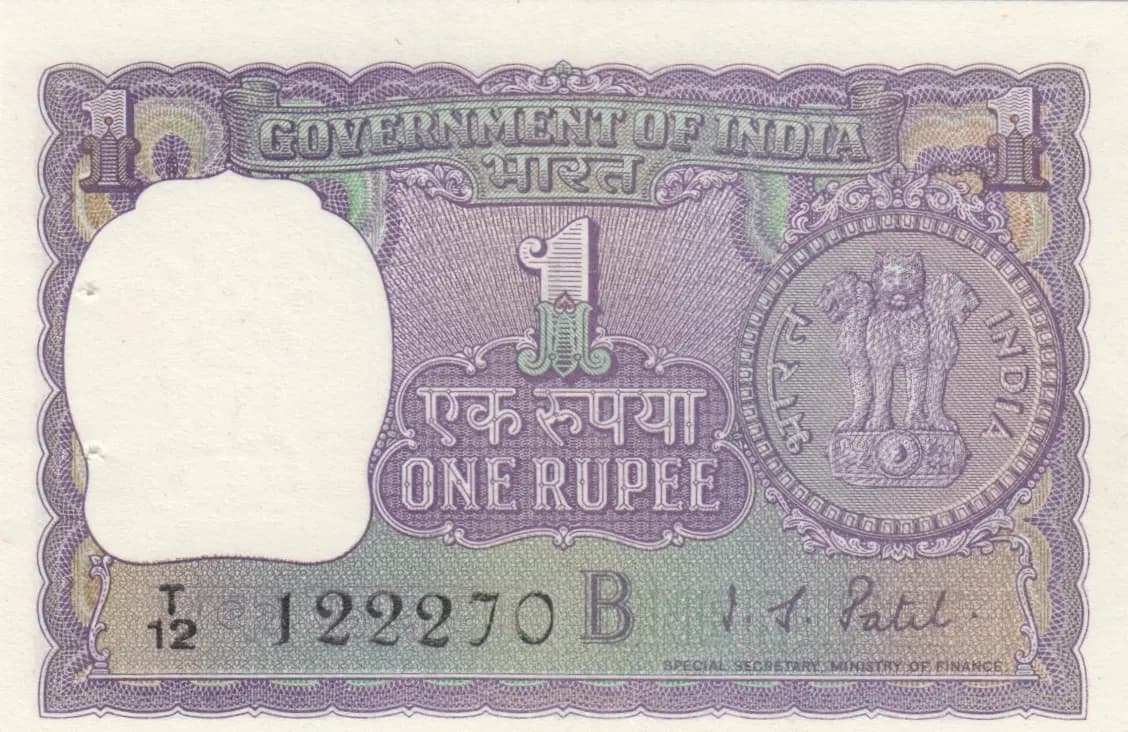
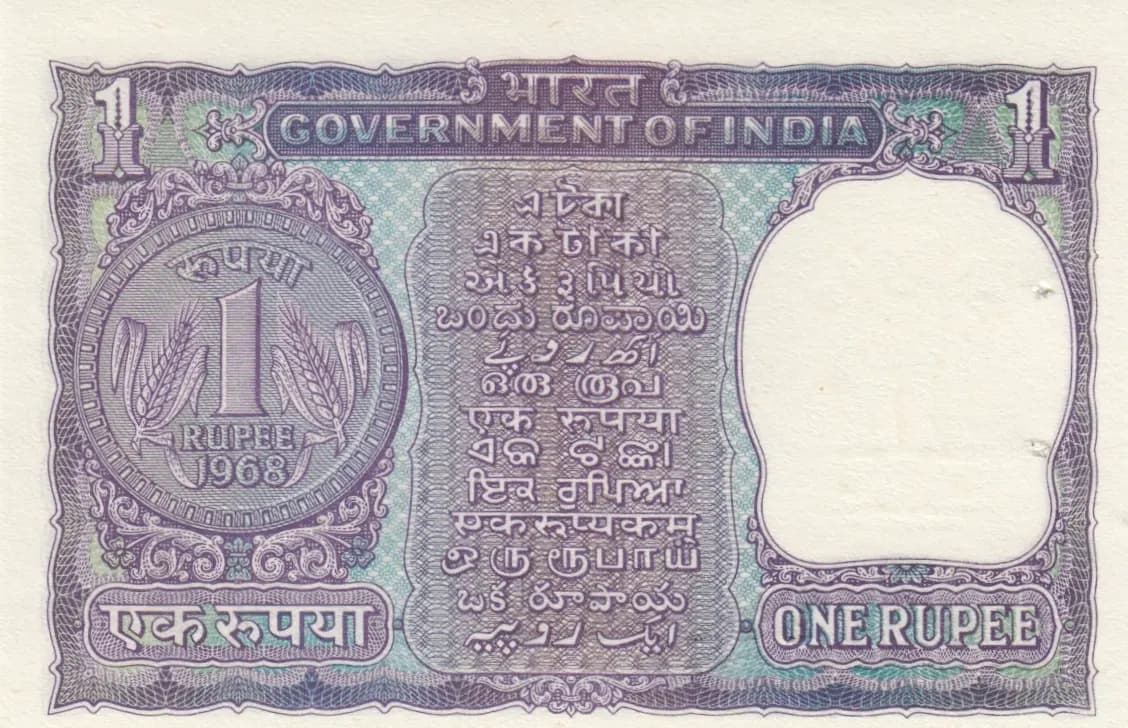
This is a 1968 Indian 1 Rupee note (Pick P-77d) in Uncirculated condition, featuring the iconic Ashoka Lion Capital emblem on the obverse and a decorative coin design on the reverse. The note displays excellent preservation with minimal wear, slight age-appropriate patina on the watermark areas, and vibrant multicolored printing in purple, green, and cream tones. As part of the standard post-independence Indian currency series, this note represents an important period in India's monetary history and remains highly collectible despite being relatively common in the market.
Common. This note is part of the standard P-77 series (variants a-d) issued over a 14-year period (1966-1980) with substantial print runs typical of everyday circulation currency. Market data from eBay listings shows UNC examples consistently priced at $9.99 USD, with catalogue values at $7 (2019), indicating robust supply and steady but modest collector demand. The 1968 date is not particularly scarce within this series, and no documented print run restrictions or early recalls exist for this specific variety.
Issued during India's economic consolidation in the late 1960s, this note features the Ashoka Lion Capital—the emblem of the Indian government derived from the Mauryan Empire's ancient symbol at Sarnath Museum. The multilingual reverse (Hindi, Tamil, Telugu, Kannada, and Malayalam) reflects India's commitment to acknowledging its diverse linguistic regions following independence. This series (P-77d, issued 1966-1980) represents the Government of India's standardized currency during a period of post-colonial nation-building and economic development.
The obverse features a large circular seal containing the Ashoka Lion Capital (Sarnath emblem)—four lions seated back-to-back, now the official state emblem of India—positioned on the right side of the note. The denomination is prominently displayed in the center in both English ('ONE RUPEE') and Hindi ('रुक्क रुप्या'). The reverse displays a circular medallion on the left containing the numeral '1' and the word 'RUPEE' with a wheat or grain decorative motif, symbolizing agricultural prosperity. Both sides feature ornate decorative borders with intricate floral and geometric patterns at the corners. The blank oval spaces on both sides represent the watermark area featuring the Ashoka column and letter 'A'. The entire note employs a multicolored underprint with purple, green, teal, and cream tones creating a visually distinct security design characteristic of this issue.
FRONT SIDE: 'GOVERNMENT OF INDIA' (English) / 'भारत' (Hindi: India) / 'ONE RUPEE' (English) / 'रुक्क रुप्या' (Hindi: One Rupee) / 'SPECIAL SECRETARY, MINISTRY OF FINANCE' with signature 'Patel' / Serial number: B 199270. BACK SIDE: 'GOVERNMENT OF INDIA' (English) / 'भारत' (Hindi: India) / 'ONE RUPEE' (English) / 'एक रुप्या' (Hindi: One Rupee) / 'ഒരു രൂപ' (Malayalam: One Rupee) / 'ಒಂದು ರೂಪಾಯಿ' (Kannada: One Rupee) / 'ఒక రూపాయి' (Telugu: One Rupee) / 'ஒரு ரூபாய்' (Tamil: One Rupee) / Date: 1963 (appears on reverse).
This note was produced using intaglio (engraved) printing combined with letterpress and multicolor lithography for the background security features. The fine detail visible in the Ashoka Lion Capital emblem and the decorative borders indicates high-quality engraved plate work. The watermark featuring the Ashoka column was created during paper manufacture at the Government of India Security Press (GISPP) or affiliated security printers. The note exhibits the characteristic registration and color layering typical of 1960s Indian currency production, with the multicolor underprint applied before final engraved details.
This is specifically cataloged as P-77d, the fourth and final variant of the 1 Rupee Government of India note. Varieties within P-77 series are distinguished by signature titles and other minor administrative changes across the 1966-1980 issuance period. The observed signature 'Patel' with title 'SPECIAL SECRETARY, MINISTRY OF FINANCE' helps identify this as a mid-series variant. The serial number format (letter prefix 'B' followed by six numerals) and date 1963 on reverse (referring to the original design adoption rather than printing date) are consistent with 1968 issuance. No major printing errors or overprints are evident in this example.