1 rupee 1972
Market Prices
1 saleAbout This Note
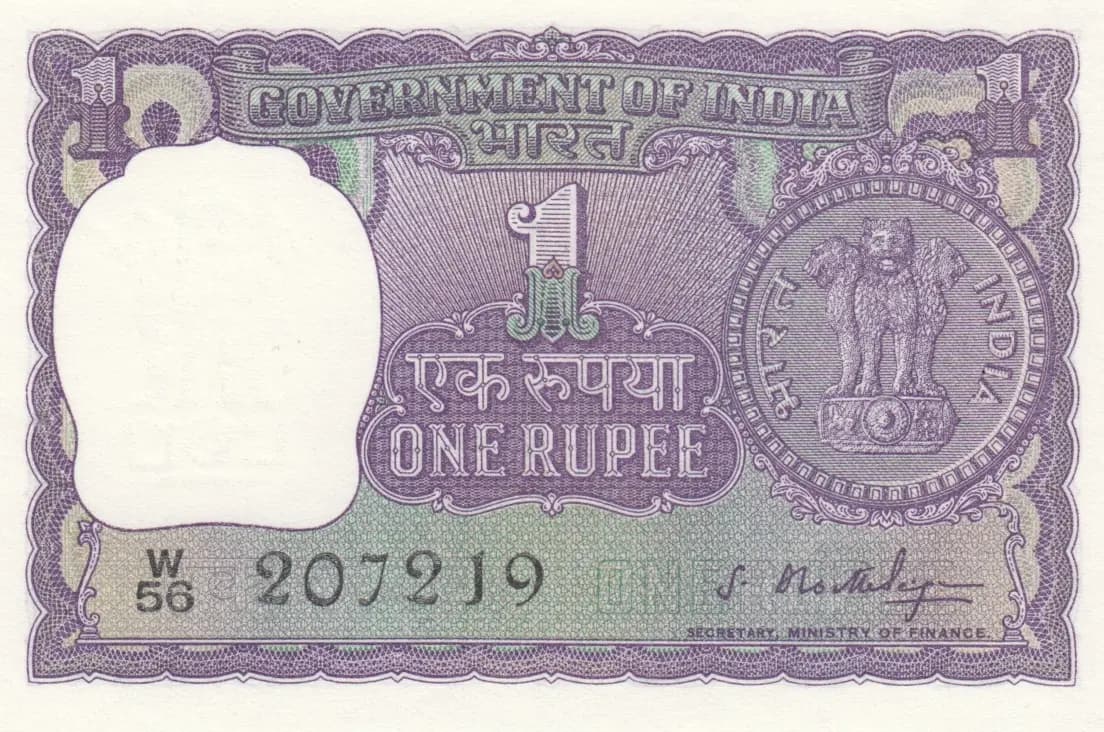
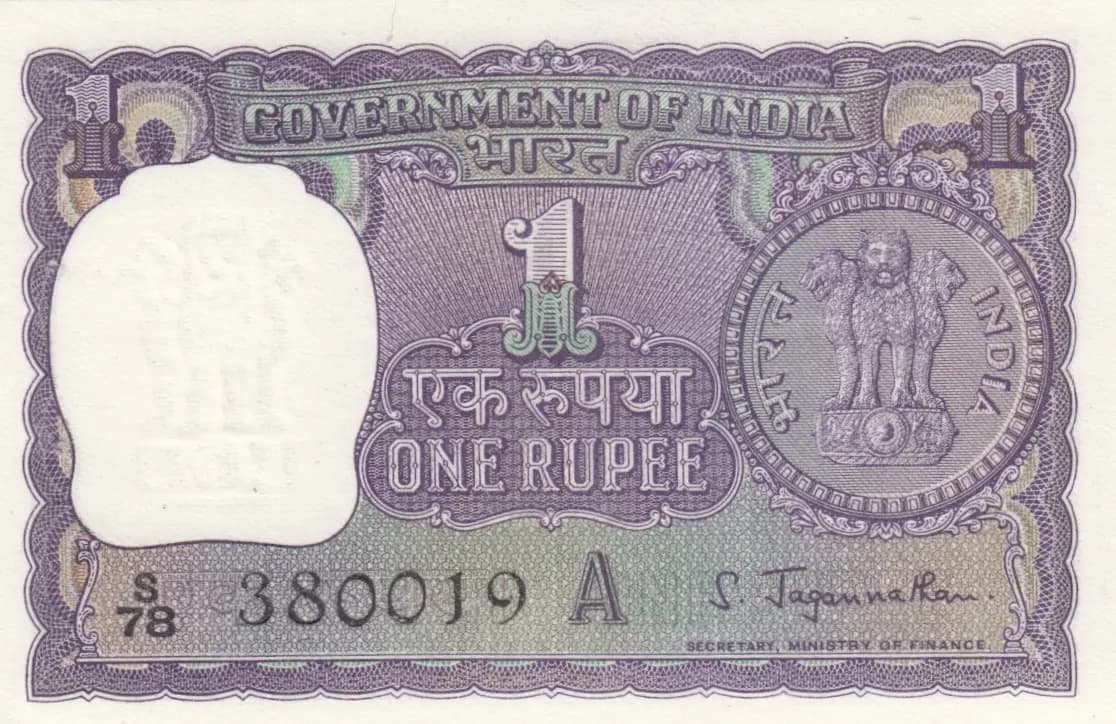
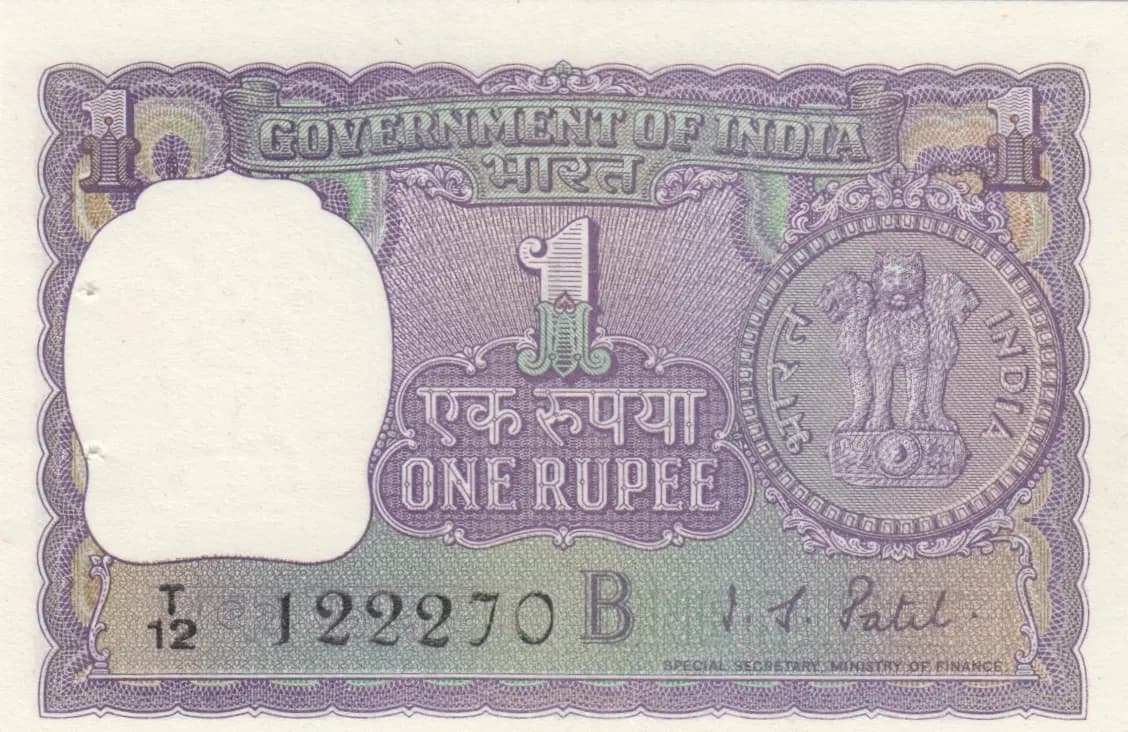
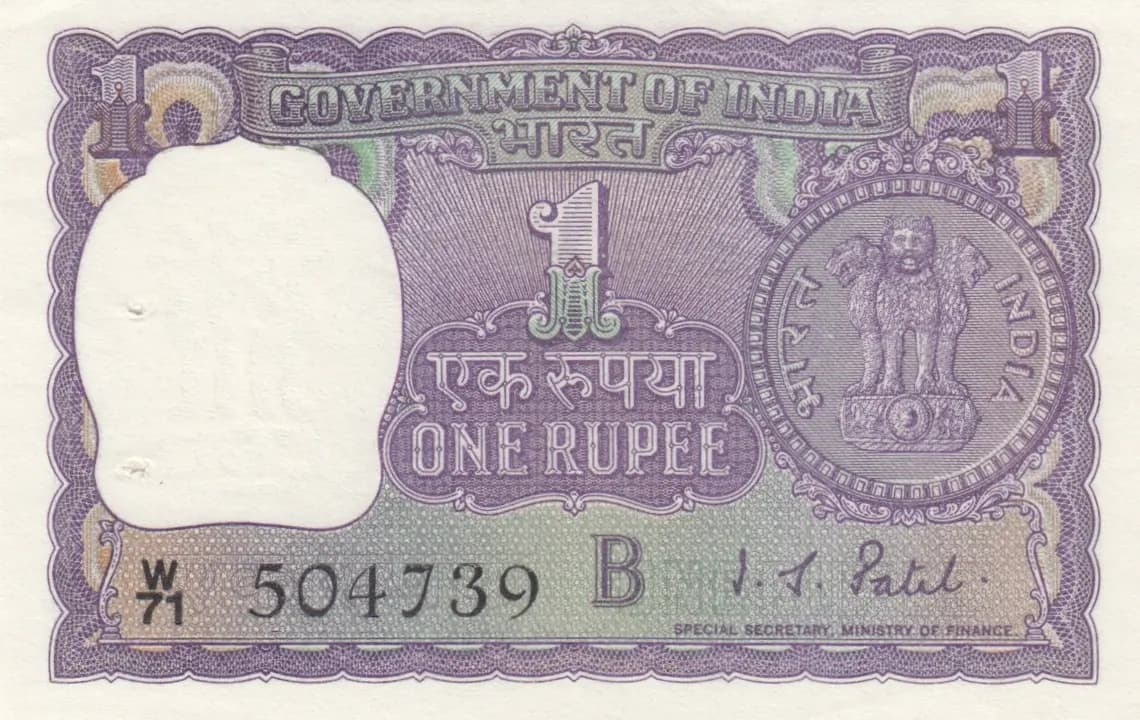
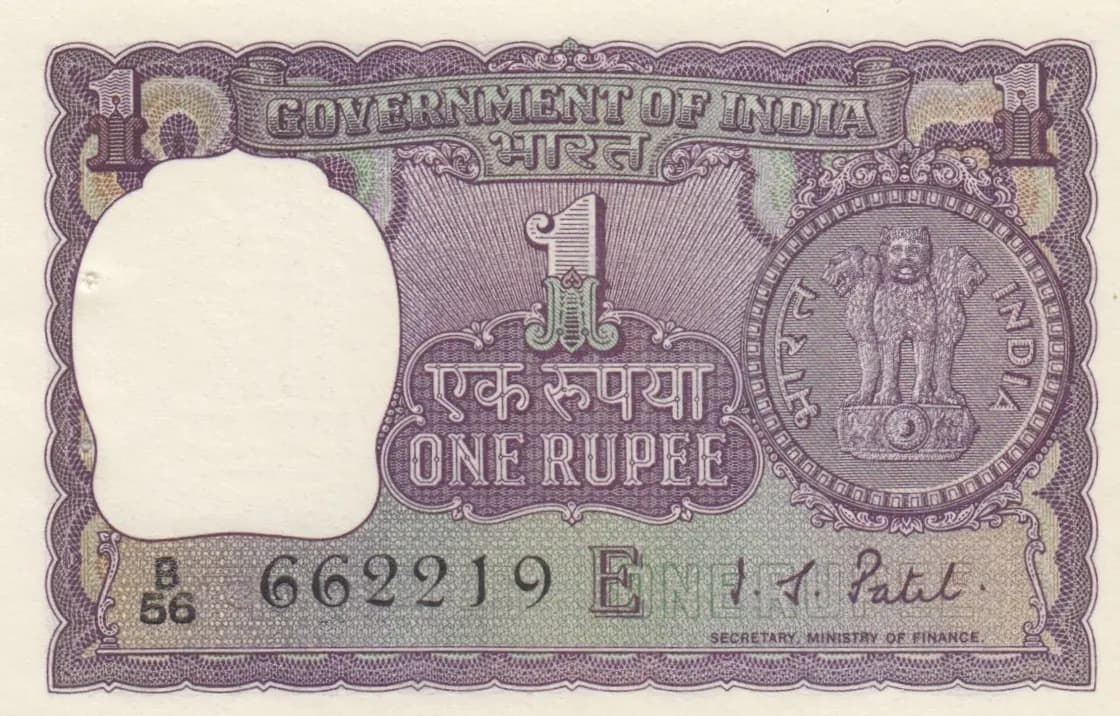
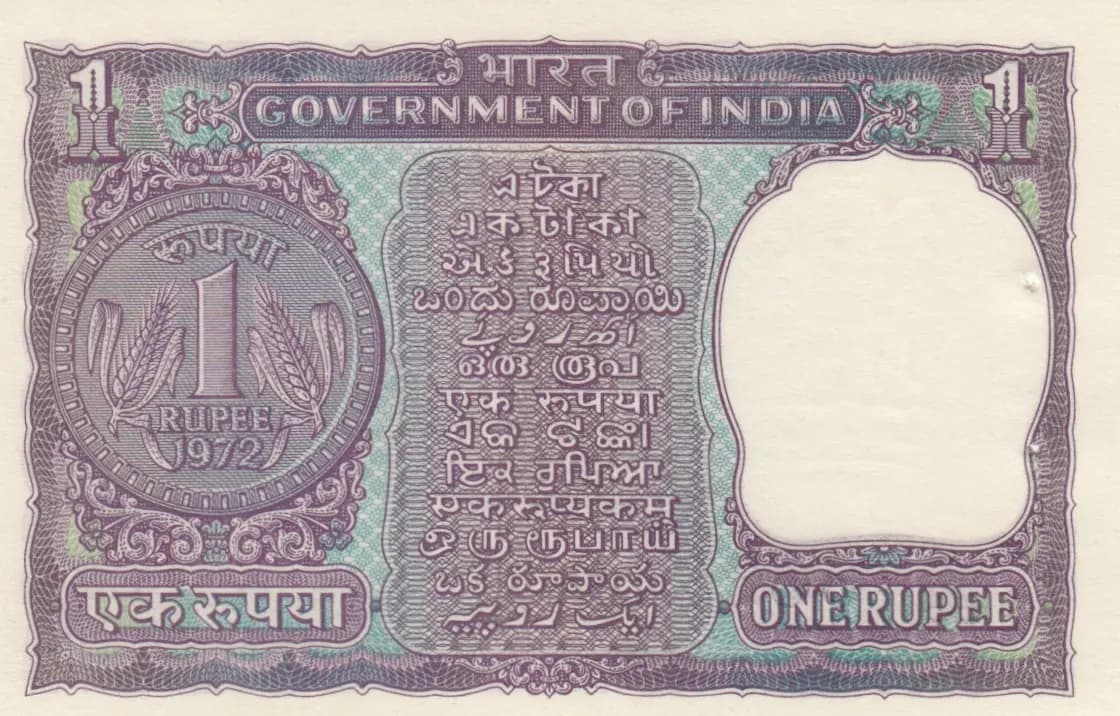
This is a 1972 Government of India 1 Rupee banknote (Pick P-77k) in uncirculated condition, featuring the iconic Lion Capital of Ashoka emblem on the obverse and a wheat-themed reverse design dated 1972. The note displays characteristic purple and green coloring on a cream background with bilingual English/Devanagari inscriptions, and exhibits no wear, creases, or damage typical of its UNC grade. The blank oval spaces on both sides are distinctive design elements of this series, setting it apart from earlier portrait-bearing rupee notes.
Common. This note from the 1966-1980 standard issue series had a large print run spanning multiple years and denominations. eBay market data shows UNC examples selling for $2.75-$7 USD, well below the $20 threshold indicating common circulating notes. No specific scarcity factors (limited print run, recall, short-lived issuer) apply to this Pick number. While collected, it remains readily available in the secondary market.
Issued during India's post-independence consolidation period (1966-1980 series), this note commemorates the nation's cultural heritage through the Lion Capital of Ashoka, an ancient Buddhist monument representing dharma and India's national emblem. The 1972 date marking on the reverse reflects the note's production during the early 1970s, a period of monetary standardization in independent India. The bilingual design (English and Devanagari) reinforces the Indian government's commitment to linguistic diversity and national identity in currency design.
The obverse features the Lion Capital of Ashoka (Sarnath Museum original) as a circular emblem on the right side—a four-lion sculpture representing India's national symbol, surrounded by decorative ornamental frames. The left side displays a blank oval space where a portrait would traditionally appear, a characteristic design choice of this series. The reverse depicts a circular emblem with wheat stalks flanking the denomination and year '1972', symbolizing agricultural prosperity. Both sides are dominated by purple and green intaglio printing on a cream underprint, with extensive bilingual inscriptions in English and multiple Indian scripts (primarily Devanagari). The design reflects India's sovereignty, agricultural heritage, and commitment to multilingual representation.
FRONT SIDE: 'GOVERNMENT OF INDIA' (English), 'एक रुपया' (Devanagari: One Rupee), 'ONE RUPEE' (English), 'SECRETARY, MINISTRY OF FINANCE' (English), and 'पॉल' (Devanagari: Paul, likely the finance secretary's name). Serial number 'B 56 662219 E' with watermark letter 'E'. BACK SIDE: 'GOVERNMENT OF INDIA' (English), 'भारत' (Devanagari: Bharat/India), 'RUPEE 1972' (English/numerals), 'एक रुपया' (Devanagari: One Rupee), 'ONE RUPEE' (English), 'रुपया' (Devanagari: Rupee). Central panel contains additional multilingual text in Devanagari and other Indian scripts detailing note specifications.
Intaglio printing (offset combined with engraving), characteristic of Reserve Bank of India and Indian government security printers of the 1970s era. The multicolored underprint (purple and green on cream) indicates multi-plate or advanced offset lithography. The crisp, fine detail visible in the Ashoka emblem and ornamental borders confirms engraved security printing techniques typical of this denomination and period. Security printer details are not explicitly visible on the note but likely produced by the India Security Press (Nashik) or a RBI-authorized security facility.
This example is identified as variety P-77k per Pick catalog. The serial number prefix 'B 56' with letter 'E' watermark designation represents one of multiple printer/batches within the series. The specific signature (Paul, Secretary of Finance) may indicate a particular year of issue within the 1972-era production. No major overprints, color varieties, or printing errors are evident in this specimen. Collectors should note that the 1966-1980 series includes variants P-73 through P-77k with different signatures and design modifications; this P-77k represents a later iteration within that family.