100 kronur 1961 specimen
Market Prices
About This Note
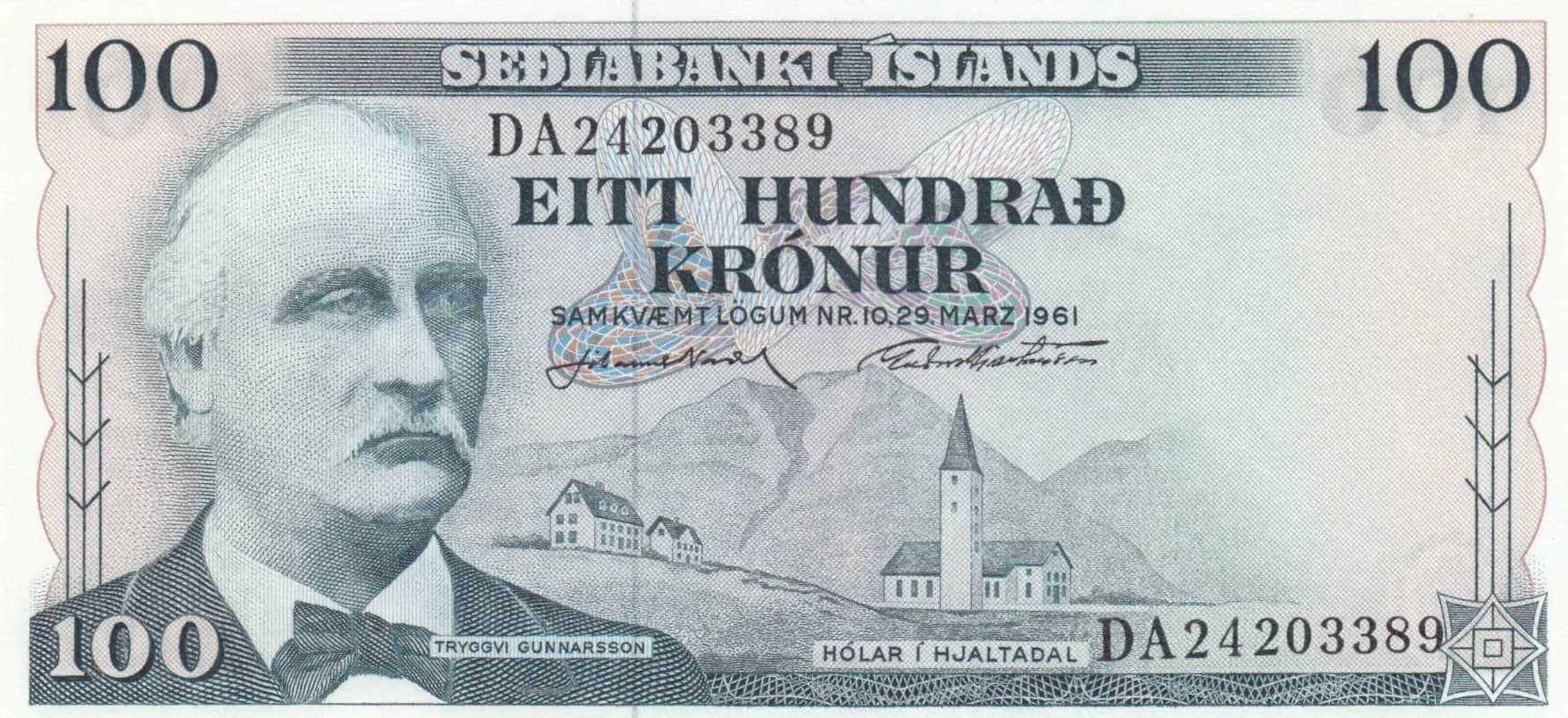
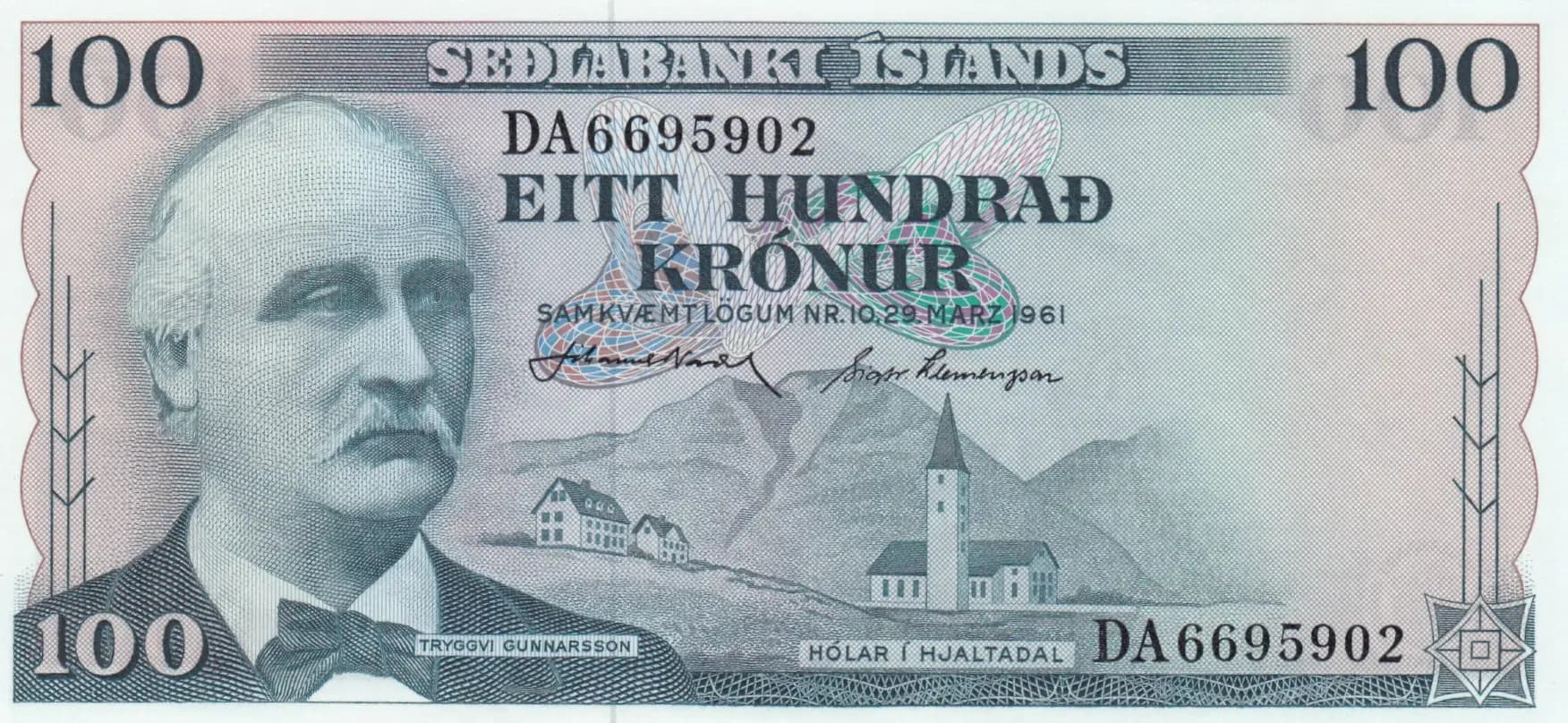
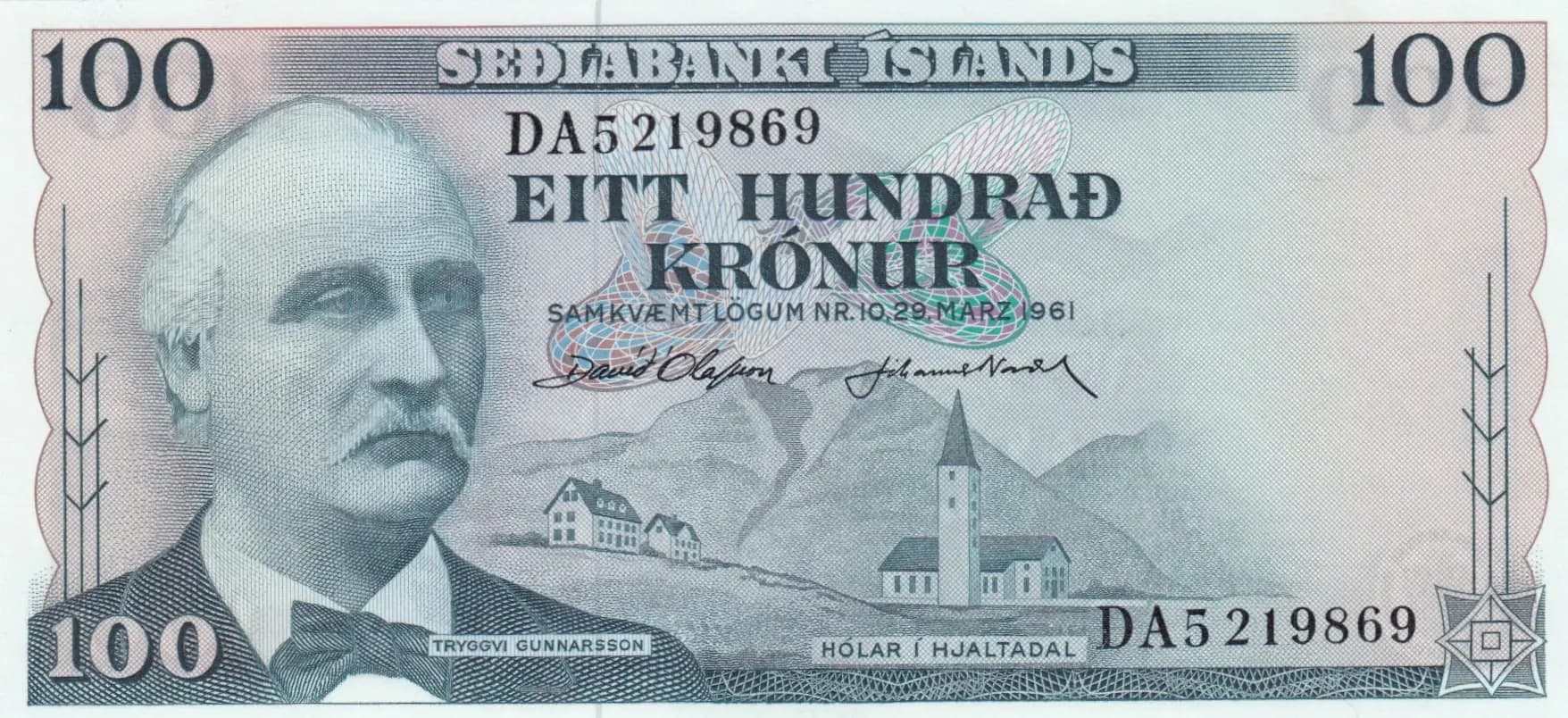
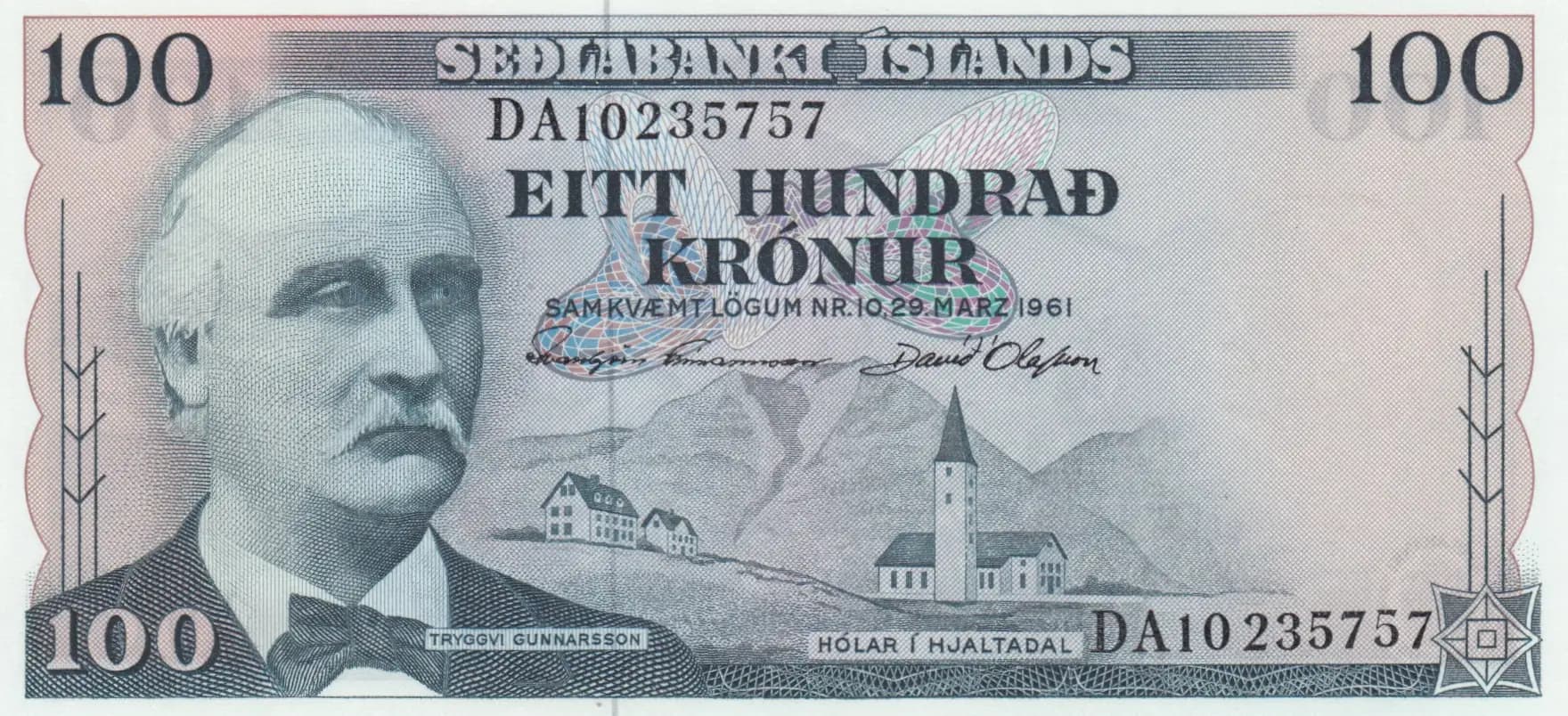
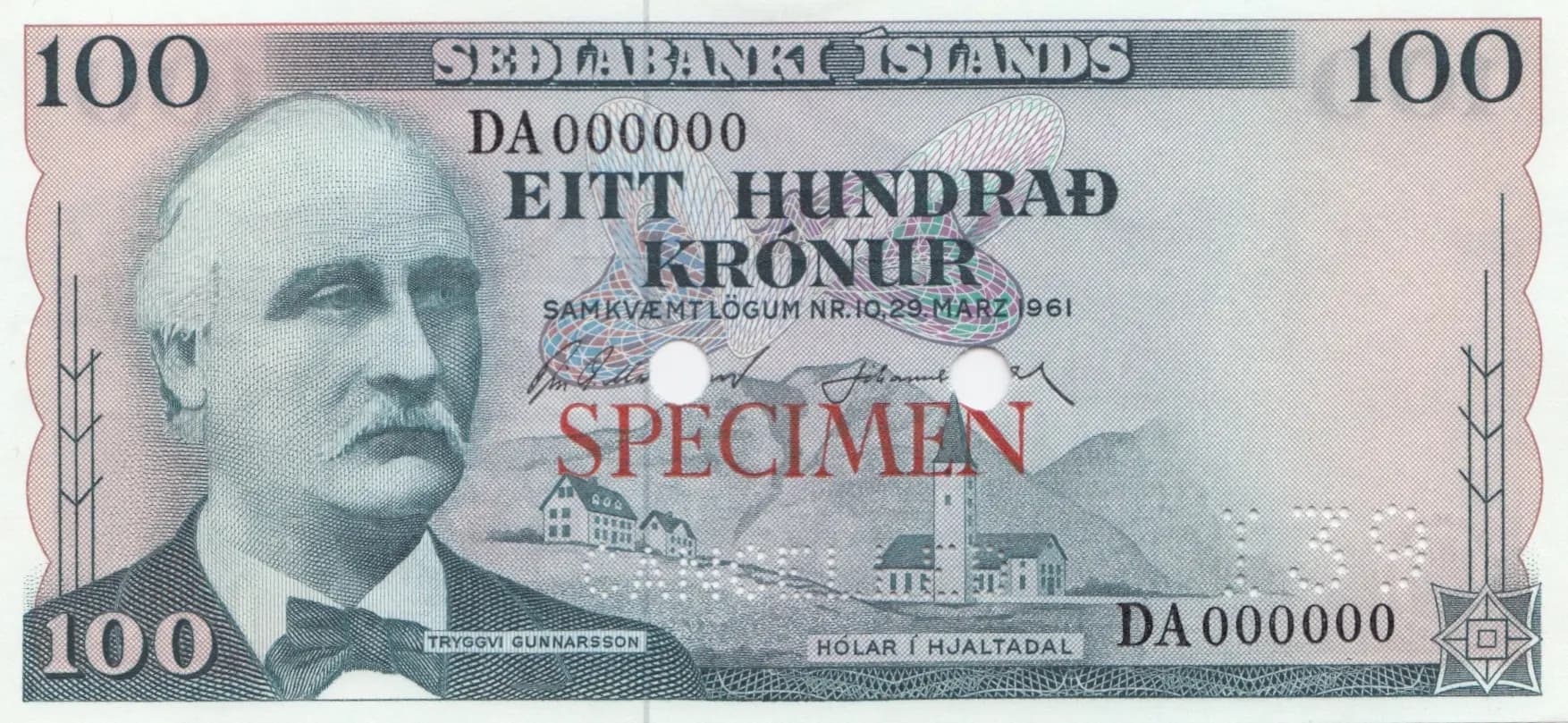
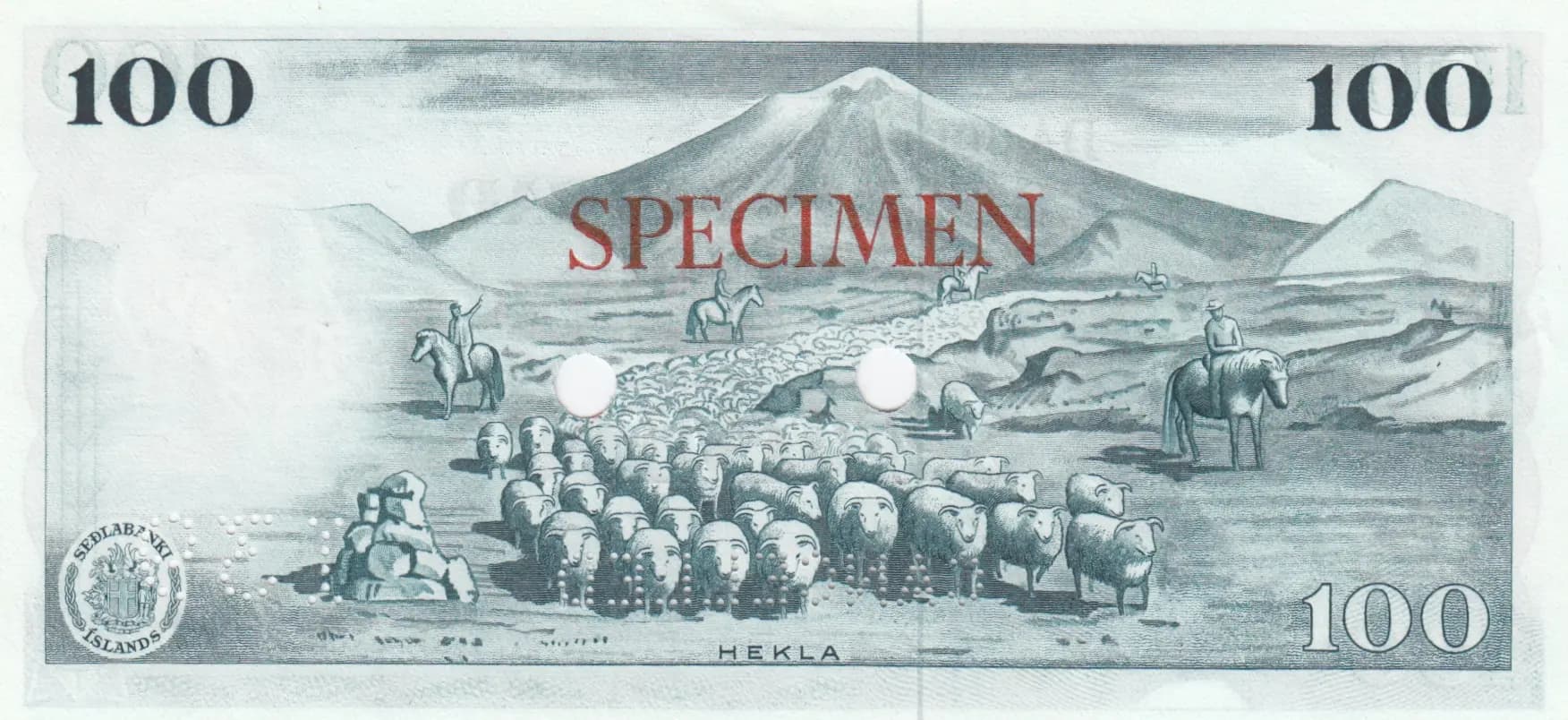
This is an exceptional specimen example of Iceland's 100 kronur note from 1961, issued by Sedlabanki Islands under Law No. 10 of March 29, 1961. The note features remarkable engraving detail on both sides—Tryggvi Gunnarsson's portrait on the front with the settlement of Hólar in Hjaltadalur, and a striking pastoral scene with mounted sheepherders and Mount Hekla on the reverse. In uncirculated condition with the characteristic twin punch holes of a specimen note, this piece represents an important example of mid-20th century Icelandic currency design and cultural heritage imagery.
Common. While specimen notes are inherently less common than circulation issues, the eBay market data shows consistent pricing in the $8–$40 range for uncirculated examples, with a 2019 catalog value of $165 USD suggesting moderate collector interest rather than scarcity. The production run for this series appears to have been adequate, and specimen notes from this period are regularly encountered in the market. No evidence of recall, short print run, or extreme rarity exists for this Pick number.
Issued in 1961, this note marks a significant period in Iceland's monetary history following independence and economic development. The imagery reflects Iceland's identity during this era: Tryggvi Gunnarsson represents the nation's historical figures, while the pastoral scenes of sheepherding and the iconic Mount Hekla celebrate Iceland's agrarian traditions and dramatic natural landscape. The specimen designation indicates this was a reference note distributed for authentication and cataloging purposes by the central bank.
The front of this banknote features a three-quarter portrait of Tryggvi Gunnarsson, a significant Icelandic historical figure, rendered in formal 19th-century attire with detailed engraving. To the right is a landscape vignette depicting the rural settlement of Hólar in Hjaltadalur, showing traditional Nordic-style architecture characteristic of historic Icelandic communities. The reverse displays a dramatic pastoral scene central to Icelandic identity: mounted sheepherders on horseback managing flocks of sheep against a mountainous backdrop, with Mount Hekla—Iceland's most famous volcano—prominently featured in the landscape. Both sides feature decorative guilloche borders and fine line engraving throughout. The seal of Sedlabanki Islands, featuring a cross design, appears on the lower left of the reverse. The overall color scheme on the front is rose-pink with blue-gray tones, while the reverse is predominantly black and gray on white, with red specimen overprint text.
Front side: 'SEDLABANKI ISLANDS' (Central Bank of Iceland), '100' (denomination), 'EITT HUNDRAD KRÓNU' (One hundred kronur), 'SAMKVÆMT LOGUM NR.10, 29.MARZ 1961' (According to Law No. 10, 29 March 1961), 'SPECIMEN' (specimen designation), 'TRYGGVI GUNNARSSON' (name of portrait subject), 'HOLAR I HJALTADAL' (Hólar in Hjaltadalur, location), 'DA 000000' (serial number). Back side: '100' (denomination, repeated), 'SPECIMEN' (specimen designation in red), 'HEKLA' (Mount Hekla, the volcano depicted), 'SEDLABANKI ISLANDS' (Central Bank of Iceland, on seal/coat of arms).
This note was produced by BWC (Bradbury, Wilkinson & Company), as confirmed in the PMG population report. The printing technique is intaglio engraving, evidenced by the fine line work, detailed portraiture, and the crisp guilloche patterns visible throughout the note. The multicolored underprint on the front indicates the use of multiple printing passes typical of high-security banknote production of this era. The specimen punch holes were applied post-printing.
This note is the P-44s variety (specimen note), one of three known variants cataloged by PMG for the base Pick number P-44. The other variants are P-44a and P-44r, all printed by BWC. The 's' designation confirms this as a specimen issue, identifiable by the two circular punch holes running vertically through the note and the prominent 'SPECIMEN' overprint. The serial number shown is DA 000000, typical of specimen notes which often carry dummy or placeholder serial numbers rather than genuine currency sequences.