100 kronur 1961
About This Note
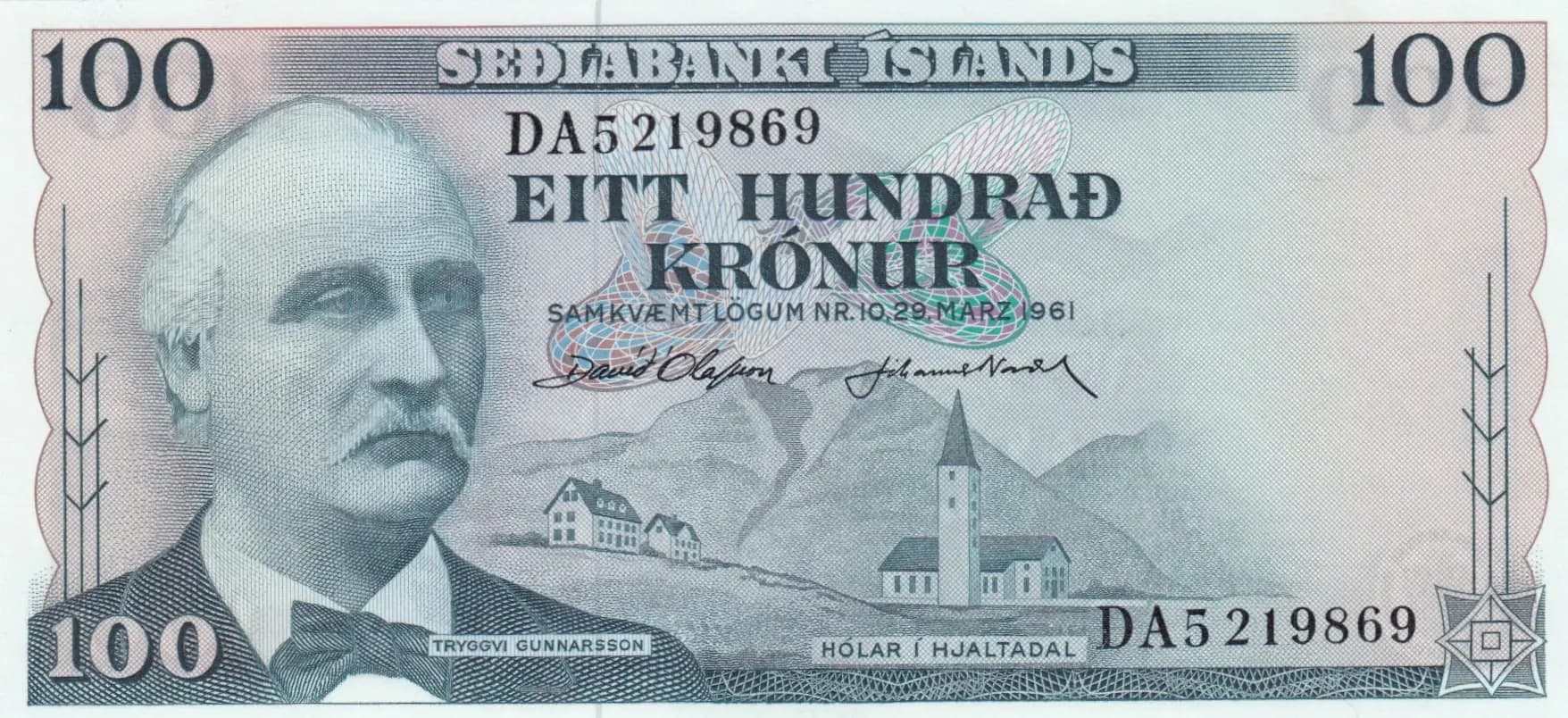
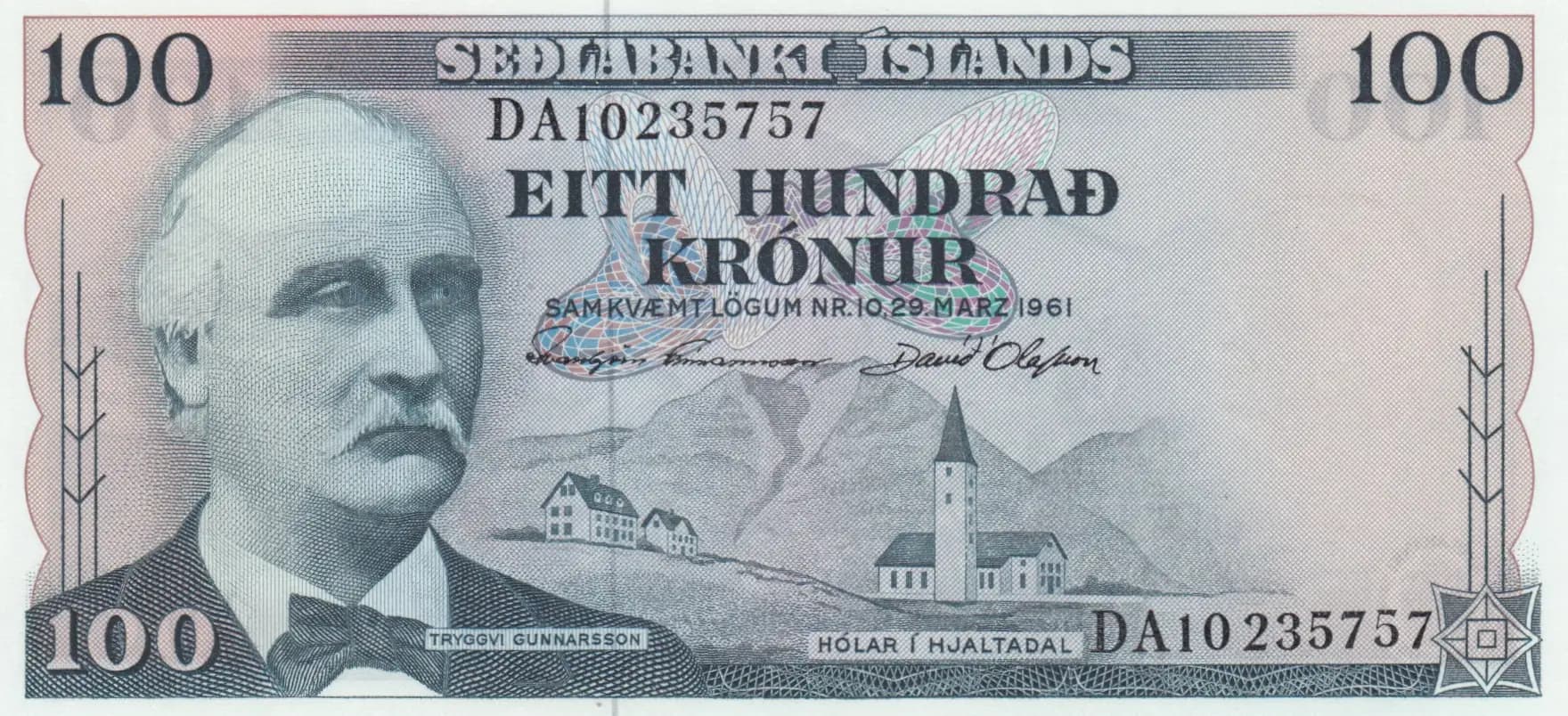
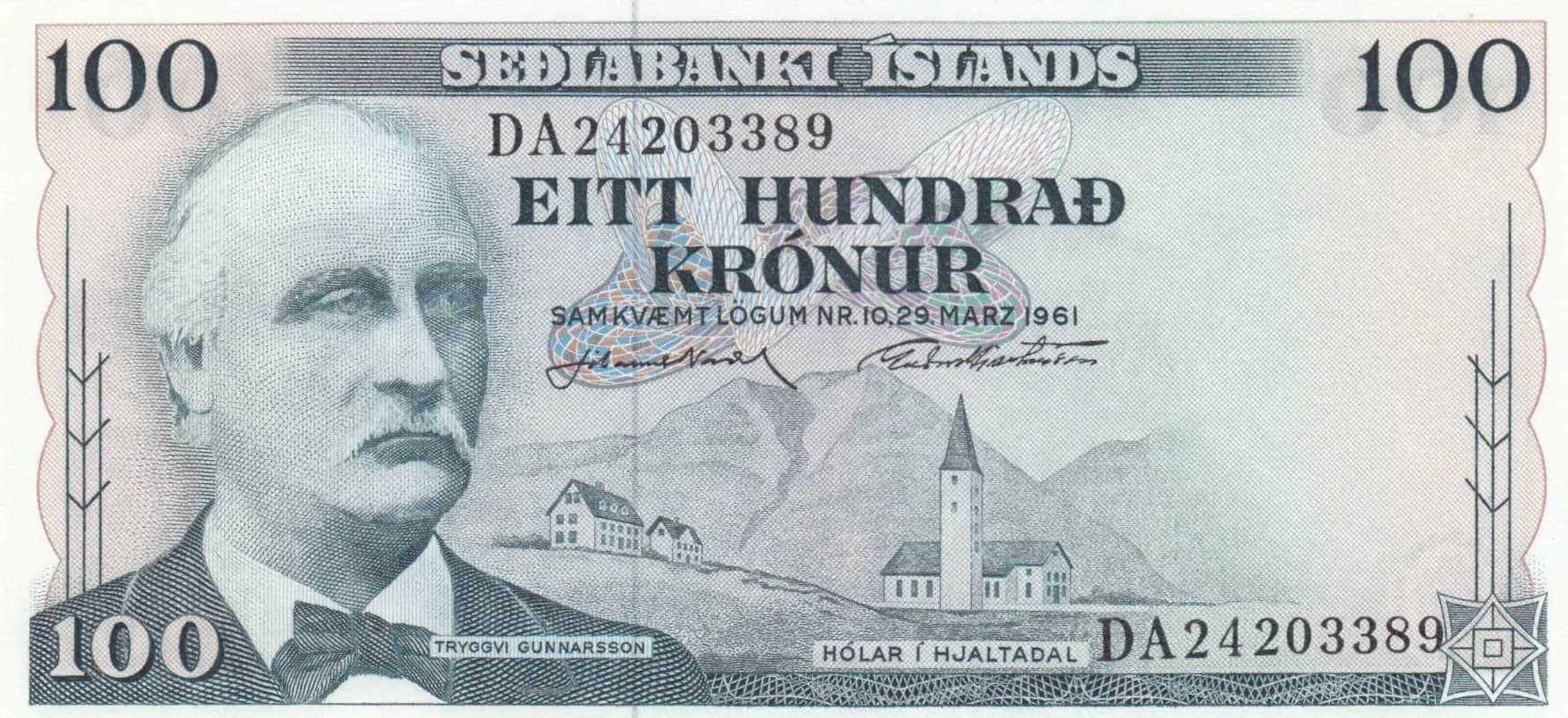
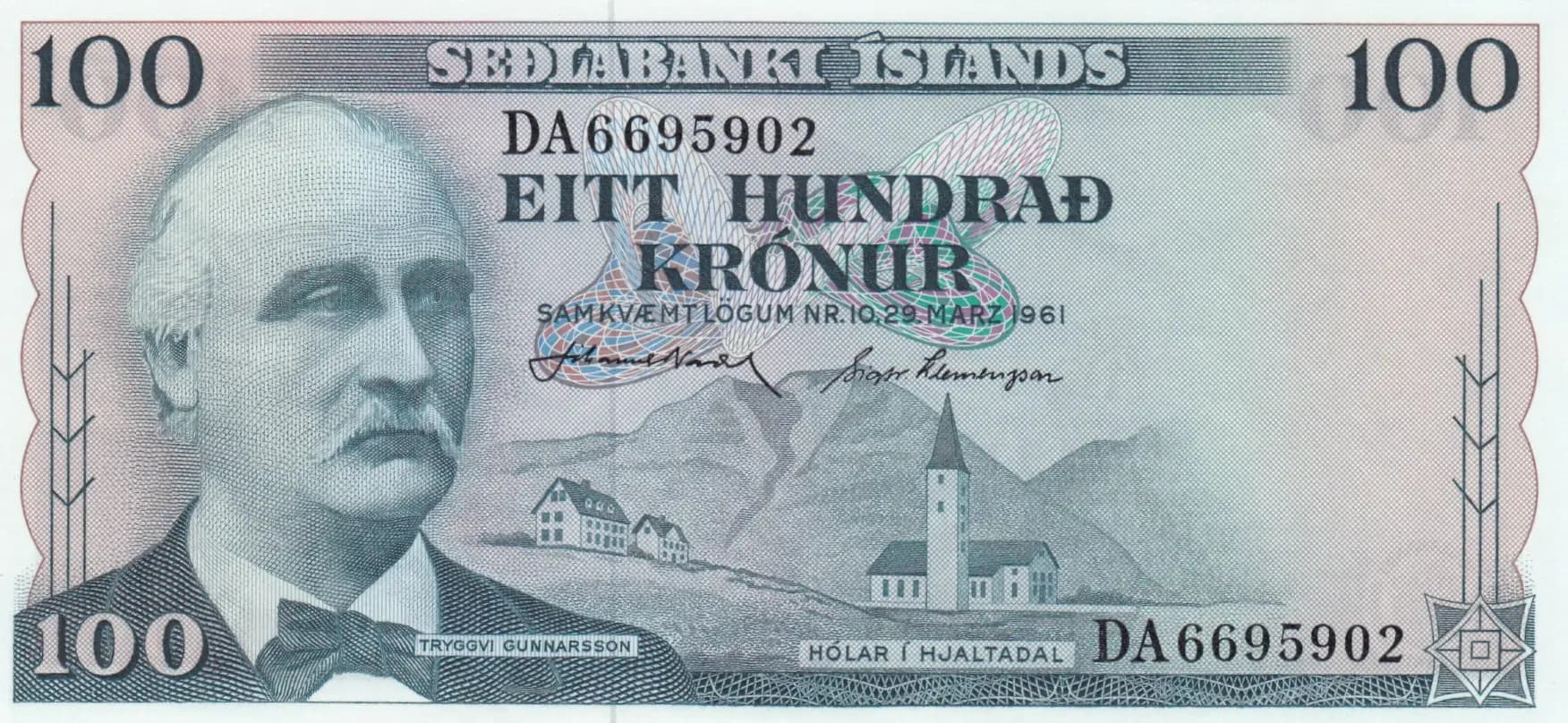
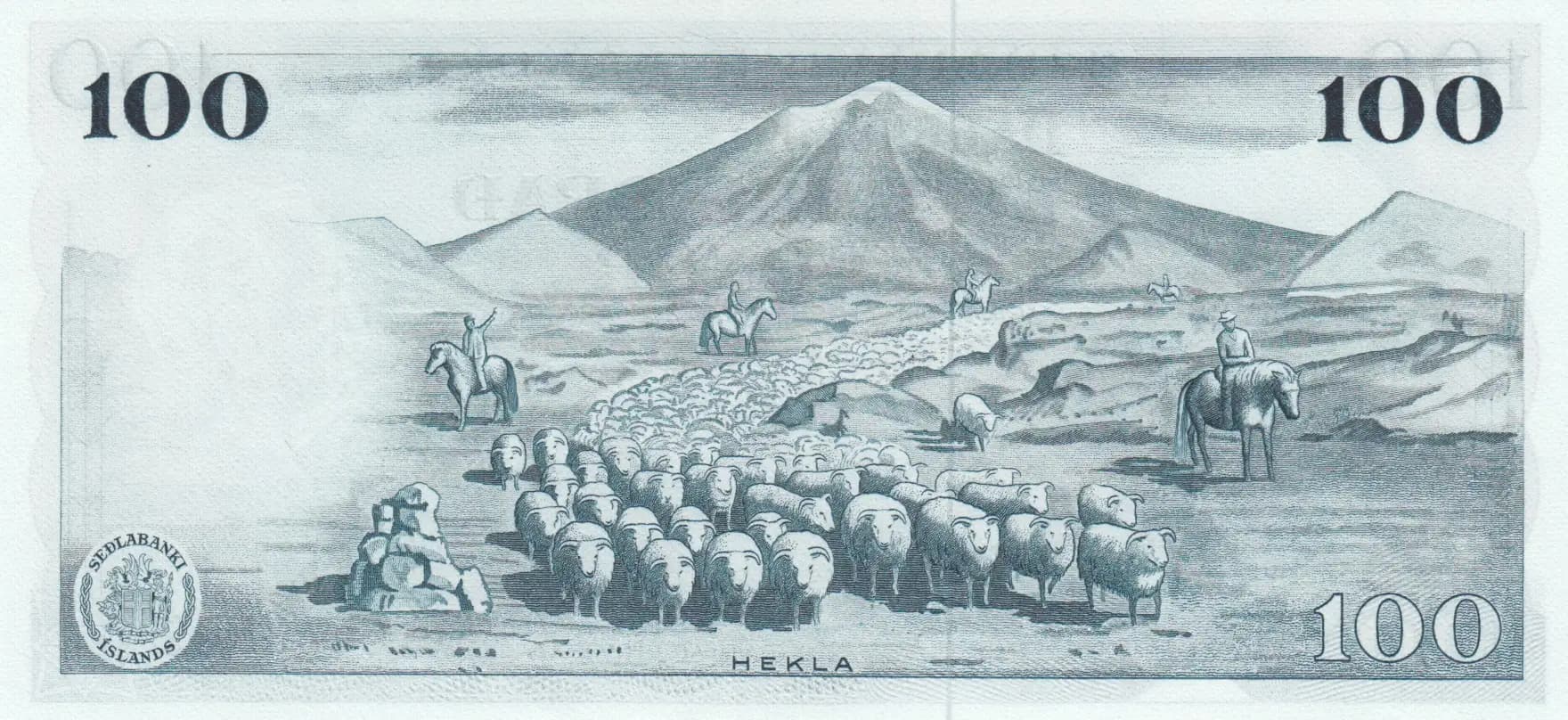
A pristine UNC example of the 1961 Iceland 100 króna note (Pick P-44(6)), featuring a striking portrait of Tryggvi Gunnarsson on the obverse and a dramatic pastoral scene of Hekla volcano with traditional Icelandic sheep herding on the reverse. The note exhibits exceptional condition with no visible wear, creases, or circulation marks, displaying the intricate engraved detail characteristic of mid-20th century Icelandic currency with a sophisticated gray-blue and pink color palette.
Common. The 1961 100 króna notes from Iceland are standard circulation issues from a major denomination and year of issue. No specific evidence of limited print runs, recalls, or short-lived circulation periods exists for this Pick number. The denomination and date place it firmly within standard production for the Central Bank of Iceland during this era.
Issued under Law No. 10 of March 29, 1961, this note marks a significant period in Iceland's post-independence economic development. The dual imagery—honoring Tryggvi Gunnarsson and the historic church at Hólar í Hjaltadal alongside the iconic Hekla volcano and traditional sheep herding—reflects Iceland's deep connection to its cultural heritage and pastoral economy during the early Cold War era. The Sedlabanki Íslands (Central Bank of Iceland) utilized these patriotic and landscape themes to reinforce national identity during a transformative period in Icelandic history.
The obverse presents a left-facing profile portrait of Tryggvi Gunnarsson, a bearded historical figure in formal attire with bow tie, rendered in fine engraved detail. To the right is a landscape vignette depicting Hólar church with its distinctive tall steeple set against a mountainous Icelandic backdrop with rural buildings, representing the historically significant ecclesiastical site in Hjaltadal. The reverse features a comprehensive pastoral composition dominated by the iconic conical peak of Hekla volcano, Iceland's most famous and historically significant volcano, with a large flock of sheep in the foreground and mounted shepherds illustrating traditional Icelandic rural life and animal husbandry practices that formed the economic foundation of the nation.
{"front":{"100":"Denomination numeral","SEÐLABANKI ÍSLANDS":"Central Bank of Iceland","EITT HUNDRAD KRÓNUR":"One Hundred Króna","SAMKVÆMT LOGUM NR.10, 29 MARZ 1961":"According to Law No. 10, 29 March 1961","TRYGGVI GUNNARSSON":"Tryggvi Gunnarsson [historical figure depicted]","HÓLAR Í HJALTADAL":"Hólar in Hjaltadal [location of depicted church]"},"back":{"100":"Denomination numeral","SEÐLABANKI ÍSLANDS":"Central Bank of Iceland","HEKLA":"Hekla [volcanic mountain depicted]"}}
Steel engraving (intaglio printing), evidenced by the intricate fine-line work visible throughout both the portrait, landscape vignettes, and background patterns. The high-quality detailed line work, precise shading through line density variations, and the preservation of fine engraved details in this UNC specimen are characteristic of security printing standards employed by European banknote printers of the 1961 period. The printer for Icelandic banknotes of this era was typically De La Rue or Bradbury Wilkinson; detailed attribution would require additional research on archival records.
Serial number observed: DA6695902. Without access to comprehensive serial number range documentation for the 1961 issue, specific variety classification by series prefix cannot be definitively established from this specimen alone. Standard varieties for this Pick number would include different signature combinations of bank officials and potential color or security feature variations across the print run, but no distinctive variety characteristics are apparent from the single specimen analyzed.