100 kronur 1961
About This Note
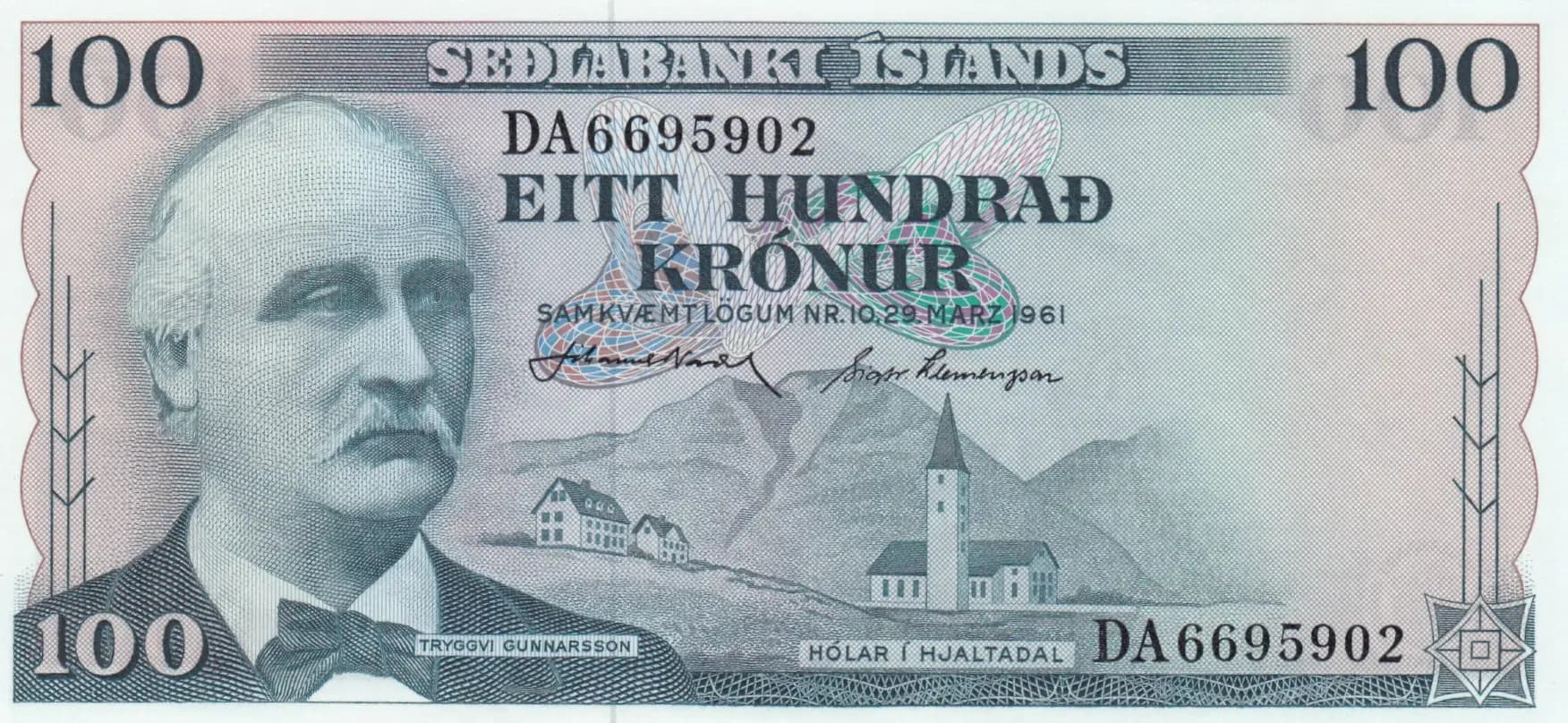
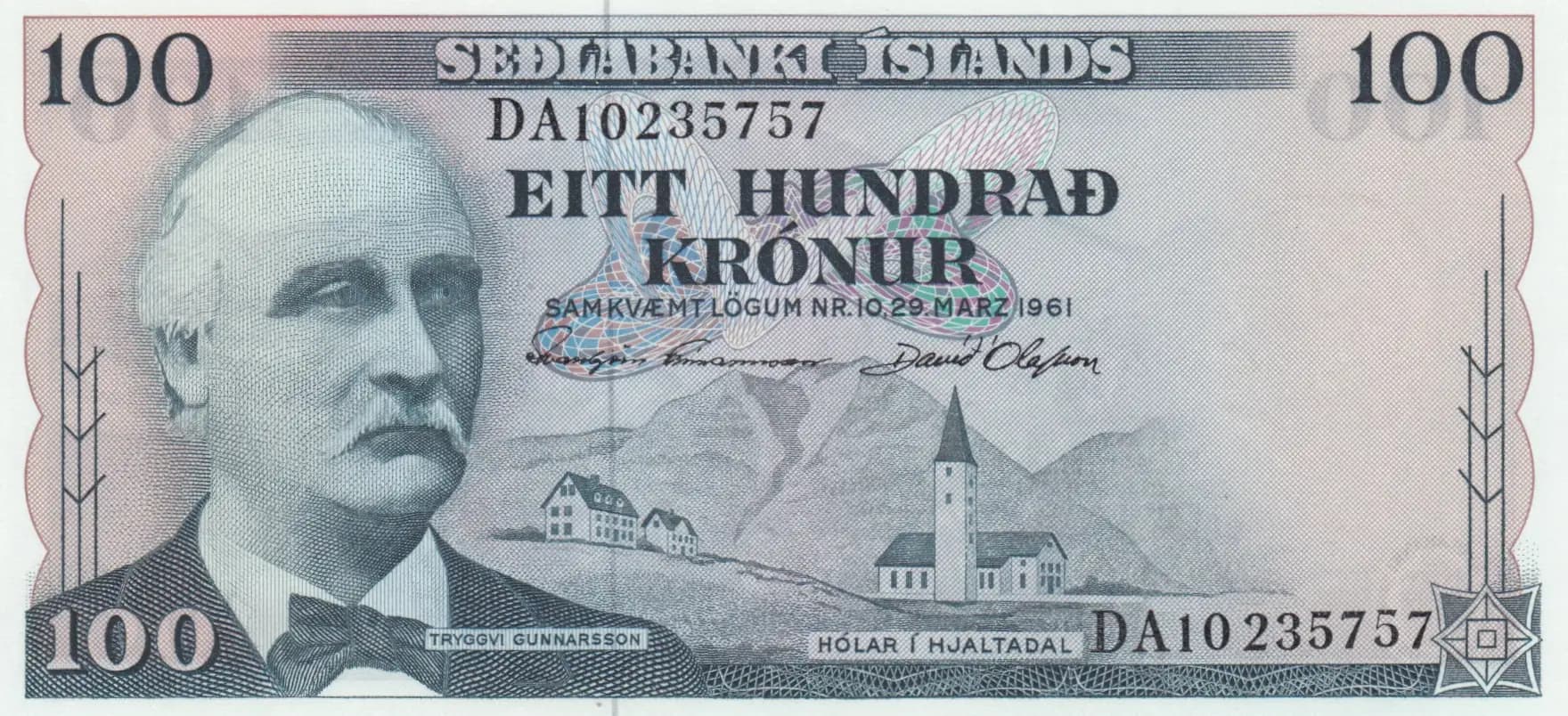
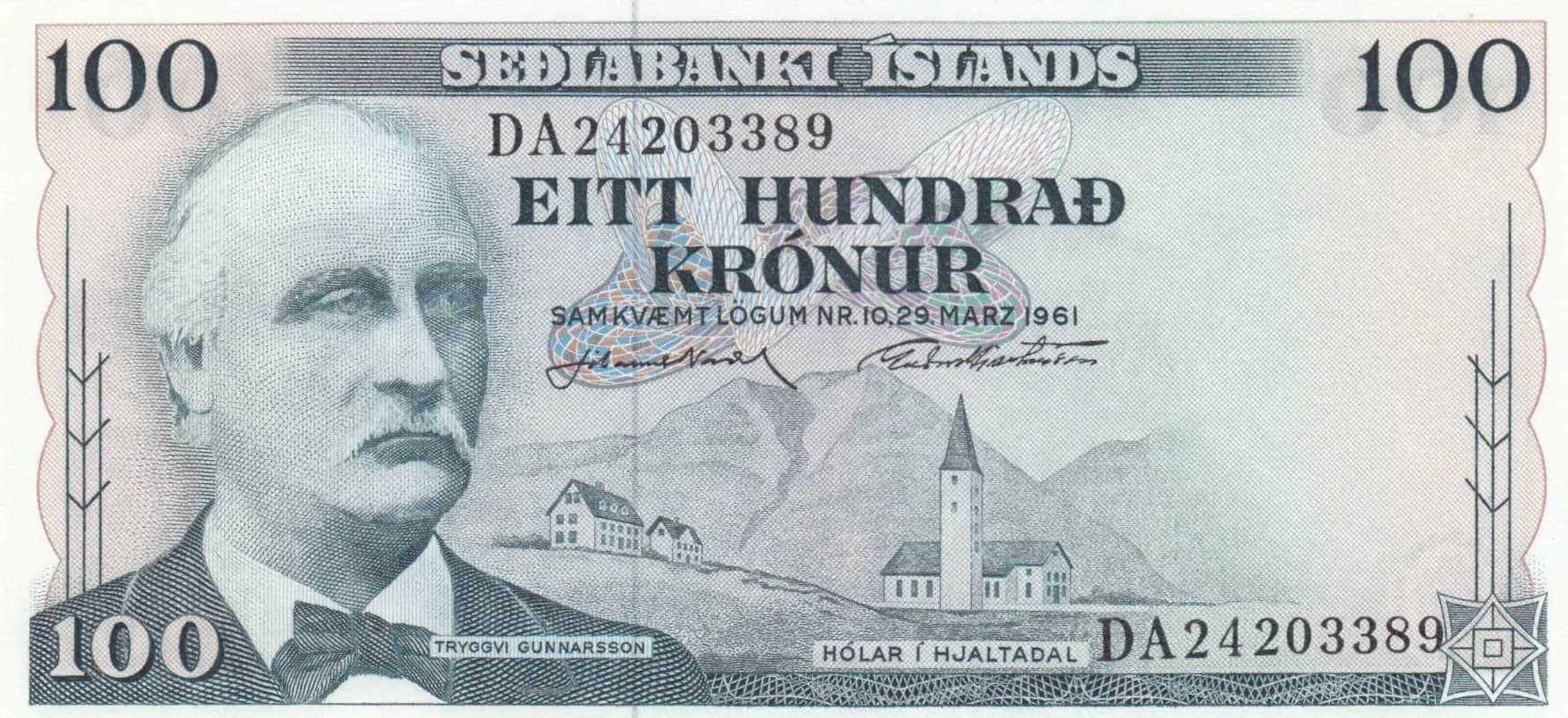
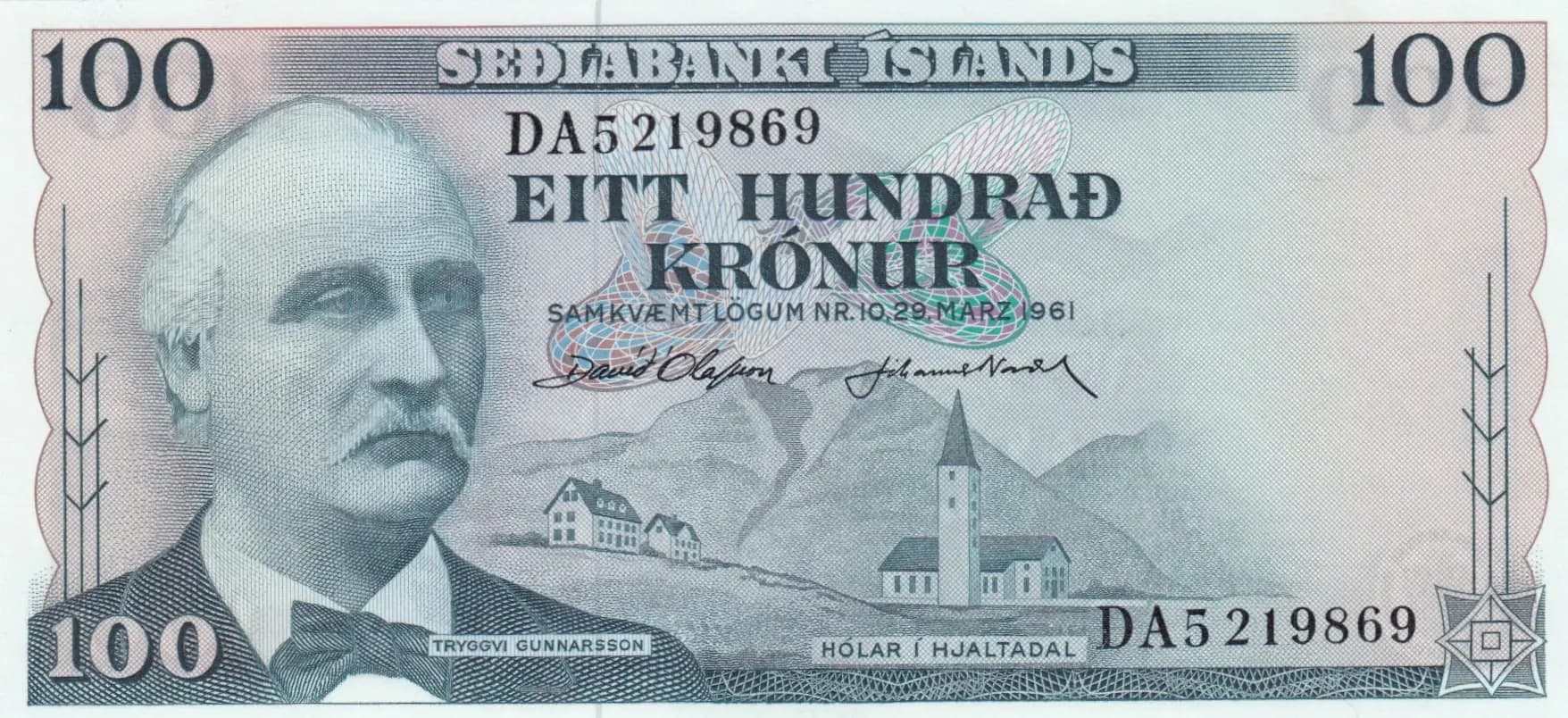
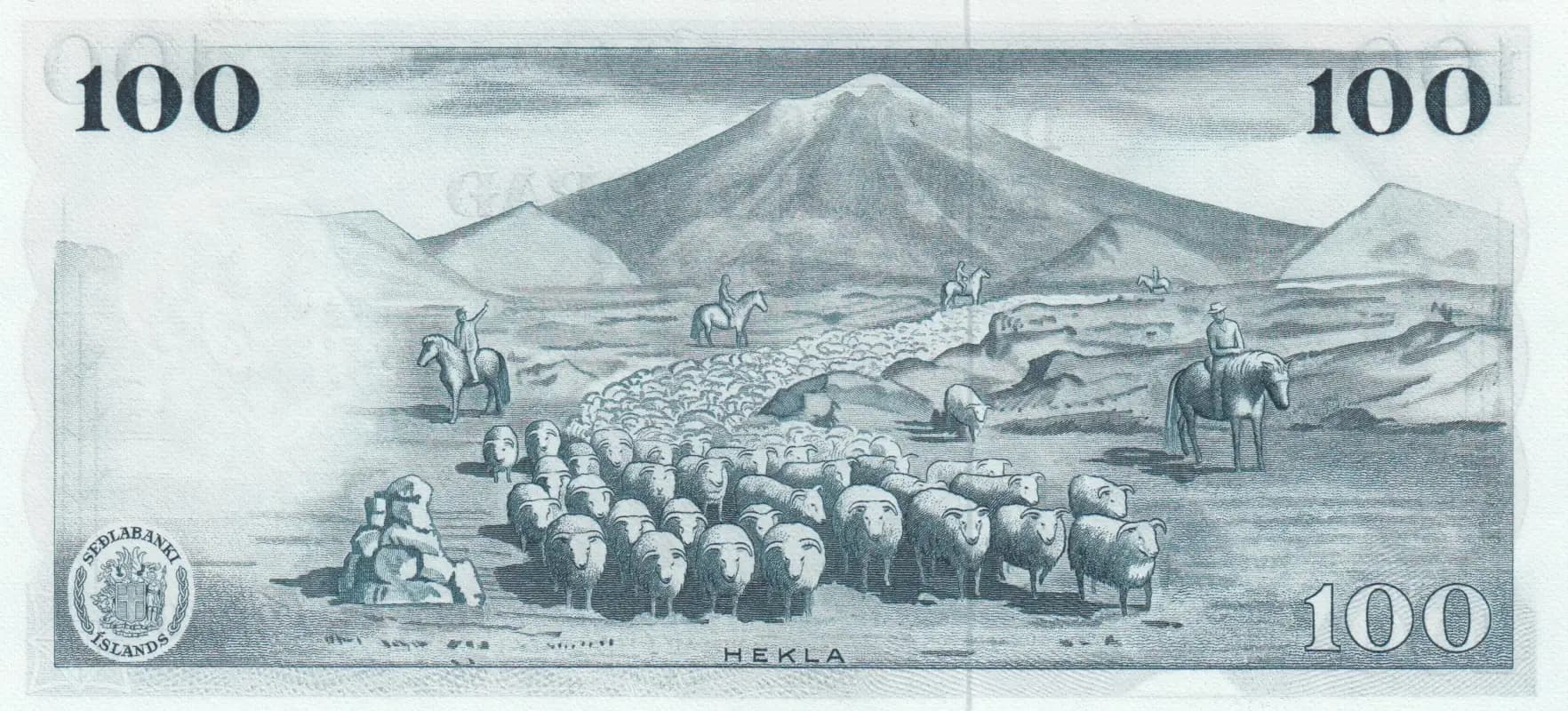
A handsome UNC example of Iceland's 100 kronur banknote from 1961, featuring excellent preservation with sharp, crisp engraving throughout. The obverse presents a distinguished portrait of Tryggvi Gunnarsson alongside a detailed engraving of Hólar church in Hjaltadal, while the reverse showcases a dramatic landscape of Mount Hekla with sheep herding activities—iconic imagery reflecting Iceland's pastoral heritage and volcanic geography. The pale pink and gray coloration with blue-green accents creates an elegant aesthetic typical of early 1960s Icelandic currency design.
Common. The 1961 100 kronur note from Pick-44(7) was part of a standard circulation series issued by the Central Bank of Iceland and saw regular production. No evidence suggests limited print runs, short-lived issuance, or widespread recall. UNC examples are readily available in the collector market at modest premiums over face value, typical of early 1960s Icelandic banknotes.
Issued on 29 March 1961 under Icelandic law no. 10, this banknote commemorates Tryggvi Gunnarsson, a significant figure in Icelandic history, while depicting two of Iceland's most culturally important landmarks: Hólar cathedral in the north and Mount Hekla, the nation's most famous volcano. The imagery—from pastoral sheep herding to ecclesiastical architecture—reflects Iceland's economy and cultural identity during the early independence era, following Iceland's full sovereignty establishment in 1944.
The obverse features Tryggvi Gunnarsson (1809-1889), an Icelandic educator and church leader, rendered in classical portrait style with characteristic beard and formal bow tie on the left side. The right half of the note displays an intricate engraving of Hólar Cathedral in Hjaltadal, a medieval ecclesiastical center in northern Iceland, depicted with its prominent steeple and surrounding stone buildings set against mountainous terrain. Decorative elements include geometric corner ornaments and vertical wheat stalk borders. The reverse presents a dramatic panoramic scene of Mount Hekla, Iceland's most prominent and historically active volcano, depicted with a snow-capped peak dominating the composition. Multiple figures on horseback manage large flocks of sheep across rolling Icelandic plains, illustrating the nation's traditional pastoral economy. An Icelandic coat of arms seal appears on the left margin. The palette of pale pink, gray, blue-green, and black creates sophisticated visual hierarchy.
FRONT: 'SEÐLABANKI ÍSLANDS' (Central Bank of Iceland); 'EITT HUNDRAD KRÓNUR' (One Hundred Kronur); 'SAMKVÆMTLOGUM NR.10.29.MARS 1961' (In accordance with law no. 10, 29 March 1961); 'TRYGGVI GUNNARSSON' (portrait identification); 'HÓLAR Í HJALTADAL' (Hólar in Hjaltadal); Serial number 'DA5219869'; Signatures of 'David Oddsson' and 'Hannes Óskarsson'. BACK: '100' (denomination); 'HEKLA' (volcano identification); 'ÍSLAND' (Iceland).
Intaglio engraving (copperplate/steel plate printing), characteristic of high-security banknote production of the 1960s era. The fine line engraving visible throughout both sides, intricate pattern work in backgrounds, detailed modeling of figures and landscape elements, and sharp registration indicate professional central bank printing standards. No overprints are evident. The printing was executed by Iceland's designated banknote printer for the Sedlabanki Íslands.
The specific variety is identified by the signature combination of David Oddsson (Governor) and Hannes Óskarsson, typical of 1961 issuance. The serial number prefix 'DA' indicates this note's position within the production sequence. Minor variations in serial number ranges may exist, but no major varieties (different colors, significant design changes, or overprints) are documented for Pick-44(7) of this date.