100 kronur 1961
About This Note
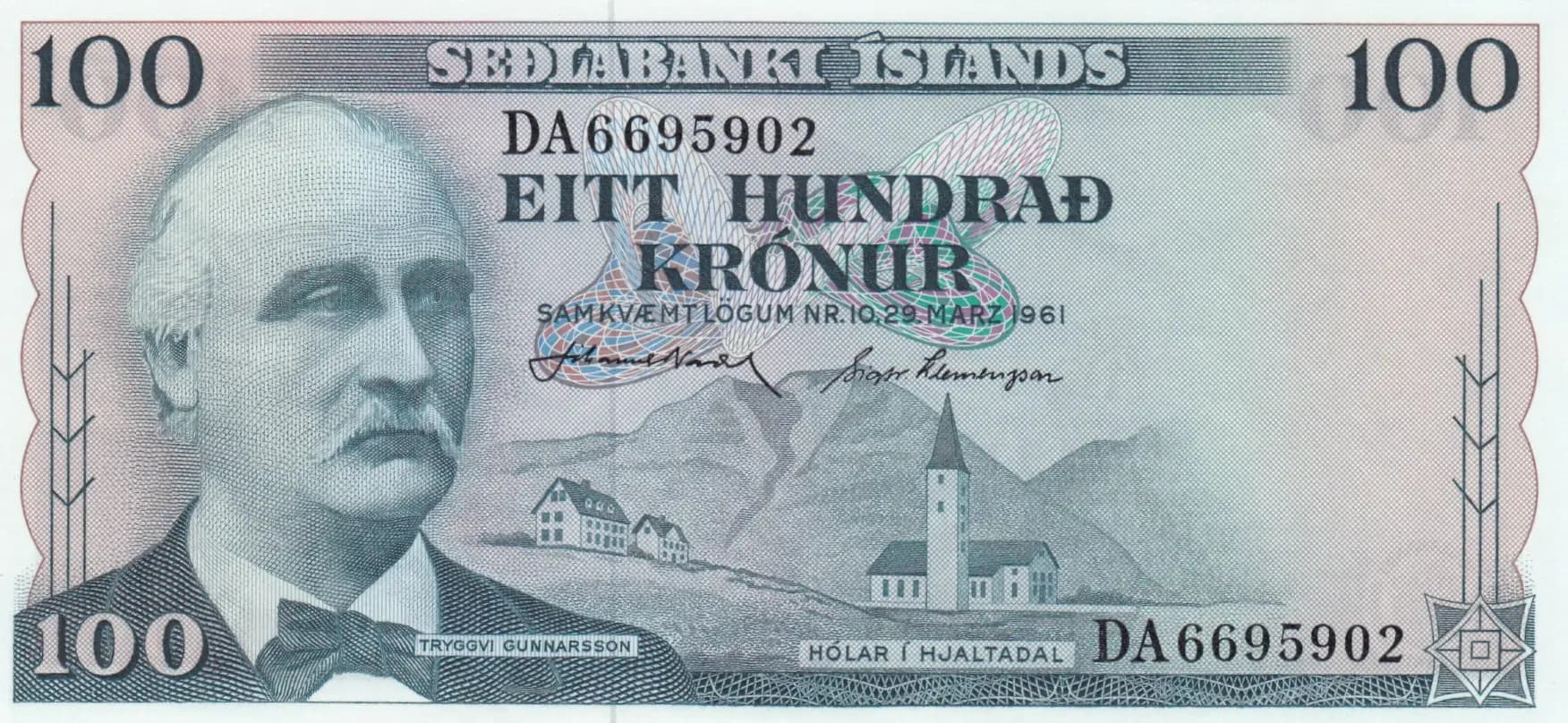
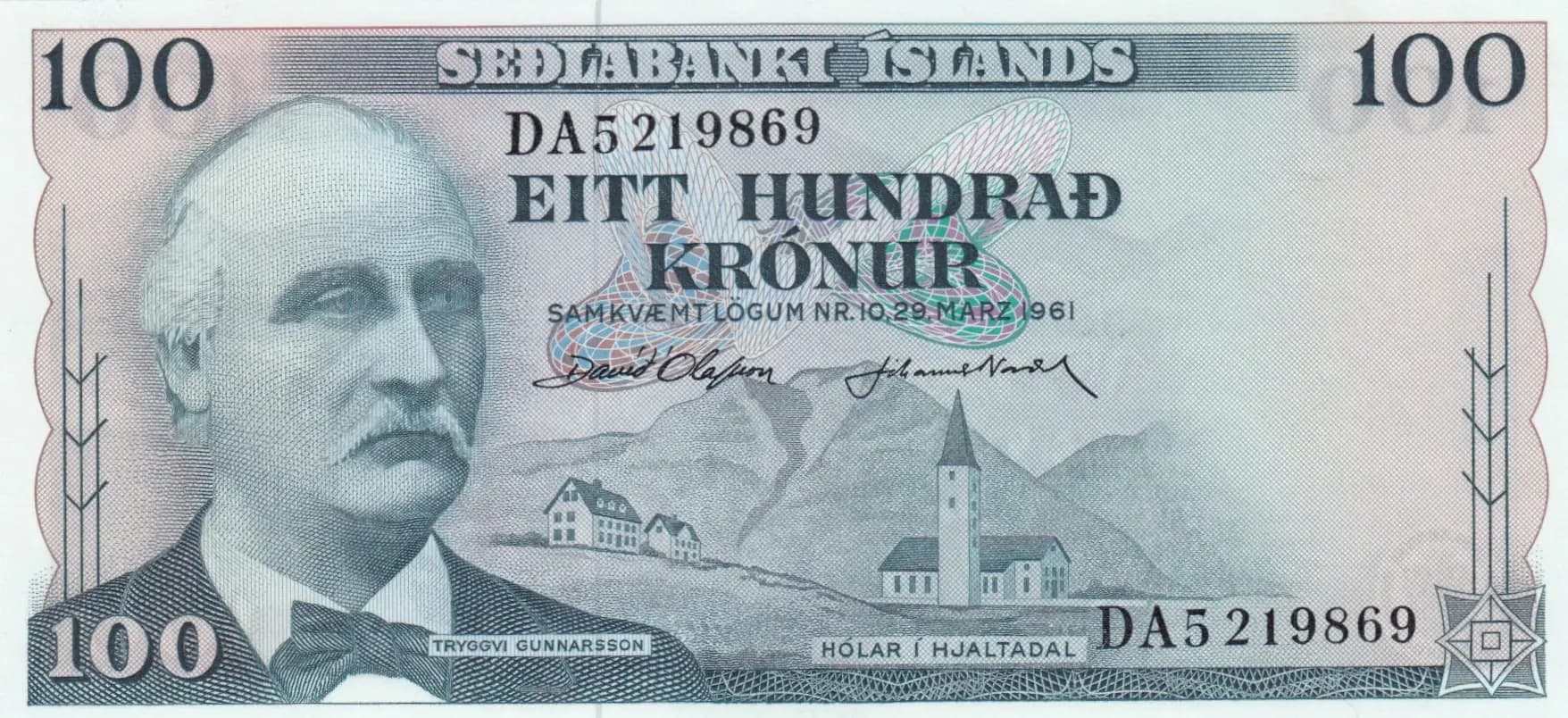
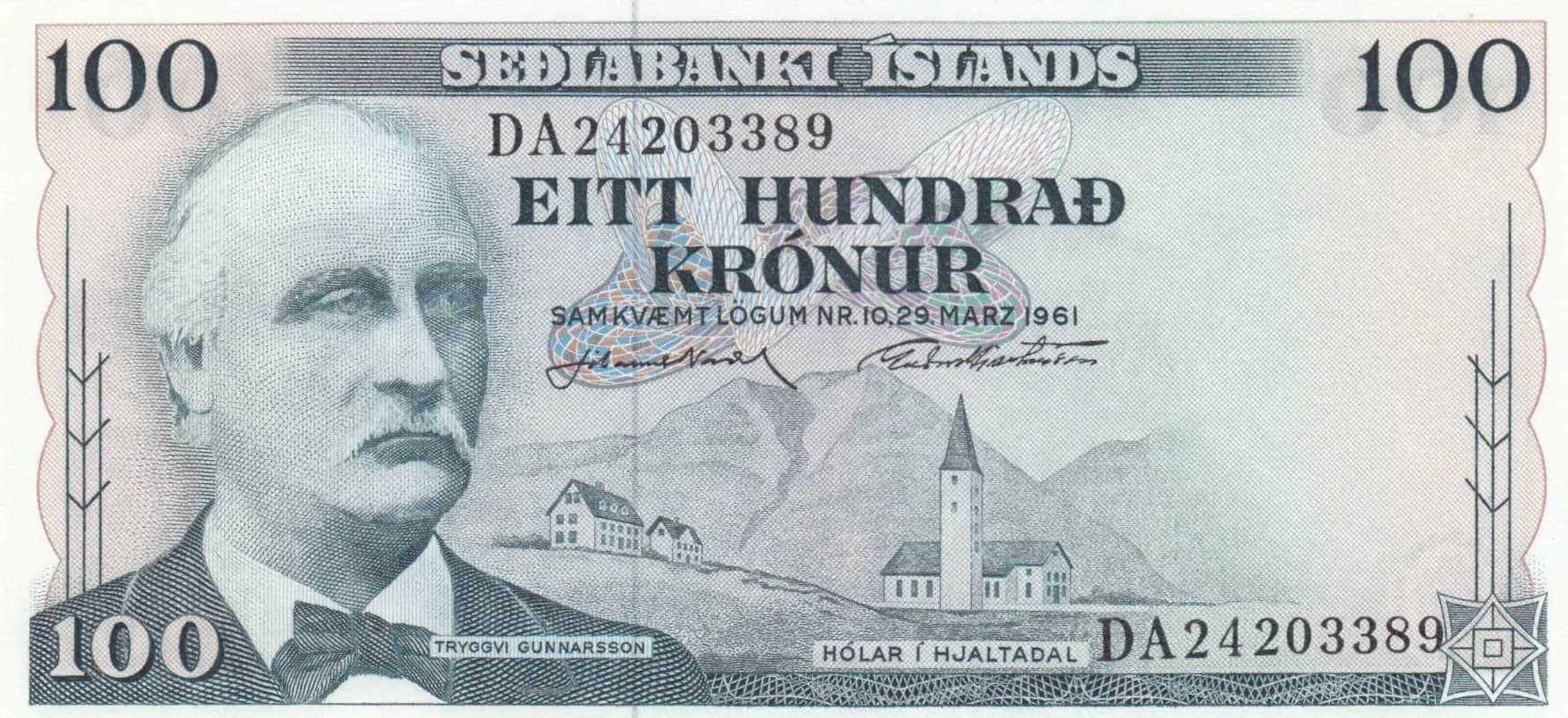
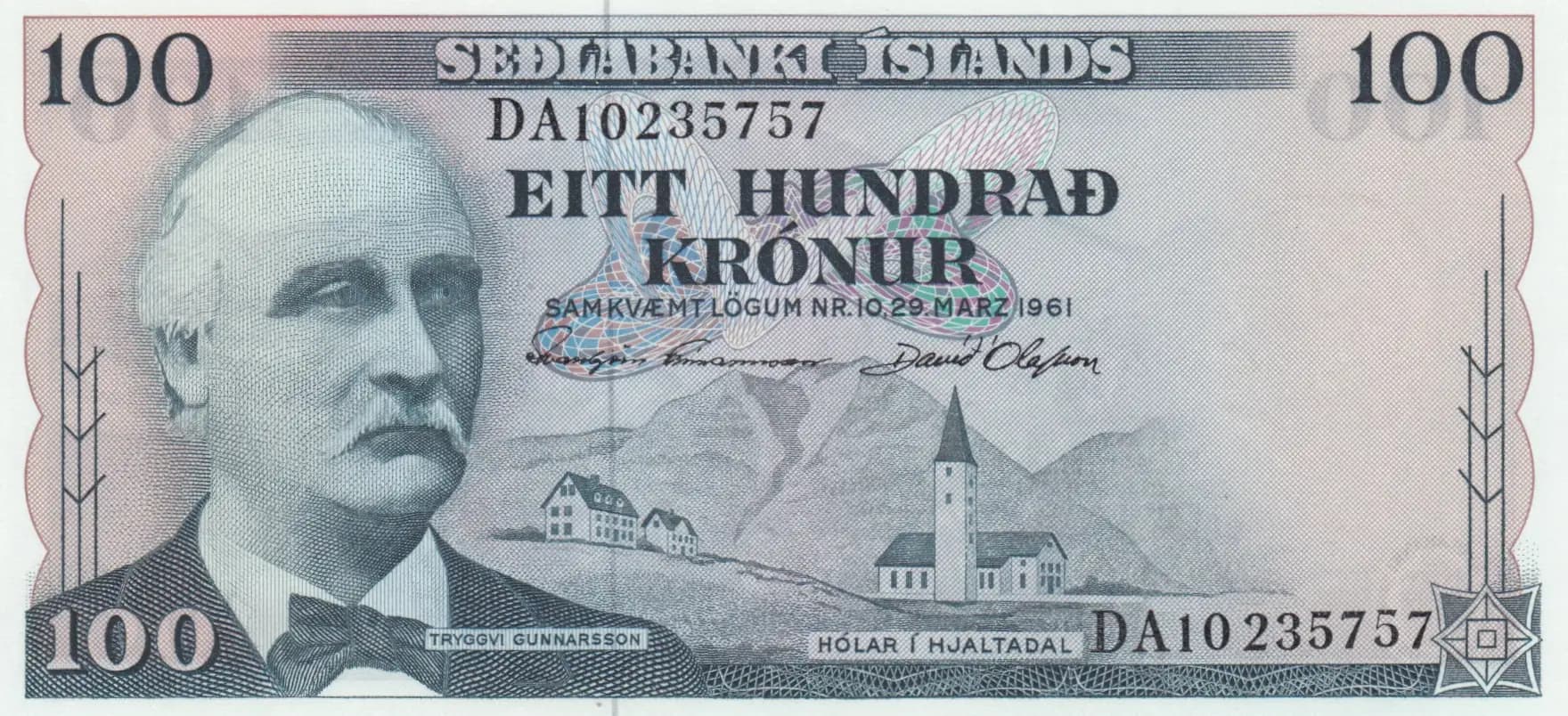
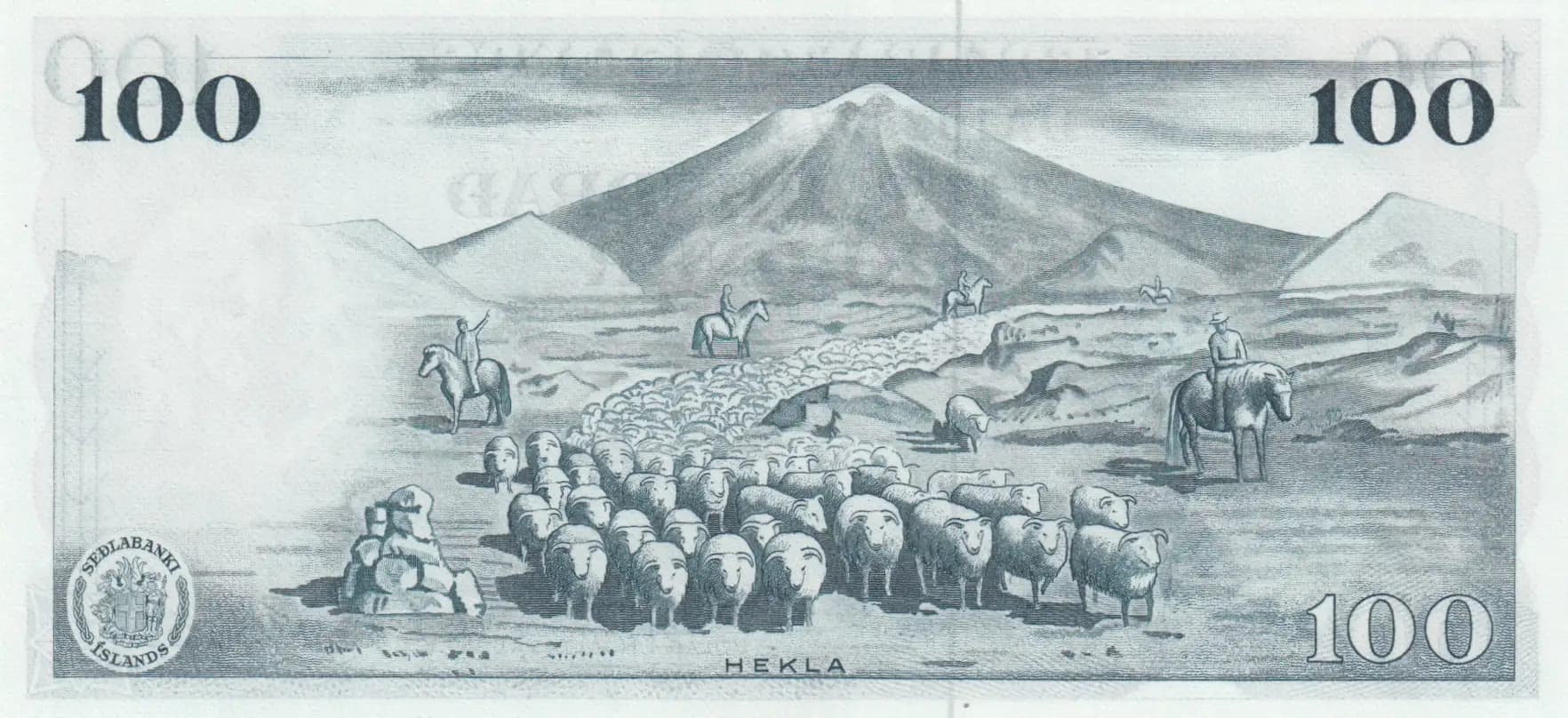
This is an uncirculated 1961 Iceland 100 kronur banknote (Pick-44(9)) issued by Sedlabanki Islands featuring exceptional engraving quality and historical imagery. The obverse presents a formal portrait of Tryggvi Gunnarsson alongside a detailed rendering of Hólar church in Hjaltadal Valley, while the reverse depicts a dramatic pastoral scene of sheep herding beneath Iceland's iconic Hekla volcano. The note exhibits pristine condition with no visible circulation wear, sharp color registration, and intact security features including a geometric security thread.
Common. The 1961 100 kronur denomination was part of a standard circulation series issued by Sedlabanki Islands. No historical evidence suggests limited print runs, recall status, or production anomalies for this Pick number. Uncirculated examples exist in reasonable supply across numismatic markets, and modern Icelandic banknotes of this era are not particularly scarce.
Issued on March 29, 1961, this banknote commemorates key elements of Icelandic cultural and economic heritage during the post-independence period. Tryggvi Gunnarsson, featured on the obverse, represents Iceland's intellectual or civic prominence, while the reverse's sheep herding scene before Hekla reflects the nation's pastoral economy and relationship with its dramatic volcanic landscape—Hekla being one of Iceland's most historically significant and active volcanoes.
The obverse features Tryggvi Gunnarsson, a bearded man in formal 19th/early 20th-century attire with bow tie, positioned on the left in three-quarter profile. The right side showcases Hólar Cathedral in Hjaltadal Valley with its distinctive steeple set against mountain peaks, rendered in fine detail characteristic of Icelandic ecclesiastical architecture. The denomination '100' appears in all four corners in substantial numerals. The reverse presents a sweeping landscape composition dominated by Hekla volcano's snow-capped peak in the background, with a large flock of sheep being herded by mounted riders across rocky Icelandic terrain in the foreground, emphasizing the nation's pastoral heritage. A geometric security thread runs vertically through the note's center.
FRONT SIDE: 'SEDLABANKI ISLANDS' (Central Bank of Iceland); 'EITT HUNRAÐ KRÓNUR' (One Hundred Kronur); 'SAMKVÆMT LOGUM NR.10, 29.MARZ, 1961' (According to Law No. 10, 29 March 1961); 'TRYGGVI GUNNARSSON' (name of portrait subject); 'HÓLAR Í HJALTADAL' (Hólar in Hjaltadal Valley). BACK SIDE: '100' (denomination in corners); 'HEKLA' (name of volcano depicted); 'SEDLABANKA ÍSLANDS' (Central Bank of Iceland seal inscription).
Intaglio (engraved) printing on banknote paper, characteristic of high-security currency production of the era. The note exhibits fine line engraving throughout with detailed landscape and portrait work, microprint patterns in background areas, and integrated security thread. Based on the period and Icelandic production standards, this was likely produced by the Sedlabanki Islands in cooperation with an established European security printer, though specific printer attribution for this Pick number would require archival confirmation.
This specimen carries serial number DA10235757. Varieties for Pick-44(9) may exist in signature combinations, watermark configurations, or security thread patterns, but would require comparison with multiple examples to establish definitively. The 1961 date is fixed per the legislative reference. No overprints or significant modifications are evident on this example.