20 filler 1920
About This Note
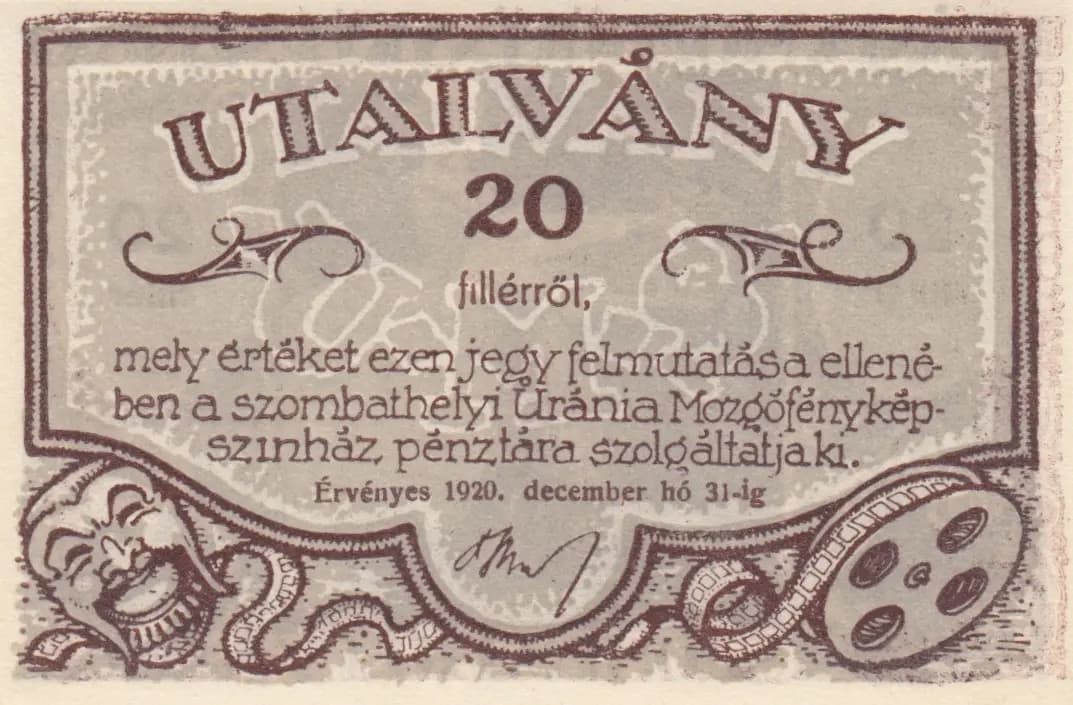
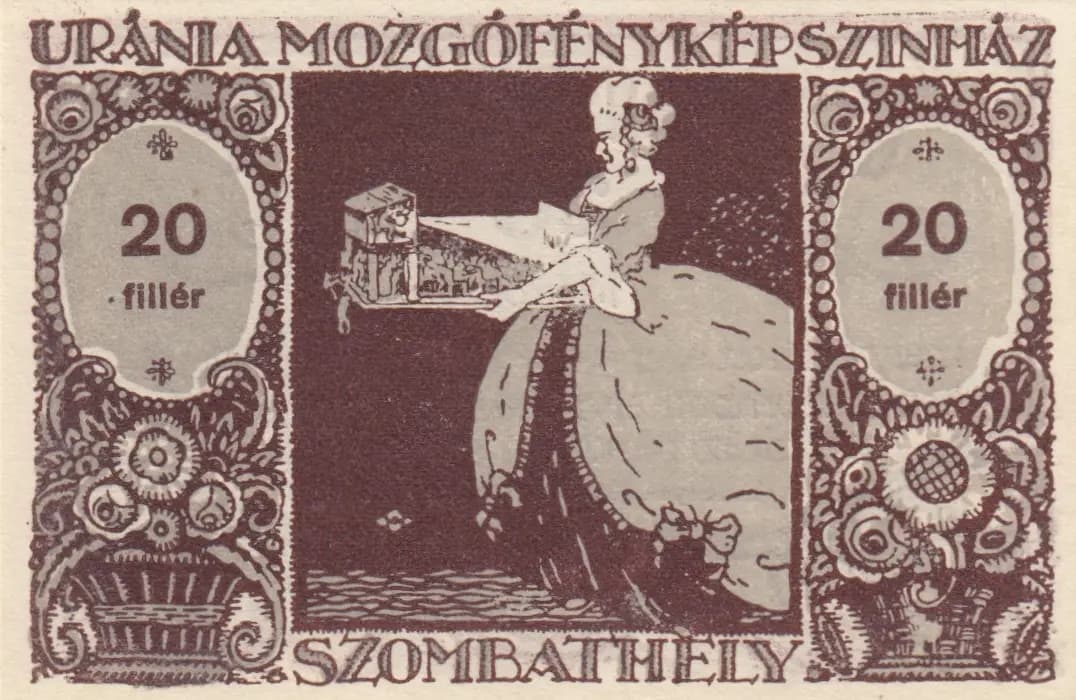
This 20 filler note from 1920 is a remarkable example of emergency currency issued by the Világitási és Vizmű R.T. (Lighting and Water Works Joint Stock Company) in Budapest during Hungary's post-WWI monetary crisis. The note features an elegant diamond-shaped central design with decorative red/pink accents on a beige/tan background, displayed in uncirculated condition with minimal wear. This unlisted Pick number represents a fascinating piece of Hungarian corporate scrip history, issued for a brief period in December 1920 as a means of payment for utility services during a time of severe currency shortage.
Uncommon. This note is unlisted in the Pick catalog, which itself indicates limited documentation and likely a restricted print run issued by a single utilities company for a specific two-week period in December 1920. Corporate scrip from Budapest utilities, particularly undocumented issues, typically saw limited circulation and survival rates. However, the UNC condition and lack of widespread collector demand suggests this was not heavily sought after historically. The unlisted status and corporate nature (rather than government issue) place it outside mainstream numismatic markets, making it scarce in the specialized field of Hungarian emergency currency but not exceptionally rare.
The December 1920 issuance of this corporate filler currency reflects Hungary's severe economic instability in the immediate aftermath of World War I and the Treaty of Trianon. The Világitási és Vizmű R.T., a major Budapest utilities company, issued these notes as supplementary currency to facilitate transactions when official crown notes were unavailable or unreliable. The specific December 1-28, 1920 validity period indicates a short-term emergency measure, as Budapest's infrastructure companies sought practical solutions to maintain operations during the nation's monetary collapse.
This note employs a distinctive diamond-shaped central motif that appears on both sides, framed by ornamental borders featuring red/pink decorative elements including corner symbols. The front displays decorative letter symbols ('V', 'P', 'T') in the corners with the company name and validity text in elegant serif typography. The reverse side features a more elaborate design with an orange/yellow central diamond containing a dark rectangular element (likely a security stamp or corporate seal), surrounded by a checkered or textured pattern in pink/red tones. The spelling of 'BUDAPEST' is presented letter-by-letter separated by diamond symbols along the bottom of the reverse. No portraits or landmarks are depicted; the design is purely ornamental and corporate in character, emphasizing the utility company's authority to issue the scrip.
FRONT SIDE: 'VILÁGITÁSI ÉS VIZMŰ R.T.' = 'Lighting and Water Works Joint Stock Company'; 'huszaz 20 fillérről melyekk ellenértékét jöpénzkirunk szolgálkajia ki 1920 év december hó 1.—28.' = 'Twenty 20 fillers for which we provide equivalent value, Lighting and Water Works service from December 1-28, 1920'; 'BUDAPEST' = 'Budapest'. BACK SIDE: 'VILÁGITÁSI ÉS VIZMŰ R.T.' = 'Lighting and Water Works Joint Stock Company'; '20' = '20'; 'HUSZ' = 'Twenty'; 'FILLÉR' = 'Filler' (Hungarian currency subdivision); 'BUDAPEST' = 'Budapest'.
The note appears to have been produced using typographic or letterpress printing methods combined with chromolithography, evidenced by the clean line work of the text, the precise geometric diamond shapes, and the multi-color registration visible in the beige, red/pink, orange, and black inks. The decorative serif fonts and ornamental borders are characteristic of early 20th-century Central European printing techniques. The specific printer is not definitively known from the catalog data, though the quality and style suggest a competent Budapest-based printing house capable of commercial security printing.
This specific issue is unlisted in Pick, indicating it may represent an undocumented or poorly cataloged variety of Hungarian filler currency. No signature varieties, date variations, or serial number prefixes are apparent from the visual analysis. The December 1-28, 1920 validity window appears to be the sole variety marker for this emission. Further research into Világitási és Vizmű R.T. records and Hungarian monetary archives may reveal additional denominations or variant printings from this issuer during the same crisis period.