5000 drachmai 1942
Market Prices
37 salesAbout This Note
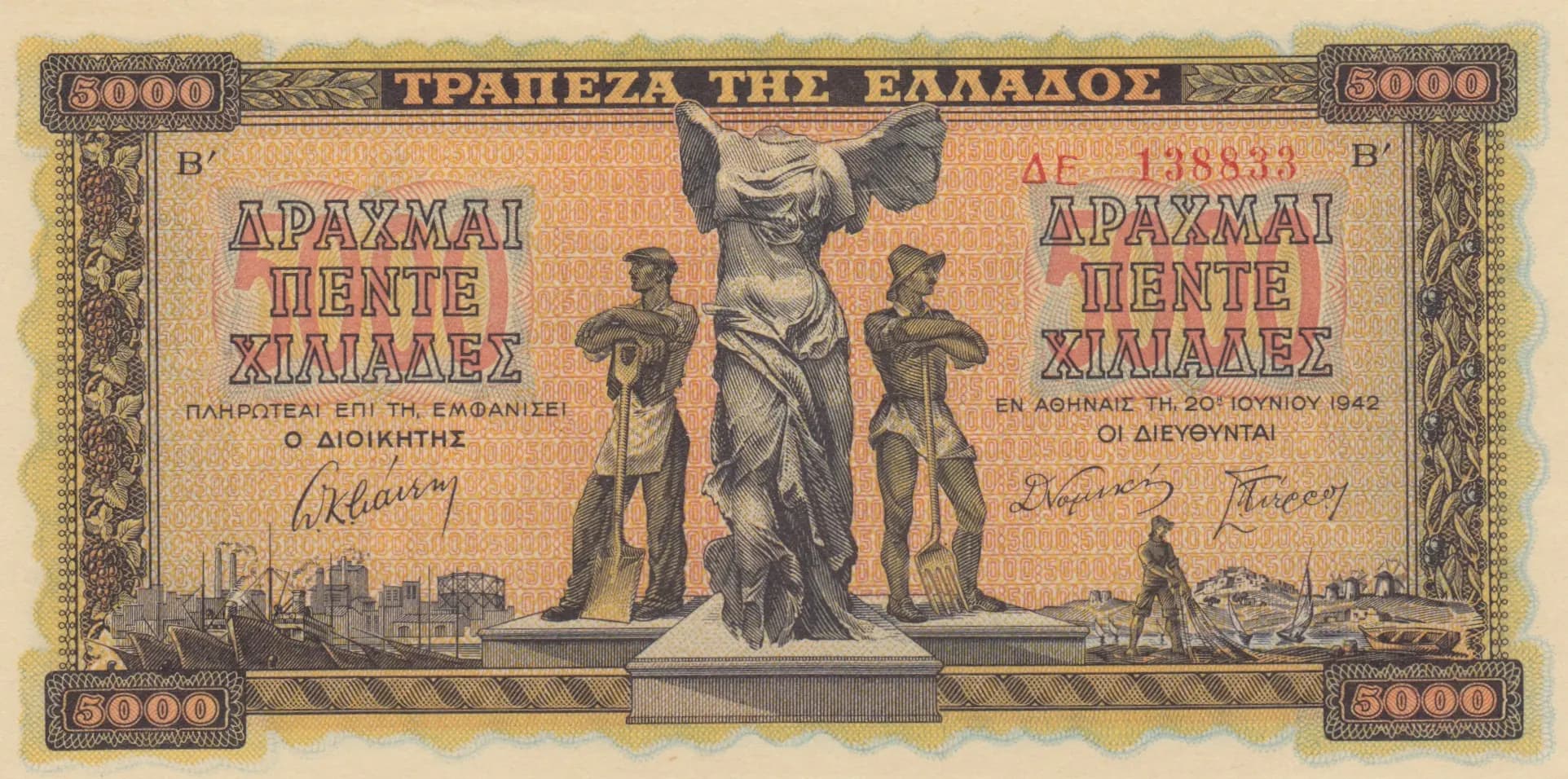
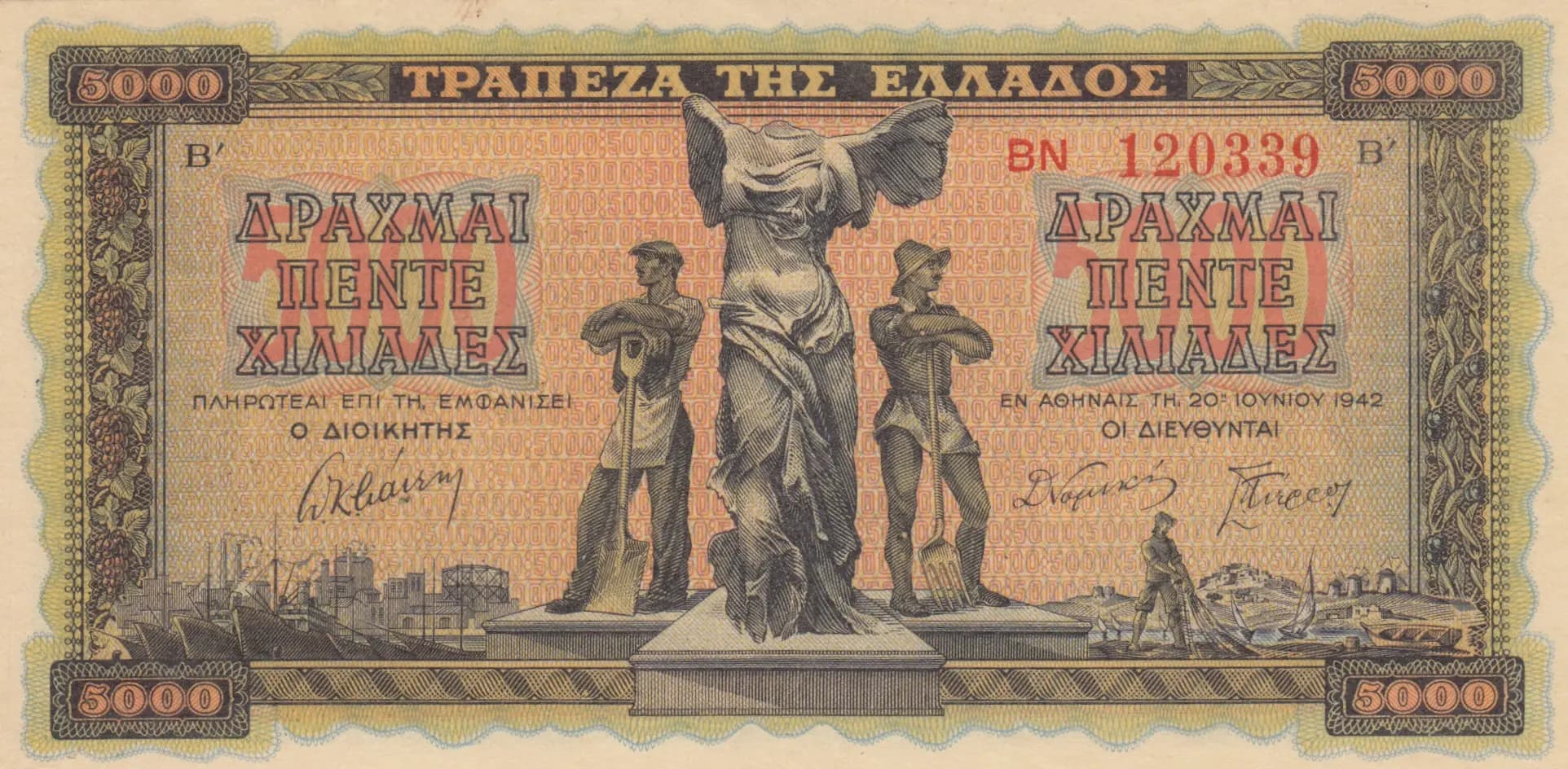
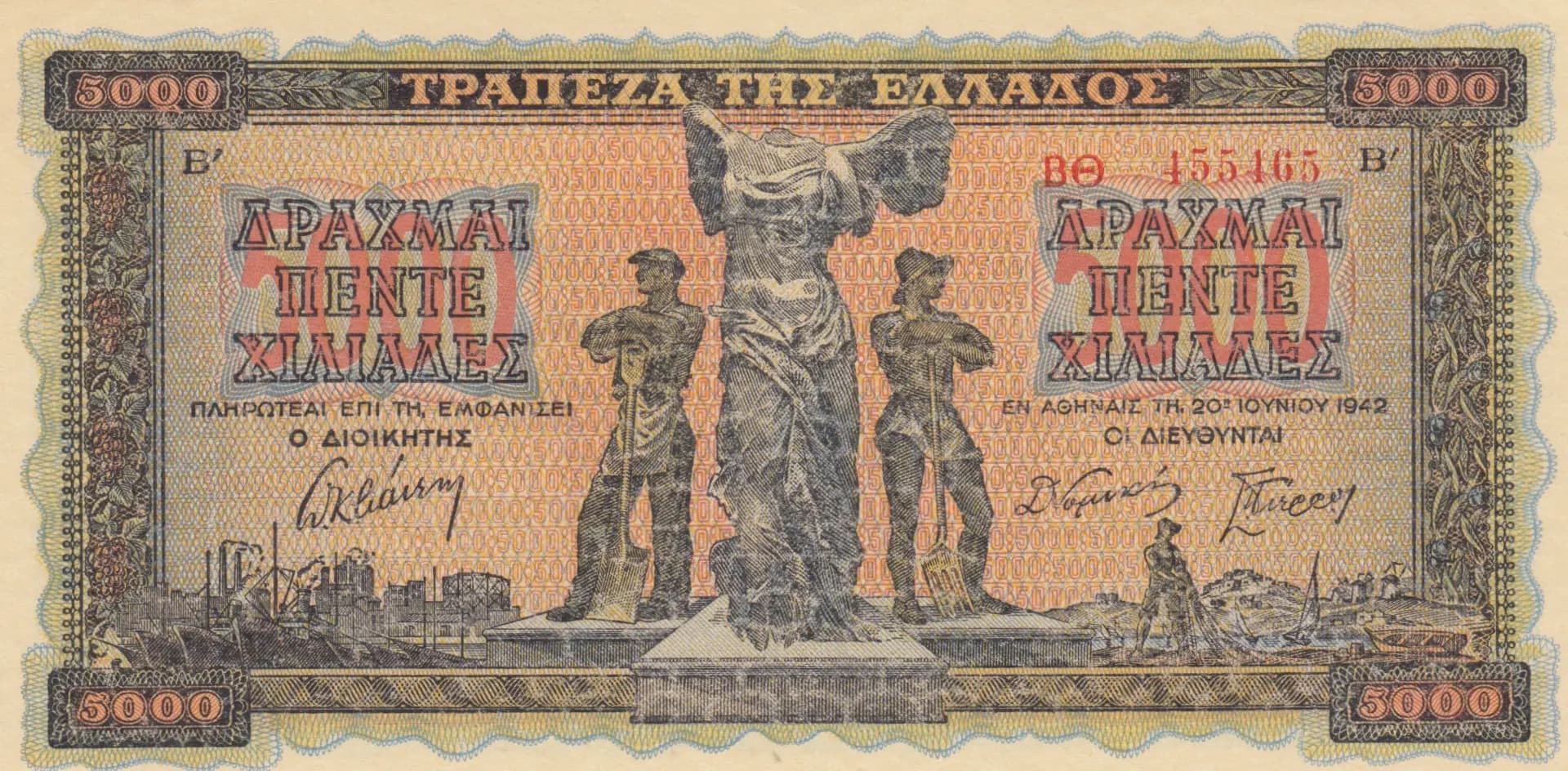
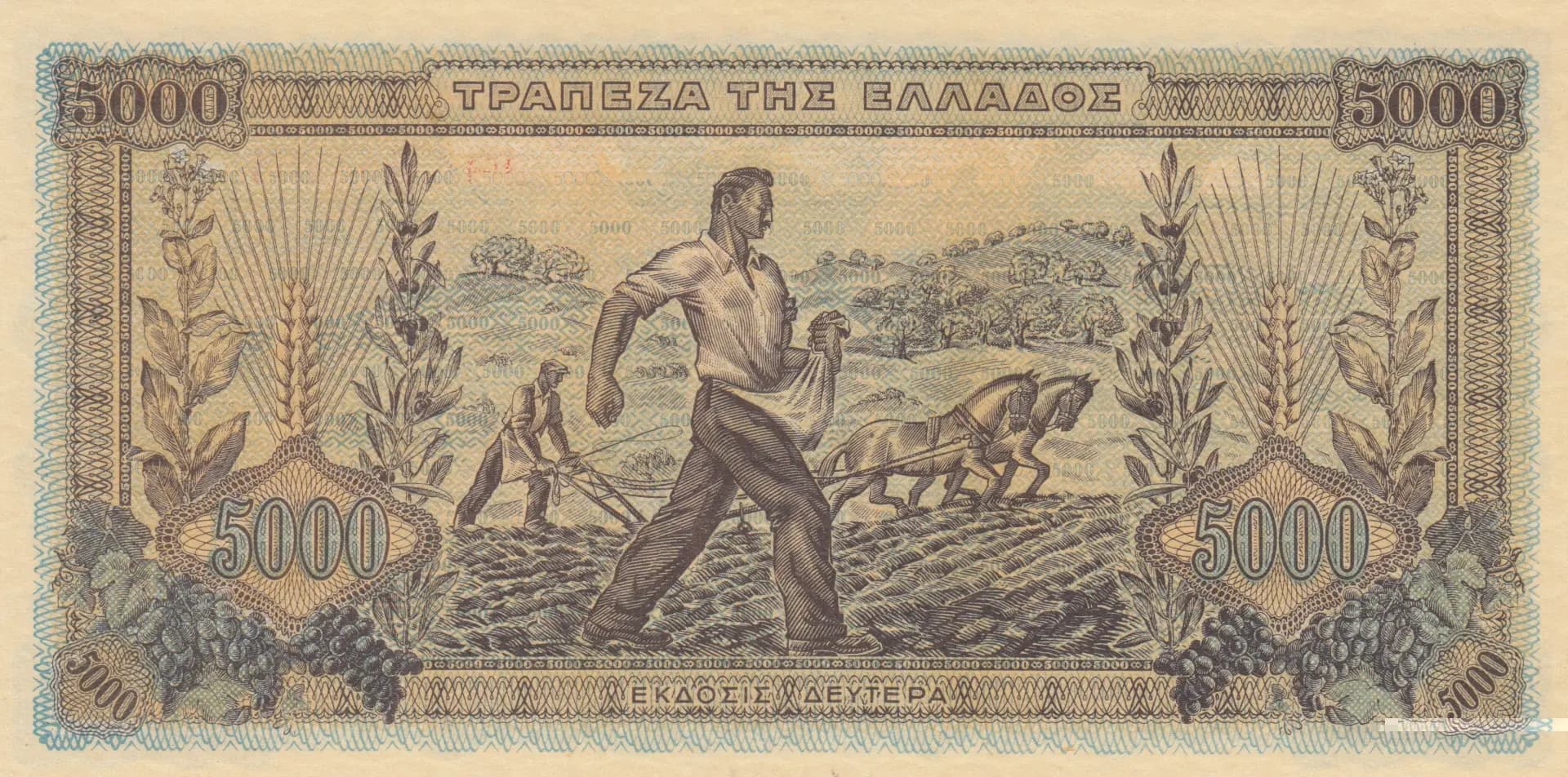
This Greek 5000 drachmai banknote from 1942 (Pick P-119b) presents a visually striking example of wartime Greek currency featuring classical allegorical imagery on both sides. The front displays Nike of Samothrace as the central figure flanked by male workers, with industrial and maritime scenes in the vignettes, while the reverse depicts agricultural labor with a classical male figure plowing with horses amid grain stalks. The note shows moderate to heavy circulation wear with visible creases, foxing, and faded printing consistent with its AU grade and nearly 80-year age, making it a historically significant artifact from Greece's World War II occupation period.
Common. The eBay price tracking data demonstrates consistent market activity with numerous sales across multiple grades (PMG 35 through PMG 66, plus ungraded EF and VF examples) spanning from 2012 to 2023. Even higher-graded examples (PMG 65-66) typically sell in the $30-$142 range, with most sales clustering below $60, indicating substantial surviving specimens in various grades. The 2016 catalogue valuation of $9 UNC further confirms this is a regularly encountered note among collectors. The print run was substantial, and no evidence of rarity, recall, or limited survival supports any scarcer classification.
Issued on June 20, 1942, during the Nazi occupation of Greece, this banknote reflects the Bank of Greece's continued operation under duress and the regime's emphasis on classical Hellenic symbolism to maintain national identity. The dual imagery of industrial progress (factories and ships) and agricultural prosperity (plowing and grain cultivation) represented the occupied nation's economic aspirations despite wartime constraints. The classical allegorical figures—Nike representing victory and the male laborer representing productive capacity—served propagandistic functions typical of wartime currency design across occupied Europe.
The obverse features Nike of Samothrace—the ancient Greek goddess of victory rendered in classical style with raised arm—positioned centrally between two male figures representing industrial workers and the laboring classes. The composition includes vignettes depicting industrial progress (factories and ships at lower left) and maritime commerce (fishing and shoreline scenes at lower right), reflecting the occupied economy's desired production and trade capacity. The reverse presents an allegorical figure of agricultural labor in classical dress, shown plowing fields with a team of horses while wheat stalks frame both sides of the composition, emphasizing Greece's agrarian foundation and the promise of harvest and prosperity. Both sides employ dense decorative borders with intricate vine-leaf patterns, geometric scrollwork, and ornamental designs characteristic of 1940s Bank of Greece productions.
Front Side: 'ΤΡΑΠΕΖΑ ΤΗΣ ΕΛΛΑΔΟΣ' (Bank of Greece); 'ΔΡΑΧΜΑΙ' (Drachmai); 'ΠΕΝΤΕ ΧΙΛΙΑΔΕΣ' (Five Thousand); '5000' (denomination in numerals); 'ΠΑΡΩΤΕΑΙ ΕΠΙ ΤΗ ΕΜΦΑΝΙΣΕΙ Ο ΔΙΟΙΚΗΤΗΣ' (Payable on presentation by the Director); 'ΕΝ ΑΘΗΝΑΙΣ ΤΗ 20ºΙΟΥΝΙΟΥ 1942' (In Athens, June 20, 1942); 'ΟΙ ΔΙΕΥΘΥΝΤAI' (The Directors); 'Β'' (Series B marking). Back Side: 'ΤΡΑΠΕΖΑ ΤΗΣ ΕΛΛΑΔΟΣ' (Bank of Greece); '5000' (denomination in all four corners); Agricultural/labor text fragment visible at base.
Intaglio engraving, the standard security printing method employed by the Bank of Greece for currency production. The fine line work visible in the microprint patterns, ornamental borders, and detailed agricultural vignettes, combined with the complex geometric patterns and intricate security features throughout, are characteristic of high-quality intaglio production. The visual analysis confirms the presence of fine linework in wheat stalks, facial details, and background textures typical of engraved currency plates of this era.
This specimen exhibits series marking 'Β'' (Series B) visible in the upper right area. The Pick P-119b designation itself indicates this is the second known variety of the 1942 5000 drachmai issue. The note was issued on 20 June 1942 from Athens (ΕΝ ΑΘΗΝΑΙΣ). Standard varieties for this type typically include different series letter markings (A, B, C, etc.) and potentially different signature combinations among the Directors signing the note, though all examples derive from the single 1942 issue date. No overprints are evident on this specimen.