5000 drachmai 1942
About This Note
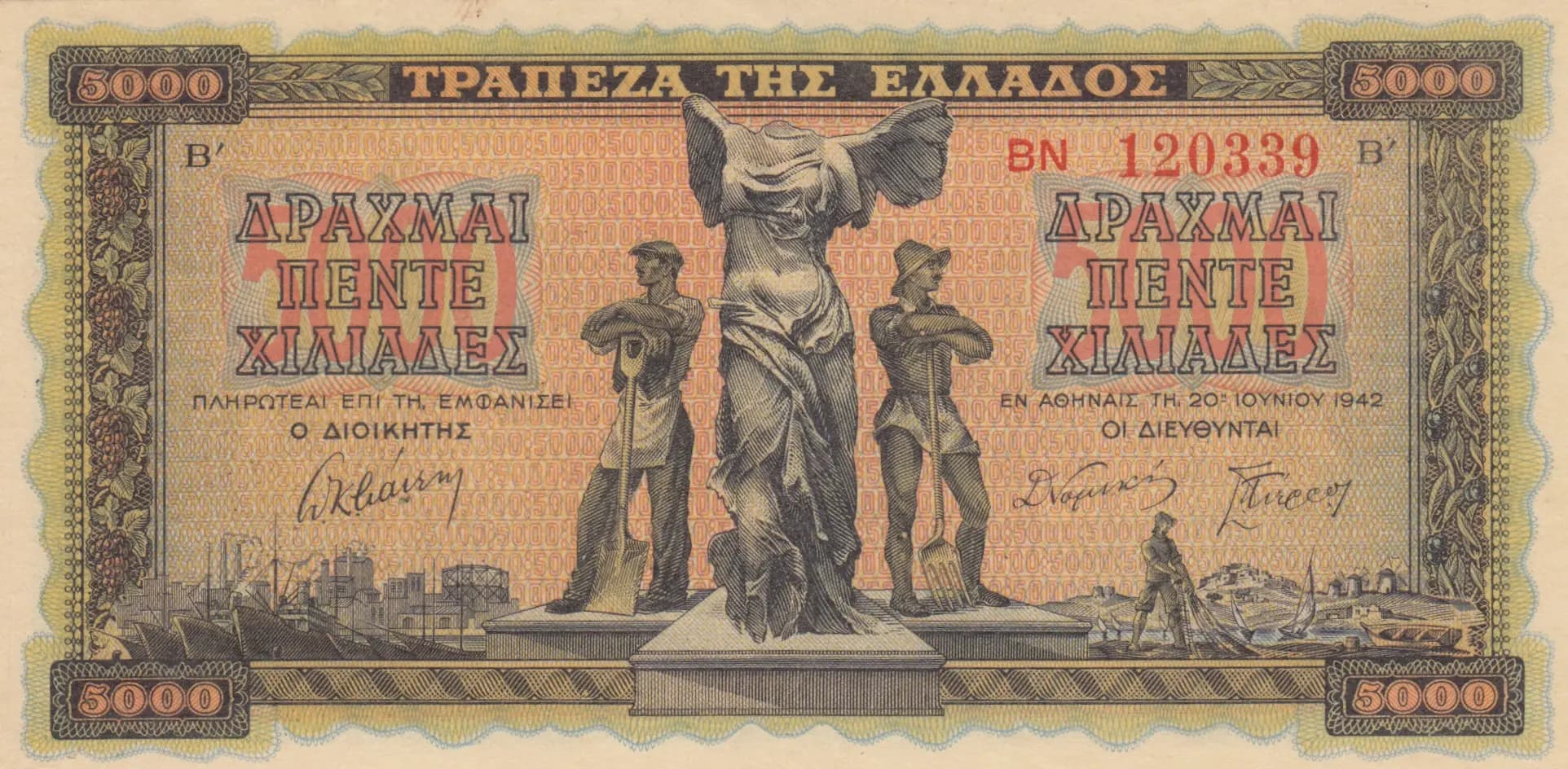
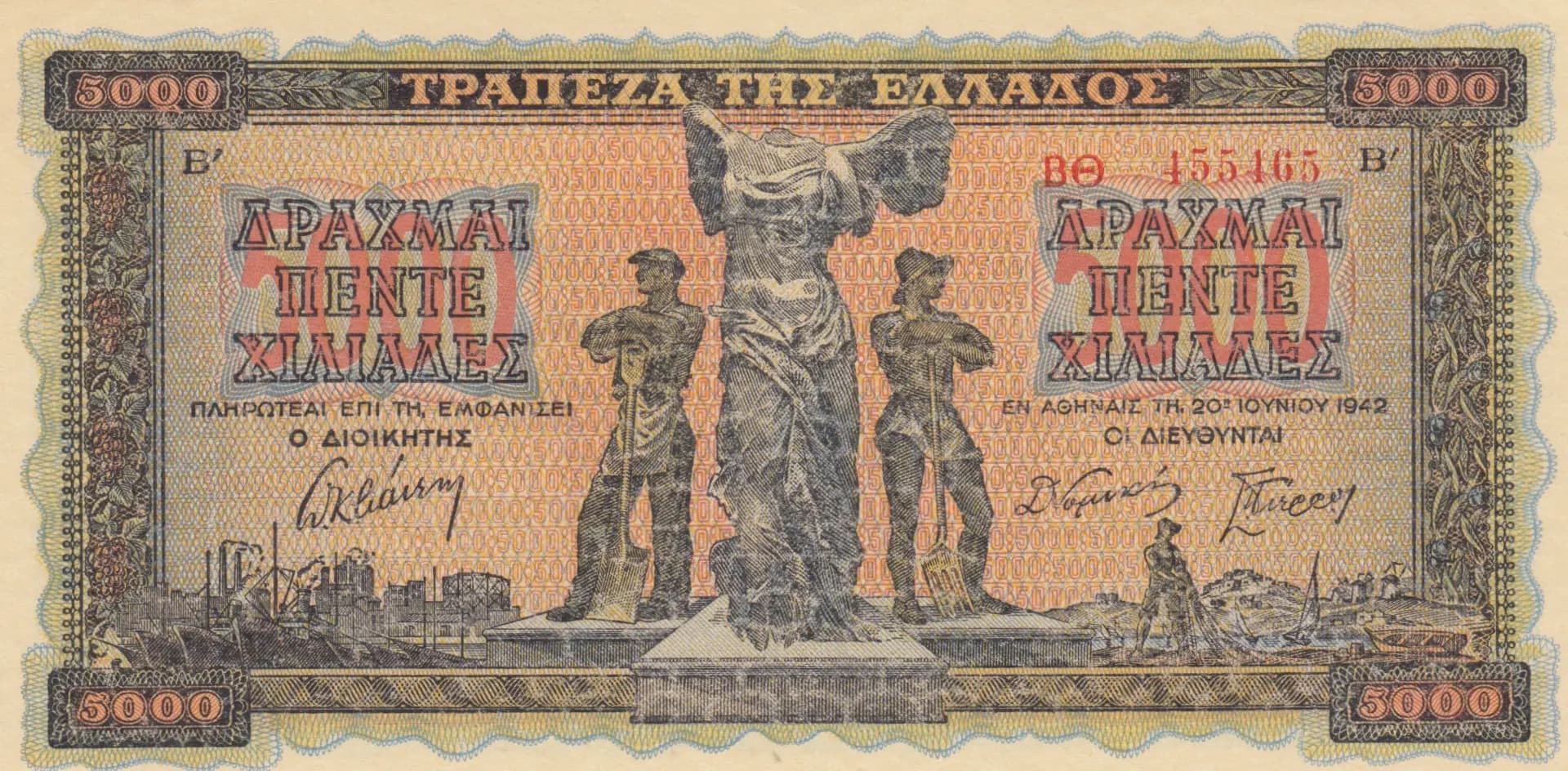
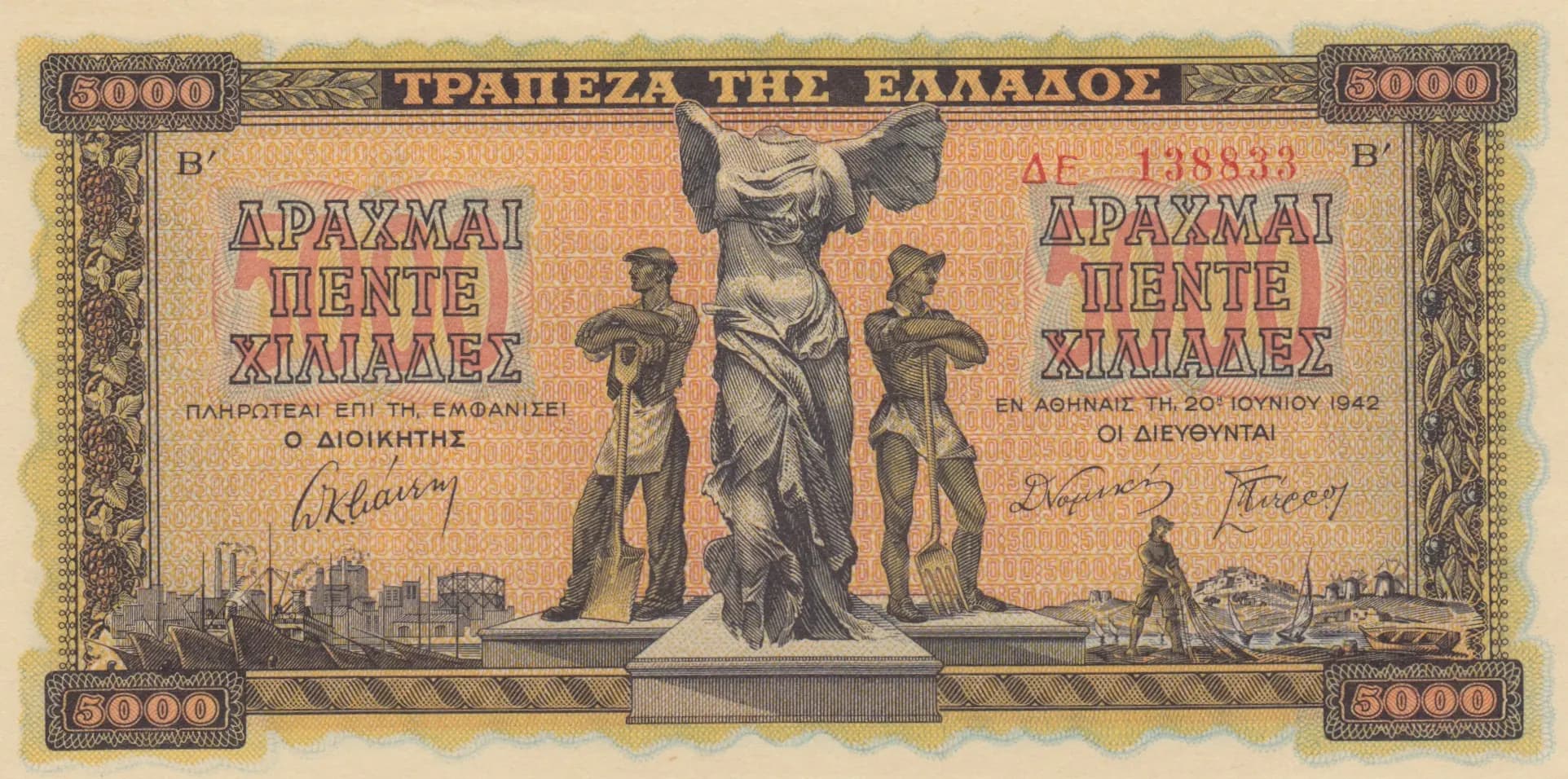
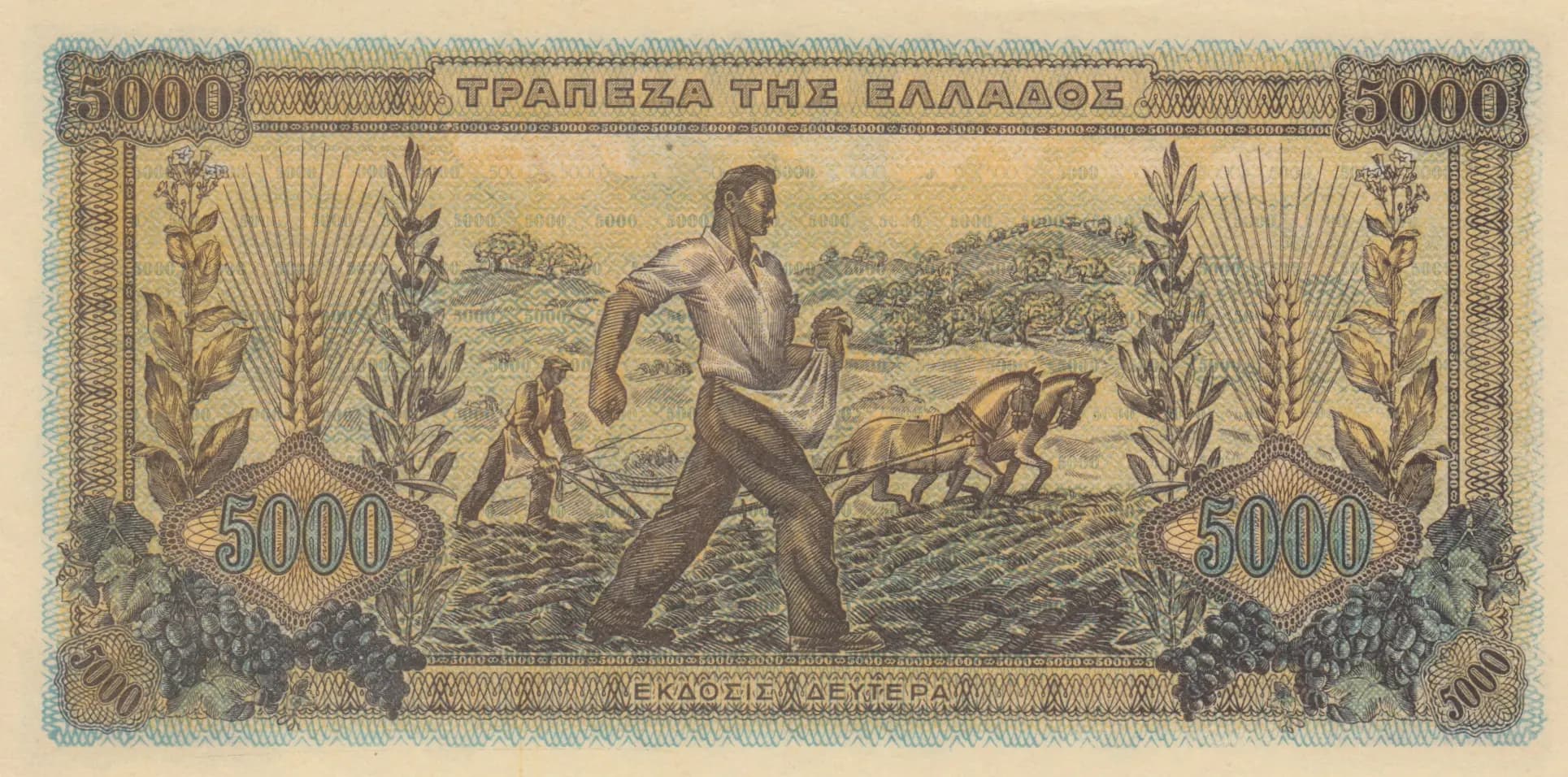
This is an exceptionally well-preserved example of the Greek 5000 Drachmai note from June 20, 1942, graded UNC. The note features an allegorical composition on the obverse depicting Nike (Victory) flanked by classical male figures representing labor and industry, with architectural ruins in the background, while the reverse presents a pastoral agricultural scene with plowmen and horses amid cultivated fields. The fine engraving, vibrant color palette of tans, oranges, and browns, and complete absence of wear or handling marks make this an outstanding specimen of wartime Greek currency from the Bank of Greece's Second Issue.
Common. This note represents a standard issue from the Bank of Greece's wartime Second Drachmai Issue of 1942, with substantial print runs to support Greece's occupation-period currency needs. The UNC grade, while desirable to collectors, does not confer rarity given the stable preservation conditions many notes from this era experienced. No historical evidence of recall, destruction of significant portions of the print run, or short-lived issue period exists. The note is readily obtainable on the numismatic market at moderate collector prices.
Issued during the German occupation of Greece in World War II, this note reflects the economic conditions and symbolic imagery of the period. The allegorical figures of Victory and Labor on the obverse, combined with the agricultural labor depicted on the reverse, represent idealized national productivity and resilience during occupation. The June 1942 date places this note during the mid-war period when inflation and economic hardship were severe in Greece, yet the Bank of Greece continued to assert monetary authority and national identity through classical iconography.
The obverse features an allegorical composition centered on Nike (Winged Victory), the classical Greek goddess of victory, rendered with prominent wings and classical drapery. She is flanked by two muscular male figures in classical Greek dress: the left figure appears to represent industrial or manual labor (possibly holding tools or implements), while the right figure embodies agricultural or pastoral work. Architectural ruins visible in the lower left background symbolize Classical Greek heritage. The composition is framed by elaborate Greek key patterns and ornamental borders with denomination numerals in all four corners. The reverse depicts a more naturalistic agricultural labor scene: a commanding male figure in classical dress directs or oversees plowmen working with a horse-drawn plow in cultivated fields. Decorative wheat or grain stalks flank both sides with sunburst patterns behind them, emphasizing agricultural productivity. Rolling hills and tilled fields fill the background landscape. Both sides employ fine line engraving with repetitive background patterns typical of 1940s security printing practices.
FRONT: 'ΤΡΑΠΕΖΑ ΤΗΣ ΕΛΛΑΔΟΣ' (Bank of Greece) / 'ΔΡΑΧΜΑΙ' (Drachmai) / 'ΠΕΝΤΕ ΧΙΛΙΑΔΕΣ' (Five Thousand) / '5000' (denomination in numerals) / 'ΠΛΗΡΟΤΕΑΙ ΕΠΙ ΤΗ ΕΜΦΑΝΙΣΕΙ' (Payable on presentation) / 'ΕΝ ΑΘΗΝΑΙΣ ΤΗ 20ᵒ ΙΟΥΝΙΟΥ 1942' (In Athens on the 20th of June 1942) / 'Ο ΔΙΟΙΚΗΤΗΣ' (The Governor) / 'ΟΙ ΔΙΕΥΘΥΝΤΑΙ' (The Directors) / Series marking 'B'' / Serial number 'ΔΕ 138839'. BACK: 'ΤΡΑΠΕΖΑ ΤΗΣ ΕΛΛΑΔΟΣ' (Bank of Greece) / '5000' (denomination) / 'ΕΚΔΟΣΙΣ ΔΕΥΤΕΡΑ' (Second Issue).
Intaglio engraving (fine line engraving) on all design elements, executed by the Bank of Greece's security printer. The note exhibits characteristics consistent with classic 1940s banknote production: intricate line work, repetitive microprint-like numerical patterns in background fields for security, multi-color registration with precise alignment of tan, orange, brown, yellow-green, and black inks. The complexity of the allegorical and agricultural scenes, combined with the ornamental borders and security features, indicates production by a European security printer experienced in high-security currency work, likely under Bank of Greece direct supervision during wartime.
This example is identified as Pick P-119a(1), the Second Issue ('ΕΚΔΟΣΙΣ ΔΕΥΤΕΡΑ') variant. The series marking 'B'' and serial number 'ΔΕ 138839' indicate this note falls within a specific serial number range of the Second Issue printing. Varieties for this Pick number are primarily distinguished by series letter prefixes and corresponding serial number blocks. The presence of the 'B'' series marking and the specific signature block (Governor and Directors) confirms this as belonging to the established Second Issue variant rather than later reissues or alternative printings.