5000 drachmai 1942
About This Note
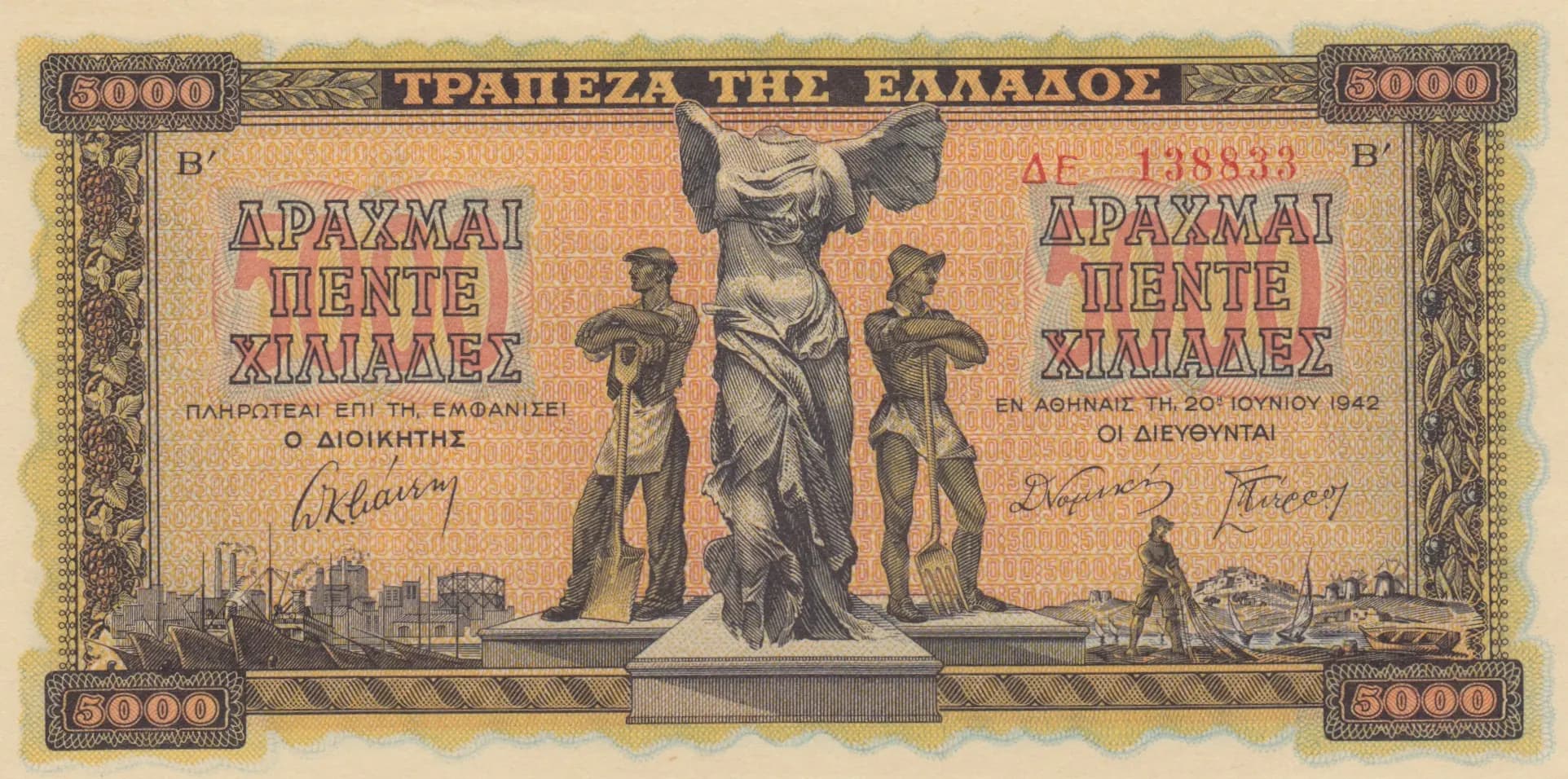
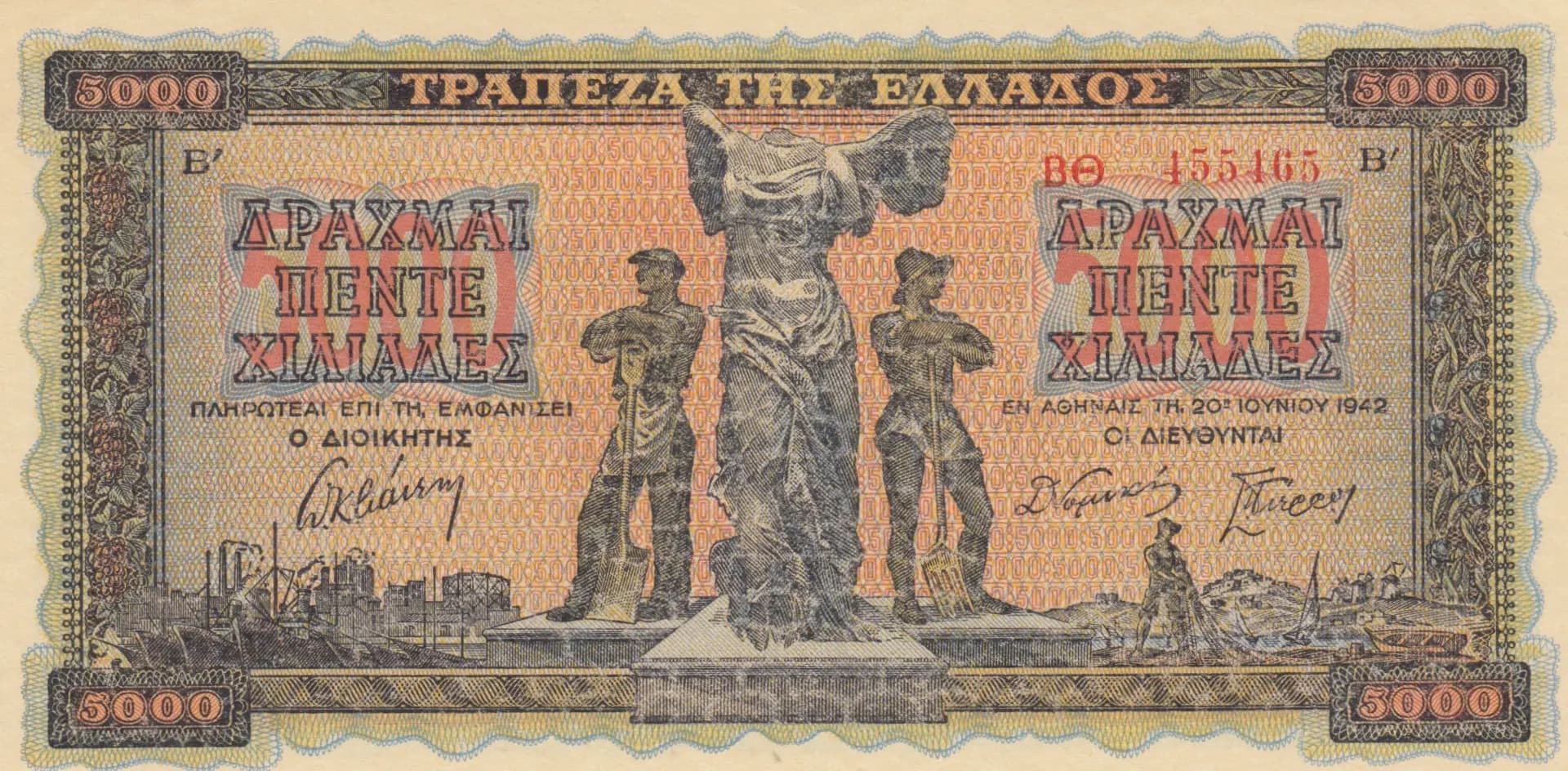
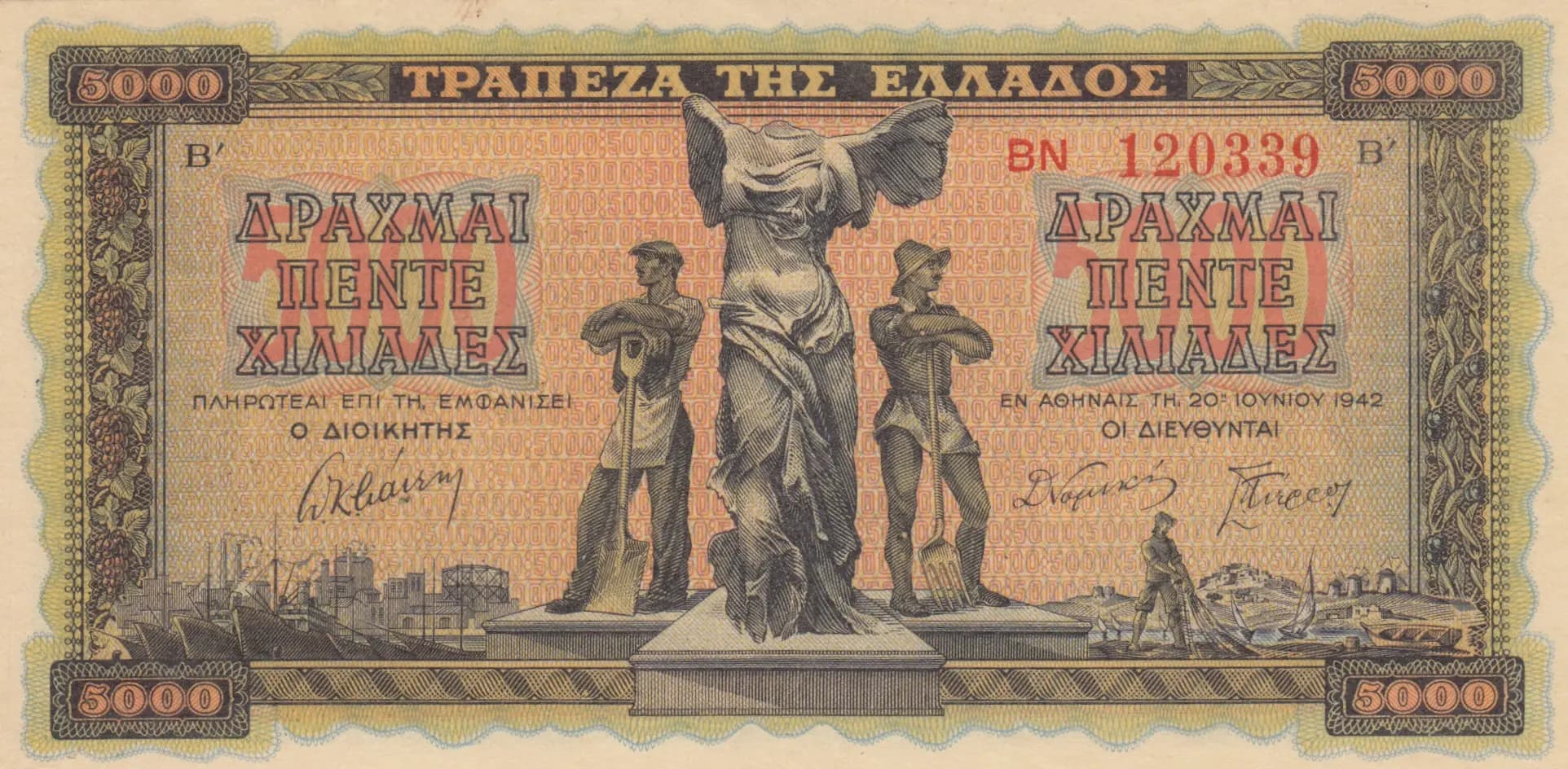
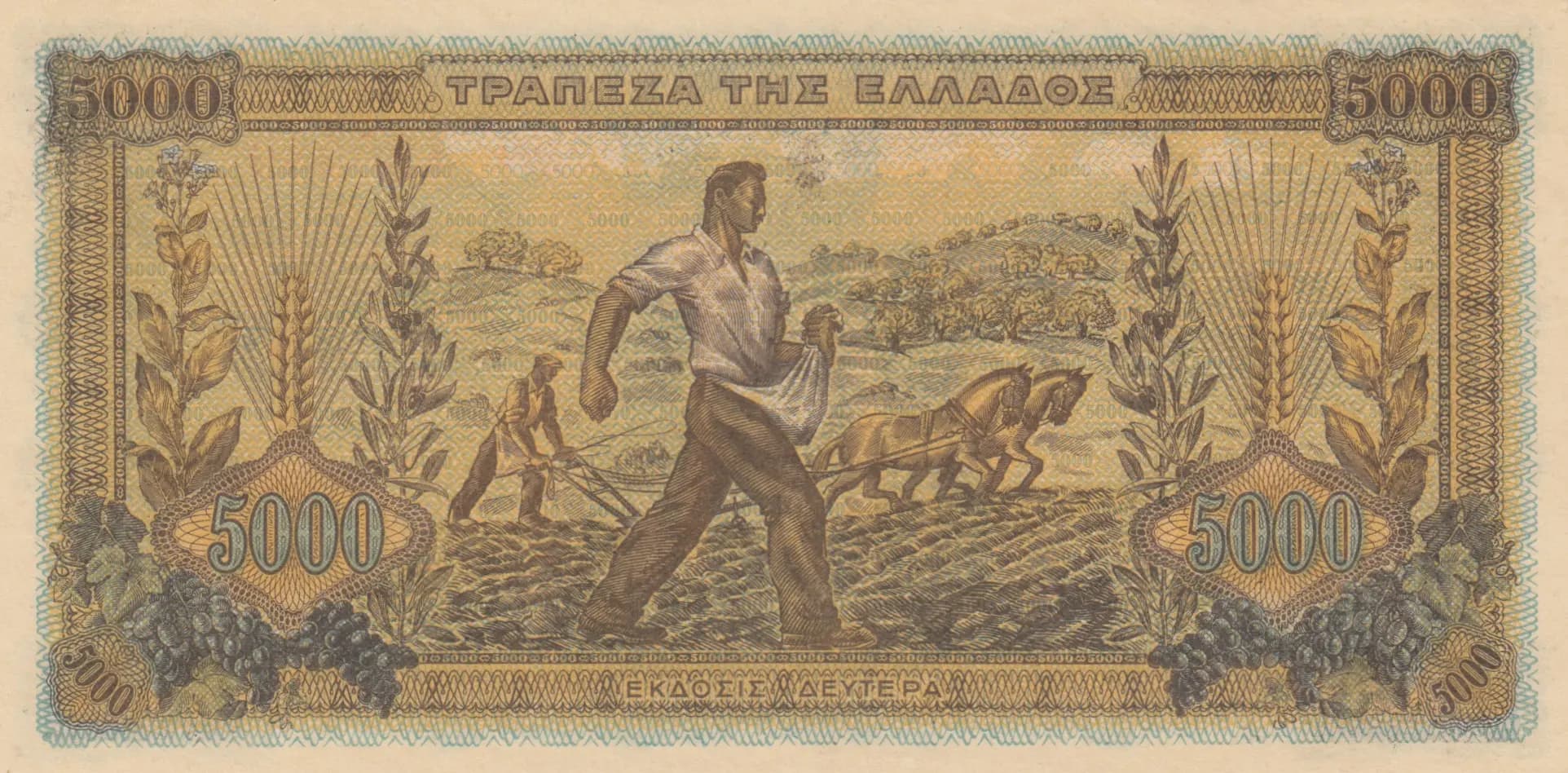
This is a Greek 5000 drachmai banknote from June 20, 1942, issued by the Bank of Greece during the Nazi occupation period. The note is in AU (About Uncirculated) condition, displaying the characteristic orange/coral and gold color scheme with classical allegorical imagery celebrating Greek industry and agriculture. The front features the winged Nike figure (symbolizing victory) flanked by representatives of industry and labor, while the reverse depicts a harvest scene with agricultural workers, making this a visually significant example of wartime Greek monetary design.
Common. The 5000 drachmai denomination from 1942 was part of standard wartime circulation and significant print runs were necessary to meet economic demands during the occupation period. The AU condition grade, while desirable, does not elevate an otherwise standard-issue banknote to rarity status. These notes remain readily available in the secondary market at moderate prices, reflecting their common circulation history.
Issued during Greece's occupation in World War II, this denomination reflects the Bank of Greece's attempt to maintain financial stability during one of the nation's darkest periods. The allegorical imagery—with Nike, industrial workers, and agricultural laborers—projected themes of Greek resilience and productivity, subtly affirming national identity despite foreign occupation. The June 1942 date places this note early in the occupation period, before the severe inflation that would later plague Greek currency.
The front features a classical tripartite composition centered on Nike of Samothrace, the winged goddess of victory, rendered in the classical Greek style. To her left stands an industrial laborer before a cityscape with factories and smokestacks, symbolizing Greece's industrial capacity. To her right is an agricultural worker before cultivated fields, representing the rural economy. Additional male figures in classical dress appear in the lower corners. The reverse depicts an allegorical harvest scene with a central male figure (likely Demeter or a personification of Agriculture) surrounded by laborers engaged in harvest work, with stylized wheat stalks flanking the composition and radiating sun rays behind the central figure. Both sides employ ornamental borders with repeating geometric patterns and classical architectural motifs executed in fine engraving.
Front side: 'ΤΡΑΠΕΖΑ ΤΗΣ ΕΛΛΑΔΟΣ' (Bank of Greece); '5000' and 'ΔΡΑΧΜΑΙ ΠΕΝΤΕ ΧΙΛΙΑΔΕΣ' (Five Thousand Drachmai); 'ΠΛΗΡΩΤΕΑΙ ΕΠΙ ΤΗ. ΕΜΦΑΝΙΣΕΙ' (Payable upon presentation); 'Ο ΔΙΟΙΚΗΤΗΣ' (The Director); 'ΟΙ ΔΙΕΥΘΥΝΤΑΙ' (The Directors); 'ΕΝ ΑΘΗΝΑΙΣ ΤΗ 20° ΙΟΥΝΙΟΥ 1942' (In Athens on June 20, 1942); Serial designation 'B'' (Series Beta) with serial number 'BN 120339'. Back side: 'ΤΡΑΠΕΖΑ ΤΗΣ ΕΛΛΑΔΟΣ' (Bank of Greece); '5000' denomination.
This note was produced using intaglio printing (engraving and steel plate printing), the standard security printing method for Greek banknotes of this era. The fine detail visible in the ornamental borders, facial features, and allegorical figures, combined with the repeating security pattern background (visible in both the visual analysis and consistent with Bank of Greece practice), indicates professional security printer production, likely by the Athens-based or internationally contracted printer serving the Bank of Greece during wartime operations.
This example is identified as Pick 119a(2), indicating it is the second variety of the 119a type. The 'B'' series designation visible on the note (Beta series) is a key identifier of this specific variety. The serial number format 'BN 120339' follows the Bank of Greece's numbering system for this period. Collectors should note variations in signature combinations (The Director and The Directors signatures), which may exist across the print run and represent different varieties within this Pick number designation.