500 000 drachmai 1944
About This Note
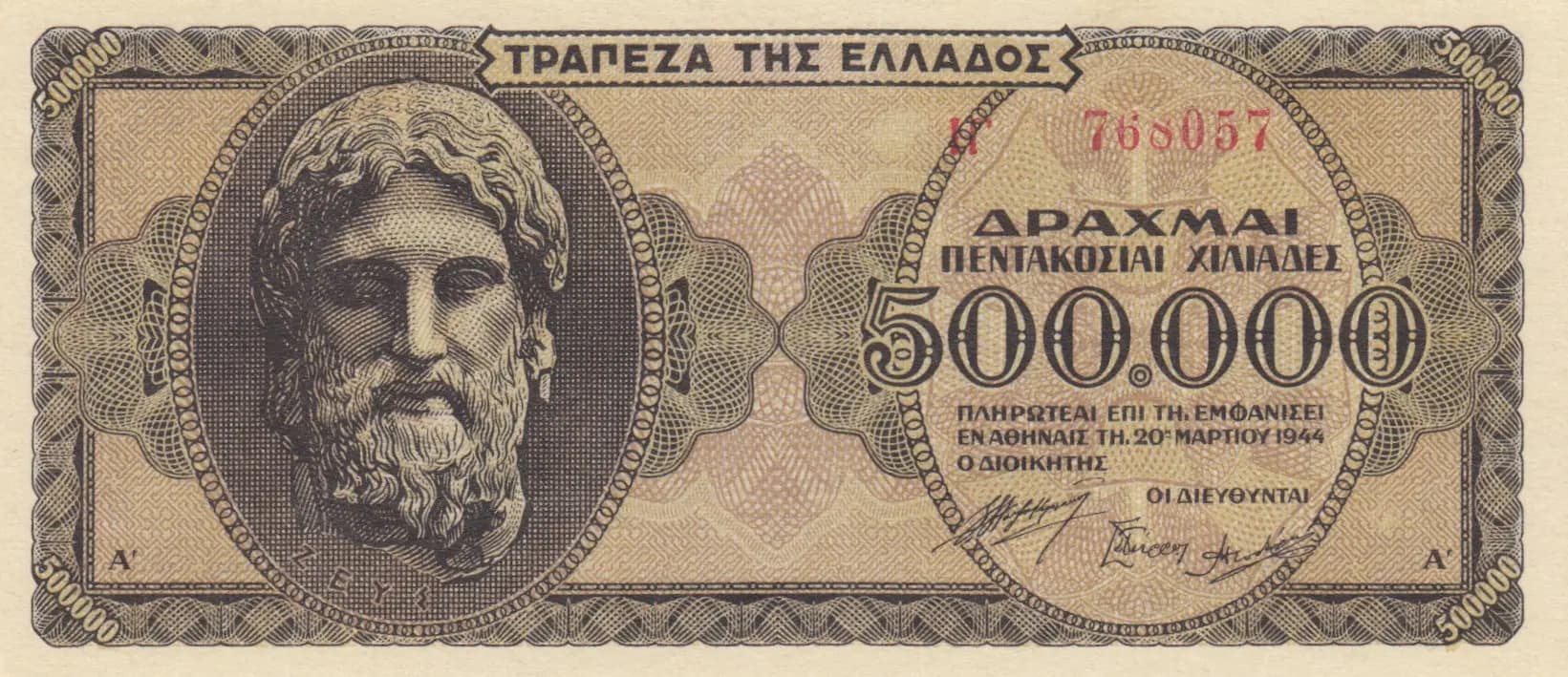
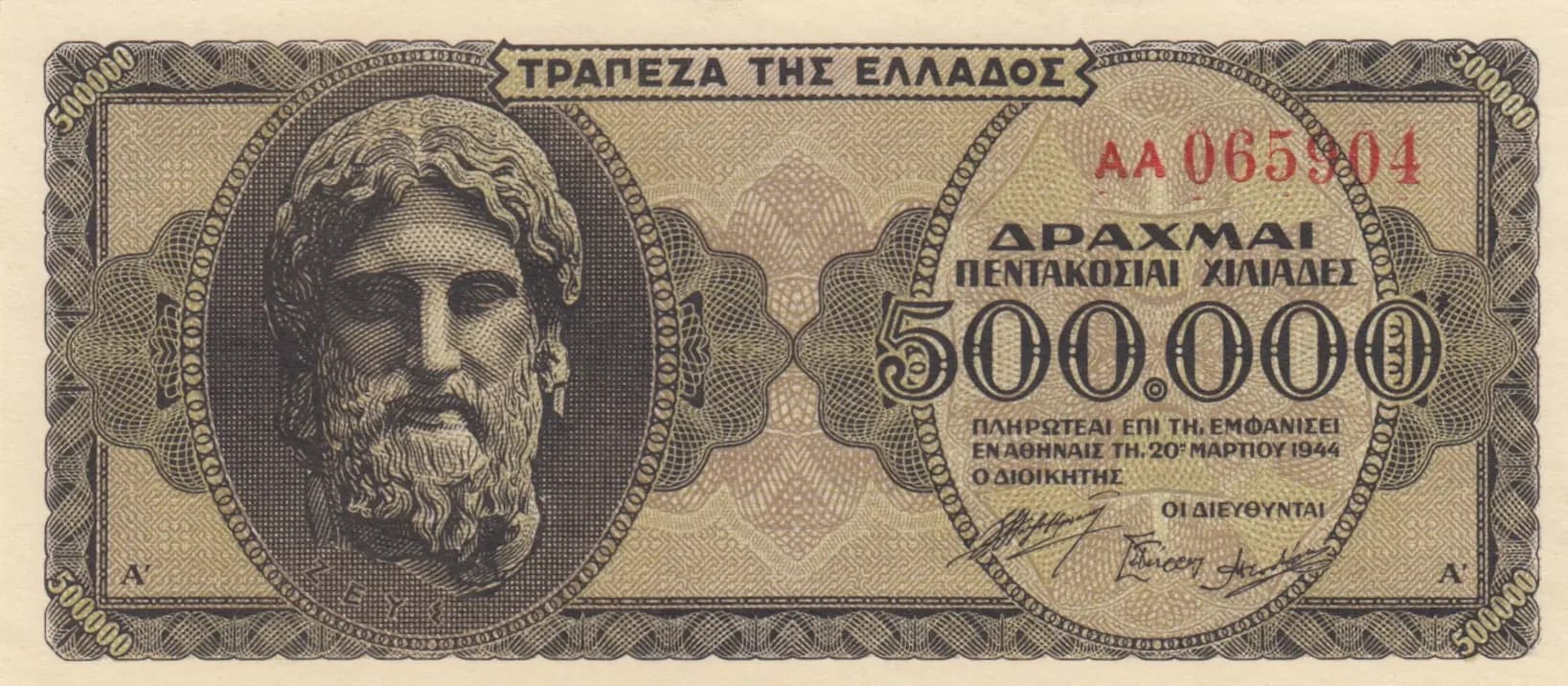
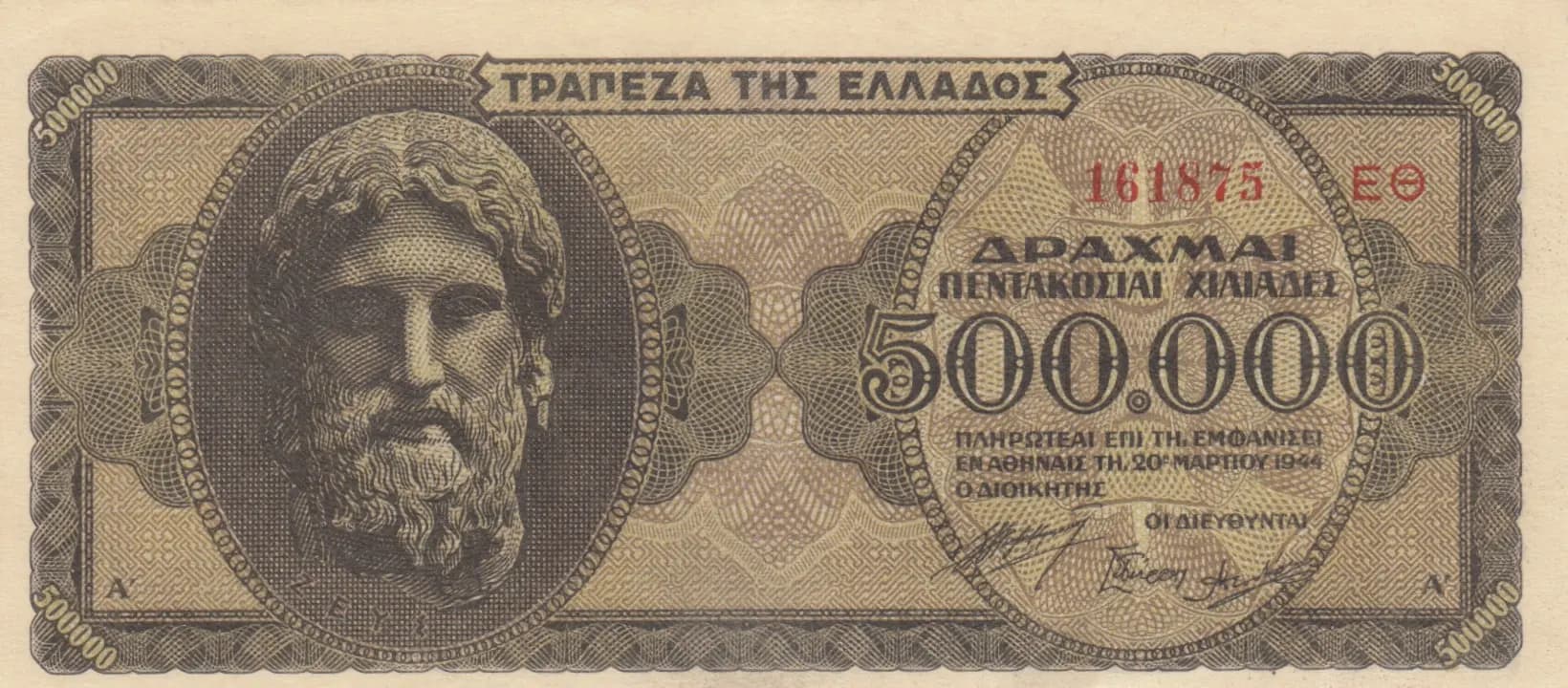
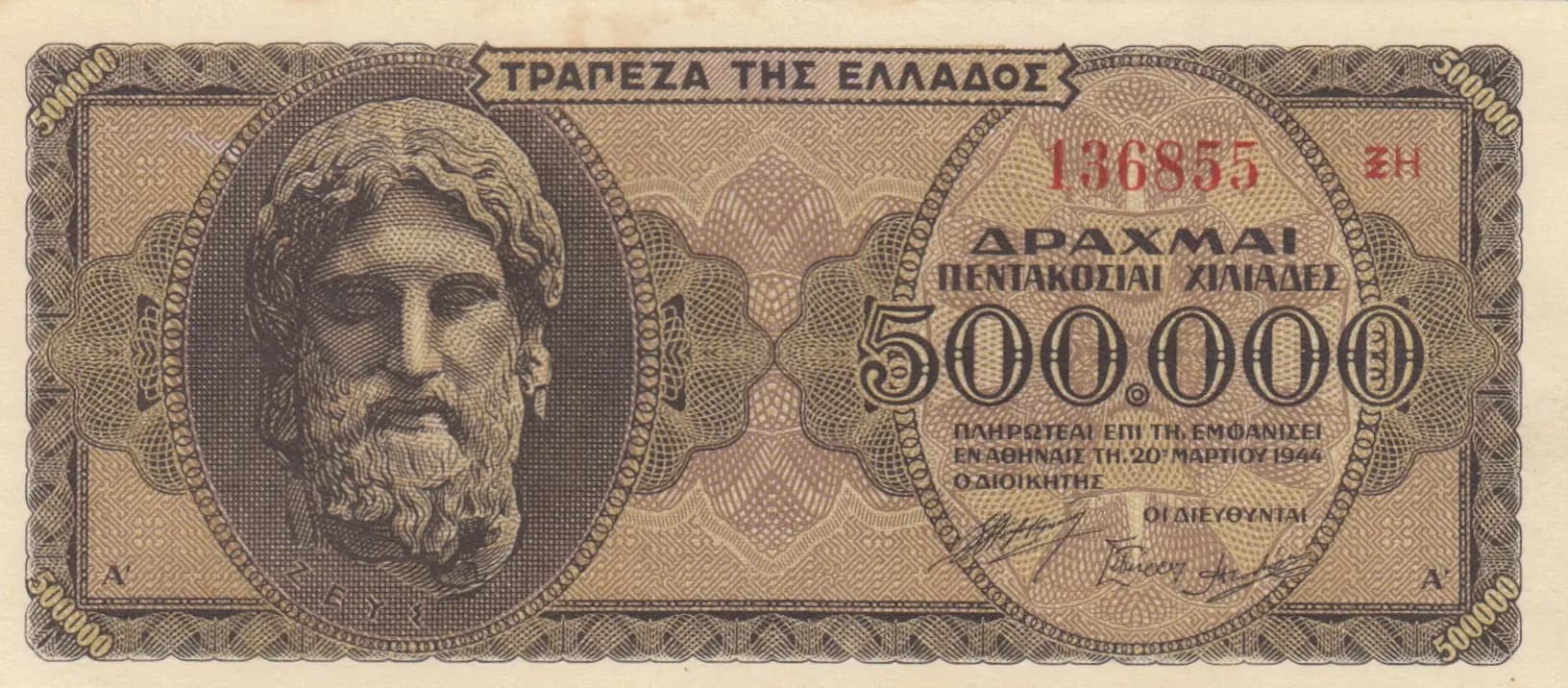
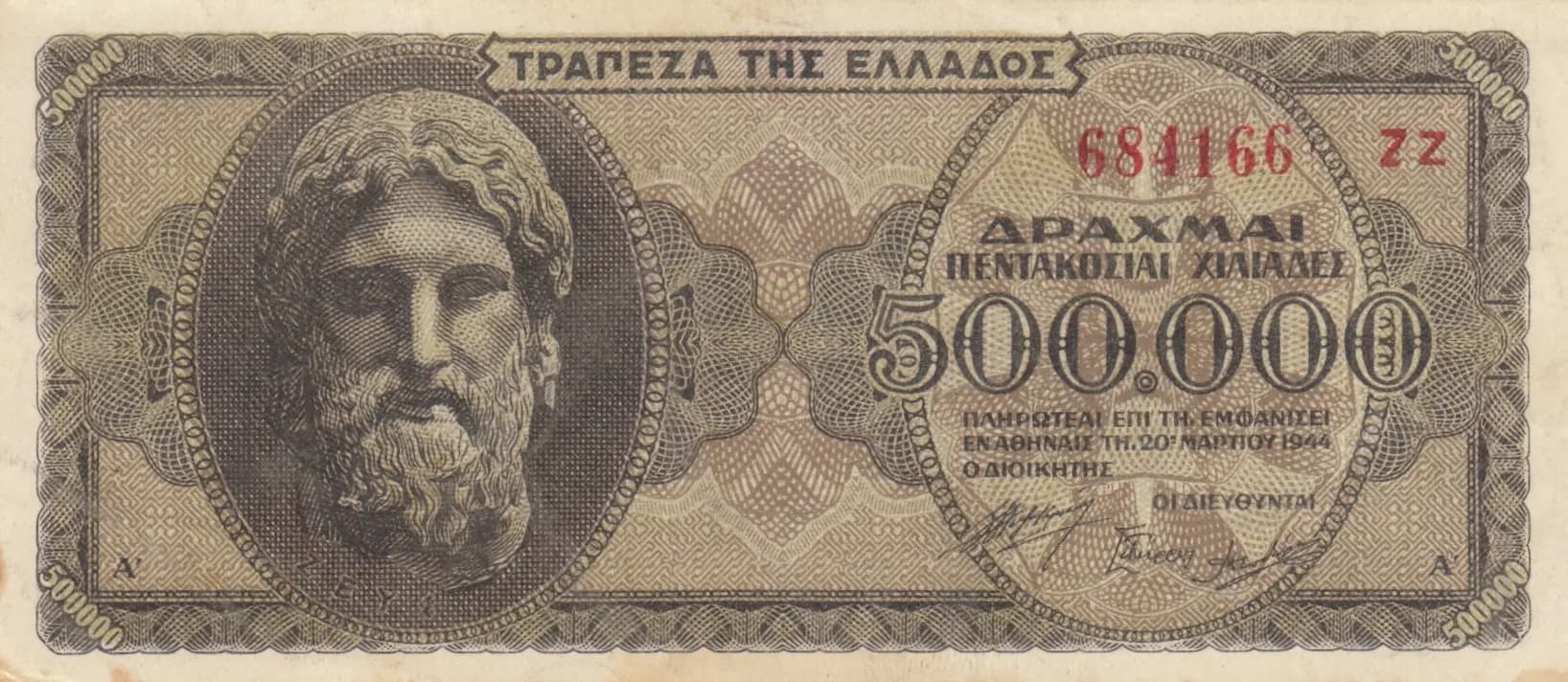
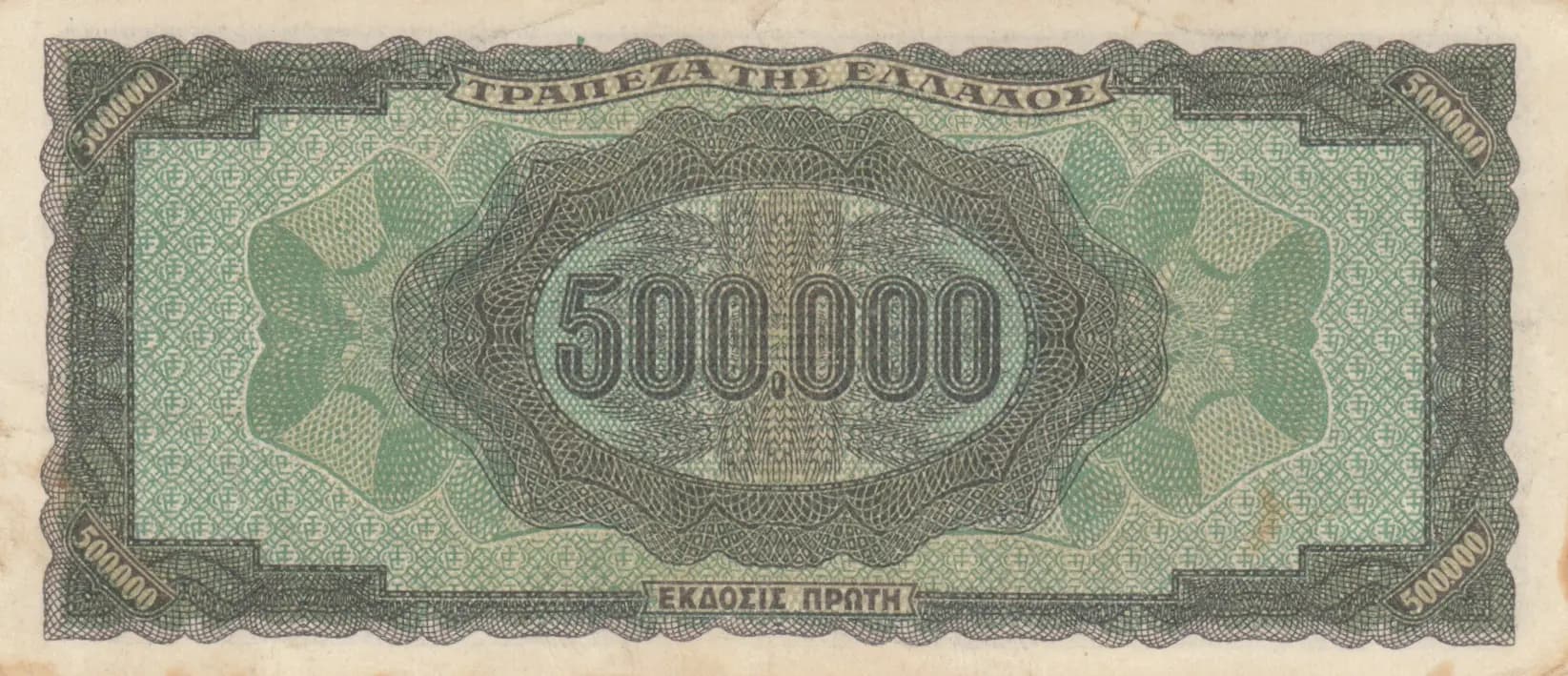
This 500,000 Drachmai note from 1944 presents a classically-styled Greek banknote in VF condition, featuring a distinguished bearded male portrait in profile within a circular frame on the tan-colored front. The note exhibits sharp engraving throughout with intricate geometric security patterns and ornamental designs, while the reverse displays a complementary green color scheme with the denomination prominently displayed in an ornamental oval frame. Though showing age-related toning consistent with its 80-year history, the note remains well-preserved with no significant wear, creases, or damage, making it an attractive example of wartime Greek currency.
Common. The 500,000 Drachmai notes from 1944 were issued in substantial quantities to meet the hyperinflationary demands of the occupation period and subsequent economic crisis. While these notes are now historically significant, they were produced in large print runs and survive in relatively good numbers today. The VF condition grade is desirable but not exceptionally scarce for this issue. No specific evidence of limited mintage, recall, or extreme scarcity applies to this Pick number variety.
Issued on March 20, 1944, during Nazi occupation of Greece, this banknote represents a critical period in Greek monetary history when the Bank of Greece (Trapeza tis Ellados) continued operations under German control. The classical Greek imagery—particularly the portrait of Zeus depicted in traditional Hellenic style—served as a nationalist assertion of Greek cultural identity even during foreign occupation. The 'First Issue' designation on the reverse indicates this was among the earliest emissions of this high-denomination denomination, created to address severe inflation and currency devaluation during the occupation period.
The front of this banknote features a classical portrait identified as Zeus, rendered in profile facing left with curled beard and hair, positioned within a circular frame on the left side. The portrait exemplifies the neoclassical style favored by Greek currency design, connecting contemporary Greek identity to ancient Hellenic civilization. The reverse features no portrait but instead emphasizes ornamental design, with the denomination '500,000' displayed prominently within an ornamental oval frame as the central focus. Both sides employ elaborate geometric border patterns and decorative scrollwork typical of high-security currency design of the period, with extensive fine-line cross-hatching serving as background security features throughout the note.
FRONT SIDE: 'ΤΡΑΠΕΖΑ ΤΗΣ ΕΛΛΑΔΟΣ' (Bank of Greece); 'ΔΡΑΧΜΑΙ ΠΕΝΤΑΚΟΣΙΑΙ ΧΙΛΙΑΔΕΣ' (Five Hundred Thousand Drachmas); '500,000' (denomination in numerals); 'ΠΛΗΡΩΤΕΑΙ ΕΠΙ ΤΗ ΕΜΦΑΝΙΣΕΙ ΤΟΥ ΚΑΤΟΧΟΥ ΤΗΣ ΠΑΡΟΥΣΗΣ ΕΝΤΟΛΗΣ ΕΚΔΙΔΟΣΙΗΣ' (Payable upon presentation by the holder of this note); 'ΔΙΕΥΘΥΝΤΗΣ' (Director); 'ΟΓΔΙΕΥΘΥΝΤΗΙ' (Co-Director); Series 'ΖΖ'; Serial number '684166'. BACK SIDE: 'ΤΡΑΠΕΖΑ ΤΗΣ ΕΛΛΑΔΟΣ' (Bank of Greece); '500,000' (denomination); 'ΕΚΔΟΣΙΣ ΠΡΩΤΗ' (First Issue).
This note was produced using intaglio engraving, the standard security printing method for Greek banknotes of this era. The sharp clarity of fine lines, the intricate cross-hatching patterns visible in the geometric designs, and the detailed portrait rendering all indicate traditional engraving plates. The precision of the geometric security patterns and the quality of impression visible in the visual analysis are characteristic of Bank of Greece security printing from this period, likely produced at the note printing facilities operated under Bank of Greece authority.
This example is identified as Pick-126b(3), indicating it is the third cataloged variety of the b-type 500,000 Drachmai denomination from 1944. The series designation 'ΖΖ' and serial number '684166' visible on this specimen identify it within the issued range. The 'ΕΚΔΟΣΙΣ ΠΡΩΤΗ' (First Issue) marking on the reverse confirms this represents the initial emission of this denomination. Varieties for this Pick number may be distinguished by signature combinations, series letters, or other administrative markings that would require comparison with the complete Pick catalog specifications.