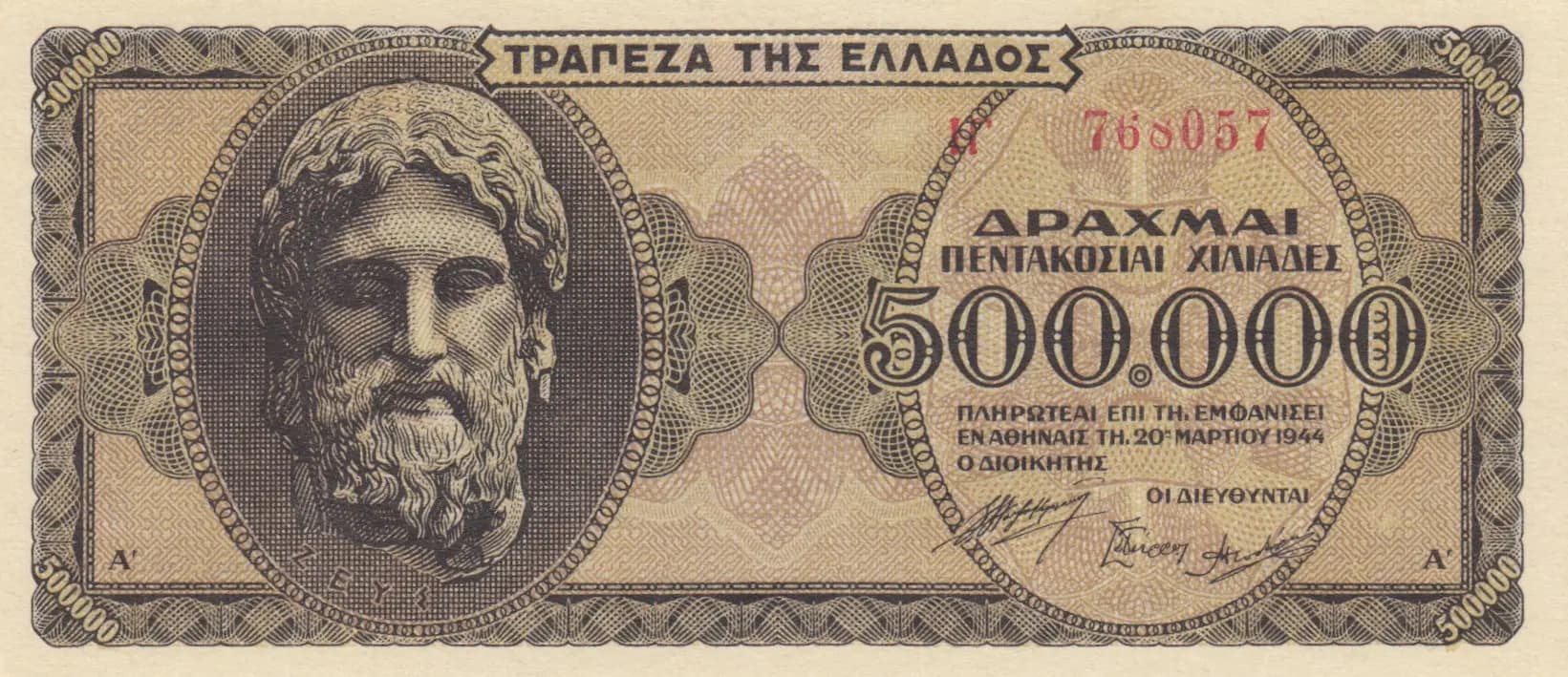
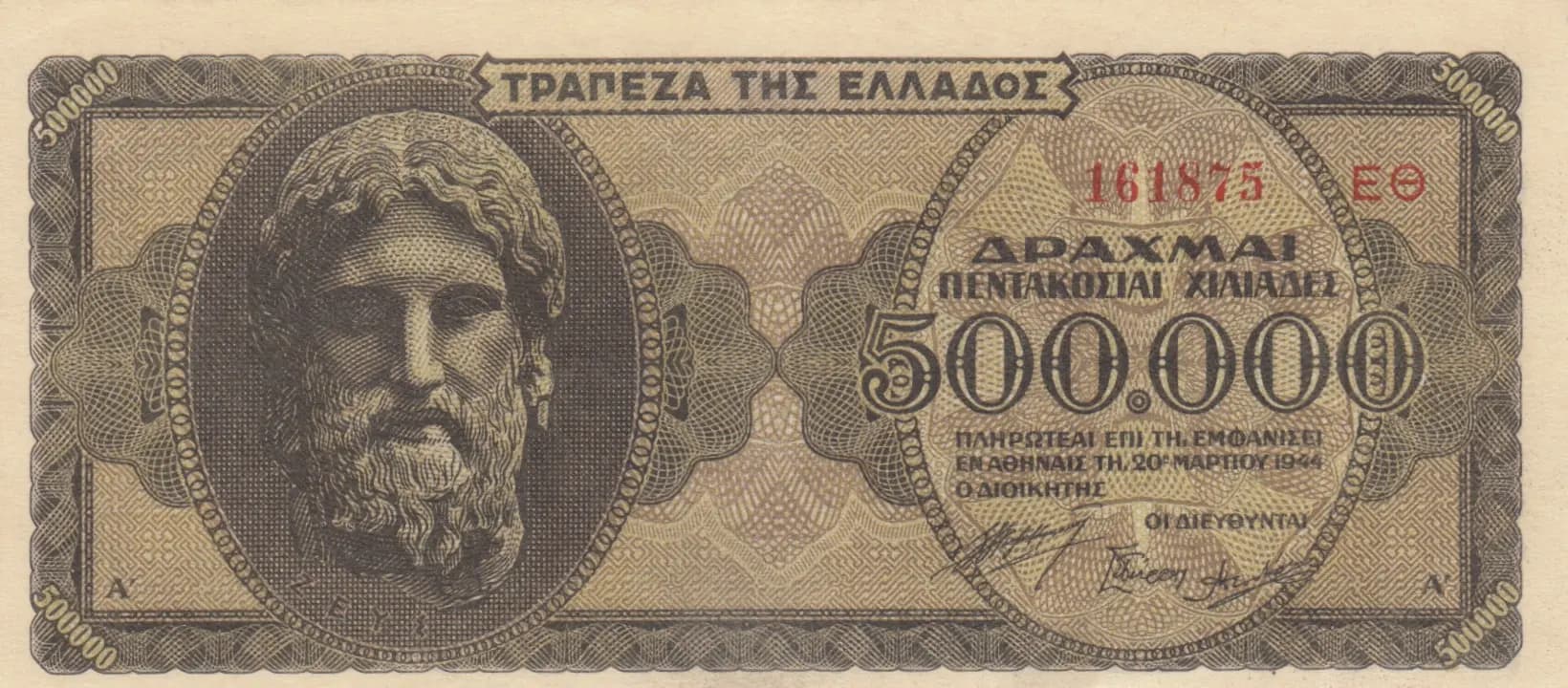
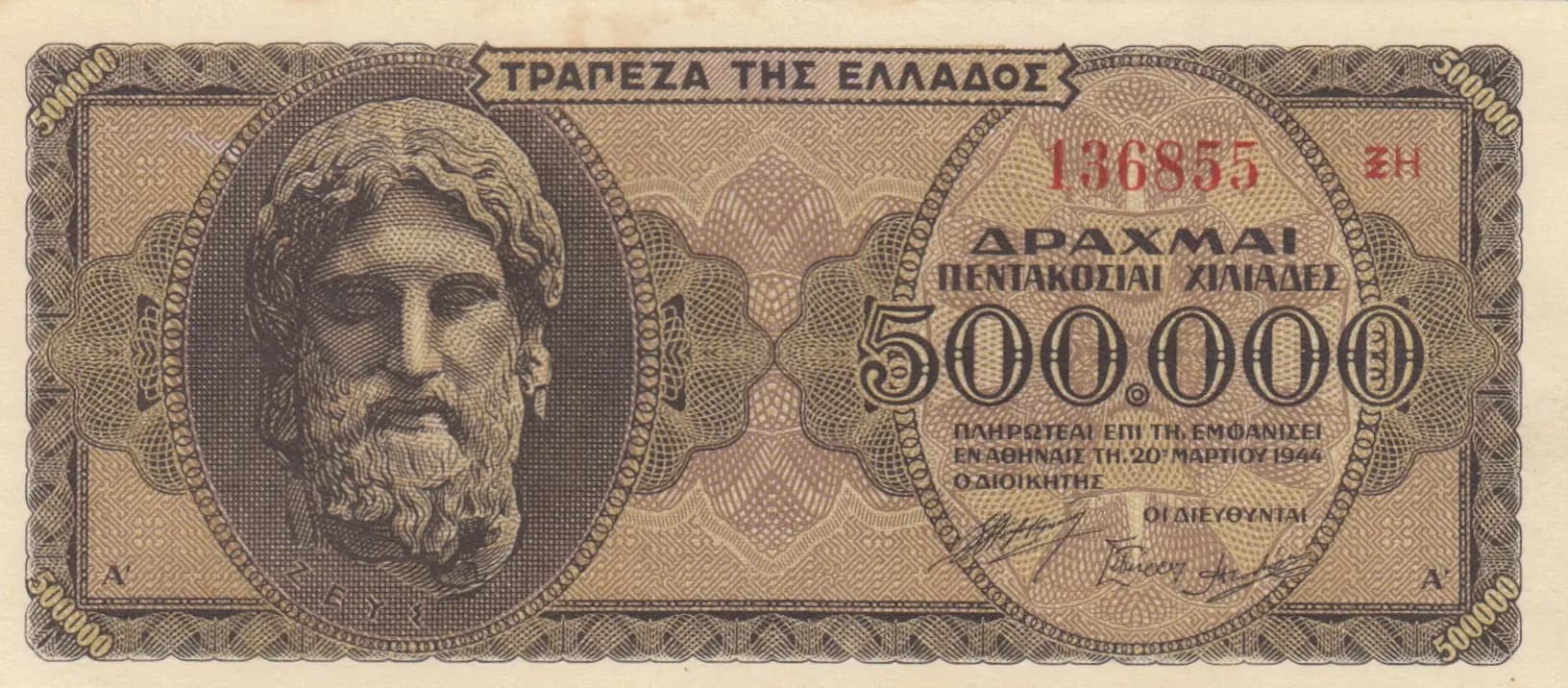
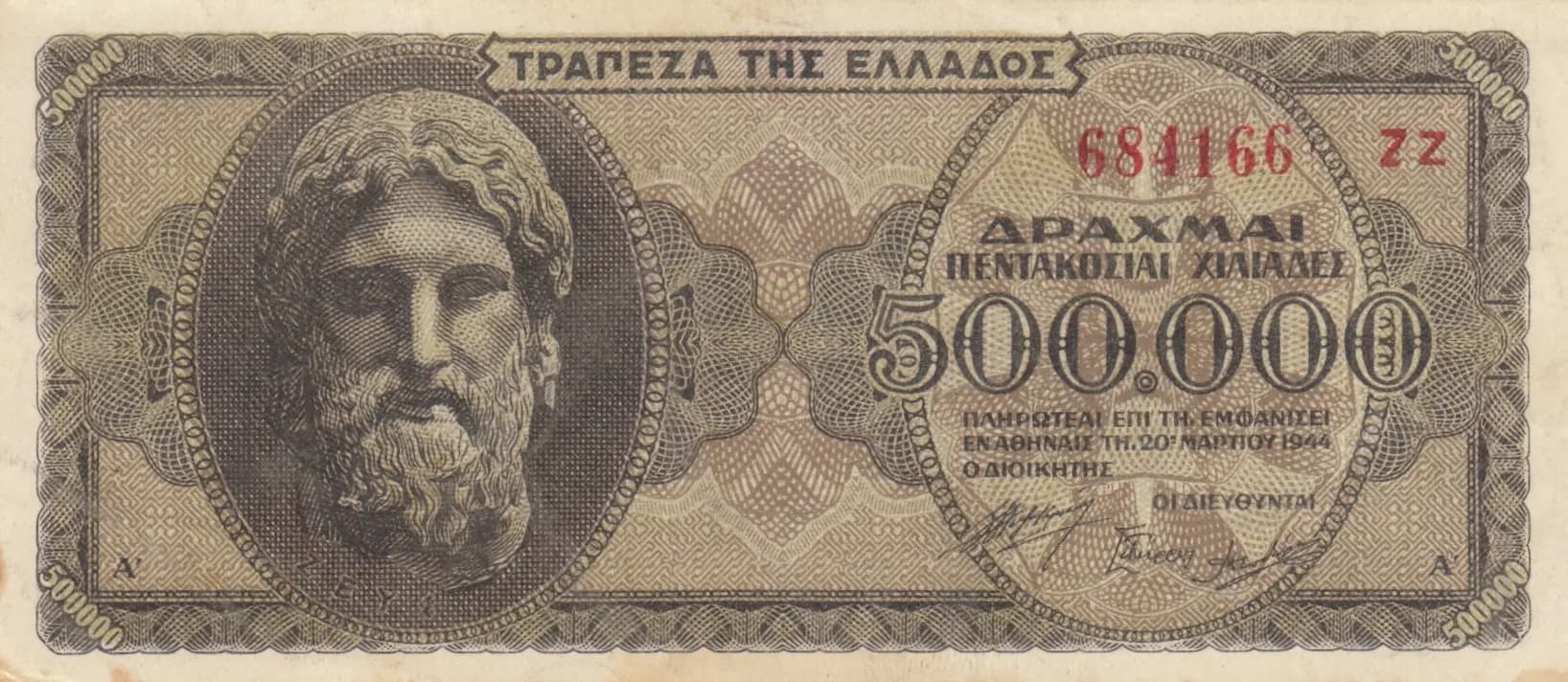
500 000 drachmai 1944
About This Note
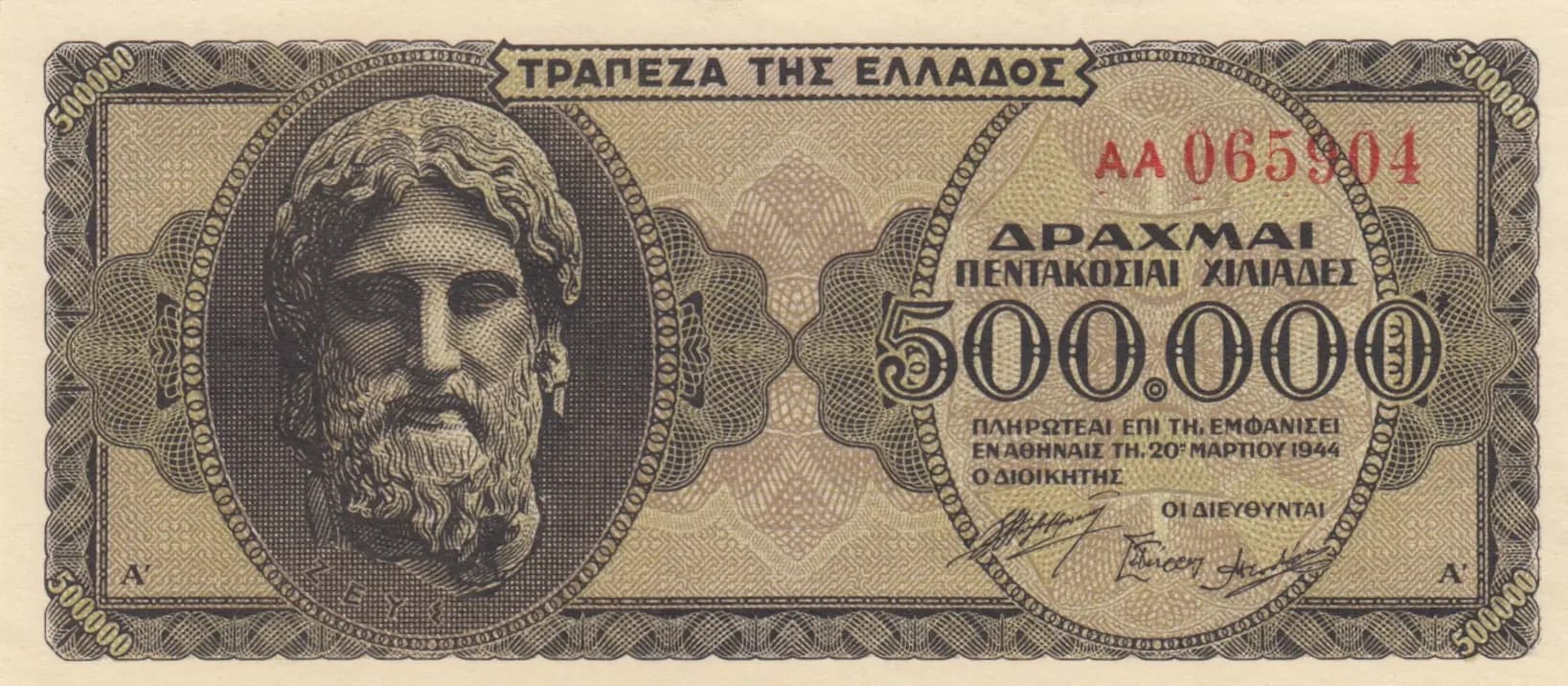
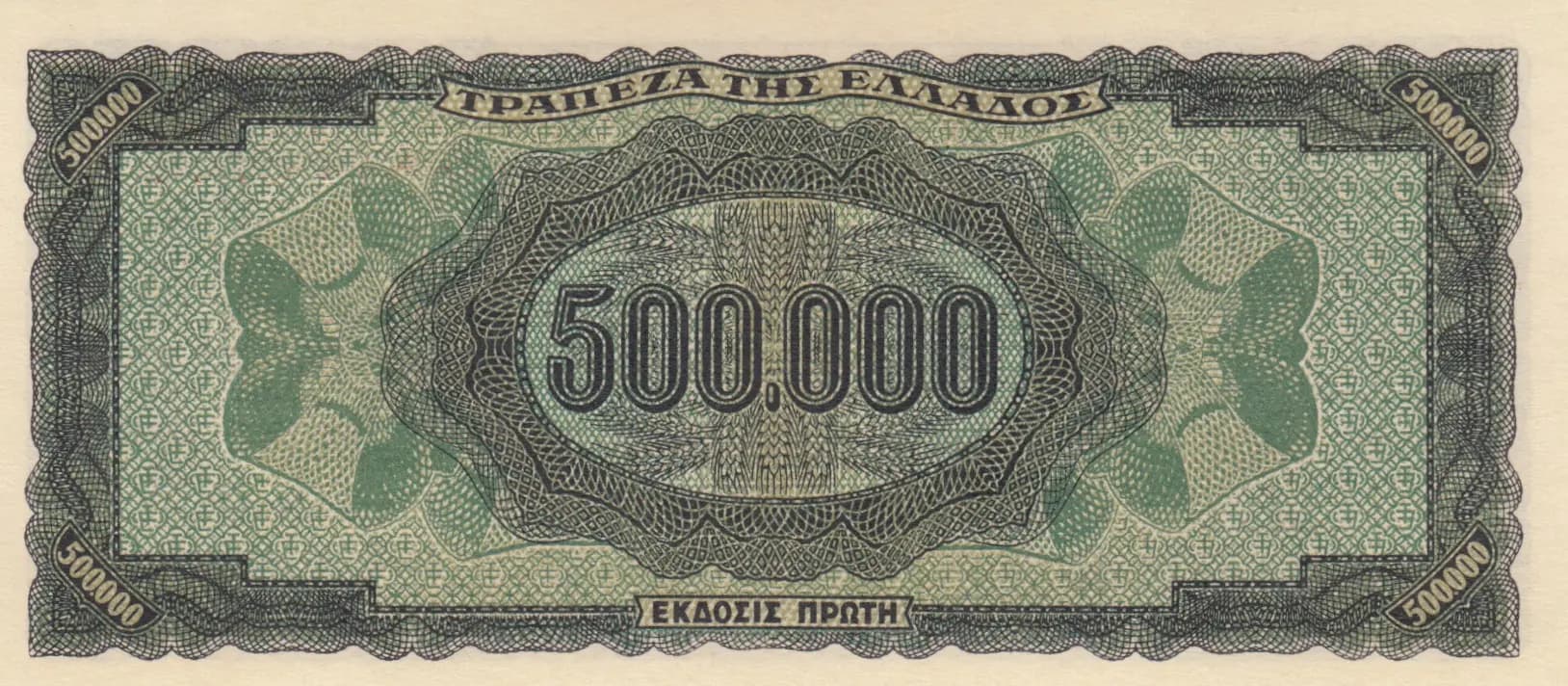
This is a Greek 500,000 Drachmai banknote issued on 20 March 1944 during the German occupation of Greece, graded AU with exceptional preservation. The note features a classical portrait of a bearded male figure in profile within an ornate circular frame on the front, with the reverse displaying an elaborate geometric design centered around the large denomination. The sharp engraving, vibrant color palette (beige/tan on front, green on reverse), and complete absence of wear or circulation marks make this an exemplary specimen of this hyperinflation-era issue.
Common. While this is a historically significant hyperinflation-era banknote from WWII Greece, the 500,000 drachmai denomination was produced in substantial quantities to meet the extraordinary monetary demands of the period. Despite its large face value and historical context, examples survive in relatively good numbers in the collector market. The AU condition grade represented here enhances value above common circulated examples, but the note itself is not rare or scarce in absolute terms. Market availability and pricing patterns indicate this is a standard offering in Greek banknote collections rather than a sought-after rarity.
Issued during World War II occupation, this 500,000 drachmai note represents Greece's severe monetary crisis and hyperinflation of the 1940s. The classical Greek portrait on the obverse reflects the Bank of Greece's effort to maintain national identity and confidence during the occupation period. The 'First Edition' designation on the reverse and the formal 'payable on presentation' language underscore the emergency circumstances of this enormous denomination, which would soon become obsolete as inflation spiraled further in the post-war period.
The obverse features a classical bearded male figure in profile facing left, depicted in the style of ancient Greek numismatic portraiture, positioned within an ornate circular medallion frame with decorative geometric borders. The figure represents a historical Greek personage, consistent with the Bank of Greece's iconographic program during the occupation period. The reverse is dominated by a large denomination value '500.000' enclosed in an elaborate rectangular ornamental frame with symmetrical geometric elements flanking both sides, potentially incorporating butterfly or shield-like motifs. Both sides utilize extensive fine-line engraving, cross-hatching, and geometric pattern work throughout the field and borders as anti-counterfeiting security measures. The color scheme—warm beige and tan on the obverse contrasting with green and dark gray-black on the reverse—provides visual distinction between sides while maintaining period-appropriate aesthetics.
FRONT: 'ΤΡΑΠΕΖΑ ΤΗΣ ΕΛΛΑΔΟΣ' (Bank of Greece) | 'ΔΡΑΧΜΑΙ' (Drachmas) | 'ΠΕΝΤΑΚΟΣΙΑΙ ΧΙΛΙΑΔΕΣ' (Five hundred thousand) | '500.000' (500,000) | 'ΠΑΛΗΡΩΤΕΑΙ ΕΠΙ ΤΗ ΕΜΦΑΝΙΕΙΕΙ' (Payable on presentation) | 'ΕΝ ΑΘΗΝΑΙΣ ΤΗ 20ε ΜΑΡΤΙΟΥ 1944' (In Athens on 20th March 1944) | 'Ο ΔΙΟΙΚΗΤΗΣ' (The Governor) | 'ΟΙ ΔΙΕΥΘΥΝΤΑΙ' (The Directors) | Serial: 'ΑΛ 065901'. REVERSE: 'ΤΡΑΠΕΖΑ ΤΗΣ ΕΛΛΑΔΟΣ' (Bank of Greece) | '500.000' (500,000) | '500000' (500000, shown in corners) | 'ΕΚΔΟΣΙΣ ΠΡΩΤΗ' (First Edition).
Intaglio engraving (recess printing) using steel dies. The sharp, well-defined line work, intricate geometric patterns, fine cross-hatching, and dimensional depth visible throughout both surfaces are characteristic of professional banknote intaglio production. This note was produced by the Bank of Greece's printing facilities or authorized security printers under Greek central bank supervision during the occupation period. The complexity of the engraved patterns and the precision of alignment indicate use of advanced currency printing presses capable of high-security multi-color intaglio production.
This example is cataloged as Pick 126a(2), indicating it is the second identified variety within the 126a classification. The serial number prefix 'ΑΛ' and the 'First Edition' (Εκδοσις Πρωτη) marking on the reverse are consistent with early issuance from March 1944. Collector interest should focus on serial number prefixes and signature variations among the Governor and Directors panels, which may denote different printings or issuing authorities within the same denomination. No overprints or substantial alterations are observed on this specimen.