500 000 drachmai 1944
About This Note
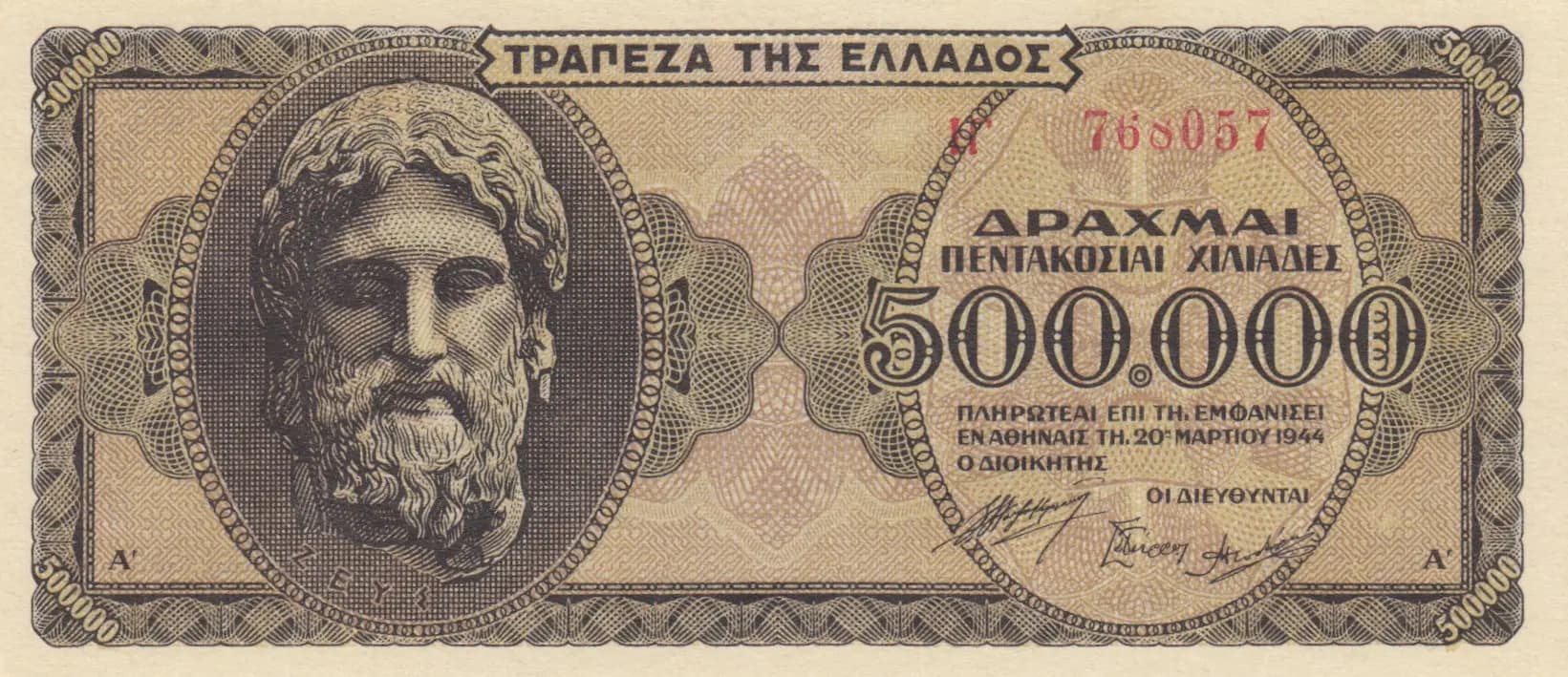
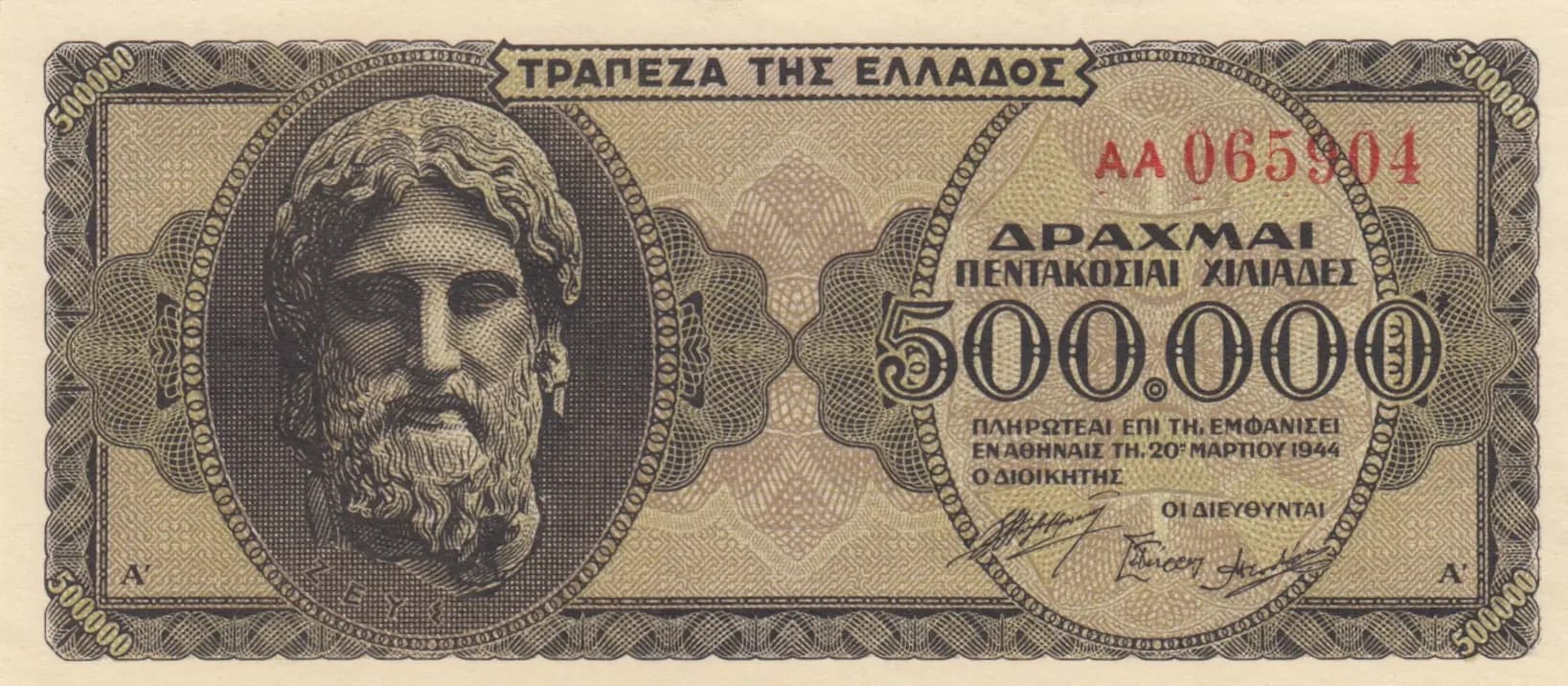
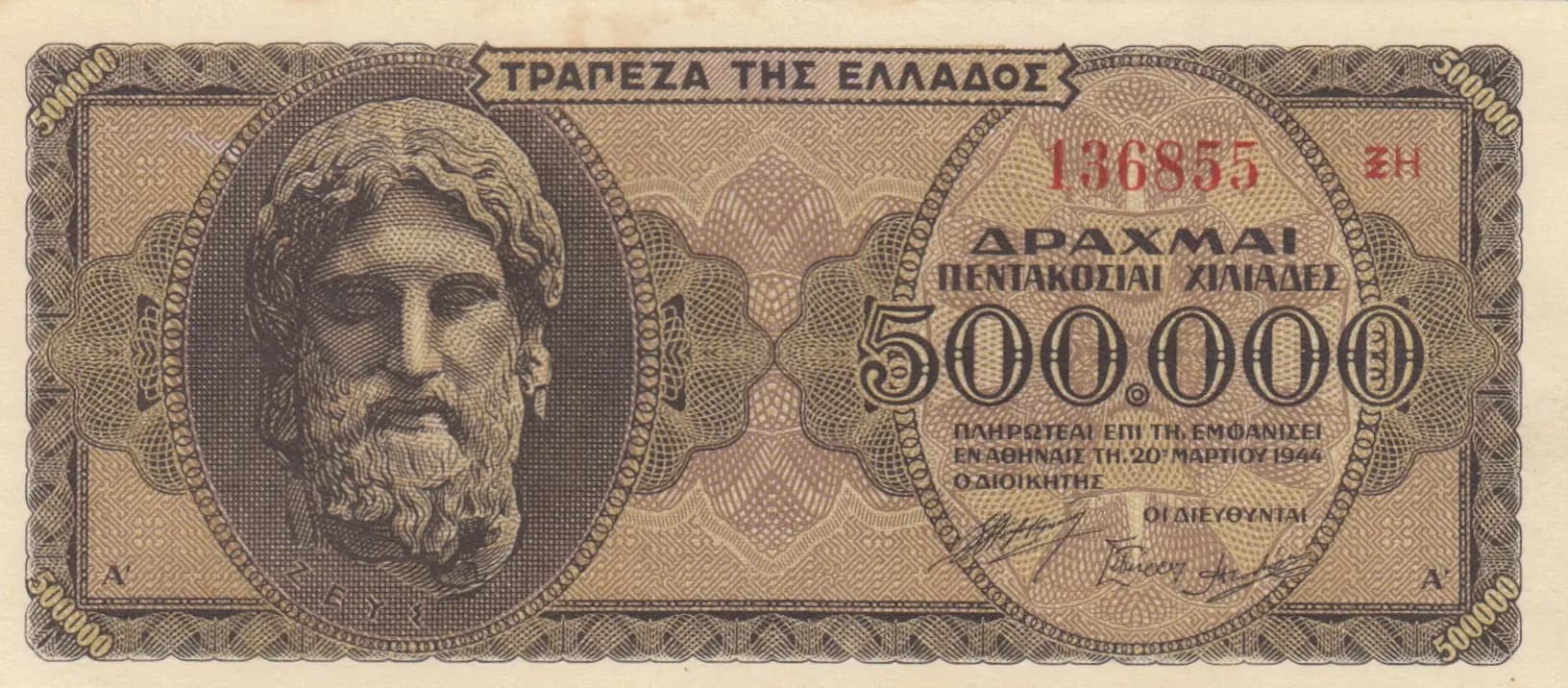
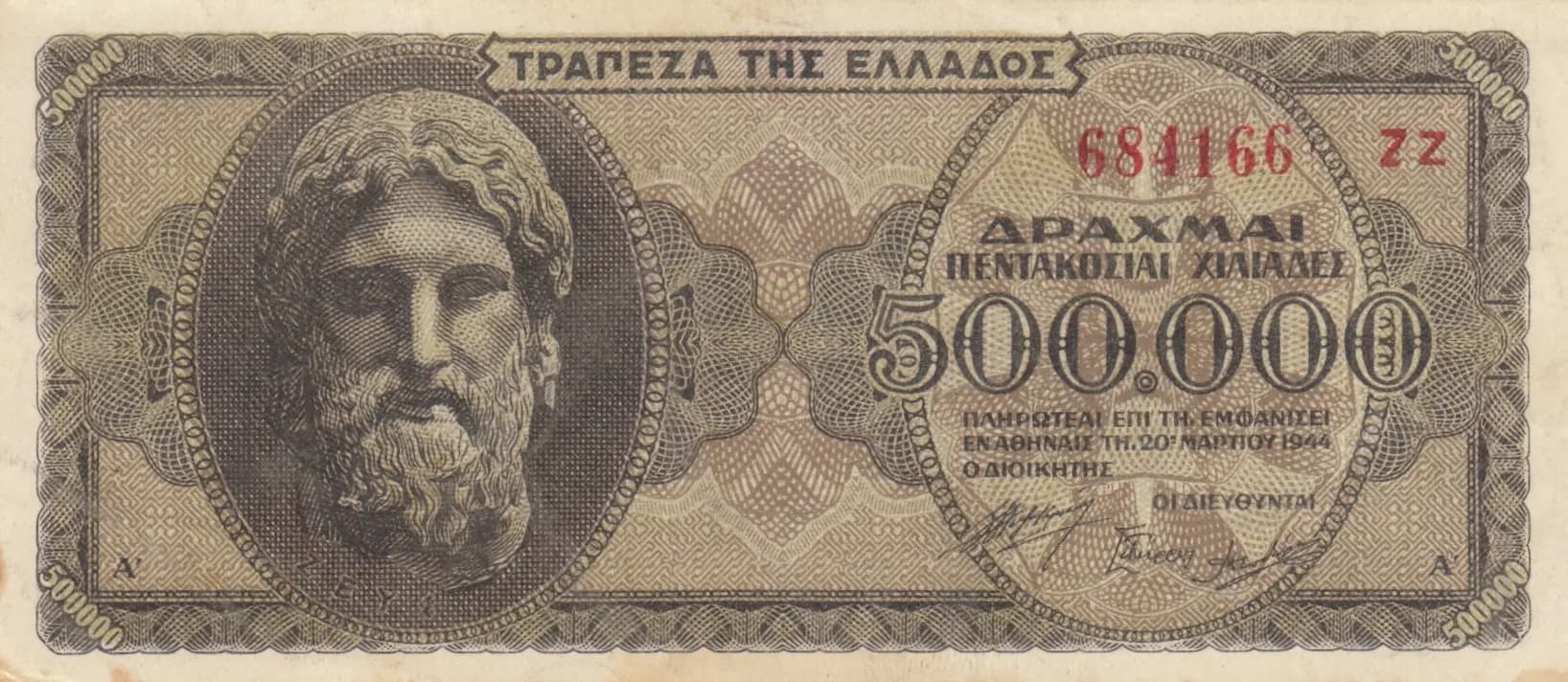
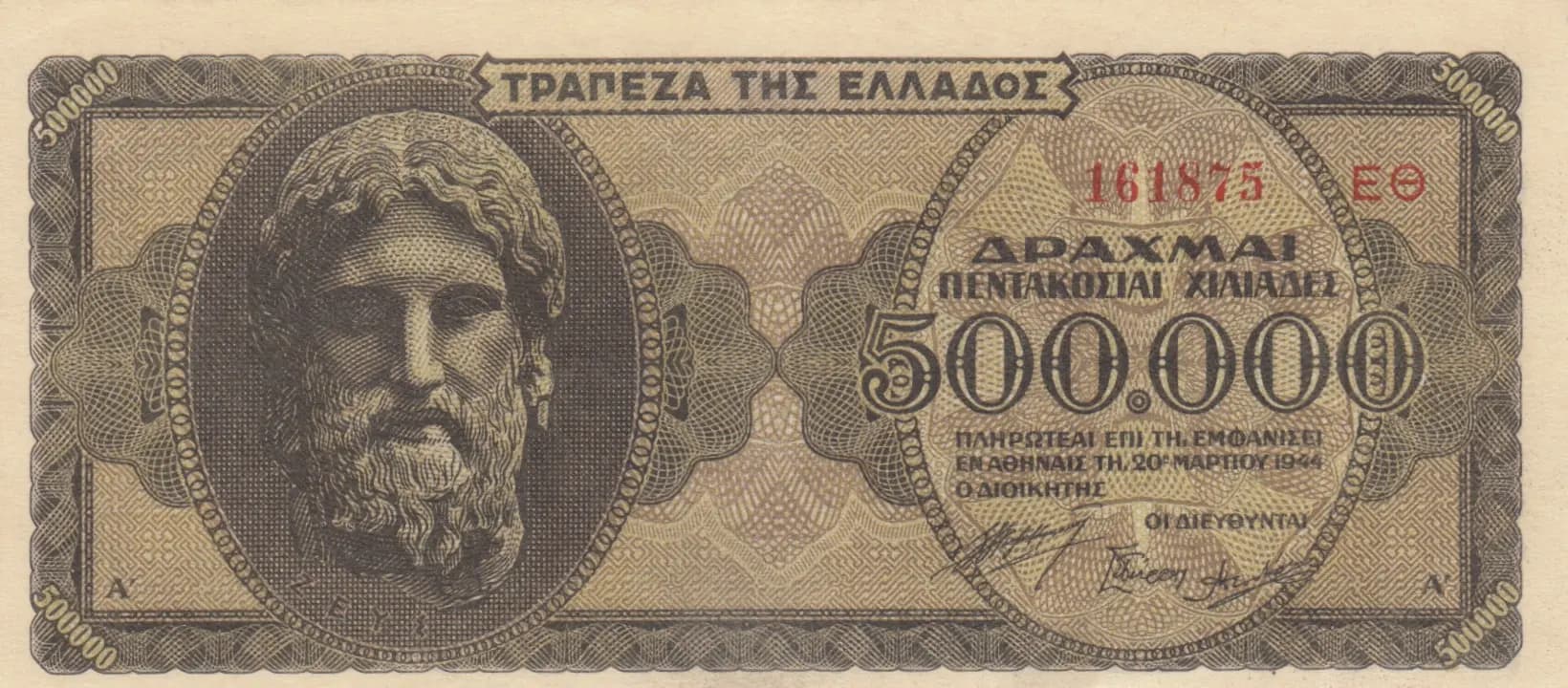
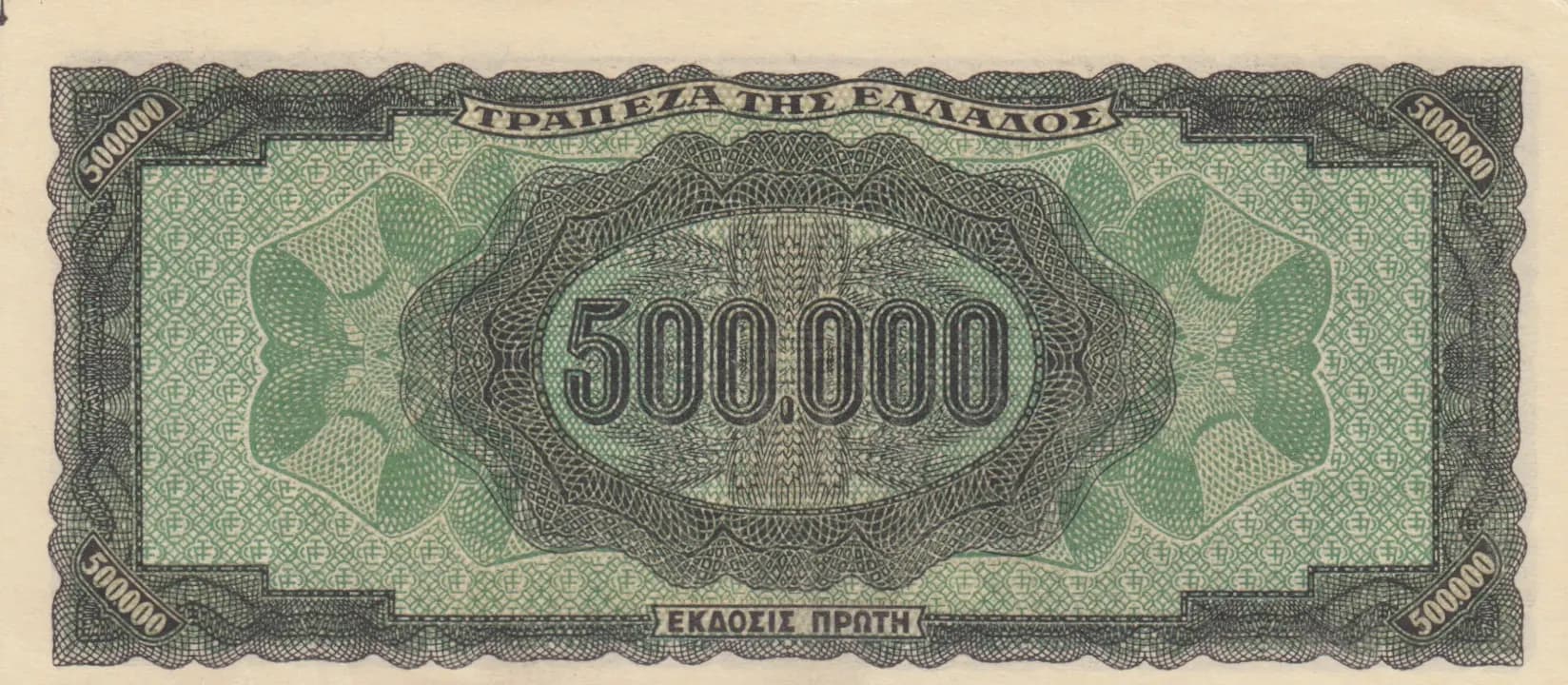
This is a Greek 500,000 Drachmai banknote from March 20, 1944, issued during the German occupation of Greece in World War II. The note is in AU (About Uncirculated) condition, displaying crisp printing with no visible wear, tears, or creases. The front features a classical portrait of Zeus in profile within an ornamental circular border, set against an intricately patterned beige background, while the reverse showcases the denomination prominently within decorative geometric frames in green and dark tones.
Common. The 500,000 Drachmai denomination from 1944 was issued in substantial quantities during the final months of occupation when hyperinflation necessitated large denomination notes. While World War II-era Greek banknotes have historical significance, this particular note and denomination were not recalled, do not represent a short-lived issue (the series continued), and regularly appear in collections and on the market. AU condition examples are readily available to collectors at modest valuations.
This note was issued by the Bank of Greece (Trapeza tis Ellados) during the final year of German occupation, a period of severe hyperinflation in Greece that would reach catastrophic levels by 1944-1945. The classical imagery of Zeus reflects Greece's effort to maintain cultural identity and legitimacy through connection to ancient heritage during foreign occupation. The denomination of 500,000 drachmai itself testifies to the rapid devaluation of the currency during this turbulent period of World War II.
The obverse features Zeus, the king of the classical Greek gods, depicted in left-facing profile with curled hair and beard, a choice reflecting Greece's connection to its ancient classical heritage during the occupation period. The portrait is enclosed within an elaborate circular ornamental border, with the denomination '500.000' and text positioned to the right. The background employs intricate geometric patterns and Greek key designs in beige and tan tones, creating a sophisticated classical aesthetic. The reverse maintains thematic consistency with ornate decorative elements, featuring the denomination prominently within a large central circular frame surrounded by complex geometric patterns in green, dark gray, and black, with Greek key motifs in the borders.
FRONT: 'ΤΡΑΠΕΖΑ ΤΗΣ ΕΛΛΑΔΟΣ' = Bank of Greece; 'ΔΡΑΧΜΑΙ ΠΕΝΤΑΚΟΣΙΑΙ ΧΙΛΙΑΔΕΣ' = Five Hundred Thousand Drachmas; '500.000' = 500,000; 'ΠΑΝΕΠΙΣΤΗΜΙ ΕΠΙ ΤΗ ΕΜΦΑΝΙΣΕΙ ΕΝ ΑΘΗΝΑΙΣ ΤΗ 20 ΜΑΡΤΙΟΥ 1944' = Published on its appearance in Athens on March 20, 1944; 'Ο ΔΙΟΙΚΗΤΗΣ' = The Director; 'ΟΙ ΔΙΕΥΘΥΝΤΑΙ' = The Directors; Series designation 'ΒΘ'; Serial number '161874'. BACK: 'ΤΡΑΠΕΖΑ ΤΗΣ ΕΛΛΑΔΟΣ' = Bank of Greece; '500.000' = 500,000; 'ΕΚΔΟΣΙΣ ΠΡΩΤΗ' = First Edition.
This note was produced using intaglio printing (engraving), evidenced by the fine line work, intricate geometric background patterns, elaborate decorative borders, and sharp detail reproduction visible throughout both sides. The crisp impression and precise ornamental circular frames are characteristic of high-quality banknote engraving. While the specific security printer is not definitively identified in standard references, Greek banknotes of this era were typically produced by the Bank of Greece's printing facilities or contracted European security printers.
This is identified as Pick 126b(1), the first issue variety of this denomination. The note displays series designation 'ΒΘ' (Theta-Beta in Greek numerical notation) and carries serial number 161874. The inscription 'ΕΚΔΟΣΙΣ ΠΡΩΤΗ' (First Edition) on the reverse confirms this as the inaugural printing. Subsequent varieties may exist with different series designations or date variations, but this represents the standard first edition of the 500,000 Drachmai issue from March 1944.